The paper presents our work on cross-lingual ontology alignment system which uses embedding based cosine similarity matching. The ontology entities are made contextually richer by creating descriptions using novel techniques. We use a fine-tuned transformer based multilingual model for generating better embeddings. We use cosine similarity to find positive ontology entities pairs and then apply threshold filtering to retain only highly similar entities. We have evaluated our work on OAEI-2022 multifarm track. We achieve 71
Large-scale recommendation systems consistently grapple with extreme data and label sparsity, where the vast majority of potential user-item interactions remain unobserved and unlabeled. This fundamental constraint severely limits model training, introducing biased gradients, degrading personalization quality, and amplifying popularity bias toward frequently interacted items while neglecting long-tail content. The challenge intensifies as platforms scale to serve diverse user populations across massive item catalogs, where traditional supervised learning approaches prove inadequate. This article provides a comprehensive examination of contemporary strategies designed to train robust recommendation models under severe supervision constraints. The article encompasses self-supervised learning techniques that leverage unlabeled interaction data through contrastive and pretext objectives, implicit feedback modeling approaches that extract weak supervision from behavioral signals while mitigating inherent biases, and transfer learning frameworks that incorporate knowledge from auxiliary tasks and cross-domain sources. Critical analysis reveals the practical trade-offs between sample efficiency, computational scalability, and recommendation fidelity across different sparsity regimes. By synthesizing theoretical foundations with real-world deployment considerations, this work offers actionable guidance for researchers and practitioners seeking to improve recommendation accuracy, enhance cold-start robustness, and expand long-tail coverage in production environments where explicit feedback remains scarce yet personalization expectations continue rising. The article bridges academic innovation with industrial implementation realities facing modern recommendation systems.
We propose Reference-Based Modulation (RB-Modulation), a new plug-and-play solution for training-free personalization of diffusion models.Existing training-free approaches exhibit difficulties in (a) style extraction from reference images in the absence of additional style or content text descriptions, (b) unwanted content leakage from reference style images, and (c) effective composition of style and content. RB-Modulation is built on a novel stochastic optimal controller where a style descriptor encodes the desired attributes through a terminal cost. The resulting drift not only overcomes the difficulties above, but also ensures high fidelity to the reference style and adheres to the given text prompt. We also introduce a cross-attention-based feature aggregation scheme that allows RB-Modulation to decouple content and style from the reference image.With theoretical justification and empirical evidence, our test-time optimization framework demonstrates precise extraction and control of *content* and *style* in a training-free manner. Further, our method allows a seamless composition of content and style, which marks a departure from the dependency on external adapters or ControlNets. See project page: https://rb-modulation.github.io/ for code and further details.
This paper addresses intervention-based causal representation learning (CRL) under a general nonparametric latent causal model and an unknown transformation that maps the latent variables to the observed variables. Linear and general transformations are investigated. The paper addresses both the identifiability and achievability aspects. Identifiability refers to determining algorithm-agnostic conditions that ensure the recovery of the true latent causal variables and the underlying latent causal graph. Achievability refers to the algorithmic aspects and addresses designing algorithms that achieve identifiability guarantees. By drawing novel connections between score functions (i.e., the gradients of the logarithm of density functions) and CRL, this paper designs a score-based class of algorithms that ensures both identifiability and achievability. First, the paper focuses on linear transformations and shows that one stochastic hard intervention per node suffices to guarantee identifiability. It also provides partial identifiability guarantees for soft interventions, including identifiability up to mixing with parents for general causal models and perfect recovery of the latent graph for sufficiently nonlinear causal models. Secondly, it focuses on general transformations and demonstrates that two stochastic hard interventions per node are sufficient for identifiability. This is achieved by defining a differentiable loss function whose global optima are empirically validated via experiments on structured synthetic data and image data.
Large Language Models (LLMs) pruning seeks to remove unimportant weights for inference speedup with minimal performance impact. However, existing methods often suffer from performance loss without full-model sparsity-aware fine-tuning. This paper presents Wanda++, a novel pruning framework that outperforms the state-of-the-art methods by utilizing decoder-block-level regional gradients. Specifically, Wanda++ improves the pruning score with regional gradients for the first time and proposes an efficient regional optimization method to minimize pruning-induced output discrepancies between the dense and sparse decoder output. Notably, Wanda++ improves perplexity by up to 32% over Wanda in the language modeling task and generalizes effectively to downstream tasks. Further experiments indicate our proposed method is orthogonal to sparsity-aware fine-tuning, where Wanda++ can be combined with LoRA fine-tuning to achieve a similar perplexity improvement as the Wanda method. The proposed method is lightweight, pruning a 7B LLaMA model in under 10 minutes on a single NVIDIA H100 GPU.
Sampling from the posterior distribution poses a major computational challenge in solving inverse problems using latent diffusion models. Common methods rely on Tweedie's first-order moments, which are known to induce a quality-limiting bias. Existing second-order approximations are impractical due to prohibitive computational costs, making standard reverse diffusion processes intractable for posterior sampling. This paper introduces Second-order Tweedie sampler from Surrogate Loss (STSL), a novel sampler that offers efficiency comparable to first-order Tweedie with a tractable reverse process using second-order approximation. Our theoretical results reveal that the second-order approximation is lower bounded by our surrogate loss that only requires $O(1)$ compute using the trace of the Hessian, and by the lower bound we derive a new drift term to make the reverse process tractable. Our method surpasses SoTA solvers PSLD and P2L, achieving 4X and 8X reduction in neural function evaluations, respectively, while notably enhancing sampling quality on FFHQ, ImageNet, and COCO benchmarks. In addition, we show STSL extends to text-guided image editing and addresses residual distortions present from corrupted images in leading text-guided image editing methods. To our best knowledge, this is the first work to offer an efficient second-order approximation in solving inverse problems using latent diffusion and editing real-world images with corruptions.
Fine-tuning language models~(LMs) on human-generated data remains a prevalent practice. However, the performance of such models is often limited by the quantity and diversity of high-quality human data. In this paper, we explore whether we can go beyond human data on tasks where we have access to scalar feedback, for example, on math problems where one can verify correctness. To do so, we investigate a simple self-training method based on expectation-maximization, which we call ReST$^{EM}$, where we (1) generate samples from the model and filter them using binary feedback, (2) fine-tune the model on these samples, and (3) repeat this process a few times. Testing on advanced MATH reasoning and APPS coding benchmarks using PaLM-2 models, we find that ReST$^{EM}$ scales favorably with model size and significantly surpasses fine-tuning only on human data. Overall, our findings suggest self-training with feedback can substantially reduce dependence on human-generated data.
Teams that have trained large Transformer-based models have reported training instabilities at large scale that did not appear when training with the same hyperparameters at smaller scales. Although the causes of such instabilities are of scientific interest, the amount of resources required to reproduce them has made investigation difficult. In this work, we seek ways to reproduce and study training stability and instability at smaller scales. First, we focus on two sources of training instability described in previous work: the growth of logits in attention layers (Dehghani et al., 2023) and divergence of the output logits from the log probabilities (Chowdhery et al., 2022). By measuring the relationship between learning rate and loss across scales, we show that these instabilities also appear in small models when training at high learning rates, and that mitigations previously employed at large scales are equally effective in this regime. This prompts us to investigate the extent to which other known optimizer and model interventions influence the sensitivity of the final loss to changes in the learning rate. To this end, we study methods such as warm-up, weight decay, and the $\mu$Param (Yang et al., 2022), and combine techniques to train small models that achieve similar losses across orders of magnitude of learning rate variation. Finally, to conclude our exploration we study two cases where instabilities can be predicted before they emerge by examining the scaling behavior of model activation and gradient norms.
We propose Reference-Based Modulation (RB-Modulation), a new plug-and-play solution for training-free personalization of diffusion models. Existing training-free approaches exhibit difficulties in (a) style extraction from reference images in the absence of additional style or content text descriptions, (b) unwanted content leakage from reference style images, and (c) effective composition of style and content. RB-Modulation is built on a novel stochastic optimal controller where a style descriptor encodes the desired attributes through a terminal cost. The resulting drift not only overcomes the difficulties above, but also ensures high fidelity to the reference style and adheres to the given text prompt. We also introduce a cross-attention-based feature aggregation scheme that allows RB-Modulation to decouple content and style from the reference image. With theoretical justification and empirical evidence, our framework demonstrates precise extraction and control of content and style in a training-free manner. Further, our method allows a seamless composition of content and style, which marks a departure from the dependency on external adapters or ControlNets.
Diffusion probabilistic models have been shown to generate state-of-the-art results on several competitive image synthesis benchmarks but lack a low-dimensional, interpretable latent space, and are slow at generation. On the other hand, standard Variational Autoencoders (VAEs) typically have access to a low-dimensional latent space but exhibit poor sample quality. We present DiffuseVAE, a novel generative framework that integrates VAE within a diffusion model framework, and leverage this to design novel conditional parameterizations for diffusion models. We show that the resulting model equips diffusion models with a low-dimensional VAE inferred latent code which can be used for downstream tasks like controllable synthesis. The proposed method also improves upon the speed vs quality tradeoff exhibited in standard unconditional DDPM/DDIM models (for instance, FID of 16.47 vs 34.36 using a standard DDIM on the CelebA-HQ-128 benchmark using T=10 reverse process steps) without having explicitly trained for such an objective. Furthermore, the proposed model exhibits synthesis quality comparable to state-of-the-art models on standard image synthesis benchmarks like CIFAR-10 and CelebA-64 while outperforming most existing VAE-based methods. Lastly, we show that the proposed method exhibits inherent generalization to different types of noise in the conditioning signal. For reproducibility, our source code is publicly available at https://github.com/kpandey008/DiffuseVAE.
As the use of Large Language Models (LLMs) becomes more widespread, understanding their self-evaluation of confidence in generated responses becomes increasingly important as it is integral to the reliability of the output of these models. We introduce the concept of Confidence-Probability Alignment, that connects an LLM's internal confidence, quantified by token probabilities, to the confidence conveyed in the model's response when explicitly asked about its certainty. Using various datasets and prompting techniques that encourage model introspection, we probe the alignment between models' internal and expressed confidence. These techniques encompass using structured evaluation scales to rate confidence, including answer options when prompting, and eliciting the model's confidence level for outputs it does not recognize as its own. Notably, among the models analyzed, OpenAI's GPT-4 showed the strongest confidence-probability alignment, with an average Spearman's (rho) over cap of 0.42, across a wide range of tasks. Our work contributes to the ongoing efforts to facilitate risk assessment in the application of LLMs and to further our understanding of model trustworthiness.(1)
Research on Large Language Models (LLMs) has often neglected subtle biases that, although less apparent, can significantly influence the models' outputs toward particular social narratives. This study addresses two such biases within LLMs: representative bias, which denotes a tendency of LLMs to generate outputs that mirror the experiences of certain identity groups, and affinity bias, reflecting the models' evaluative preferences for specific narratives or viewpoints. We introduce two novel metrics to measure these biases: the Representative Bias Score (RBS) and the Affinity Bias Score (ABS), and present the Creativity-Oriented Generation Suite (CoGS), a collection of open-ended tasks such as short story writing and poetry composition, designed with customized rubrics to detect these subtle biases. Our analysis uncovers marked representative biases in prominent LLMs, with a preference for identities associated with being white, straight, and men. Furthermore, our investigation of affinity bias reveals distinctive evaluative patterns within each model, akin to `bias fingerprints'. This trend is also seen in human evaluators, highlighting a complex interplay between human and machine bias perceptions.
Modern machine learning models are prone to over-reliance on spurious correlations, which can often lead to poor performance on minority groups. In this paper, we identify surprising and nuanced behavior of finetuned models on worst-group accuracy via comprehensive experiments on four well-established benchmarks across vision and language tasks. We first show that the commonly used class-balancing techniques of mini-batch upsampling and loss upweighting can induce a decrease in worst-group accuracy (WGA) with training epochs, leading to performance no better than without class-balancing. While in some scenarios, removing data to create a class-balanced subset is more effective, we show this depends on group structure and propose a mixture method which can outperform both techniques. Next, we show that scaling pretrained models is generally beneficial for worst-group accuracy, but only in conjunction with appropriate class-balancing. Finally, we identify spectral imbalance in finetuning features as a potential source of group disparities --- minority group covariance matrices incur a larger spectral norm than majority groups once conditioned on the classes. Our results show more nuanced interactions of modern finetuned models with group robustness than was previously known. Our code is available at https://github.com/tmlabonte/revisiting-finetuning.
Training Large Language Models (LLMs) incurs significant cost; hence, any strategy that accelerates model convergence is helpful. In this paper, we investigate the ability of a simple idea checkpoint averaging along the trajectory of a training run to improve both convergence and generalization quite early on during training. Here we show that models trained with high learning rates observe higher gains due to checkpoint averaging. Furthermore, these gains are amplified when checkpoints are sampled with considerable spacing in training steps. Our training recipe outperforms conventional training and popular checkpoint averaging baselines such as exponential moving average (EMA) and stochastic moving average (SWA). We evaluate our training recipe by pre-training LLMs, where high learning rates are inherently preferred due to extremely large batch sizes. Specifically, we pre-trained nanoGPT-2 models of varying sizes, small (125M), medium (335M), and large (770M)on the OpenWebText dataset, comprised of 9B tokens. Additionally, we present results for publicly available Pythia LLMs, ranging from 1B to 12B, which were trained on the PILE-deduped dataset containing 207B tokens.
The rawly collected training data often comes with separate noisy labels collected from multiple imperfect annotators (e.g., via crowdsourcing). A typical way of using these separate labels is to first aggregate them into one and apply standard training methods. The literature has also studied extensively on effective aggregation approaches. This paper revisits this choice and aims to provide an answer to the question of whether one should aggregate separate noisy labels into single ones or use them separately as given. We theoretically analyze the performance of both approaches under the empirical risk minimization framework for a number of popular loss functions, including the ones designed specifically for the problem of learning with noisy labels. Our theorems conclude that label separation is preferred over label aggregation when the noise rates are high, or the number of labelers/annotations is insufficient. Extensive empirical results validate our conclusions.
Empirical risk minimization (ERM) of neural networks is prone to over-reliance on spurious correlations and poor generalization on minority groups. The recent deep feature reweighting (DFR) technique achieves state-of-the-art group robustness via simple last-layer retraining, but it requires held-out group and class annotations to construct a group-balanced reweighting dataset. In this work, we examine this impractical requirement and find that last-layer retraining can be surprisingly effective with no group annotations (other than for model selection) and only a handful of class annotations. We first show that last-layer retraining can greatly improve worst-group accuracy even when the reweighting dataset has only a small proportion of worst-group data. This implies a "free lunch" where holding out a subset of training data to retrain the last layer can substantially outperform ERM on the entire dataset with no additional data or annotations. To further improve group robustness, we introduce a lightweight method called selective last-layer finetuning (SELF), which constructs the reweighting dataset using misclassifications or disagreements. Our empirical and theoretical results present the first evidence that model disagreement upsamples worst-group data, enabling SELF to nearly match DFR on four well-established benchmarks across vision and language tasks with no group annotations and less than 3% of the held-out class annotations. Our code is available at https://github.com/tmlabonte/last-layer-retraining.
This paper studies the causal representation learning problem when the latent causal variables are observed indirectly through an unknown linear transformation. The objectives are: (i) recovering the unknown linear transformation (up to scaling) and (ii) determining the directed acyclic graph (DAG) underlying the latent variables. Sufficient conditions for DAG recovery are established, and it is shown that a large class of non-linear models in the latent space (e.g., causal mechanisms parameterized by two-layer neural networks) satisfy these conditions. These sufficient conditions ensure that the effect of an intervention can be detected correctly from changes in the score. Capitalizing on this property, recovering a valid transformation is facilitated by the following key property: any valid transformation renders latent variables' score function to necessarily have the minimal variations across different interventional environments. This property is leveraged for perfect recovery of the latent DAG structure using only \emph{soft} interventions. For the special case of stochastic \emph{hard} interventions, with an additional hypothesis testing step, one can also uniquely recover the linear transformation up to scaling and a valid causal ordering.
The generalization ability of machine learning models degrades significantly when the test distribution shifts away from the training distribution. We investigate the problem of training models that are robust to shifts caused by changes in the distribution of class-priors or group-priors. The presence of skewed training priors can often lead to the models overfitting to spurious features. Unlike existing methods, which optimize for either the worst or the average performance over classes or groups, our work is motivated by the need for finer control over the robustness properties of the model. We present an extremely lightweight post-hoc approach that performs scaling adjustments to predictions from a pre-trained model, with the goal of minimizing a distributionally robust loss around a chosen target distribution. These adjustments are computed by solving a constrained optimization problem on a validation set and applied to the model during test time. Our constrained optimization objective is inspired by a natural notion of robustness to controlled distribution shifts. Our method comes with provable guarantees and empirically makes a strong case for distributional robust post-hoc classifiers. An empirical implementation is available at https://github.com/weijiaheng/Drops.
Empirical risk minimization (ERM) of neural networks can cause over-reliance on spurious correlations and poor generalization on minority groups. Deep feature reweighting (DFR) [8] improves group robustness via last-layer retraining, but it requires full group and class annotations for the reweighting dataset. To eliminate this impractical requirement, we propose a one-shot active learning method which constructs the reweighting dataset with the disagreement points between the ERM model with and without dropout activated. Our experiments show our approach achieves 94% of DFR performance on the Waterbirds and CelebA datasets despite using no group annotations and up to 21 × fewer class annotations.
We consider a popular family of constrained optimization problems in machine learning that involve optimizing a non-decomposable objective while constraining another. Different from the previous approach that expresses the classifier thresholds as a function of all model parameters, we consider an alternative strategy where the thresholds are expressed as a function of only a subset of the model parameters, i.e., the last layer of the neural network. We propose new training procedures that optimize for the bottom and last layers separately, and solve them using standard gradient-based methods. Experiments on a benchmark dataset demonstrate our proposed method achieves performance comparable to the existing approach while being computationally efficient.
 Piyush Rai合作论文数Department of Computer Science and Engineering, Indian Institute of Technology, Kanpur8
 Wen-Sheng Chu合作论文数Google7
 Hal Daumé III合作论文数Department of Computer Science, University of Maryland7
 Vidya Muthukumar合作论文数Schools of ECE and ISyE, Georgia Institute of Technology5
 Ehsan Amid合作论文数Google DeepMind4
 P. Thomas Fletcher合作论文数University of Virginia;Scientific Computing and Imaging Institute, School of Computing, University of Utah4
 Ben Poole合作论文数Google Brain4
 Prasanna Sattigeri合作论文数IBM Research;MIT-IBM Watson AI Lab4
 Rogerio Schmidt Feris合作论文数MIT-IBM Watson AI Lab, IBM Research4
 Litu Rout合作论文数Google DeepMind3
 Yang Liu合作论文数Department of Computer Science and Engineering, Baskin School of Engineering, University of California, Santa Cruz3
 Constantine Caramanis合作论文数Chandra Department of Electrical and Computer Engineering, Cockrell School of Engineering, The University of Texas at Austin3
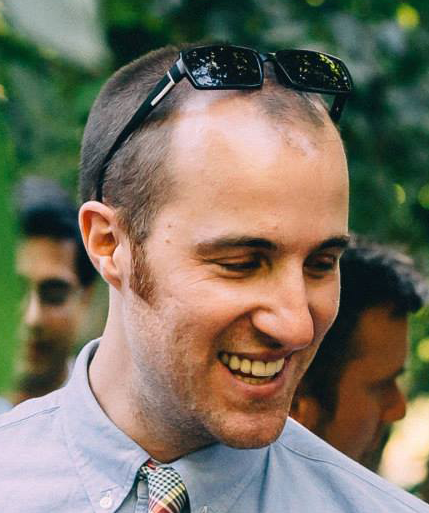 Jascha Sohl-Dickstein合作论文数Anthropic3
 Dmitry Malioutov合作论文数IBM Research;T.J. Watson IBM Research center3
 Sanjay Shakkottai合作论文数Chandra Department of Electrical and Computer Engineering, Cockrell School of Engineering, The University of Texas at Austin3Yujia Chen合作论文数2Sunabha Chatterjee合作论文数2Chai-Wah Wu合作论文数2
 Tyler LaBonte合作论文数School of Industrial & Systems Engineering, Georgia Institute of Technology2
 Emre Acartürk合作论文数Rensselaer Polytechnic Institute2Izzeddin Gür合作论文数Google Research2Tejaswini Pedapati合作论文数IBM Res, Yorktown Hts, NY USA2
 Md. Shad Akhtar合作论文数Department of Computer Science & Engineering, Indraprastha Institute of Information Technology, Delhi2
 Burak Varici合作论文数2
 Nataniel Ruiz合作论文数Google DeepMind2
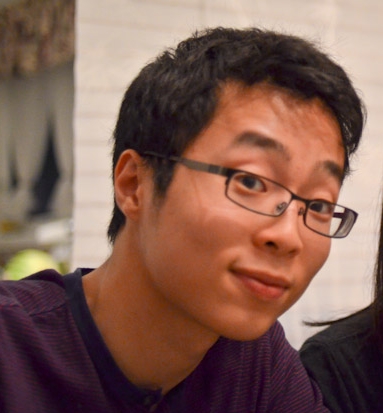 Kelvin Xu合作论文数Google DeepMind2
 Igor Melnyk合作论文数Capital One2
 Alexander A. Alemi合作论文数Anthropic2
 Ben Adlam合作论文数Google2
 Lechao Xiao (萧乐超)合作论文数Google DeepMind2
 Jaehoon Lee合作论文数Anthropic2
 Ali Emami合作论文数1 Institut de Recherches Cliniques de Montréal2
 Yongxi Lu合作论文数Apple Inc2
 Kristen Grauman合作论文数Department of Computer Science, University of Texas at Austin;Facebook AI Research2
 Roman Novak合作论文数OpenAI2
 Yu Cheng (成宇)合作论文数The Chinese University of Hong Kong;Skywork AI2
 Peter X. Liu (刘小平)合作论文数Department of Systems and Computer Engineering, Carleton University2
 Pushpak Bhattacharyya合作论文数Computer Science and Engineering Department, Indian Institute of Technology Bombay-Monash Australia Academy2
 John H. L. Hansen合作论文数Department of Electrical Engineering, Erik Jonsson School of Engineering and Computer Science, The University of Texas at Dallas;Center for Robust Speech Systems, The University of Texas at Dallas;Department of Electrical and Computer Engineering, University of Colorado at Boulder2
 Samuel Thomas合作论文数Thomas J. Watson Research Center, IBM Research AI2
 John D. Co-Reyes合作论文数Google DeepMind2
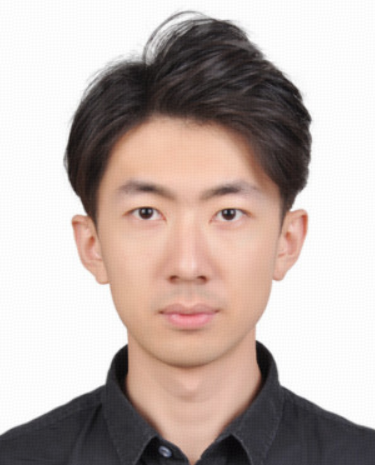 Jiaheng Wei合作论文数Hong Kong University of Science and Technology (Guang Zhou)2
 Brian Kingsbury合作论文数IBM T. J. Watson Research Center2
 Shuangfei Zhai合作论文数Apple2
 Koray Kavukcuoglu合作论文数Google DeepMind;Google2
 Stefano Ermon合作论文数Department of Computer Science, Stanford University;Woods Institute for the Environment, Stanford University;Inception2
 Vikas Sindhwani合作论文数Google2
 Kush R. Varshney合作论文数Trustworthy Machine Intelligence Department, IBM Thomas J. Watson Research Center2
 Ali Tajer合作论文数Rensselaer Polytechnic Institute2




