Meaningful participation in science and engineering practices requires that students make their thinking visible to others and build on one another's ideas. But sharing ideas with others in small groups and classrooms carries social risk, particularly for students from nondominant groups and communities. In this paper, we explore how students' perceptions of classrooms shape their contributions to classroom knowledge building in science across a wide range of classrooms. We examine the claim that when students feel a sense of belonging in class, they contribute more and perceive their ideas to be more influential in knowledge building. Data comes from classroom exit tickets (n = 10,194) administered in 146 classrooms as part of a 10-state field test of a new middle-school science curriculum, OpenSciEd, which were analyzed using mixed effects models. We found that students' sense of belonging predicted the degree to which they contributed ideas out loud in class (Odds ratio = 1.57) as well as the degree to which they perceived their contributions as influencing others (Odds ratio = 1.53). These relationships were particularly strong for students who reported a lower a sense of belonging. We also found significant differences by both race and gender in whether students said they contributed and believed their ideas influenced those of others. These findings suggest that a learner's sense of belonging in class and willingness to contribute may be mutually reinforcing, highlighting the need to promote content-specific strategies to foster belonging in ways that support collaborative knowledge building.
Supporting student interest in science is critical for broadening participation in the field because interest, even more than achievement, is associated with pursuing future science education and careers. In this study, we explore the conjecture that equitable classroom cultures can support interest in science. Specifically, we examine the idea that science classroom cultures that equitably reflect collective enterprise (where students engage collaboratively in scientific sensemaking) and care (where students believe that they are valued and respected members of the classroom community) support students, particularly those from historically marginalized populations, to develop interest in science. The study is part of a field test of a new middle school science curriculum called OpenSciEd. Data consist of survey responses from 847 students across 34 teachers located in nine states. Our analysis employed mixed-effects models to accommodate the nested structure of the data. We found that classrooms vary substantially in the degree to which they reflect collective enterprise and care, indicating that classroom culture is a perceptible and consequential feature of the shared classroom environment. Student background did not predict reports of collective enterprise or care, providing evidence that classrooms in our sample were equitable along these dimensions. Critically, collective enterprise and care are both strongly associated with student-reported interest in science. These findings underscore the importance of attending to classroom culture and the relational aspects of science learning as we seek to expand interest in science, particularly for students from historically marginalized populations.
An increasingly popular form of collaboration involves forming partnerships among researchers, educators, and community members to improve or transform education systems through research inquiry. However, not all partnerships are successful. The field needs valid, reliable, and useful measures to help with assessing progress toward partnership goals. In this community case study, we present a participatory, mixed-methods approach for creating measures to assess the progress of education research-practice partnerships (RPPs). The case illustrates a novel approach to measurement design, driven by perspectives and feedback of over 300 members of 80 partnerships. As a result, the measures align with the values and practices of the very collaborations the measures were intended to assess.
The implementation of equity-oriented reforms is never simply a technical matter: it involves directly engaging with the norms and politics responsible for reproducing inequitable opportunities and outcomes, and with efforts to promote educational justice. To date, there has been little research on how leaders in science education navigate the political environments of schooling to engage in equity work in their local contexts. The current political divisions within and among states regarding teaching about racial equity provide an important and timely context for such study. This study examines equity projects that science education leaders engage in and how these relate to recently passed legislation in several states regarding teaching about race and its ongoing role in shaping American society and institutions. It relies on survey data from science education leaders in 33 states, focusing on their familiarity with and involvement in different kinds of equity projects in science education, along with their perceptions of what supports and what hinders their equity-focused work. Employing a mixed methods approach, including descriptive analysis, hierarchical linear modeling, and thematic analysis, we found that engagement in equity projects varied widely across and within states. However, in states with laws promoting equity, leaders were engaged in more racial equity-related projects than in states with legislation that restrict discussion of matters of race, so-called "gag orders". These findings underscore the significance of the broader political environments in shaping science education leadership and present opportunities for researchers in the field to support leaders in navigating them.
A key goal of science learning today is to support students in posing and answering questions about phenomena that matter to them while establishing a need to grapple with disciplinary ideas and practices reflected in standards. To be successful in this endeavor, teachers need to learn to partner with students on the direction of their learning while remaining attentive to goals for learning reflected in standards. In this paper, we explore the idea that educators' developing knowledge of curricular purposes and structures can help support their enactment of instructional materials that help them balance these two goals. Our study draws on 36 teachers' experiences of learning to teach with instructional materials aligned to the Next Generation Science Standards as part of a field test that included multiple cycles of professional development workshops and enactments. Our findings illustrate how teachers' knowledge of curriculum can help them make sense of their own growth in teaching.
This framework explores the plurality of ways that research-practice partnerships (RPPs) conceptualize issues of equity, and with what consequences for what gets studied, whose voices are included in inquiry, and what knowledge is foregrounded in partnership activity. We draw on institutional theory and the perspectives of members from diverse partnerships to create a framework on the beliefs and practices of equity in RPPs. In terms of their missions, RPPs’ conceptions of equity ranged from a focus on individualism and standardization, to advancing goals of identity, culture, and belonging and attending to power, justice, and anti-racism. Equity was reflected within processes for working together, varying across coordination, collaboration, or transformation of roles and power dynamics. For RPPs, the framework can help develop a common language and shared meanings. For future research, it can serve as an analytic lens to understand when and how RPPs work in service of educational transformation and change.
This symposium brings together eleven projects across three continents to examine notions of disruption in educational research.Historically, notions of disruption have pointed to the ways research leverages innovation and transformative practice.However, amid global pandemic and intersecting unrest, the authors in this session recognize the need for deeper conversation across contexts to understand the ways that educational research in the learning sciences can leverage disruption toward transformational learning.To respond to this year's call for building and sustaining knowledge in community, we seek to foster conversation about the ways that designed for and encountered disruptions act as opportunities for critical reflection and new kinds of engagement in educational research.Together, we examine various notions of disruption as they exist in our disparate work.We seek to provoke meaningful conversations about the ways educational research can embody the contemporary realities of learning with and toward disruption.
The Math Curriculum Impact Study was a large-scale randomized controlled trial (RCT) to test the efficacy of a digital core curriculum for Grade 5 mathematics. Reasoning Mind's Grade 5 Common Core Curriculum was a comprehensive, adaptive, blended learning approach that schools in the treatment group implemented for an entire school year. Schools in the control group implemented their business-as-usual mathematics curriculum. The study was completed in 46 schools throughout West Virginia, resulting in achievement data from 1,919 students. It also included exploratory investigations of teacher practice and student engagement. The main experimental finding was a null result; achievement was similar in both experimental groups. The exploratory investigations help clarify interpretation of this result. As educational leaders throughout the United States adopt digital mathematics curricula and adaptive, blended approaches, our findings provide a relevant caution. However, our findings are not generalizable to all digital offerings, and there is a continuing need for refined theory, study of implementation, and rigorous experimentation to advise schools.
This article presents a case study of scaling up the T-STEM initiative in Texas. Data come from the four-year longitudinal evaluation of the Texas High School Project (THSP). The evaluation studied the implementation and impact of T-STEM and the other THSP reforms using a mixed-methods design, including qualitative case studies; principal, teacher, and student surveys; and a quasi-experimental approach to examining the effects of the programs on student achievement and achievement-related behaviors. The article presents a brief description of T-STEM characteristics and early outcomes on math and science achievement. It then examines variation in the local interpretation and enactment of the blueprint designed to guide T-STEM academy development. A multidimensional infrastructure supported T-STEM implementation and provided needed technical assistance. Yet T-STEM academies' primary affiliations through their district or external support network provided the strongest context for implementation, shaping priorities and affording resources and know-how. The article offers key lessons for policymakers and practitioners engaged in supporting STEM efforts in particular and new school models in general.
As SimCalc targets mathematics achievement goals that lie beyond what many schools today focus on, new assessments are needed to measure what students learn and what teachers must know to support their learning. We provide an overview of how we developed four assessments for the Scaling Up SimCalc project and describe each of the processes we used to document the technical qualities of the assessments. This methodological approach can be used to measure the effectiveness of dynamic mathematics approaches at scale.
The authors praise Foundations for Success: The Final Report of the National Mathematics Advisory Panel (2008) for focusing on the mathematics within mathematics education. They critique the Panel for (a) constraining its analysis to two traditional school courses, (b) isolating independent factors and undervaluing integrated approaches, and (c) overlooking recent insights on mathematics learning. The authors urge others to seek deeper analysis of “mathematics worth knowing,” to integrate multiple resources into instructional approaches, and to delve more deeply into recent learning research.
 William Penuel合作论文数School of Education, University of Colorado Boulder;Institute of Cognitive Science, University of Colorado Boulder10
 Jeremy Roschelle合作论文数Digital Promise6
 Clarissa Deverel-Rico合作论文数3Carol Pazera合作论文数3Robbin Riedy合作论文数3
 Kristina Stamatis合作论文数3
 Caitlin C. Farrell合作论文数Univ Colorado3Anna-Ruth Allen合作论文数3Paula Arce-Trigatti合作论文数2
 Trang C. Tran合作论文数University of Colorado Boulder2
 Andrew Krumm合作论文数Department of Learning Health Sciences, Medical School, University of Michigan;School of Information, University of Michigan2Nicole Shechtman合作论文数2Ung-Sang Lee合作论文数1Jenny Yun-Chen Chan合作论文数1Stephen Sommer合作论文数1
 Ann House合作论文数1Geneva Haertel合作论文数1Jennifer Knudsen合作论文数1Gautam Yadav合作论文数1Line Esborg合作论文数1Viki Young合作论文数1Emily Oswald合作论文数1Vy Ngo合作论文数1Sushil S.合作论文数1
 Zaynab Gates合作论文数1Sarah Wellberg合作论文数1
 Sherice Clarke合作论文数Department of Education Studies, University of California, San Diego1
 David Sherer合作论文数Harvard Univ1
 Alison Fox Resnick合作论文数Coll Educ, Univ Washington1
 Avery Harrison Closser合作论文数Purdue University1Sari Widman合作论文数Sch Educ, Univ Colorado1
 Erin Henrick合作论文数College of Education, Vanderbilt University1
 T Nagashima合作论文数1
 Hannah Smith合作论文数Social Sci & Policy Studies, Worcester Polytech Inst1
 James Soland合作论文数NWEA1
 Erin Ottmar合作论文数Worcester Polytechnic Institute1
 Junnan Yu合作论文数The Little Design Lab, School of Design, The Hong Kong Polytechnic University1
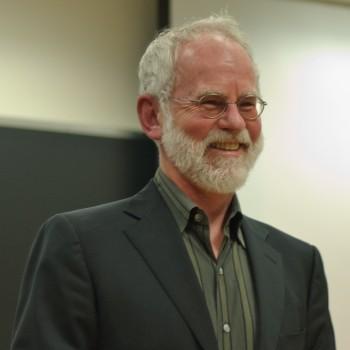 Roy Pea合作论文数Graduate School of Education, Stanford University1Nora Sabelli合作论文数1
 Philip Bell合作论文数College of Education, University of Washington1
 John D. Bransford合作论文数College of Education, University of Washington/NSF LIFE Center1
 Palmyre Pierroux合作论文数University of Oslo1
 Joseph L. Polman合作论文数University of Missouri-St. Louis1Kristin Klopfenstein合作论文数1
 Allison S. Liu合作论文数1
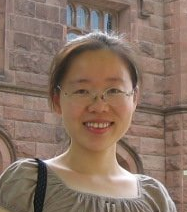 Mingyu Feng合作论文数Department of Computer Science, Worcester Polytechnic Institute1
 Vincent Aleven合作论文数Human-Computer Interaction Institute, Carnegie Mellon University;Creating Adaptive Tutoring Systems Lab, Carnegie Mellon University1




