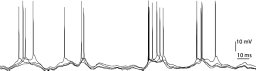
A1 Functional advantages of cell-type heterogeneity in neural circuits
Distraction was previously studied within each dimension separately, i.e., physical, cognitive and visual. However real-world activities usually involve multiple distraction dimensions in terms of brain resources that might conflict with the driving task. This brings difficulties for classifying dimension/type of distraction even for human experts. On the other hand, many subsequent functional blocks do not utilize distraction type information. For example, a pre-collision system usually makes decision based on distraction level rather than distraction type. Therefore this study aims to detect distraction in general regardless of its type, and proposes an effective machine learning algorithm, i.e., Cluster Regularized Extreme Learning Machine (CR-ELM), to detect mixed-type distraction in driving. Compared to traditional machine learning techniques, CR-ELM is designed to handle problems with multiple clusters per class, and provides more accurate detection performance, which could be used for advanced driver assistance systems.
A method (300) for determining a state classifier described. The method (300) comprises determining (304) a plurality of training data sets. Furthermore, the method (300) comprises determining (305, 306), based on the plurality of training data sets weighting values for individual source features, in which a weighting value for a source feature a relevance of this source characteristic for the status indicates classifier, and wherein the weighting values are determined by reducing or increasing an optimization function. The optimization function in this case comprises a first elimination term, the rewards it if all source characteristics of a particular data source (103, 104, 105) a plurality of different data sources (103, 104, 105) are irrelevant to the state classifier. Furthermore, the optimization function comprises a second elimination term, the rewards, when a single origin feature for the state classifier is irrelevant. It can be selected based on the weighting values a relevant subset of the plurality of source characteristics for the state classifier.
In this paper, we proposed a driver drowsiness detection method for which only eyelid movement information was required. The proposed method consists of two major parts. 1) In order to obtain accurate eye openness estimation, a vision-based eye openness recognition method was proposed to obtain an regression model that directly gave degree of eye openness from a low-resolution eye image without complex geometry modeling, which is efficient and robust to degraded image quality. 2) A novel feature extraction method based on unsupervised learning was also proposed to reveal hidden pattern from eyelid movements as well as reduce the feature dimension. The proposed method was evaluated and shown good performance.
Vigilance decrement happens in prolonged and monotonous tasks such as driving, therefore efficient estimation of vigilance using machine learning becomes a growing research field in road safety. However, the ground truth of vigilance level is often unknown. To address the estimation of brain states with unknown ground truth, we proposed an unsupervised manifold clustering method guided by task performance, namely instantaneous lapse rate, without directly using any artificially labels, using electroencephalogram (EEG) as data source. The proposed algorithm utilizes information from both data structure and task performance, which is especially suitable for applications with unknown ground truth. Future research directions include using advanced manifold clustering algorithms to increase the robustness towards the high nonlinearity in the EEG feature space and the embedded space, as well as allowing the mapping from multiple clusters to one vigilance level.
This paper explores the changes in EEG when subjects performed a modified Test of Variables of Attention (TOVA), compared to open eye resting (baseline) state. To recognize these two different brain states, two machine learning algorithms, i.e. extreme learning machine (ELM) and support vector machine (SVM), were applied and compared, using 3 statistical features and 4 power spectral density per channel. The results showed that using all 14 channels, ELM and SVM achieved similar test accuracy of 94.6% and 95.1% respectively (McNemar’s test p = 0.8 > 0.05). Using recursive channel selection, 9 channels (ELM) and 8 channels (SVM) were selected from 14 channels. After channel selection, ELM outperformed SVM significantly (McNemar’s test p = 0.0005 < 0.01) with average test accuracy of 95.0% and 92.5% respectively. The channel rank of each subject was weighted and merged using analytic hierarchical process to obtain a cross-subject ranking, which revealed the close correlation between TOVA and the visual pathway in brain.
 Yan Yang (杨燕)合作论文数School of Computing and Artificial Intelligence, Southwest Jiaotong University5
 Felix Klanner合作论文数5
 Olga Sourina合作论文数Cognitive HCI Lab, FraunhoferIDM Center, Nanyang Technological University;Fraunhofer Singapore4
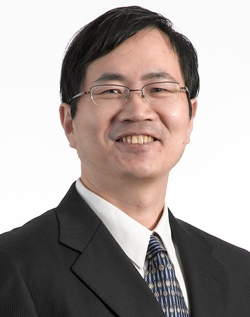 Guang-Bin Huang合作论文数School of Electrical and Electronics Engineering, Nanyang Technological University;Mind PointEye Pte Ltd4
 Ralph H. Rasshofer合作论文数3
 Haoqi Sun合作论文数3Samuel A. Neymotin合作论文数1Jaehyung Kwon合作论文数1Mads Hansen合作论文数1
 Paula Sanz-Leon合作论文数1Hyeonsu Lee合作论文数1Udo A Ernst合作论文数1Andrew R. Gallimore合作论文数1Chungho Lee合作论文数1Alan Diamond合作论文数1Safura Rashid Shomali合作论文数1Won Sup Kim合作论文数1
 Rajnish Ranjan合作论文数1Jinseop S Kim合作论文数1Hoon-Hee Kim合作论文数1Jan Grewe合作论文数1Julia M Warburton合作论文数1Stöckel David合作论文数1Nam Jung合作论文数1
 Petra Ritter合作论文数1Katherine A Holman合作论文数1P. A. Robinson合作论文数1
 Thomas Nowotny合作论文数1Karthik Soman合作论文数1Quinton Skilling合作论文数1
 Sungwoo Ahn合作论文数1
 Dae-Eun Kim合作论文数1
 Hyun Jae Jang合作论文数1
 Maximilian Schmidt合作论文数1Pradeep Kuravi合作论文数1Jeffrey Smith合作论文数1Luziwei Leng合作论文数Huawei Technologies Ltd.1Coralie Fouquet合作论文数1
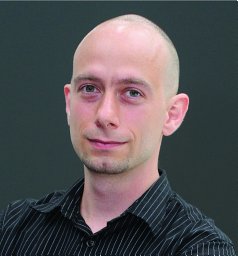 Jaroslav Hlinka合作论文数National Institute of Mental Health1
 Abdorreza Goodarzinick合作论文数Inst Adv Studies Basic Sci, Dept Phys, Zanjan 4513766731, Iran1Julia Goncharenko合作论文数Centre for Computer Science and Informatics Research, University of Hertfordshire1
 Csaba Forró合作论文数Lab Biosensors & Bioelect, Swiss Fed Inst Technol1Pamela Osborn Popp合作论文数Barrow Neurol Inst1
 Felix Fung合作论文数Ctr Integrat Brain Funct, Univ Sydney1
 Philipp Weidel合作论文数Dept Comp Sci Software Engn 3, Rhein Westfal TH Aachen1
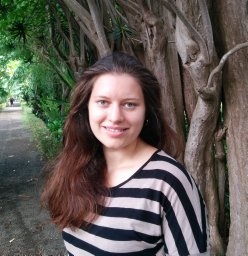 Johanna Senk合作论文数Institute of Neuroscience and Medicine (INM-6) and Institute for Advanced Simulation (IAS-6) and JARA-Institut Brain Structure-Function Relationships (INM-10),, Jülich Research Centre1
 Sat Byul Seo合作论文数Dept Math Educ, Kyungnam Univ1
 Alexandra Pierri Chatzikalymniou合作论文数1Claudia Bachmann合作论文数1




