Object detection in adverse weather has become a major constraint to the development of autonomous driving. This manuscript presents an object detection model for autonomous driving in adverse weather, which combines the advantages of sensor fusion and domain incremental learning. Filter concatenation and convolution are used to perform data-level radar and camera sensor fusion. The fused information is successively segmented and stored through domain incremental learning. The proposed method provides high accuracy and robustness object detection, even in adverse weather, to provide a basis for downstream tasks and ensure driving safety.
Artificial Intelligence (AI) has apparently become one of the most important techniques discovered by humans in history while the human brain is widely recognized as one of the most complex systems in the universe. One fundamental critical question which would affect human sustainability remains open: Will artificial intelligence (AI) evolve to surpass human intelligence in the future? This paper shows that in theory new AI twins with fresh cellular level of AI techniques for neuroscience could approximate the brain and its functioning systems (e.g. perception and cognition functions) with any expected small error and AI without restrictions could surpass human intelligence with probability one in the end. This paper indirectly proves the validity of the conjecture made by Frank Rosenblatt 70 years ago about the potential capabilities of AI, especially in the realm of artificial neural networks. This paper also gives the answer to the two widely discussed fundamental questions: 1) whether AI could have potentials of discovering new principles in nature; 2) whether error backpropagation (BP) algorithm commonly and efficiently used in tuning parameters in AI applications is also adopted in the brain. Intelligence is just one of fortuitous but sophisticated creations of the nature which has not been fully discovered. Like mathematics and physics, with no restrictions artificial intelligence would lead to a new subject with its self-contained systems and principles. We anticipate that this paper opens new doors for 1) AI twins and other AI techniques to be used in cellular level of efficient neuroscience dynamic analysis, functioning analysis of the brain and brain illness solutions; 2) new worldwide collaborative scheme for interdisciplinary teams concurrently working on and modelling different types of neurons and synapses and different level of functioning subsystems of the brain with AI techniques; 3) development of low energy of AI techniques with the aid of fundamental neuroscience properties; and 4) new controllable, explainable and safe AI techniques with reasoning capabilities of discovering principles in nature.
Auditability and verifiability are critical elements in establishing trustworthiness in federated learning (FL). These principles promote transparency, accountability, and independent validation of FL processes. Incorporating auditability and verifiability is imperative for building trust and ensuring the robustness of FL methodologies. Typical FL architectures rely on a trustworthy central authority to manage the FL process. However, reliance on a central authority could become a single point of failure, making it an attractive target for cyber-attacks and insider frauds. Moreover, the central entity lacks auditability and verifiability, which undermines the privacy and security that FL aims to ensure. This article proposes an auditable and verifiable decentralized FL (DFL) framework. We first develop a smart-contract-based monitoring system for DFL participants. This monitoring system is then deployed to each DFL participant and executed when the local model training is initiated. The monitoring system records necessary information during the local training process for auditing purposes. Afterward, each DFL participant sends the local model and monitoring system to the respective blockchain node. The blockchain nodes representing each DFL participant exchange the local models and use the monitoring system to validate each local model. To ensure an auditable and verifiable decentralized aggregation procedure, we record the aggregation steps taken by each blockchain node in the aggregation contract. Following the aggregation phase, each blockchain node applies a multisignature scheme to the aggregated model, producing a globally verifiable model. Based on the signed global model and the aggregation contract, each blockchain node implements a consensus protocol to store the validated global model in tamper-proof storage. To evaluate the performance of our proposed model, we conducted a series of experiments with different machine learning architectures and datasets, including CIFAR-10, F-MNIST, and MedMNIST. The experimental results indicate a slight increase in time consumption compared with the state-of-the-art, serving as a tradeoff to ensure auditability and verifiability. The proposed blockchain-enabled DFL also saves up to 95% communication costs for the participant side.
EDITORIAL article Front. Neurosci., 24 March 2023Sec. Perception Science Volume 17 - 2023 | https://doi.org/10.3389/fnins.2023.1169027
In real life, various degradation scenarios exist that might damage document images, making it harder to recognize and analyze them, thus binarization is a fundamental and crucial step for achieving the most optimal performance in any document analysis task. We propose DocBinFormer (Document Binarization Transformer), a novel two-level vision transformer (TL-ViT) architecture based on vision transformers for effective document image binarization. The presented architecture employs a two-level transformer encoder to effectively capture both global and local feature representation from the input images. These complimentary bi-level features are exploited for efficient document image binarization, resulting in improved results for system-generated as well as handwritten document images in a comprehensive approach. With the absence of convolutional layers, the transformer encoder uses the pixel patches and sub-patches along with their positional information to operate directly on them, while the decoder generates a clean (binarized) output image from the latent representation of the patches. Instead of using a simple vision transformer block to extract information from the image patches, the proposed architecture uses two transformer blocks for greater coverage of the extracted feature space on a global and local scale. The encoded feature representation is used by the decoder block to generate the corresponding binarized output. Extensive experiments on a variety of DIBCO and H-DIBCO benchmarks show that the proposed model outperforms state-of-the-art techniques on four metrics. The source code will be made available at https://github.com/RisabBiswas/DocBinFormer.
Objective: Transcranial direct current stimulation (tDCS) is a non-invasive brain stimulation technique used to generate conduction currents in the head and disrupt brain functions. To rapidly evaluate the tDCS-induced current density in near real-time, this paper proposes a deep learning-based emulator, named DeeptDCS. Methods: The emulator leverages Attention U-net taking the volume conductor models (VCMs) of head tissues as inputs and outputting the three-dimensional current density distribution across the entire head. The electrode configurations are also incorporated into VCMs without increasing the number of input channels; this enables the straightforward incorporation of the non-parametric features of electrodes (e.g., thickness, shape, size, and position) in the training and testing of the proposed emulator. Results: Attention U-net outperforms standard U-net and its other three variants (Residual U-net, Attention Residual U-net, and Multi-scale Residual U-net) in terms of accuracy. The generalization ability of DeeptDCS to non-trained electrode configurations can be greatly enhanced through fine-tuning the model. The computational time required by one emulation via DeeptDCS is a fraction of a second. Conclusion: DeeptDCS is at least two orders of magnitudes faster than a physics-based open-source simulator, while providing satisfactorily accurate results. Significance: The high computational efficiency permits the use of DeeptDCS in applications requiring its repetitive execution, such as uncertainty quantification and optimization studies of tDCS.
Cryptographic misuse such as incorrect use of cipher, key, and other security-related parameters in software products can lead to devastating consequences. While for many developers, the lack of prior experience in applied cryptography could be the cause of crypto misuses, the complexity of a crypto library, bad API design, and the lack of proper documentation and assistant tools are the factors that lead to misuses. In this paper, we conduct a comparative study on cryptographic libraries with regard to their design and usability. We choose nine libraries written in three programming languages as the candidate for the usability study. We pay attention to the design and usability of symmetric encryption APIs with the help of a series of tasks designed to evaluate potential causes of crypto misuses. The experimental results grant us new insights as to what improvements can be made to mitigate crypto misuses and our results serve as a roadmap for library designers to avoid common pitfalls when designing a crypto library in the future.
Currently, illegal parking detection tasks are mainly achieved through manually checking by enforcement officers on patrol or using Closed-Circuit Television (CCTV) cameras. However, these methods either need high human labour costs or demand installation costs and procedures. Therefore, illegal parking detection solutions, which can reduce significant labour and equipment installation costs, are highly demanded. This paper proposes a novel voting based detection algorithm using deep learning networks implemented using in-vehicle cameras to achieve illegal parking detection with multiple offences’ types. Adopting in-vehicle cameras better matches real-world mobile scenarios than using traditional CCTV cameras as this helps enforcement authorities to reduce manpower and installation costs. A well-constructed new dataset with more than 10000 high-quality labelled images with seven object categories is built for illegal parking detection tasks. Additionally, one novel labelling method named “minimal illegal units” is proposed for illegal parking detection. It reduces the time and human labelling costs significantly, achieving a better correlation of a vehicle and its parking type. The experiments have been conducted in the urban areas of Singapore. Furthermore, the illumination robustness test has also been performed to illustrate that the proposed detection algorithm exhibits strong resistance to changing illumination conditions in varied operating environments. Our proposed detection algorithm can provide a benchmark for research in illegal parking detection.
In contrast to traditional adversarial learning (AL) which learns speaker-invariant representations, this paper proposes cascaded adversarial learning (CAL) which learns speaker-invariant emotion data for speaker independent emotion recognition (SIER) tasks. CAL is a dual cascaded network architecture where the output of the transformation network is fed as input to the classification network. Transformation network transforms original speech emotion to speaker-invariant emotion data by implementing an AL strategy with an encoder-decoder architecture. The classification network predicts the emotion from the speaker-invariant emotion data (output of the transformation network). We argue that the speaker-invariant emotion data realized by transformation network has less variation than the original speech emotion data and therefore are conducive for SIER as it improve generalization capability. To our knowledge this is the first time a dual cascaded network has been used for SIER and demonstrate state-of-the-art performances for SIER on Emo-DB and RAVDESS datasets.
The Tracking-by-segmentation framework is widely used in visual tracking to handle severe appearance change such as deformation and occlusion. Tracking-by-segmentation methods first segment the target object from the background, then use the segmentation result to estimate the target state. In existing methods, target segmentation is formulated as a superpixel labeling problem constrained by a target likelihood constraint, a spatial smoothness constraint and a temporal consistency constraint. The target likelihood is calculated by a discriminative part model trained independently from the superpixel labeling framework and updated online using historical tracking results as pseudo-labels. Due to the lack of spatial and temporal constraints and inaccurate pseudo-labels, the discriminative model is unreliable and may lead to tracking failure. This paper addresses the aforementioned problems by integrating the objective function of model training into the target segmentation optimization framework. Thus, during the optimization process, the discriminative model can be constrained by spatial and temporal constraints and provides more accurate target likelihoods for part labeling, and the results produce more reliable pseudo-labels for model learning. Moreover, we also propose a supervision switch mechanism to detect erroneous pseudo-labels caused by a severe change in data distribution and switch the classifier to a semi-supervised setting in such a case. Evaluation results on OTB2013, OTB2015 and TC-128 benchmarks demonstrate the effectiveness of the proposed tracking algorithm.
Accurate motion object detection (MOD) using in-vehicle cameras in driving vehicles is a challenging task. Several deep learning based motion segmentation approaches have been reported based on the interpretable optical flow feature. However, the interpretable optical flow feature has not been explored by object-level MOD approaches. In this paper, we propose a motion embedding pipeline (MEP) architecture that utilizes interpretable optical flow and deep learning to solve object-level MOD problems. The MEP is a three-stage pipeline that consists of an object detector, a novel feature extraction algorithm to capture relative motion between objects and the background, as well as a motion predictor for representation learning with stacked autoencoder to determine motions. A new dataset, Singapore motion object detection (SG-MOD) dataset is constructed in this work with much larger variations in urban environments. Experimental results show that the proposed MEP outperforms other pipeline-based architecture and deep learning based approaches on the SG-MOD and KITTI-MOD datasets in most metrics.
In this paper, we propose a novel transductive pseudo-labeling based method for deep semi-supervised image recognition. Inspired from the superiority of pseudo labels inferred by label propagation compared with those inferred from network, we argue that information flow from labeled data to unlabeled data should be kept noiseless and with minimum loss. Previous research works use scarce labeled data for feature learning and solely consider the relationship between two feature vectors to construct the similarity graph in feature space, which causes two problems that ultimately lead to noisy and incomplete information flow from labeled data to unlabeled data. The first problem is that the learned feature mapping is highly likely to be biased and can easily over-fit noise. The second problem is the loss of local geometry information in feature space during label propagation. Accordingly, we firstly propose to incorporate self-supervised learning into feature learning for cleaner information flow in feature space during subsequent label propagation. Secondly, we propose to use reconstruction concept to measure pairwise similarity in feature space, such that local geometry information can be preserved. Ablation study confirms synergistic effects from features learned with self-supervision and similarity graph with local geometry preserving. Extensive experiments conducted on benchmark datasets have verified the effectiveness of our proposed method.
Semi-supervised learning has largely alleviated the strong demand for large amount of annotations in deep learning. However, most of the methods have adopted a common assumption that there is always labeled data from the same class of unlabeled data, which is impractical and restricted for real-world applications. In this research work, our focus is on semi-supervised learning when the categories of unlabeled data and labeled data are disjoint from each other. The main challenge is how to effectively leverage knowledge in labeled data to unlabeled data when they are independent from each other, and not belonging to the same categories. Previous state-of-the-art methods have proposed to construct pairwise similarity pseudo labels as supervising signals. However, two issues are commonly inherent in these methods: (1) All of previous methods are comprised of multiple training phases, which makes it difficult to train the model in an end-to-end fashion. (2) Strong dependence on the quality of pairwise similarity pseudo labels limits the performance as pseudo labels are vulnerable to noise and bias. Therefore, we propose to exploit the use of self-supervision as auxiliary task during model training such that labeled data and unlabeled data will share the same set of surrogate labels and overall supervising signals can have strong regularization. By doing so, all modules in the proposed algorithm can be trained simultaneously, which will boost the learning capability as end-to-end learning can be achieved. Moreover, we propose to utilize local structure information in feature space during pairwise pseudo label construction, as local properties are more robust to noise. Extensive experiments have been conducted on three frequently used visual datasets, i.e., CIFAR-10, CIFAR-100 and SVHN, in this paper. Experiment results have indicated the effectiveness of our proposed algorithm as we have achieved new state-of-the-art performance for novel visual categories learning for these three datasets.
Considering that vehicle exhaust contributes to the majority of nitrogen oxides (NOx), which is harmful to environment and climate, it is important to measure NOx concentrations in sustainable developments. This article proposes to apply spectroscopic gas sensing methods and an innovative deep learning network algorithm for obtaining high-precision NOx data. The adopted mid-infrared sensor technology is based on mid-infrared spectroscopy combined with an advanced substrate-integrated hollow waveguide (iHWG) sensing interface. Using extreme learning machine (ELM) algorithms with an exceptionally fast learning speed when dealing with big data problems next to excellent generalization abilities, a deep learning network for regressing NOx concentrations was implemented. Moreover, to further improve the regression performance the proposed deep ELM was provided with features derived from supervised learning improving its ability to address target constituents. Finally, experiments with gas mixtures containing three species relevant in exhaust emission monitoring have confirmed the utility of the developed approach.
This paper proposes DeeptDCS, a deep learning-based real-time emulator to estimate the currents induced during the transcranial direct current stimulation (tDCS). The DeeptDCS takes the volume conductor model of a human head and the excitation parameters as inputs and provides the tDCS-induced three-dimensional current density across the whole head as output. The DeeptDCS obtains the current density more than 112x faster than the finite element-based open-source SimNIBS simulator while achieving a mean absolute error less than 0.1%.
Adaptively adjusting the graph, by taking the clustering capability into consideration, has become popular in graph-based clustering methods and extended to multiview clustering problem. Existing methods learn the graph from pairwise distances of the data in the original space or a linearly projected space, which requires that those representations can finely reflect the implicit data structure. However, the data structure in high-dimensional space may not always lie on a linear manifold, and this problem becomes more critical in multiview conditions. Aim at this, we propose a multiview clustering method based on adaptive graph and dual distance. Specifically, we fuse the distances computed from nonlinear embedding space and original space. An adaptive graph is then constructed based on the fused distance, and it is more reliable for multiview clustering. In our approach, the clustering result with exact number of clusters can be found without post-processing. We evaluate the proposed method on several multiview datasets, the experimental results show our approach is superior to the state-of-the-art multiview clustering methods.
Convolutional dictionary learning (CDL) aims to learn a structured and shift-invariant dictionary to decompose signals into sparse representations. While yielding superior results compared to traditional sparse coding methods on various signal and image processing tasks, most CDL methods have difficulties handling large data, because they have to process all images in the dataset in a single pass. Therefore, recent research has focused on online CDL (OCDL) which updates the dictionary with sequentially incoming signals. In this article, a novel OCDL algorithm is proposed based on a local, slice-based representation of sparse codes. Such representation has been found useful in batch CDL problems, where the convolutional sparse coding and dictionary learning problem could be handled in a local way similar to traditional sparse coding problems, but it has never been explored under online scenarios before. We show, in this article, that the proposed algorithm is a natural extension of the traditional patch-based online dictionary learning algorithm, and the dictionary is updated in a similar memory efficient way too. On the other hand, it can be viewed as an improvement of existing second-order OCDL algorithms. Theoretical analysis shows that our algorithm converges and has lower time complexity than existing counterpart that yields exactly the same output. Extensive experiments are performed on various benchmarking datasets, which show that our algorithm outperforms state-of-the-art batch and OCDL algorithms in terms of reconstruction objectives.
Principal component analysis network (PCANet), as an unsupervised shallow network, demonstrates noticeable effectiveness on datasets of various volumes. It carries a two-layer convolution with PCA as filter learning method, followed by a block-wise histogram post-processing stage. Following the structure of PCANet, extreme learning machine auto-encoder (ELM-AE) variants are employed to replace the PCA's role, which come from extreme learning machine network (ELMNet) and hierarchical ELMNet. ELMNet emphasizes the importance of orthogonal projection while overlooking non-linearity. The latter introduces complex pre-processing to overcome drawback of non-linear ELM-AE. In this paper, we analyze intrinsic characteristics of ELM-AE variants and accordingly propose a regularized ELM-AE, which combines non-linearity learning capability and approximately orthogonal projection. Experiments on image classification show the effectiveness compared to supervised convolutional neural networks and related shallow networks on unsupervised feature learning.
The prosperity of artificial intelligence has aroused intensive interests in intelligent/autonomous navigation, in which path prediction is a key functionality for decision supports, e.g. route planning, collision warning, and traffic regulation. For maritime intelligence, Automatic Identification System (AIS) plays an important role because it recently has been made compulsory for large international commercial vessels and is able to provide nearly real-time information of the vessel. Therefore AIS data based vessel path prediction is a promising way in future maritime intelligence. However, real-world AIS data collected online are just highly irregular trajectory segments (AIS message sequences) from different types of vessels and geographical regions, with possibly very low data quality. So even there are some works studying how to build a path prediction model using historical AIS data, but still, it is a very challenging problem. In this paper, we propose a comprehensive framework to model massive historical AIS trajectory segments for accurate vessel path prediction. Experimental comparisons with existing popular methods are made to validate the proposed approach and results show that our approach could outperform the baseline methods by a wide margin.
 Penn LIN合作论文数School of Electrical & Electronic Engineering, Nanyang Technological University29
 Narasimhan Sundararajan合作论文数School of Electrical & Electronic Engineering, Nanyang Technological University22
 Paramasivan Saratchandran合作论文数Nanyang Technology University20
 Dongshun Cui合作论文数Nanyang Technol Univ, Interdisciplinary Grad Sch, Energy Res Inst NTU, ERI N, Singapore 639798, Singapore17
 Chee Kheong Siew合作论文数Information Communication Institute of Singapore, School of Electrical and Electronic Engineering, Nanyang Technological University16
 Chenwei Deng (邓宸伟)合作论文数School of Information and Electronics, Beijing Institute of Technology14
 Yuan Lan (兰媛)合作论文数College of Mechanical and Vehicle Engineering, Taiyuan University of Technology14
 Tianchi Liu合作论文数Nanyang Technol Univ, Sch Elect & Elect Engn, Singapore 639798, Singapore13Chamara Kasun Liyanaarachchi Lekamalage合作论文数12
 Guanghao Zhang合作论文数12
 Soh Yeng Chai合作论文数School of Electrical & Electronic Engineering, Nanyang Technological University12Yijie Zeng合作论文数Nanyang Technological University11
 Hongming Zhou合作论文数Herman B Wells Center for Pediatric Research, Indiana University School of Medicine11
 Yue Li合作论文数9
 Yan Yang (杨燕)合作论文数School of Computing and Artificial Intelligence, Southwest Jiaotong University9
 Baojun Zhao (赵保军)合作论文数School of Information and Electronics, Beljing Institute of Technology8
 Olga Sourina合作论文数Cognitive HCI Lab, FraunhoferIDM Center, Nanyang Technological University;Fraunhofer Singapore8
 Amaury Lendasse合作论文数Aalto University, School of Science and Technology, Department of Information and Computer Science8
 Shangbo Mao合作论文数Corporate Lab, Rolls-Royce@NTU7Ji-chao CHEN (陈继超)合作论文数7Zuo Bai合作论文数7
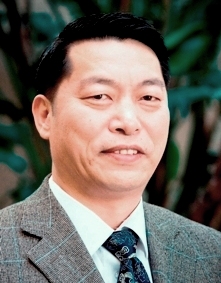 Dianhui Wang (王殿辉)合作论文数School of Information and Control Engineering, China University of Mining and Technology;Department of Computer Science and Information Technology, La Trobe University7
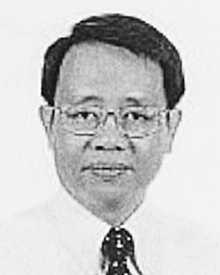 Wee Ser合作论文数Sch Elect & Elect Engn, Nanyang Technol Univ7
 Marcus Eng Hock Ong (王英福)合作论文数Department Of Emergency Medicine, Singapore General Hospital7
 Erik Cambria合作论文数School of Computer Science and Engineering, Nanyang Technological University;SenticNet7
 Haoqi Sun合作论文数7
 Shuigen Wang (王水根)合作论文数6
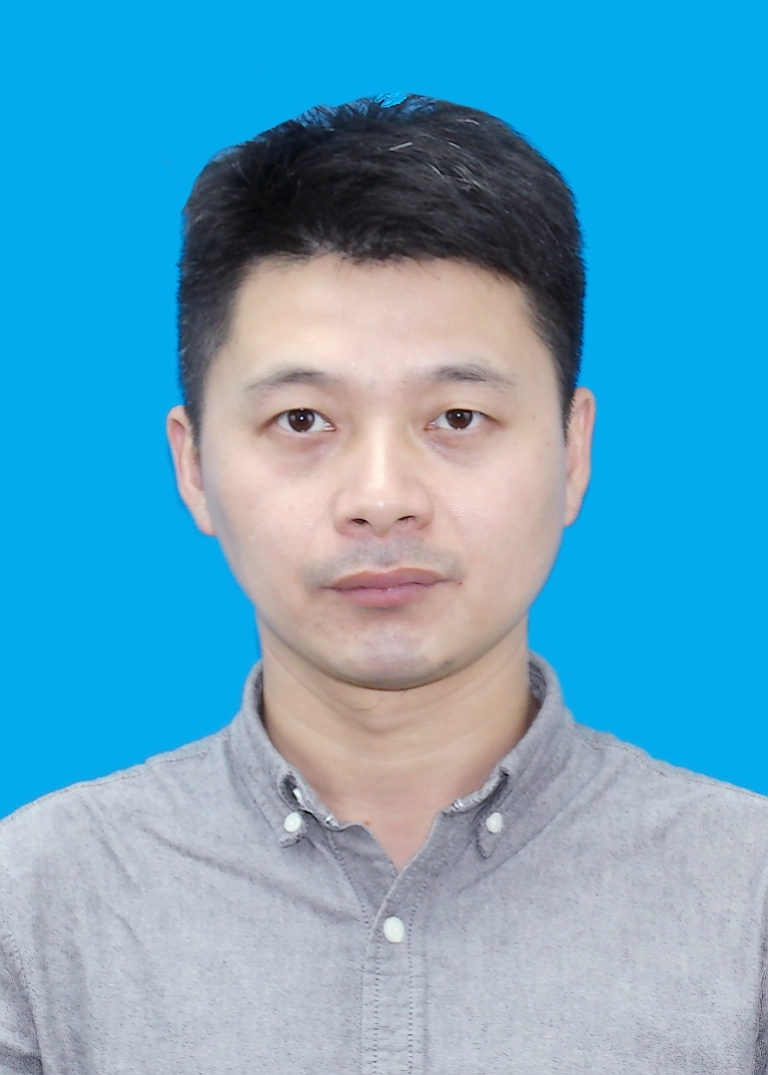 Jiuwen Cao (曹九稳)合作论文数School of Automation, Hangzhou Dianzi University;Artificial Intelligence Institute, Hangzhou Dianzi University6
 Chi Man Vong (黃志文)合作论文数Faculty of Science and Technology,University of Macau6
 Weiwei Zong合作论文数School of Electrical and Electronic Engineering, Nanyang Technological University6
 Kezhi Mao合作论文数School of Electrical and Electronic Engineering, College of Engineering, Nanyang Technological University6
 Yoan Miche合作论文数Network Security Research Department, Nokia Bell Labs6
 Kai Hu (胡凯)合作论文数School of Computer Science, Xiangtan University5
 Xiaofan Jia合作论文数School of Electrical and Electronic Engineering, Nanyang Technological University5
 Yuanyuan Qing合作论文数School of Electrical and Electronic Engineering, Nanyang Technological University, Singapore 639798, Singapore5
 Yew-Soon Ong合作论文数College of Computing and Data Science, Nanyang Technological University;School of Computer Science and Engineering, Nanyang Technological University;Centre for Frontier Al Research, Agency for Science, Technology and Research5
 Lei Chen (陈磊)合作论文数Sensetime5
 Haroon A. Babri合作论文数School of Electrical and Electronic Engineering, Nanyang Technological University5Ming-Bin Li (李明滨)合作论文数5
 Lim Meng Hiot合作论文数School of Electrical and Electronic Engineering, Nanyang Technological University;Centre for Financial Engineering, Nanyang Business School, Nanyang Technological University5Qingping Lin合作论文数Information Communication Institute of Singapore, School of Electrical & Electronic Engineering, Nanyang Technological University5
 Cornelia Denk合作论文数4
 Jiexiong Tang合作论文数KTH Royal Institute of Technology4
 Kar-Ann Toh合作论文数School of Electrical & Electronic Engineering, Yonsei University4
 Enmei Tu合作论文数4
 Weisi Lin合作论文数School of Computer Science and Engineering, Nanyang Technological University;College of Computing and Data Science, Nanyang Technological University4
 Zongben Xu (徐宗本)合作论文数Institute for Information and System Sciences, School of Mathematics and Statistics, Xi'an Jiaotong University4
 Lily Rachmawati合作论文数National University of Singapore4




