The neutron portal operator provides a theoretically motivated connection between the visible and dark sectors and features in several well-studied asymmetric dark matter models. This operator leads to dark matter induced nucleon decays that mimic the experimental signature of "ordinary" nucleon decays. In this work, we reinterpret Super-Kamiokande nucleon decay searches for n -* r0v and p -* r+v to constrain dark matter induced nucleon decays. For GeV-scale dark matter, we obtain lower bounds of O(1 TeV) on the scale of the effective neutron portal operator. We also discuss the prospects for future searches at HyperKamiokande and highlight the importance of a dedicated experimental analysis with reduced systematic uncertainties.
We present a new scenario of freeze-in, where the dark matter is produced exclusively via the annihilation of photons. We study fermionic and scalar dark matter models with a focus on cosmological histories with low reheat temperatures. Photonic freeze-in can be probed via direct detection, dark matter production in SN1987A, and via the production of new electromagnetically charged states at the LHC. We briefly discuss UV-complete models that can realize this scenario.
Asymmetric dark matter is a well-motivated approach to explain the apparent coincidence between the relic densities of visible and dark matter, Ω_D ≃ 5.4Ω_b. A complete explanation requires two components, a relation between the particle masses of the dark and visible matter, and a second relation between the number densities in each sector. In this work, we propose a new mechanism to address the former. We consider an extended SU(3)_1 × SU(3)_2 colour group in the visible sector, with QCD embedded as the diagonal subgroup. A ℤ_2 exchange symmetry then relates SU(3)_2 to a dark, confining SU(3)_D sector. The dark matter is a composite state of dark fermions transforming in the fundamental representation of SU(3)_D. The spontaneously broken ℤ_2 symmetry ultimately leads to a relation between the QCD and dark gauge couplings which, for suitable field content, gives rise to confinement scales of the same order of magnitude. The mechanism leads to a rich particle spectrum above the TeV scale which could be probed at future experiments. The model also naturally includes an axion solution to the strong CP problem.
We derive new bounds on hadronically interacting, sub-GeV mass dark matter. First, we show that oneloop interactions with photons can be sufficient to maintain equilibrium between the dark matter and Standard Model sectors at MeV temperatures, resulting in constraints from big bang nucleosynthesis. Using chiral perturbation theory, we find that this leads to an upper bound on the dark-matter-nucleon scattering cross section that is orders of magnitude stronger than existing astrophysical constraints. Furthermore, we show that even if these interactions remain out of equilibrium, there is an irreducible freeze-in abundance of dark matter that can easily overclose the universe. We also compute new bounds from rare kaon decays that can provide even stronger constraints. Our results have significant implications for future direct detection experiments aiming to search for MeV-scale dark matter.
We derive conservative upper limits on the dark-matter–nucleon scattering cross-section for sub-GeV mass dark matter. Working exclusively within the low-energy chiral effective theory, we derive bounds that are independent of the details of the dark matter interactions in the UV. Dark matter that interacts only hadronically at leading order also inevitably interacts with photons or electrons at next-to-leading-order. We show that these electromagnetic interactions lead to strong constraints from big bang nucleosynthesis and over-production of dark matter via freeze-in at low temperatures, while the leading-order hadronic couplings face stringent constraints from meson decays. Combining these constraints, we rule out both spin-independent and spin-dependent dark-matter–nucleon scattering cross-sections ≳ 10^-36 cm^2 for dark matter masses in the keV - 100 MeV range. These bounds are several orders of magnitude stronger than the existing constraints from astrophysics and cosmology and have significant implications for future low-mass direct detection experiments.
We provide an exhaustive classification of three-family DFSZ axion models that have no cosmological domain wall problem. This result is obtained by making the Peccei-Quinn symmetry flavour dependent in certain specific ways, thus reinforcing a possible connection between the strong CP problem and the flavour puzzle. Known DFSZ flavour variants such as the top-specific model emerge as special cases. Key features of the phenomenology of these models are briefly discussed.
An ongoing challenge in dark matter direct detection is to improve the sensitivity to light dark matter in the MeV--GeV mass range. One proposal is to dope a liquid noble-element direct detection experiment with a lighter element such as hydrogen. This has the advantage of enabling larger recoil energies compared to scattering on a heavy target, while leveraging existing detector technologies. Direct detection experiments can also extend their reach to lower masses by exploiting the Migdal effect, where a nuclear recoil leads to electronic ionisation or excitation. In this work we combine these ideas to study the sensitivity of a hydrogen-doped LZ experiment (HydroX), and a future large-scale experiment such as XLZD. We find that HydroX could have sensitivity to dark matter masses as low as 5~MeV for both spin-independent and spin-dependent scattering, with XLZD extending that reach to lower cross sections. Notably, this technique substantially enhances the sensitivity of direct detection to spin-dependent proton scattering, well beyond the reach of any current experiments.
The absorption of fermionic dark matter has recently been studied as a signature for the direct detection of dark matter. We construct the first UV completion of the scalar effective operator associated with this signature. We calculate the constraints on the model and demonstrate there is viable parameter space which can be probed by a next-generation experiment such as XLZD. We also consider the cosmological history of our model and show that the correct relic abundance can be obtained via freeze-out in the dark sector. However, within this minimal model, we find that the absorption signal is highly suppressed in the parameter space that yields the correct relic abundance.
We propose the Optomechanical Dark-matter INstrument (ODIN), based on a new method for the direct detection of low-mass dark matter. We consider dark matter interacting with superfluid helium in an optomechanical cavity. Using an effective field theory, we calculate the rate at which dark matter scatters off phonons in a highly populated, driven acoustic mode of the cavity. This scattering process deposits a phonon into a second acoustic mode in its ground state. The deposited phonon ($\mu$eV range) is then converted to a photon (eV range) via an optomechanical interaction with a pump laser. This photon can be efficiently detected, providing a means to sensitively probe keV scale dark matter. We provide realistic estimates of the backgrounds and discuss the technical challenges associated with such an experiment. We calculate projected limits on dark matter-nucleon interactions for dark matter masses ranging from 0.5 to 300 keV and estimate that a future device could probe cross-sections as low as $\mathcal{O}(10^{-32})$ cm$^2$.
We identify the QCD axion and right-handed (sterile) neutrinos as bound states of an SU(5) chiral gauge theory with Peccei-Quinn (PQ) symmetry arising as a global symmetry of the strong dynamics. The strong dynamics is assumed to spontaneously break the PQ symmetry, producing a high-quality axion and naturally generating Majorana masses for the right-handed neutrinos at the PQ scale. The composite sterile neutrinos can directly couple to the left-handed (active) neutrinos, realizing a standard see-saw mechanism. Alternatively, the sterile neutrinos can couple to the active neutrinos via a naturally small mass mixing with additional elementary states, leading to light sterile neutrino eigenstates. The SU(5) strong dynamics therefore provides a common origin for a high-quality QCD axion and sterile neutrinos.
The scattering of neutral particles by an atomic nucleus can lead to electronic ionisation and excitation through a process known as the Migdal effect. We revisit and improve upon previous calculations of the Migdal effect, using the Dirac-Hartree-Fock method to calculate the atomic wavefunctions. Our methods do not rely on the use of the dipole approximation, allowing us to present robust results for higher nuclear recoil velocities than was previously possible. Our calculations provide the theoretical foundations for future measurements of the Migdal effect using neutron sources, and searches for dark matter in direct detection experiments. We show that multiple ionisation must be taken into account in experiments with fast neutrons, and derive the semi-inclusive probability for processes that yield a hard electron above a defined energy threshold. We present results for the noble elements up to and including xenon, as well as carbon, fluorine, silicon and germanium. The transition probabilities from our calculations are publicly available.
We present a five-dimensional (5D) axion-neutrino model that explains the Standard Model fermion mass hierarchy and flavor structure, while simultaneously generating a high-quality axion. The axion and right-handed neutrinos transform under a 5D Peccei-Quinn gauge symmetry, and have highly suppressed profiles on the UV brane where the symmetry is explicitly broken. This setup allows neutrinos to be either Dirac or Majorana with hierarchically small sterile neutrino masses. The axion decay constant originates from the IR scale, which in the holographically dual four-dimensional description corresponds to the confinement scale of some new strong dynamics with a high-quality global Peccei-Quinn symmetry that produces a composite axion and light, composite sterile neutrinos. The sterile neutrinos could be observed in astrophysical or laboratory experiments, and the model predicts specific axion-neutrino couplings.
We demonstrate that the recent measurement of the anomalous magnetic moment of the muon and dark matter can be simultaneously explained within the Minimal Supersymmetric Standard Model. Dark matter is a mostly-bino state, with the relic abundance obtained via co-annihilations with either the sleptons or wino. The most interesting regions of parameter space will be tested by the next generation of dark matter direct detection experiments.
We investigate the possibility that both dark matter and the long-standing discrepancy in the anomalous magnetic moment of the muon may be explained within the MSSM. In light of the stringent bounds from direct detection, we argue that the most promising viable scenarios have bino-like dark matter produced via either bino-wino or bino-slepton co-annihilation. We find that the combination of next-generation direct detection experiments and the LHC will be able to probe much of the interesting parameter space, however a future high-energy collider is needed to comprehensively explore this scenario.
A bstract Recent measurements of the Higgs-muon coupling are directly probing muon mass generation for the first time. We classify minimal models with a one-loop radiative mass mechanism and show that benchmark models are consistent with current experimental results. We find that these models are best probed by measurements of ( g − 2) μ , even when taking into account the precision of Higgs measurements expected at future colliders. The current ( g − 2) μ anomaly, if confirmed, could therefore be a first hint that the muon mass has a radiative origin.
Precision measurements of the Higgs couplings are, for the first time, directly probing the mechanism of fermion mass generation. The purpose of this work is to determine to what extent these measurements can distinguish between the tree-level mechanism of the Standard Model and the theoretically motivated alternative of radiative mass generation. Focusing on the third-family, we classify the minimal one-loop models and find that they fall into two general classes. By exploring several benchmark models in detail, we demonstrate that a radiative origin for the tau-lepton and bottom-quark masses is consistent with current observations. While future colliders will not be able to rule out a radiative origin, they can probe interesting regions of parameter space.
We consider a 5D extension of the DFSZ axion model that addresses both the axion quality and fermion mass hierarchy problems, and predicts flavour-dependent, off-diagonal axion-fermion couplings. The axion is part of a 5D complex scalar field charged under a U(1)PQ symmetry that is spontaneously broken in the bulk, and is insensitive to explicit PQ breaking on the UV boundary. Bulk Standard Model fermions interact with two Higgs doublets that can be localized on the UV boundary or propagate in the bulk to explain the fermion masses and mixings. When the Higgs doublets are localized on the UV boundary, they induce flavour diagonal couplings between the fermions and the axion. However, when the Higgs doublets propagate in the bulk, the overlap of the axion and fermion profiles generates flavour off-diagonal couplings. The effective scale of these off-diagonal couplings in both the quark and lepton sectors can be as small as 1011 GeV, and therefore will be probed in future precision flavour experiments.
For direct detection of sub-MeV dark matter, a promising strategy is to search for individual phonon excitations in a crystal. We perform an analytic calculation of the rate for light dark matter (keV < m(DM) < MeV) to produce two acoustic phonons through scattering in cubic crystals such as GaAs, Ge, Si, and diamond. The multiphonon rate is always smaller than the rate to produce a single optical phonon, whenever the latter is kinematically accessible. In Si and diamond, there is a dark matter mass range for which multiphonon production can be the most promising process, depending on the experimental threshold.
Generically, the effective coupling between the dark matter and an atom scales with the number of constituents in the atom, resulting in the effective coupling being proportional to the mass of the atom. In this limit, when the momentum transfer is also small, we show that the leading term in the scattering of a particle off the optical phonons of an array of atoms, whether in a crystal or in a molecule, vanishes. Next-generation dark matter direct detection experiments with sub-eV energy thresholds will operate in a regime where this effect is important, and the suppression can be up to order $10^6$ over naive expectations. For dark matter that couples differently to protons and neutrons, the suppression is typically of order $10-100$ but can be avoided through a judicious choice of material, utilising variations in nuclear ratios $Z/A$ to break the proportionality of the coupling to mass. We provide explicit illustrations of this effect by calculating structure factors for di-molecules and for the crystals NaI and sapphire.
We examine the theoretical motivations for long-lived particle (LLP) signals at the LHC in a comprehensive survey of standard model (SM) extensions. LLPs are a common prediction of a wide range of theories that address unsolved fundamental mysteries such as naturalness, dark matter, baryogenesis and neutrino masses, and represent a natural and generic possibility for physics beyond the SM (BSM). In most cases the LLP lifetime can be treated as a free parameter from the [Formula: see text]m scale up to the Big Bang Nucleosynthesis limit of [Formula: see text] m. Neutral LLPs with lifetimes above [Formula: see text]100 m are particularly difficult to probe, as the sensitivity of the LHC main detectors is limited by challenging backgrounds, triggers, and small acceptances. MATHUSLA is a proposal for a minimally instrumented, large-volume surface detector near ATLAS or CMS. It would search for neutral LLPs produced in HL-LHC collisions by reconstructing displaced vertices (DVs) in a low-background environment, extending the sensitivity of the main detectors by orders of magnitude in the long-lifetime regime. We study the LLP physics opportunities afforded by a MATHUSLA-like detector at the HL-LHC, assuming backgrounds can be rejected as expected. We develop a model-independent approach to describe the sensitivity of MATHUSLA to BSM LLP signals, and compare it to DV and missing energy searches at ATLAS or CMS. We then explore the BSM motivations for LLPs in considerable detail, presenting a large number of new sensitivity studies. While our discussion is especially oriented towards the long-lifetime regime at MATHUSLA, this survey underlines the importance of a varied LLP search program at the LHC in general. By synthesizing these results into a general discussion of the top-down and bottom-up motivations for LLP searches, it is our aim to demonstrate the exceptional strength and breadth of the physics case for the construction of the MATHUSLA detector.
 Chengcheng Han (韩成成)合作论文数School of Physics, Sun Yat-sen University7
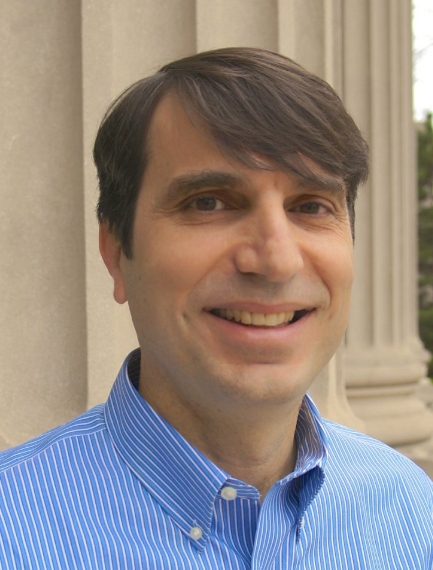 Tony Gherghetta合作论文数School of Physics and Astronomy, College of Science and Engineering, University of Minnesota7
 Tsutomu Yanagida合作论文数Particle and Nuclear Physics Division, Tsung-Dao Lee Institute, Shanghai Jiao Tong University7
 Matthew Dolan合作论文数School of Physics, Faculty of Science, The University of Melbourne6
 Andrew Spray合作论文数Pace Revenue Management5
 Raymond Volkas合作论文数School of Physics, University of Melbourne3
 Anibal Medina合作论文数Department of Physics;University of California;Department of Physics, University of California3
 Tom Melia合作论文数3Tirtha Sankar Ray合作论文数Saha Institute of Nuclear Physics3
 Rodrigo Alonso合作论文数2
 Minh D. Nguyen合作论文数Sch Phys & Astron, Univ Minnesota2
 Michael Baker合作论文数School of Physics, Faculty of Science, The University of Melbourne2
 Andrea Thamm合作论文数College of Natural Sciences, University of Massachusetts Amherst2Simon Knapen合作论文数Instituut voor, Katholieke Universiteit Leuven2Emiliano Molinaro合作论文数1
 Emmanuel Olaiya合作论文数Rutherford Appleton Laboratory, Science and Technology Facilities Council;Particle Physics Department, Science and Technology Facilities Council1Juan Carlos Arteaga Velazquez合作论文数1Joshua Wood合作论文数1Alexander C. Ritter合作论文数1Martin A. Subieta Vasquez合作论文数1Anthony Fradette合作论文数1Jeff A. Dror合作论文数1
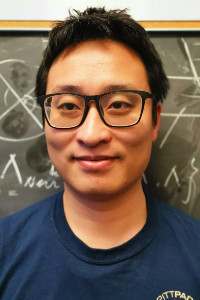 Zhen Liu合作论文数School of Physics and Astronomy, College of Science and Engineering, University of Minnesota1
 Arturo Fernandez Tellez合作论文数Facultad de Ciencias FísicoMatemáticas, Benemérita Universidad Autónoma de Puebla1Jae Hyeok Chang合作论文数1Nikita Blinov合作论文数1Brian Campbell-Deem合作论文数1Karen S. Caballero Mora合作论文数1
 Arpon Paul合作论文数The Abdus Salam International Centre for Theoretical Physics1
 Seyda Ipek合作论文数Carleton Univ1David Pinner合作论文数1
 Tongyan Lin合作论文数Department of Physics, University of California, San Diego1Matthias Schlaffer合作论文数1Claire Shepherd-Themistocleous合作论文数1
 Salvator Lombardo合作论文数Cornell University1Charles Young合作论文数1
 Oliver Fischer合作论文数University of Liverpool1Quentin Bonnefoy合作论文数1
 Avirup Ghosh合作论文数1
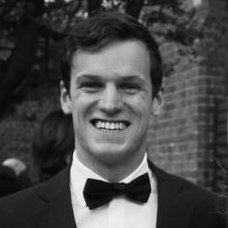 jackson d clarke合作论文数the TerascaleSchool of Physics, University of Melbourne1Elina Fuchs合作论文数1
 Raymond Tung-Ming Co合作论文数1
 Olcyr Sumensari合作论文数IJCLab, Université Paris-Saclay1
 Yuhsin Tsai合作论文数Dept Phys, Univ Notre Dame1
 David Curtin合作论文数Department of Physics, Faculty of Arts and Science, University of Toronto1
 Alexander Kusenko合作论文数Physics & Astronomy Department, College of Life Sciences, University of California1
 Christopher Baker合作论文数School of Mathematics and Physics, Faculty of Science, The University of Queensland1
 Jayden Newstead合作论文数School of Physics, Faculty of Science, The University of Melbourne1
 Nicole Bell合作论文数School of Physics, The University of Melbourne;ARC Centre of Excellence for Dark Matter Particle Physics;ARC Centre of Excellence for Particle Physics at the Terascale1




