The KM3NeT experiment has recently observed a neutrino with an energy around 100PeV, and IceCube has detected five neutrinos with energies above 1PeV. While there are no known astrophysical sources, exploding primordial black holes could have produced these high-energy neutrinos. For Schwarzschild black holes this interpretation results in tensions between the burst rates inferred from the KM3NeT and IceCube observations, with indirect constraints from the extragalactic gamma ray background and with the non-observation of an associated gamma ray signal at LHAASO. In this letter we show that if there is a population of primordial black holes charged under a new dark u(1) symmetry which spend most of their time in a quasi-extremal state, the neutrino emission at 1PeV may be more suppressed than at 100PeV. The burst rates implied by the KM3NeT and IceCube observations and the indirect constraints can then all be consistent at 1σ, and no associated gamma-ray signal was expected at LHAASO. Furthermore, these black holes could constitute all of the observed dark matter in the universe.
We discuss the possibility of forming primordial black holes during a first-order phase transition in the early Universe. As is well known, such a phase transition proceeds through the formation of true-vacuum bubbles in a Universe that is still in a false vacuum. When there is a particle species whose mass increases significantly during the phase transition, transmission of the corresponding particles through the advancing bubble walls is suppressed. Consequently, an overdensity can build up in front of the walls and become sufficiently large to trigger primordial black hole formation. We track this process quantitatively by solving a Boltzmann equation, and we delineate the phase transition properties required for our mechanism to yield an appreciable abundance of primordial black holes.
This report, summarising work achieved in the context of the LHC Dark Matter Working Group, investigates the phenomenology of t-channel dark matter models, spanning minimal setups with a single dark matter candidate and mediator to more complex constructions closer to UV-complete models. For each considered class of models, we examine collider, cosmological and astrophysical implications. In addition, we explore scenarios with either promptly decaying or long-lived particles, as well as featuring diverse dark matter production mechanisms in the early universe. By providing a unified analysis framework, numerical tools and guidelines, this work aims to support future experimental and theoretical efforts in exploring t-channel dark matter models at colliders and in cosmology.
Observation of gamma rays from an exploding black hole would provide strong evidence for primordial black holes, the first direct evidence of Hawking radiation, and definitive information on the particles present in nature. However, indirect constraints suggest that direct observation of an exploding Schwarzschild black hole at current or upcoming gamma ray observatories is implausible. We introduce a dark-QED toy model consisting of a dark photon and a heavy dark electron. In this scenario a population of light primordial black holes charged under the dark u(1) symmetry can become quasiextremal, so they survive much longer than if they were uncharged, before discharging and exhibiting a Schwarzschild-like final explosion. We show that the answer is "yes," in this scenario the probability of observing an exploding black hole over the next 10 years could potentially be over 90%.
Primordial black holes could potentially form during a first-order cosmological phase transition due to a buildup of particles which are predominantly reflected from the advancing bubble walls. After discussing the general mechanism, we examine the criteria that need to be satisfied for a black hole to form. We then set out the Boltzmann equation that describes the evolution of the relevant phase space distribution function, carefully describing our treatment of the Liouville operator and the collision term. Assuming a spherical false-vacuum pocket of sufficient size and a constant wall velocity, we find that black holes can form in a range of different scenarios.
This report, summarising work achieved in the context of the LHC Dark Matter Working Group, investigates the phenomenology of $t$-channel dark matter models, spanning minimal setups with a single dark matter candidate and mediator to more complex constructions closer to UV-complete models. For each considered class of models, we examine collider, cosmological and astrophysical implications. In addition, we explore scenarios with either promptly decaying or long-lived particles, as well as featuring diverse dark matter production mechanisms in the early universe. By providing a unified analysis framework, numerical tools and guidelines, this work aims to support future experimental and theoretical efforts in exploring $t$-channel dark matter models at colliders and in cosmology.
We study a simplified model of two colourless heavy vector resonances in the singlet representation of SU(2)_L, with zero and unit hypercharge. We discuss mixing with the Standard Model gauge bosons due to electroweak symmetry breaking, semi-analytic formulae for production at proton colliders, requirements to obey the narrow width approximation and selected low energy constraints. We show current LHC constraints and sensitivity projections for the HL-LHC, HE-LHC, SPPC and FCC-hh on the charged and neutral heavy vectors. The utility of the simplified model Lagrangian is demonstrated by matching these results onto three explicit models: a weakly coupled abelian extension of the Standard Model gauge group, a weakly coupled non-abelian extension and a strongly coupled minimal composite Higgs model. All our results are presented in terms of physical resonance masses, using expressions which are accurate even at vector masses near the electroweak scale due to a parameter inversion we derive. We discuss the importance of this inversion and point out that its effect, and the effects of electroweak symmetry breaking, can remain important up to resonance masses of several TeV. Finally, we clarify the relation between this simplified model and the Heavy Vector Triplet (HVT) model, a simplified model for heavy SU(2)_L triplets with zero hypercharge, and provide exact and approximate matching relations.
The observation of an evaporating black hole would provide definitive information on the elementary particles present in nature. In particular, it could discover or exclude particles beyond those present in the standard model of particle physics. We consider a wide range of motivated scenarios beyond the standard model and identify those which would be best probed in the event of an observation. For those models we define representative benchmark parameters and characterise the photon spectra as a function of time. For the supersymmetric benchmark model, where most of the new particles produce secondary photons, we provide secondary spectra and discuss the subtle interplay between faster black hole evaporation and an increased flux of secondary photons. Finally, we discuss the impact of these models on future experimental analysis strategies.
We propose a new Time Projection Chamber particle detector (TPC) to search for the existence of feebly-interacting bosons and to investigate the existence of the X17 boson, proposed by the ATOMKI group to explain anomalous results in the angular distributions of electron-positron pairs created in proton-induced nuclear reactions. Our design will provide 200 times greater sensitivity than ATOMKI and the program of research will also provide world-leading limits on feebly interacting bosons in the mass range of 5 - 25 MeV.
Photons radiated from an evaporating black hole in principle provide complete information on the particle spectrum of nature up to the Planck scale. If an evaporating black hole were to be observed, it would open a unique window onto models beyond the Standard Model of particle physics. To demonstrate this, we compute the limits that could be placed on the size of a dark sector. We find that observation of an evaporating black hole at a distance of 0.01 parsecs could probe dark sector models containing one or more copies of the Standard Model particles, with any mass scale up to 100 TeV.
We clarify the role of vector boson fusion (VBF) in the production of heavy vector triplets at the LHC and the HL-LHC. We point out that the presence of VBF production leads to an unavoidable rate of Drell-Yan (DY) production and highlight the subtle interplay between the falling parton luminosities and the increasing importance of VBF production as the heavy vector mass increases. We discuss current LHC searches and HL-LHC projections in di-boson and di-lepton final states and demonstrate that VBF production outperforms DY production for resonance masses above 1 TeV in certain regions of the parameter space. We define two benchmark parameter points which provide competitive production rates in vector boson fusion.
This is the Snowmass2021 Energy Frontier (EF) Beyond the Standard Model (BSM) report. It combines the EF topical group reports of EF08 (Model-specific explorations), EF09 (More general explorations), and EF10 (Dark Matter at Colliders). The report includes a general introduction to BSM motivations and the comparative prospects for proposed future experiments for a broad range of potential BSM models and signatures, including compositeness, SUSY, leptoquarks, more general new bosons and fermions, long-lived particles, dark matter, charged-lepton flavor violation, and anomaly detection.
We propose a new mechanism to simultaneously explain the observed dark matter abundance and the baryon asymmetry of the Universe. The mechanism is based on the Filtered Dark Matter scenario, where dark matter particles acquire a large mass during a first-order phase transition. This implies that only a small fraction of them are energetic enough to enter the advancing true vacuum bubbles and survive until today, while the rest are reflected and annihilate away quickly. We supplement this scenario with a CP-violating interaction, which creates a chiral asymmetry in the population of dark matter particles. In the false vacuum phase, a portal interaction quickly converts the dark sector chiral asymmetry into a Standard Model lepton asymmetry. The lepton asymmetry is then partially converted to a baryon asymmetry by standard electroweak sphaleron processes. We discuss the dependence of the generated asymmetry on the parameters of the model for two different portal interactions and demonstrate successful baryogenesis for both. For one of the portals, it is also possible to simultaneously explain the observed dark matter abundance, over many orders of magnitude in the dark matter mass.
A bstract Recent measurements of the Higgs-muon coupling are directly probing muon mass generation for the first time. We classify minimal models with a one-loop radiative mass mechanism and show that benchmark models are consistent with current experimental results. We find that these models are best probed by measurements of ( g − 2) μ , even when taking into account the precision of Higgs measurements expected at future colliders. The current ( g − 2) μ anomaly, if confirmed, could therefore be a first hint that the muon mass has a radiative origin.
Precision measurements of the Higgs couplings are, for the first time, directly probing the mechanism of fermion mass generation. The purpose of this work is to determine to what extent these measurements can distinguish between the tree-level mechanism of the Standard Model and the theoretically motivated alternative of radiative mass generation. Focusing on the third-family, we classify the minimal one-loop models and find that they fall into two general classes. By exploring several benchmark models in detail, we demonstrate that a radiative origin for the tau-lepton and bottom-quark masses is consistent with current observations. While future colliders will not be able to rule out a radiative origin, they can probe interesting regions of parameter space.
A bstract Motivated by UV explanations of the B -physics anomalies, we study a dark sector containing a Majorana dark matter candidate and a coloured coannihilation partner, connected to the Standard Model predominantly via a U 1 vector leptoquark. A TeV scale U 1 leptoquark, which couples mostly to third generation fermions, is the only successful single-mediator description of the B -physics anomalies. After calculating the dark matter relic surface, we focus on the most promising experimental avenue: LHC searches for the coloured coannihilation partner. We find that the coloured partner hadronizes and forms meson-like bound states leading to resonant signatures at colliders reminiscent of the quarkonia decay modes in the Standard Model. By recasting existing dilepton and monojet searches we exclude coannihilation partner masses less than 280 GeV and 400 GeV, respectively. Since other existing collider searches do not significantly probe the parameter space, we propose a new dedicated search strategy for pair production of the coloured partner decaying into bbττ final states and dark matter particles. This search is expected to probe the model up to dark matter masses around 600 GeV with current luminosity.
We describe a new mechanism of dark matter production. If dark matter particles acquire mass during a first order phase transition, it is energetically unfavorable for them to enter the expanding bubbles. Instead, most of them are reflected and quickly annihilate away. The bubbles eventually merge as the phase transition completes and only the dark matter particles that have entered the bubbles survive to constitute the observed dark matter today. This mechanism can produce dark matter with masses from the TeV scale to above the PeV scale, surpassing the Griest-Kamionkowski bound.
We report on the status of efforts to improve the reinterpretation of searches and measurements at the LHC in terms of models for new physics, in the context of the LHC Reinterpretation Forum. We detail current experimental offerings in direct searches for new particles, measurements, technical implementations and Open Data, and provide a set of recommendations for further improving the presentation of LHC results in order to better enable reinterpretation in the future. We also provide a brief description of existing software reinterpretation frameworks and recent global analyses of new physics that make use of the current data.
 Andrea Thamm合作论文数College of Natural Sciences, University of Massachusetts Amherst16
 Alexandre Arbey合作论文数9
 Joachim Kopp合作论文数Institut fur Physik, Johannes Gutenberg-University8
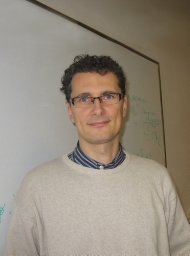 Aldo Deandrea合作论文数IPN Lyon7
 Benjamin Fuks合作论文数Laboratoire de Physique Subatomique et de Cosmologie, Université Joseph Fourier/CNRS-IN2P37
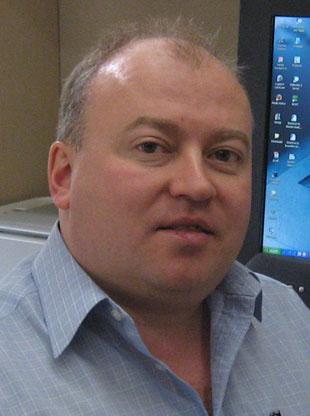 Greg Landsberg合作论文数Department of Physics, Brown University6
 Wolfgang Altmannshofer合作论文数Technische Universitat Munchen6
 Riccardo Torre合作论文数Sezione di Pisa6Lukas Mittnacht合作论文数5
 Caterina Doglioni合作论文数Department of Physics and Astronomy, University of Manchester5
 Tevong You合作论文数DAMTP, Univ Cambridge5Jose Bordes合作论文数5Shehu S. Abdussalam合作论文数Centre for Mathematical Sciences5J. Martin Camalich合作论文数Departamento de F ´ õsica;Centro Mixto;Institutos de Investigacion de Paterna, Universidad de Valencia-CSIC;Institutos de Investigacion de Paterna, Universidad de Valencia5L. Panizzi合作论文数Dipartimento Prevenzione-Sez. Biotossicologia, A. U.S.L.-6 di Livorno5Felix Kahlhoefer合作论文数5
 Ben Allanach合作论文数Department of Applied Mathematics and Theoretical Physics, Faculty of Mathematics, University of Cambridge5M. H. Genest合作论文数Fakultat fur Physik, Ludwig-Maximilians-Universitat Munchen5
 Alan S Cornell合作论文数Universite de Lyon;Institut de Physique Nucleaire;Institut de Physique Nucleaire, Universite de Lyon5S. De Curtis合作论文数Sezione di Firenze5
 Patrizia Azzi合作论文数Istituto Nazionale di Fisica Nucleare;CERN;Future Circular Collider Study5Moritz Breitbach合作论文数4M. Chala合作论文数4R. Boels合作论文数4G. Borghello合作论文数4P. Duda合作论文数4I. Aichinger合作论文数4M. Daibo合作论文数4e gianfelicewendt合作论文数4A. Falou合作论文数4O. R. Blanco-Garcia合作论文数4s aull合作论文数4A. Faus-Golfe合作论文数4L. Soffi合作论文数4B. Mele合作论文数4A. Chancé合作论文数4JA Aguilar Saavedra合作论文数4M. Laine合作论文数4I Bellafont合作论文数4
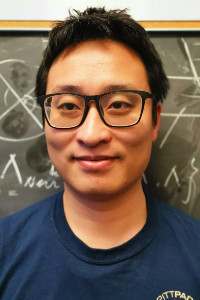 Zhen Liu合作论文数School of Physics and Astronomy, College of Science and Engineering, University of Minnesota4U Kaya合作论文数4
 Lorenzo Bellagamba合作论文数Gran Sasso Laboratory, INFN4C. Bhat合作论文数4
 Francesco Bossu合作论文数CEA4R. M. Alemany Fernandez合作论文数4L. García Tabarés合作论文数4M. Gil Costa合作论文数4Dipan Sengupta合作论文数4Silvia Arias合作论文数Div Fire Safety Engn, Lund Univ4




