The DAEδALUS experiment calls for 10 mA of protons at 800 MeV on a neutrino-producing target. To achieve this record-setting current from a cyclotron system, H2 (+) ions will be accelerated. Loosely bound vibrationally excited H2 (+) ions inevitably produced in conventional ion sources will be Lorentz stripped at the highest energies. Presence of these states was confirmed at the Oak Ridge National Laboratory and strategies were investigated to quench them, leading to a proposed R&D effort towards a suitable ion source for these high-power cyclotrons.
In this paper, we report results regarding how LiH2+ fragments as a result of a low-energy collision with an electron (dissociative recombination), a reaction that contains only elements and particles created during the very first phase of the universe. The collision-energy-dependent reaction rate and cross sections show detailed structures, more so than predicted by theory, suggesting significant rovibrational coupling in the ion and a complex reaction surface. From the structure of the molecule, the reaction predominantly results in the formation of Li + H-2. However, 23% of the reaction flux leads to more interesting products, with 17% producing Li + 2H and 6% producing LiH + H. These last two channels break the strongest molecular bond in the system and, in the case of the latter channel, form a significantly weaker ionic bond. Possible reasons behind this interesting behavior are discussed, together with the interaction between the available reaction channels.
We present a study into the collision-induced dissociation (possibly including electron stripping) of O-3(+) and N-3(+) with rest gas molecules (predominantly H-2) in the heavy-ion storage ring CRYRING. The projectile ions had kinetic energies of 1.96 MeV (O-3(+)) and 2.25 MeV (N-3(+)) and from the experimental data we could derive the relative importance of the channels that produce at least one neutral product fragment. The dominant type of fragmentation for both ions involves the production of a single neutral fragment, namely an individual atom. We also find pronounced dissimilarities when comparing the O-3(+) and N-3(+) results, which we link to the stronger chemical bonds in the nitrogen system.
We present a study into the collision-induced dissociation (possibly including electron stripping) of O-3(+) and N-3(+) with rest gas molecules (predominantly H-2) in the heavy-ion storage ring CRY ...
We present a study into the collision-induced dissociation (possibly including electron stripping) of O-3(+) and N-3(+) with rest gas molecules (predominantly H-2) in the heavy-ion storage ring CRY ...
We present a study into the collision-induced dissociation (possibly including electron stripping) of O-3(+) and N-3(+) with rest gas molecules (predominantly H-2) in the heavy-ion storage ring CRY ...
Interest in astrophysical sources of charge exchange X-rays has been growing steadily since the discovery of X-ray emission from the comet Hyakutake with ROSAT in 1996. Since then, charge exchange has been observed between solar wind ions and neutrals in the geocorona and in the atmospheres of Mars and Jupiter. Charge exchange with interstellar neutrals within the heliosphere between solar wind ions and neutral hydrogen and helium from the interstellar medium is now acknowledged as contributing a considerable (although currently unknown) fraction of the soft X-ray background. We make a brief survey of the heliospheric, Galactic, and extragalactic systems in which charge exchange has been observed or is predicted to take place. Experiments measuring velocity dependent cross-section and line ratios for Lyman-series lines and He-like triplets are needed to check current theoretical models of charge exchange emission and aid interpretation of observations. We point out a number of systems that are of astrophysical interest that could be the subject of future laboratory investigations, particularly velocity dependent line ratios of the X-ray emission produced by charge exchange between highly ionized common elements (such as O, C, Ne, and Fe) and atomic hydrogen and helium. To begin to address the need for laboratory data we have measured velocity dependent Ly-series line ratios for C6+ ions interacting with H2, He, and Kr gas targets at Oak Ridge National Laboratory's Ion-Atom Merged-Beams Apparatus.
Laser spectroscopic investigations on high-lying states around the ionization potential (IP) in the atomic spectrum of Fe have been carried out for the development of a practical three-step resonance ionization scheme accessible by Ti: sapphire lasers. A hot cavity laser ion source, typically used at on-line radioactive ion beam production facilities, was employed in this work. Ionization schemes employing high-lying Rydberg and autoionizing states populated by three-photon excitations were established. Five new Rydberg and autoionizing Rydberg series converging to the ground and to the first four excited states of Fe II are reported. Analyses of the Rydberg series yield the value 63 737.686 +/- 0.068 cm(-1) for the ionization potential of iron.
This report describes the efforts made to develop a resonant-ionization laser ion source based on tunable Ti:Sapphire lasers for nuclear physics and astrophysics research at HRIBF. Three Ti:Sapphire lasers have been upgraded with individual pump lasers to eliminate laser power losses due to synchronization delays. Ionization schemes for 14 elements have been obtained. Off-line studies show that the overall efficiency of the laser ion source can be as high as 40%. TaC surface coatings have been investigated for minimizing surface and bulk trapping of the atoms of interest.
An experimental capability being developed at the Oak Ridge National Laboratory Multi-Charged Ion Research Facility (ORNL MIRF) is described that enables stored cooling and state characterization of atomic and molecular ions of essentially any mass. Ions selected from a variety of available (hot and cold) sources are injected into a 1.5 meter long electrostatic mirror trap, in which excited internal states decay by radiative cooling. Ion lifetime studies or direct measurements of 'in-trap' interactions of molecular ions with electrons or atomic targets are accomplished with either a crossed electron beam or atomic beam (with recoil ion detection) located in the field-free region of the ion-trap, coupled with product velocity imaging. Similarly, extraction of trap-cooled ions can be used 'out-of-trap' for near state-specific electron capture (EC) and dissociative charge exchange (DCE) studies employing higher resolution COLTRIMS techniques coupled with fragment imaging.
Absolute cross sections for heavy ion fragment production due to electron-impact dissociation of XH2+ (X = B, C, N, O, F), N2D+ and O3+ have been investigated with the crossed electron-ion beams technique in the energy range 3 – 100 eV. This energy regime covers the dissociative excitation and ionization processes. Two and three-body dissociation channels are observed in these systems and marked resonant-like structure is also observed in the dissociative excitation channels of some systems. It is unclear if direct excitation or resonant capture processes lead to these enhanced dissociative excitation cross sections.
Absolute cross sections for electron-impact dissociation of N2D+ producing N-2(+), ND+, and N+ ion fragments were measured in the 5- to 100-eV range using a crossed electron-ion beams technique. In the 5- to 20-eV region, in which dissociative excitation (DE) is the principal contributing mechanism, N-2(+) production dominates. The N-2(+) + D dissociation channel shows a large resonant-like structure in the DE cross section, as observed previously in electron impact dissociation of triatomic dihydride species [M. Fogle, E. M. Bahati, M. E. Bannister, S. H. M. Deng, C. R. Vane, R. D. Thomas, and V. Zhaunerchyk, Phys. Rev. A 82, 042720 (2010)]. In the dissociative ionization (DI) region, 20- to 100-eV, N-2(+), ND+, and N+ ion fragment production are comparable. The observance of the ND+ and N+ ion fragments indicate breaking of the N-N bond along certain dissociation channels.
An all-permanent magnet electron cyclotron resonance (ECR) ion source is tuned to create a variety of intense molecular ion beams for basic research. Based on simultaneous injection of several gases with spectroscopic high purity or enriched isotope content (e.g., H2, D2, N2, O2 or CO) and low power microwave heating, the ECR ion source produces diatomic molecular ion beams of H2+, D2+, HD+, HO+, DO+, NH+, ND+ and more complex polyatomic molecular ions such as H3+, D3+, HD2+, H2O+, D2O+, H3O+, D3O+, and NHn+, NDn+ with n=2,3,4 and possibly higher. Molecular ion beams have been produced with very high current intensities compared to other molecular beam sources. The recorded molecular ion beam spectra are discussed.
Absolute cross sections for electron-impact dissociation of O-3(+) ions yielding O+ and O-2(+) fragment ions have been measured using a crossed electron-ion beams method for energies from about 3 eV to 100 eV. While the O-2(+) channel dominates the dissociation cross section over the measured energy range, a strong enhancement is observed in the O+ channel at low energy.
The time spreads of Mn ions produced by three-photon resonant ionization in a hot-cavity laser ion source are measured. A one-dimensional ion-transport model is developed to simulate the observed ion time structures. Assuming ions are generated with a Maxwellian velocity distribution and are guided by an axial electric field, the predictions of the model agree reasonably well with the experimental data and suggest that the ions are radially confined in the ion source and a substantial fraction of the ions in the transport tube are extracted.
Dissociative recombination of the Zundel cation D(5)O(2)(+) almost exclusively produces D + 2 D(2)O with a maximum kinetic energy release of 5.1 eV. An imaging technique is used to investigate the distribution of the available reaction energy among these products. Analysis shows that as much as 4 eV can be stored internally by the molecular fragments, with a preference for producing highly excited molecular fragments, and that the deuteron shows a nonrandom distribution of kinetic energies. A possible mechanism and the implications for these observations are addressed.
 Hardy Krause合作论文数Physics Division, Oak Ridge National Laboratory74
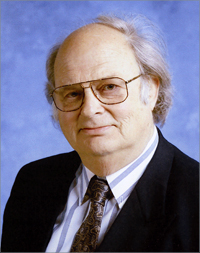 Sheldon Datz合作论文数Oak Ridge National Laboratory60
 M. E. Bannister合作论文数34
 Ivan Sellin合作论文数30PF DITTNER合作论文数27r s thoe合作论文数27R. D. Thomas合作论文数26
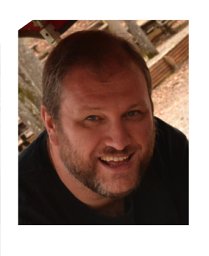 Michael R Fogle合作论文数26Stuart B Elston合作论文数26
 Vitali Zhaunerchyk合作论文数Stockholm Univ, Albanova Univ Ctr23
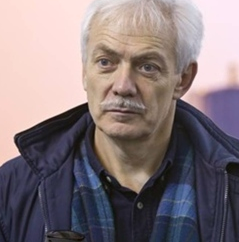 Reinhold Schuch合作论文数Department of Physics, Stockholm University21G.D. Alton合作论文数19Charles C. Havener合作论文数19P. M. Griffin合作论文数18Martin Suter合作论文数18James R. Beene合作论文数17
 Helge Knudsen合作论文数16Roman Laubert合作论文数16Bahati E合作论文数15
 T. M. Rosseel合作论文数Oak Ridge National Laboratory15S. Raman合作论文数14J. P. Forester合作论文数14E. Bahati合作论文数14P. Grafstrom合作论文数13Dj Pegg合作论文数12
 Fred Meyer合作论文数12Jp Giese合作论文数11Jp Young合作论文数11N. L. Jones合作论文数11Marianne Breinig合作论文数11
 David Schultz合作论文数Sandia Site Office, Universities Research Association, INC.11R. Peterson合作论文数10M. Larsson合作论文数9H. Schone合作论文数9Wolf D Geppert合作论文数9D Lester Hulett合作论文数9S.M. Shafroth合作论文数9E.F. Deveney合作论文数8M. Schulz合作论文数8
 Klaus Wendt合作论文数8Daniel W. Stracener合作论文数Forschungszentrum Jfilich8Stuart B. Elston合作论文数8
 Fredrik Hellberg合作论文数8JK SWENSON合作论文数8R Hutton合作论文数7Mats Larsson合作论文数7Erik Vigren合作论文数7Harvey Gould合作论文数Lawrence Berkeley National Laboratory;University of California;Lawrence Berkeley National Laboratory, University of California , Berkeley7Yun Liu合作论文数7




