Abstract BACKGROUND: Belzutifan is an FDA approved small molecule inhibitor used for the treatment of patients with advanced clear cell renal cell carcinoma (ccRCC). Belzutifan inhibits HIF2α, a transcription factor that promotes tumor angiogenesis and metastasis. Although ccRCC patients can potentially develop resistance to belzutifan there are currently no strategies to counteract this drug resistance in patients. We have identified that serine/threonine protein phosphatase-5 (PP5) expression and activity is elevated in ccRCC, contributing to its pro-survival role. We have designed and developed small molecule inhibitors of PP5. The objective of this study was to examine whether PP5 inhibition can cause apoptosis in belzutifan-resistant ccRCC cells. METHODS: Belzutifan-resistant ccRCC cells were developed by treating 786-O cells with 10μM belzutifan. Once 70% confluent, the cells were split and treated with 10μM belzutifan again. This process was repeated until the cells appeared healthy and grew at a similar rate to 786-O without belzutifan treatment. Belzutifan was removed from the cells for at least 24 hours before additional drug treatments and/or protein extraction. Compound P053 is a second-generation small molecule inhibitor of PP5. Belzutifan-resistant ccRCC cells were treated with either 1μM or 10μM of P053 for 24 hours and apoptotic markers were evaluated by immunoblotting to examine cleaved caspase-3 and cleaved-PARP. RESULTS: The second generation PP5 inhibitor P053 has the ability to bind to the catalytic domain and inhibit the phosphatase activity of PP5. Belzutifan-resistant ccRCC cells are able to maintain growth in the presence of 10μM belzutifan and do not display any hallmarks of activation of apoptosis. Treatment of belzutifan-resistant cells with either 1μM or 10μM of P053, however, induced apoptosis, as evidenced by elevated levels of cleaved caspase-3 and cleaved-PARP. CONCLUSIONS: PP5 inhibition with our novel small molecule inhibitor retains the ability to cause apoptosis in belzutifan-resistant cells. This suggests PP5 is a viable therapeutic target in advanced ccRCC even after belzutifan resistance. Citation Format: Sarah J. Backe, Rebecca Sager, Jennifer Heritz, John Chisholm, Mark Woodford, Dimitra Bourboulia, Gennady Bratslavsky, Mehdi Mollapour. Overcoming drug resistance in ccRCC through inhibition of protein phosphatase 5 (PP5) [abstract]. In: Proceedings of the American Association for Cancer Research Annual Meeting 2026; Part 1 (Regular Abstracts); 2026 Apr 17-22; San Diego, CA. Philadelphia (PA): AACR; Cancer Res 2026;86(7 Suppl):Abstract nr 1851.
The transcription factor Hypoxia-Inducible Factor 2α (HIF2α) plays a crucial role in cancer cell adaptation to hypoxic conditions, particularly in clear cell renal cell carcinoma, promoting tumor growth and angiogenesis. Targeting HIF2α through pharmacologic inhibition offers a promising therapeutic strategy for HIF2α-driven cancers. An in silico docking study using 10,000 drug-like compounds was performed using the previously solved X-ray crystal structure of HIF2α. Select compounds predicted to bind to the Per-Arnt-Sim-A (PAS-A) and PAS-B domains of HIF2α were further evaluated for biological activity in clear cell renal cell carcinoma and normal kidney cell lines. Biochemical and cell-based assays were performed to define the mechanism of action for a lead compound. Here, we identify Compound-c2 as a selective HIF2α inhibitor that binds to the PAS-B domain of HIF2α. Notably, Compound-c2 disrupts the interaction between HIF2α and the molecular chaperone Hsp70, leading to proteasomal degradation of HIF2α and the induction of apoptosis in ccRCC. The distinctive inhibitory mechanism of the HIF2α inhibitor identified here, Compound-c2, sets it apart from previous HIF2α antagonists. This positions Compound-c2 as a promising alternative with potential applications in addressing drug resistance, providing a unique approach to inhibit HIF2α-related processes. Cancer occurs when cells grow out of control. In the most common type of kidney cancer, this is caused by abnormal activity of a specific part of cellular machinery. In this study, we used computer simulations to find drugs that can stop this growth-causing activity. By testing drugs identified from these simulations, we found one drug that kills kidney cancer cells, but not normal cells. We show that this drug works differently than another drug used to kill kidney cancer. These results show that in the future, this drug could be used to treat kidney cancer, particularly in patients where other available drugs have not worked. Heritz et al. use an orthogonal approach to identify a selective inhibitor for HIF2α that disrupts its interaction with the molecular chaperone Hsp70. This inhibitor utilizes an alternative mechanism of action to previous HIF2α antagonists, providing a promising approach in addressing kidney cancer drug resistance.
Heat shock protein 90 (Hsp90) stabilizes numerous oncogenic proteins, making it a key therapeutic target in cancer. This protocol details an ex vivo method using freshly resected human renal cell carcinoma tissues to evaluate fluorescently labeled Hsp90 inhibitor ganetespib accumulation in tumor versus normal tissue. By preserving the native tumor architecture, this method offers a physiologically relevant alternative to xenograft models. This protocol combines flow cytometry and confocal microscopy to quantitatively and visually assess ganetespib uptake, providing insight into drug distribution and therapeutic response in human cancers. For complete details on the use and execution of this protocol, please refer to Dunn et al. and Woodford et al.
Tuberous Sclerosis Complex (TSC) is a multisystem disorder marked by benign tumors in brain, lung, and kidney. While the loss-of-function mutations in TSC1 or TSC2 have been known for decades, the molecular basis that converts these mutations into cystic kidney lesions has remained elusive. In this issue of EMBO Molecular Medicine, Zahedi and colleagues now uncover an unexpected culprit: the proto-oncogene receptor tyrosine kinase c-KIT. Their work identifies c-KIT as a pivotal driver of renal cystogenesis in TSC and suggests that its pharmacologic inhibition could complement existing mTOR-targeted therapy. M. Mollapour and colleagues discuss the role of the proto-oncogene receptor tyrosine kinase c-KIT in Tuberous Sclerosis Complex (TSC) renal cystogenesis, as reported by M. Soleimani and colleagues, in this issue of EMBO Mol Med.
Post-translational modification (PTM) of proteins regulates cellular proteostasis by expanding protein functional diversity. This naturally leads to increased proteome complexity as a result of PTM crosstalk. Here, we used the molecular chaperone protein, Heat shock protein-90 (Hsp90), which is subject to a plethora of PTMs, to investigate this concept. Hsp90 is at the hub of proteostasis and cellular signaling networks in cancer and is, therefore, an attractive therapeutic target in cancer. We demonstrated that deletion of histone deacetylase 3 (HDAC3) and histone deacetylase 8 (HDAC8) in human cells led to increased binding of Hsp90 to both ATP and its ATP-competitive inhibitor, Ganetespib. When bound to this inhibitor, Hsp90 from both HDAC3 and HDAC8 knock-out human cells exhibited similar PTMs, mainly phosphorylation and acetylation, and created a common proteomic network signature. We used both a deep-learning artificial intelligence (AI) prediction model and data based on mass spectrometry analysis of Hsp90 isolated from the mammalian cells bound to its drugs to decipher PTM crosstalk. The alignment of data from both methods demonstrates that the deep-learning prediction model offers a highly efficient and rapid approach for deciphering PTM crosstalk on complex proteins such as Hsp90.
Essential chaperones heat shock protein 70 (Hsp70) and heat shock protein 90 (Hsp90) collaborate in oncoprotein folding. Dual inhibition of these chaperones has shown synergy in preclinical studies but remains challenging to achieve. Using a computational approach, we designed peptides mimicking the predicted unfolding regions of Kinase CDK4, a client protein of both Hsp70 and Hsp90. Peptide Cdk4-2 is shown to simultaneously bind Hsp70, Hsp90, and co-chaperone Cdc37. Cdk4-2 is membrane permeable, inhibits CDK4-mediated retinoblastoma phosphorylation, and induces apoptosis in renal carcinoma cells. Structure-function studies identified a minimal pharmacophore for Hsp70 binding and critical interactions for peptide affinity. These findings demonstrate the feasibility of rationally designing multi-target modulators of chaperone networks. Cdk4-2 is a promising lead for therapeutic development, expanding the molecular space of modulators of cancer-associated multiprotein machineries. While focused on chaperones, the idea behind our strategy is general and immediately transferable to other multiprotein targets and networks.
The 2nd International Symposium on the Chaperone Code took place on October 26-28, 2023 at the Hilton Alexandria Old Town, VA, USA. The event featured more than 100 attendees from ten countries and provided a dynamic platform for established researchers, emerging investigators, postdoctoral fellows, and students to share insights and ideas on diverse facets of molecular chaperones with a strong focus on their regulation by post-translational modifications. The format fostered discussions and collaboration among participants. From the different contributions, future trajectories of the chaperone code field emerged, including avenues for further exploration and innovation in understanding and manipulating chaperone function in different diseases.
The serine/threonine protein phosphatase 5 (PP5) regulates hormone and stress-induced signaling networks. Unlike other phosphoprotein phosphatases, PP5 contains both regulatory and catalytic domains and is further regulated through post-translational modifications (PTMs). Here we identify that SUMOylation of K430 in the catalytic domain of PP5 regulates phosphatase activity. Additionally, phosphorylation of PP5-T362 is pre-requisite for SUMOylation, suggesting the ordered addition of PTMs regulates PP5 function in cells. Using the glucocorticoid receptor, a well known substrate for PP5, we demonstrate that SUMOylation results in substrate release from PP5. We harness this information to create a non-SUMOylatable K430R mutant as a 'substrate trap' and globally identified novel PP5 substrate candidates. Lastly, we generated a consensus dephosphorylation motif using known substrates, and verified its presence in the new candidate substrates. This study unravels the impact of cross talk of SUMOylation and phosphorylation on PP5 phosphatase activity and substrate release in cells.
The serine/threonine Protein Phosphatase-5 (PP5) plays an essential role in regulating hormone and stress-induced signaling networks as well as extrinsic apoptotic pathways in cells. Unlike other Protein Phosphatases, PP5 possesses both regulatory and catalytic domains, and its function is further modulated through post-translational modifications (PTMs). PP5 contains a tetratricopeptide repeat (TPR) domain, which usually inhibits its phosphatase activity by blocking the active site (closed conformation). Certain activators bind to the PP5-TPR domain, alleviating this inhibition and allowing the catalytic domain to adopt an active (open) conformation. While this mechanism has been proposed based on structural and biophysical studies, PP5 conformational changes and activity have yet to be observed in cells. Here, we designed and developed a flow cytometry-based fluorescence resonance energy transfer (FC-FRET) method, enabling real-time observation of PP5 autoinhibition and activation within live mammalian cells. By quantifying FRET efficiency using sensitized emission, we established a standardized and adaptable data acquisition workflow. Our findings revealed that, in a cellular context, PP5 exists in multiple conformational states, none of which alone fully predicts its activity. Additionally, we have demonstrated that PTMs such as phosphorylation and SUMOylation impact PP5 conformational changes, representing a significant advancement in our understanding of its regulatory mechanisms.
Serine/threonine protein phosphatase-5 (PP5) is involved in tumor progression and survival, making it an attractive therapeutic target. Specific inhibition of protein phosphatases has remained challenging because of their conserved catalytic sites. PP5 contains its regulatory domains within a single polypeptide chain, making it a more desirable target. Here we used an in silico approach to screen and develop a selective inhibitor of PP5. Compound P053 is a competitive inhibitor of PP5 that binds to its catalytic domain and causes apoptosis in renal cancer. We further demonstrated that PP5 interacts with FADD, RIPK1, and caspase 8, components of the extrinsic apoptotic pathway complex II. Specifically, PP5 dephosphorylates and inactivates the death effector protein FADD, preserving complex II integrity and regulating extrinsic apoptosis. Our data suggests that PP5 promotes renal cancer survival by suppressing the extrinsic apoptotic pathway. Pharmacologic inhibition of PP5 activates this pathway, presenting a viable therapeutic strategy for renal cancer.
Posttranslational modifications (PTMs) regulate myriad cellular processes by modulating protein function and protein-protein interaction. Heat shock protein 90 (Hsp90) is an ATP-dependent molecular chaperone whose activity is responsible for the stabilization and maturation of more than 300 client proteins. Hsp90 is a substrate for numerous PTMs, which have diverse effects on Hsp90 function. Interestingly, many Hsp90 clients are enzymes that catalyze PTM, demonstrating one of the several modes of regulation of Hsp90 activity. Approximately 25 co-chaperone regulatory proteins of Hsp90 impact structural rearrangements, ATP hydrolysis, and client interaction, representing a second layer of influence on Hsp90 activity. A growing body of literature has also established that PTM of these co-chaperones fine-tune their activity toward Hsp90; however, many of the identified PTMs remain uncharacterized. Given the critical role of Hsp90 in supporting signaling in cancer, clinical evaluation of Hsp90 inhibitors is an area of great interest. Interestingly, differential PTM and co-chaperone interaction have been shown to impact Hsp90 binding to its inhibitors. Therefore, understanding these layers of Hsp90 regulation will provide a more complete understanding of the chaperone code, facilitating the development of new biomarkers and combination therapies.
Molecular chaperones establish essential protein-protein interaction networks. Modified versions of these assemblies are generally enriched in certain maladies. A study published in Nature Communications used epichaperomics to identify unique changes occurring in chaperone-formed protein networks during mitosis in cancer cells.
Cellular Src tyrosine kinase (c-Src) exists in the secretomes of several human can-cers (extracellular, e-Src). Phosphoproteomics has demonstrated the existence of 114 potential extracellular e-Src substrates in addition to Tissue Inhibitor of Metalloproteinases 2. Here, we present a protocol to characterize secreted tyro-sine-phosphorylated substrates as a result of c-Src expression and secretion. We describe steps for collecting cell secretomes and extracts, performing antibody treatment and Ni-NTA pull-down, and detecting protein-protein interaction and substrate Y-phosphorylation. This protocol is adaptable for studies exam-ining the function of other extracellular kinases. For complete details on the use and execution of this protocol, please refer to Backe et al. (2023)1 and Sanchez-Pozo et al. (2018).2
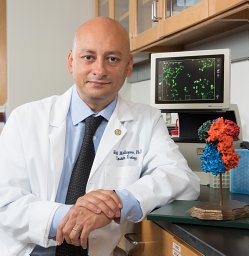 Mehdi Mollapour合作论文数National Cancer Institute, National Institutes of Health69
 Mark Woodford合作论文数58
 Gennady Bratslavsky合作论文数42
 Sarah J Backe合作论文数38Chris Boshoff合作论文数35Sager Rebecca合作论文数Department of Biochemistry and Molecular Biology, SUNY Upstate Medical University29
 William Stetler-Stevenson合作论文数Laboratory of Pathology, Center for Cancer Research, National Cancer Institute, National Institutes of Health18Christosomos Prodromou合作论文数15Shapiro Oleg合作论文数12Len Neckers合作论文数11
 Diana Maureen Dunn合作论文数10Lagos Dimitris合作论文数10Barry Panaretou合作论文数School of Cancer & Pharmaceutical Sciences, Faculty of Life Sciences & Medicine, King’s College London10
 Andrew Truman合作论文数John Innes Centre10Michael Daneshvar合作论文数9
 Giorgio Colombo合作论文数Dipartimento di Chimica, Università degli Studi di Pavia9Jane B. Trepel合作论文数8Sandra Jensen-Taubman合作论文数8
 John D. Chisholm合作论文数8
 Mark Cannon合作论文数8Matthew W. B. Trotter合作论文数8
 Denise Whitby合作论文数7Elham Ahanin合作论文数7Alexander J Baker-Williams合作论文数7
 Robin A. Weiss合作论文数University of London,Division of Infection & Immunity7
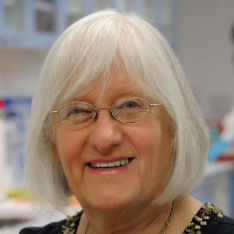 Valerie Beral合作论文数Cancer Epidemiology Unit, Nuffield Department of Population Health, Medical Sciences Division, University of Oxford7Richard J. Vart合作论文数7
 Leonid L Nikitenko合作论文数Institute of Molecular Medicine, Imperial Cancer Research Fund6
 Freddy Sitas合作论文数Research Division, Cancer Council New South Wales6Fiona Gratrix合作论文数6Shinji Tsutsumi合作论文数6Yasuhiro Takeuchi合作论文数5SarahBeth D Votra合作论文数5Natela Dushukyan合作论文数5Laura A. Wengert合作论文数5Priyanka Kancherla合作论文数5Sandra M. Jensen合作论文数5Michael Basin合作论文数Department of Urology, aUpstate Medical University5
 Blanden Adam R合作论文数Department of Biochemistry and Molecular Biology, SUNY Upstate Medical University5Landas Steve K合作论文数5
 Timothy A. J. Haystead合作论文数Department of Basic Science, School of Medicine, Duke University;Duke Cancer Institute, Duke University;Department of Pharmacology and Cancer Biology, School of Medicine, Duke University5
 Tiffany Caza合作论文数Arkana Laboratories5
 David Loiselle合作论文数5
 W. Marston Linehan合作论文数Center for Cancer Research, National Cancer Institute, National Institutes of Health;Georgetown University5Laura a Carpenter合作论文数5Dawn E. Post合作论文数5
 Stephen Henderson合作论文数Wolfson Institute for Biomedical Research, University College London5Delphine Casabonne合作论文数Richard Doll Building, University of Oxford5Beiyang Wei合作论文数5




