Quantum walks in general graphs, or more specifically scattering on graphs, encompass enough complexity to perform universal quantum computation. Any given quantum circuit can be broken down into single- and two-qubit gates, which can then be translated into subgraphs – gadgets – that implement such unitaries on the logical qubits, simulated by particles traveling along a sparse graph. In this work, we start to develop a full theory of multi-particle scattering on graphs and give initial applications to build multi-particle gadgets with different properties.
Bosonic bunching is a term used to describe the well-known tendency of bosons to bunch together, and which differentiates their behavior from that of fermions or classical particles. However, in some situations, perfectly indistinguishable bosons may counter-intuitively bunch less than classical, distinguishable particles. Here, we report two such counter-intuitive multiphoton bunching effects observed with three photons in a three-mode balanced photonic Fourier interferometer. In this setting, we show that indistinguishable photons actually minimize the probability of bunching. We also show that any non-trivial value of the three-photon collective photonic phase leads to a decreased probability of all photons ending up in the same mode, even as we increase pairwise indistinguishability. Our experiments feature engineering of partial indistinguishability scenarios using both the time and the polarization photonic degrees of freedom, and a polarization-transparent 8-mode tunable interferometer with a quantum-dot source of single photons. Besides the foundational understanding, the observation of these counter-intuitive phenomena open news perspective in devising more efficient ways of routing photons for advantage in metrology and quantum computation.
BosonSampling is the leading candidate for demonstrating quantum computational advantage in photonic systems. While we have recently seen many impressive experimental demonstrations, there is still a formidable distance between the complexity-theoretic hardness arguments and current experiments. One of the largest gaps involves the ratio of particles to modes-all current hardness evidence assumes a "dilute" regime in which the number of linear optical modes scales at least quadratically in the number of particles. By contrast, current experiments operate in a "saturated" regime with a linear number of modes. In this paper, we bridge this gap, bringing the hardness evidence for experiments in the saturated regime to the same level as had been previously established for the dilute regime. This involves proving a worst-to-average-case reduction for computing the permanent, which is robust both to large numbers of row repetitions and also to distributions over matrices with correlated entries. We also apply similar arguments to give evidence for hardness of Gaussian BosonSampling in the saturated regime.
Quantum walks have been used to develop quantum algorithms since their inception, and can be seen as an alternative to the usual circuit model; combining single-particle quantum walks on sparse graphs with two-particle scattering on a line lattice is sufficient to perform universal quantum computation. In this work we solve the problem of two-particle scattering on the line lattice for a family of interactions without translation invariance, recovering the Bose-Hubbard interaction as the limiting case. Due to its generality, our systematic approach lays the groundwork to solve the more general problem of multi-particle scattering on general graphs, which in turn can enable design of different or simpler quantum gates and gadgets. As a consequence of this work, we show that a CPHASE gate can be achieved with high fidelity when the interaction acts only on a small portion of the line graph.
Quantum computational models can be approached via the lens of resources needed to perform computational tasks, where a computational advantage is achieved by consuming specific forms of quantum resources, or, conversely, resource-free computations are classically simulable. Can we similarly identify quantum computational resources in the setting of more general quasi-particle statistics? In this work, we develop a framework to characterize the separability of a specific type of one-dimensional quasiparticle known as a fermionic anyon. As we evince, the usual notion of partial trace fails in this scenario, so we build the notion of separability through a fractional Jordan-Wigner transformation, leading to an entanglement description of fermionic-anyon states. We apply this notion of fermionic-anyon separability and the unitary operations that preserve it, mapping it to the free resources of matchgate circuits. We also identify how entanglement between two qubits encoded in a dual-rail manner, as standard for matchgate circuits, corresponds to the notion of entanglement between fermionic anyons.
The geometrical arrangement of a set of quantum states can be completely characterized using relational information only. This information is encoded in the pairwise state overlaps, as well as in Bargmann invariants of higher degree written as traces of products of density matrices. We describe how to measure Bargmann invariants using suitable generalizations of the SWAP test. This allows for a complete and robust characterization of the projective-unitary invariant properties of any set of pure or mixed states. As applications, we describe basis-independent tests for linear independence, coherence, and imaginarity. We also show that Bargmann invariants can be used to characterize multi-photon indistinguishability.
Causal influences are at the core of any empirical science, the reason why its quantification is of paramount relevance for the mathematical theory of causality and applications. Quantum correlations, however, challenge our notion of cause and effect, implying that tools and concepts developed over the years having in mind a classical world, have to be reevaluated in the presence of quantum effects. Here, we propose the quantum version of the most common causality quantifier, the average causal effect (ACE), measuring how much a target quantum system is changed by interventions on its presumed cause. Not only it offers an innate manner to quantify causation in two-qubit gates but also in alternative quantum computation models such as the measurement-based version, suggesting that causality can be used as a proxy for optimizing quantum algorithms. Considering quantum teleportation, we show that any pure entangled state offers an advantage in terms of causal effects as compared to separable states. This broadness of different uses showcases that, just as in the classical case, the quantification of causal influence has foundational and applied consequences and can lead to a yet totally unexplored tool for quantum information science.
Boson Sampling is a task that is conjectured to be computationally hard for a classical computer, but which can be efficiently solved by linear-optical interferometers with Fock state inputs. Significant advances have been reported in the last few years, with demonstrations of small- and medium-scale devices, as well as implementations of variants such as Gaussian Boson Sampling. Besides the relevance of this class of computational models in the quest for unambiguous experimental demonstrations of quantum advantage, recent results have also proposed first applications for hybrid quantum computing. Here, we introduce the adoption of non-linear photon-photon interactions in the Boson Sampling framework, and analyze the enhancement in complexity via an explicit linear-optical simulation scheme. By extending the computational expressivity of Boson Sampling, the introduction of non-linearities promises to disclose novel functionalities for this class of quantum devices. Hence, our results are expected to lead to new applications of near-term, restricted photonic quantum computers.
Gaussian boson sampling is a model of photonic quantum computing that has attracted attention as a platform for building quantum devices capable of performing tasks that are out of reach for classical devices. There is therefore significant interest, from the perspective of computational complexity theory, in solidifying the mathematical foundation for the hardness of simulating these devices. We show that, under the standard Anti-Concentration and Permanent-of-Gaussians conjectures, there is no efficient classical algorithm to sample from ideal Gaussian boson sampling distributions (even approximately) unless the polynomial hierarchy collapses. The hardness proof holds in the regime where the number of modes scales quadratically with the number of photons, a setting in which hardness was widely believed to hold but that nevertheless had no definitive proof. Crucial to the proof is a new method for programming a Gaussian boson sampling device so that the output probabilities are proportional to the permanents of submatrices of an arbitrary matrix. This technique is a generalization of Scattershot BosonSampling that we call BipartiteGBS. We also make progress towards the goal of proving hardness in the regime where there are fewer than quadratically more modes than photons (i.e., the high-collision regime) by showing that the ability to approximate permanents of matrices with repeated rows/columns confers the ability to approximate permanents of matrices with no repetitions. The reduction suffices to prove that GBS is hard in the constant-collision regime.
n optical device uses fibre loops to improve an experiment designed to show that quantum systems have the edge on classical computers. The innovative scheme offers impressive control and potential for scaling.
We experimentally demonstrate the validity of witness tests on suitable inter- ferometers designed for the purpose. Our findings confirm the effectiveness of this novel family of witness tests for capturing the quantum properties of high-dimensional systems.
We study the dynamics of bosonic and fermionic anyons defined on a one-dimensional lattice, under the effect of Hamiltonians quadratic in creation and annihilation operators, also called Gaussian Hamiltonians. These anyonic models are obtained from deformations of the standard bosonic or fermionic commutation relations via the introduction of a nontrivial exchange phase between different lattice sites. We study the effects of the anyonic exchange phase on the usual bosonic and fermionic bunching behaviors. We show how to exploit the inherent Aharonov-Bohm effect exhibited by these particles to build a deterministic, entangling two-qubit gate and prove quantum computational universality in these systems. We define coherent states for bosonic anyons and study their behavior under two-mode passive, Gaussian devices. In particular we prove that, for a particular value of the exchange factor, an anyonic mirror can generate cat states, an important resource in quantum information processing with continuous variables.
Recent years have seen a flurry of activity in the fields of quantum computing and quantum complexity theory, which aim to understand the computational capabilities of quantum systems by applying the toolbox of computational complexity theory. This paper explores the conceptually rich and technologically useful connection between the dynamics of free quantum particles and complexity theory. I review results on the computational power of two simple quantum systems, built out of noninteracting bosons (linear optics) or noninteracting fermions. These rudimentary quantum computers display radically different capabilities—while free fermions are easy to simulate on a classical computer, and therefore devoid of nontrivial computational power, a free-boson computer can perform tasks expected to be classically intractable. To build the argument for these results, I introduce concepts from computational complexity theory. I describe some complexity classes, starting with P and NP and building up to the less common #P and polynomial hierarchy, and the relations between them. I identify how probabilities in free-bosonic and free-fermionic systems fit within this classification, which then underpins their difference in computational power. This paper is aimed at graduate or advanced undergraduate students with a Physics background, hopefully serving as a soft introduction to this exciting and highly evolving field.
Photon indistinguishability plays a fundamental role in information processing, with applications such as linear-optical quantum computation and metrology. It is then necessary to develop appropriate tools to quantify the amount of this resource in a multiparticle scenario. Here we report a four-photon experiment in a linear-optical interferometer designed to simultaneously estimate the degree of indistinguishability between three pairs of photons. The interferometer design dispenses with the need of heralding for parametric down-conversion sources, resulting in an efficient and reliable optical scheme. We then use a recently proposed theoretical framework to quantify genuine four-photon indistinguishability, as well as to obtain bounds on three unmeasured two-photon overlaps. Our findings are in high agreement with the theory, and represent a new resource-effective technique for the characterization of multiphoton interference.
We study the dynamics of bosonic and fermionic anyons defined on a one-dimensional lattice, under the effect of Hamiltonians quadratic in creation and annihilation operators, commonly referred to as linear optics. These anyonic models are obtained from deformations of the standard bosonic or fermionic commutation relations via the introduction of a non-trivial exchange phase between different lattice sites. We study the effects of the anyonic exchange phase on the usual bosonic and fermionic bunching behaviors. We show how to exploit the inherent Aharonov-Bohm effect exhibited by these particles to build a deterministic, entangling two-qubit gate and prove quantum computational universality in these systems. We define coherent states for bosonic anyons and study their behavior under two-mode linear-optical devices. In particular we prove that, for a specific value of the exchange factor, an anyonic mirror can generate cat states, an important resource in quantum information processing with continuous variables.
As a promising candidate for exhibiting quantum computational supremacy, Gaussian boson sampling (GBS) is designed to exploit the ease of experimental preparation of Gaussian states. However, sufficiently large and inevitable experimental noise might render GBS classically simulable. In this work, we formalize this intuition by establishing a sufficient condition for approximate polynomial-time classical simulation of noisy GBS-in the form of an inequality between the input squeezing parameter, the overall transmission rate, and the quality of photon detectors. Our result serves as a nonclassicality test that must be passed by any quantum computational supremacy demonstration based on GBS. We show that, for most linear-optical architectures, where photon loss increases exponentially with the circuit depth, noisy GBS loses its quantum advantage in the asymptotic limit. Our results thus delineate intermediate-sized regimes where GBS devices might considerably outperform classical computers for modest noise levels. Finally, we find that increasing the amount of input squeezing is helpful to evade our classical simulation algorithm, which suggests a potential route to mitigate photon loss.
We present a comprehensive study of the impact of non-uniform, i.e.\ path-dependent, photonic losses on the computational complexity of linear-optical processes. Our main result states that, if each beam splitter in a network induces some loss probability, non-uniform network designs cannot circumvent the efficient classical simulations based on losses. To achieve our result we obtain new intermediate results that can be of independent interest. First, we show that, for any network of lossy beam-splitters, it is possible to extract a layer of non-uniform losses that depends on the network geometry. We prove that, for every input mode of the network it is possible to commute $s_i$ layers of losses to the input, where $s_i$ is the length of the shortest path connecting the $i$th input to any output. We then extend a recent classical simulation algorithm due to P. Clifford and R. Clifford to allow for arbitrary $n$-photon input Fock states (i.e. to include collision states). Consequently, we identify two types of input states where boson sampling becomes classically simulable: (A) when $n$ input photons occupy a constant number of input modes; (B) when all but $O(\log n)$ photons are concentrated on a single input mode, while an additional $O(\log n)$ modes contain one photon each.
We define a computational model that uses a one-dimensional lattice of anyons defined by deformed bosonic and fermionic commutation relations. We solve the nonlinear dynamics of the quadratic, number-preserving Hamiltonians describing optical elements, and show that the model is universal for quantum computation. For the case of deformed bosonic statistics, we describe the appropriate generalizations of typical bosonic behavior, such as the Hong-Ou-Mandel effect and coherent-state dynamics.
Suppose we have N quantum systems in unknown states vertical bar psi(i)>, but we know the value of some pairwise overlaps vertical bar vertical bar(2). What can we say about the values of the unknown overlaps? We provide a complete answer to this problem for three pure states and two given overlaps and a way to obtain bounds for the general case. We discuss how the answer contrasts from that of a classical model featuring only coherence-free, diagonal states, and we describe three applications: basis-independent coherence witnesses, dimension witnesses, and characterization of multiphoton indistinguishability.
Bosonic interference is a fundamental physical phenomenon, and it is believed to lie at the heart of quantum computational advantage. It is thus necessary to develop practical tools to witness its presence, both for a reliable assessment of a quantum source and for fundamental investigations. Here we describe how linear interferometers can be used to unambiguously witness genuine n-boson indistinguishability. The amount of violation of the proposed witnesses bounds the degree of multiboson indistinguishability, for which we also provide a novel intuitive model using set theory. We experimentally implement this test to bound the degree of three-photon indistinguishability in states we prepare using parametric down-conversion. Our approach results in a convenient tool for practical photonic applications, and may inspire further fundamental advances based on the operational framework we adopt.
 Ernesto F. Galvao合作论文数Perimeter Institute for Theoretical Physics27
 Fabio Sciarrino合作论文数Quantum Lab, Dipartimento di Fisica, Sapienza Università di Roma;Scuola Superiore di Studi Avanzati, Sapienza Università di Roma;Scuola Normale Superiore19
 Nicolo Spagnolo合作论文数Quantum Lab, Dipartimento di Fisica, Sapienza Università di Roma19
 Roberto Osellame合作论文数Institute for Photonics and Nanotechnologies, National Research Council14
 Andrea Crespi合作论文数CNR13
 Fulvio Flamini合作论文数Institute for Theoretical Physics, University of Innsbruck10
 Paolo Mataloni合作论文数Dipartimento di Fisica;Istituto Nazionale per la Fisica della Materia;Università di Roma " La Sapienza;Istituto Nazionale per la Fisica della Materia, Università di Roma " La Sapienza9
 Chiara Vitelli合作论文数Dipartimento di Fisica9
 Niko Viggianiello合作论文数Dipartimento Fis, Sapienza Univ Roma8
 R. Ramponi合作论文数Centro di Elettronica Quantistica e Strumentazione Elettronica CNR, Istituto de Fisica del Politecnico Milano Italy8
 Marco Bentivegna合作论文数Dipartimento di Fisica, Sapienza Università di Roma, Piazzale Aldo Moro 5, I-00185 Roma, Italy7
 Allan Tosta合作论文数5
 Enrico Maiorino合作论文数4
 Michał Oszmaniec合作论文数Quantin Labs, Center For Theoretical Physics, Polish Academy of Sciences4
 Taira Giordani合作论文数Sapienza Univ Roma, Dipartimento Fis, Piazzale Aldo Moro 5, I-00185 Rome, Italy3
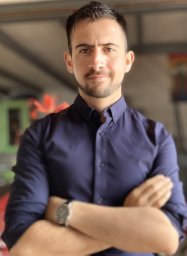 Gonzalo Carvacho合作论文数Sapienza Univ Roma, Dipartimento Fis, Piazzale Aldo Moro 5, I-00185 Rome, Italy3
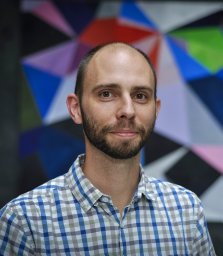 Joshua Combes合作论文数Centre for Quantum Computer Technology;Centre for Quantum Dynamics;Griffith University;Centre for Quantum Dynamics, Griffith University3
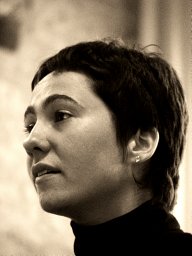 Linda Sansoni合作论文数Dipartimento Fis, Univ Roma La Sapienza3
 Francesco Hoch合作论文数2
 Chiara Esposito合作论文数Dipartimento Fis, Sapienza Univ Roma2Ludovico Latmiral合作论文数2
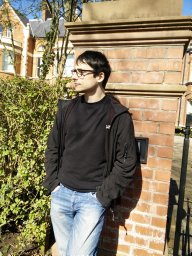 Luca Innocenti合作论文数Dipartimento Fis & Chim Emilio Segre, Univ Palermo2
 Daniel Grier合作论文数MIT2
 Nicolás Quesada合作论文数Department of Engineering Physics, École Polytechnique de Montréal2Eugenio Caruccio合作论文数1Niki Di Giano合作论文数1Sandro Giacomini合作论文数1Marcos Benicio de Andrade Alonso合作论文数1
 Adam Bouland合作论文数The Theory Group, Stanford University1Antônio C. Lourenço合作论文数1
 Rafael B Chaves合作论文数1Lucas Hutter合作论文数1
 Riccardo Albiero合作论文数Dept Phys, Politecn Milan1
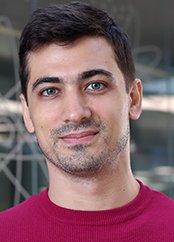 Ranieri Nery合作论文数Int Inst Phys, Univ Fed Rio Grande do Norte1
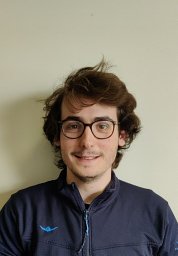 Giovanni Rodari合作论文数Dipartimento di Fisica-Sapienza, Università di Roma1
 George Moreno合作论文数Departamento de Computação, Universidade Federal Rural de Pernambuco1
 Alessia Suprano合作论文数Sapienza Univ Roma, Dipartimento Fis, Piazzale Aldo Moro 5, I-00185 Rome, Italy1
 Daniele Cozzolino合作论文数Ctr Silicon Photon Opt Commun SPOC, Tech Univ Denmark1
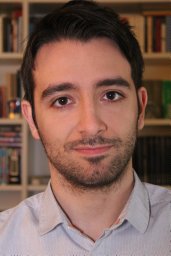 Francesco Ceccarelli合作论文数Ist Foton & Nanotecnol, IFN CNR1
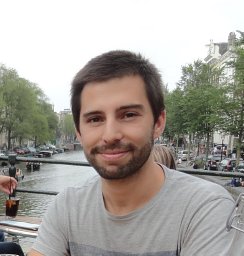 Leonardo Novo合作论文数Iberian Nanotechnol Lab, INL Int1
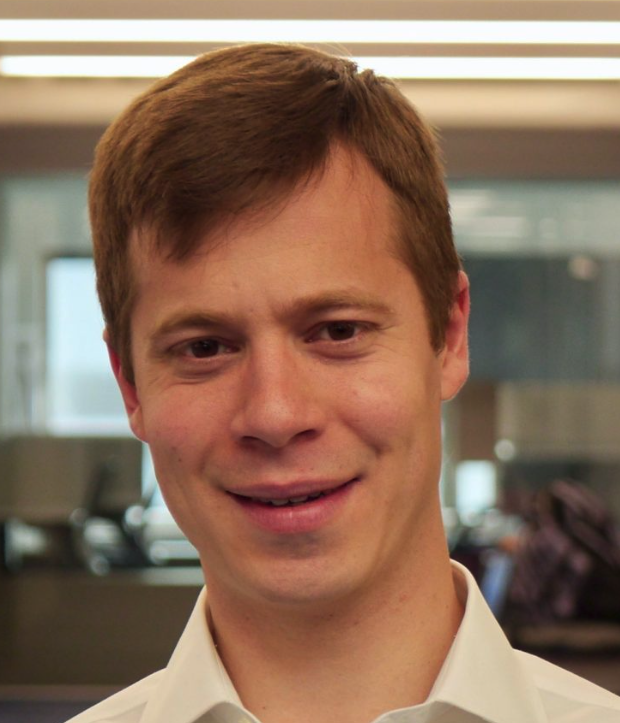 Bill Fefferman合作论文数Department of Computer Science, The University of Chicago1
 Juan Miguel Arrazola合作论文数Xanadu1
 Giacomo Corrielli合作论文数1HaoYu Qi合作论文数1
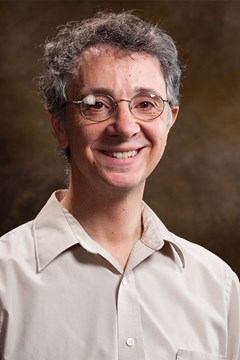 Julio Gea-Banacloche合作论文数Department of Physics, Fulbright College of Arts & Sciences, University of Arkansas1
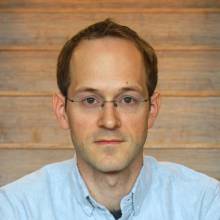 Andrew Childs合作论文数University of Maryland Department of Computer Science1
 Raul Garcia-Patron Sanchez合作论文数Laboratory for Foundations of Computer Science, School of Informatics, The University of Edinburgh1
 Fernando Iemini合作论文数Departamento de Física - ICEx, Universidade Federal de Minas Gerais1
 Tiago Debarba合作论文数Departamento de Física - ICEx, Universidade Federal de Minas Gerais1




