This report presents testing of a prototype cantilevered liquid-nitrogen-cooled silicon mirror. This mirror was designed to be the first mirror for the new soft X-ray beamlines to be built as part of the Advanced Light Source Upgrade. Test activities focused on fracture, heat transfer, modal response and distortion, and indicated that the mirror functions as intended.
In the last two decades, after the first light from the new Free Electron Lasers, either in the UV (FLASH [1] and FERMI@Elettra [2]) or X-ray (LCLS [3] and SACLA [4]), more and more new diffraction limited sources have been either constructed or planned. Third generation storage rings are upgraded to provide a more collimated, brighter, and coherent light for the next generation experimental techniques. X-ray optics are the bridge between the light sources and the experimental stations. They are the key to the success of advanced experiments but also the potential bottleneck preventing the exploitation of the full characteristics of the source. The beam degradation originated by any mirror defect (either from mirror polishing or from contamination) is amplified with a coherent source. Delivering diffraction-limited spots, including the option for variable spot sizes in and out of focus, requires the control of the surface of the optics at the 1 nm rms level, if not better. At LCLS, only very recently [5] an almost perfectly uniform beam out of focus has been obtained in the hard X-rays. It has been obtained after two 1-m long mirrors with 0.5 nm rms shape precision (after installation). Those mirrors were not readily available just a decade ago. But, thanks to the pioneering work performed at the Osaka University [6,7], those optics are now commercially available with arbitrary tangential profiles. This new generation of mirrors permits achieving unprecedented results. However, they do not remove all road blocks to a perfect photon transport system. Instead, they highlighted the critical importance of mirror mounting, handling of the thermal deformation, and the need of advanced diagnostics to properly exploit all the new potentiality of these optics. Besides the need of "perfect " mirrors, other aspects of the beamline design and elements may impact the quality of the beam in the experimental station, from the lack of blaze gratings to the need of advanced simulation tools, just to cite two. In this article, after a brief historical excursus, we will present the current state of the art of mirrors, gratings, crystals, lenses, diagnostics, and simulation tools. The main problems yet to solve and a look ahead at what would be achievable in the next decade will give the reader an idea on the search for an almost ideal photon transport system and how the path toward experiments, not conceivable today, will unfold. (c) 2022 Elsevier B.V. All rights reserved.
In the field of beam physics, two frontier topics have taken center stage due to their potential to enable new approaches to discovery in a wide swath of science. These areas are: advanced, high gradient acceleration techniques, and x-ray free electron lasers (XFELs). Further, there is intense interest in the marriage of these two fields, with the goal of producing a very compact XFEL. In this context, recent advances in high gradient radio-frequency cryogenic copper structure research have opened the door to the use of surface electric fields between 250 and 500 MV m −1 . Such an approach is foreseen to enable a new generation of photoinjectors with six-dimensional beam brightness beyond the current state-of-the-art by well over an order of magnitude. This advance is an essential ingredient enabling an ultra-compact XFEL (UC-XFEL). In addition, one may accelerate these bright beams to GeV scale in less than 10 m. Such an injector, when combined with inverse free electron laser-based bunching techniques can produce multi-kA beams with unprecedented beam quality, quantified by 50 nm-rad normalized emittances. The emittance, we note, is the effective area in transverse phase space ( x , p x / m e c ) or ( y , p y / m e c ) occupied by the beam distribution, and it is relevant to achievable beam sizes as well as setting a limit on FEL wavelength. These beams, when injected into innovative, short-period (1–10 mm) undulators uniquely enable UC-XFELs having footprints consistent with university-scale laboratories. We describe the architecture and predicted performance of this novel light source, which promises photon production per pulse of a few percent of existing XFEL sources. We review implementation issues including collective beam effects, compact x-ray optics systems, and other relevant technical challenges. To illustrate the potential of such a light source to fundamentally change the current paradigm of XFELs with their limited access, we examine possible applications in biology, chemistry, materials, atomic physics, industry, and medicine—including the imaging of virus particles—which may profit from this new model of performing XFEL science.
The focusing mirrors for the new LCLS soft x-ray (SXR) experimental hutches are tangential pre-shaped mirrors mounted in a Kirkpatrick Baez configuration. The mirrors are prefigured with an elliptical profile, coinciding with the longest working focal distance. The mirrors are equipped with benders to enable focusing of the beam at different experimental stations and to work out of focus with an uniform beam. To add complexity to the system, the mirrors are also water-cooled and need to fit in a very tight space, due to real estate limitation. For ensuring that the mirror profile is maintained at its sub-nm quality after the assembly of the mirror into its cooling and mechanical system, these mirrors need to undergo an extensive optics metrology study. The vertical and horizontal KB mirrors are first checked for twist error due to the mounting of the mirror substrate to its mechanics. This is measured with grazing incidence Fizeau interferometry. Then the mounted mirror needs to be shimmed to correct for any errors that may be caused by gluing of the mirror. This step requires a sequence of shimming and metrology measurement and must be repeated until the mirror shape is satisfactory. In addition, the mirror bender response function must be well-characterized and documented for the commissioning as well as operation of these mirrors in the experimental hutches. The response function can be attained by measuring the mirror profile using the instruments available in the LCLS Optics Metrology Laboratory and the stitching techniques developed at LCLS. The mirrors are scheduled to be installed in the new SXR beamline in spring 2020. Metrology data and initial commissioning results proving the performance of these wavefront preserving optics will be presented in this report.
Oscillators are at the heart of optical lasers, providing stable transform limited pulses. In contrast, X-ray free electron lasers use self-amplified spontaneous emission (SASE), resulting in large stochastic intensity and spectral fluctuations. Amplified spontaneous emission (ASE) of the Kα_1 line has been recently observed for Ne gas, Cu compounds and Mn solutions at the LCLS and SACLA X-ray free electron lasers (XFELs), using an X-ray SASE pulse as a pump to create population inversion. Here we describe the physics and realization of an X-ray laser oscillator (XLO) based on periodically pumping a Cu compound gain medium in a tunable Bragg cavity with a SASE pulse train, generating intense (∼ 5 x 10^10 ph/pulse), fully coherent, transform limited 8 keV pulses with 48 meV spectral resolution. We also discuss extending these results to other elements to operate XLO from about 5 to 12 keV, improving X-ray-based research beyond current capabilities.
The Linac Coherent Light Source (LCLS), a US Department of Energy Office of Science X-ray facility operated by the Stanford University, is being upgraded with a second source to provide eight beamlines (five existing and three under construction) with either high-repetition or high-intensity pulses and highly coherent X-ray beams. The photon transportation and distribution to each beamline relies on, among other elements, elliptically- bendable mirrors, often in Kirkpatrick-Baez (K-B) configuration. One of the crucial tasks in beamline design and performance prediction is the self-consistent simulation of the final point spread function of the complete optical system, simultaneously accounting for diffractive effects, mirror deformations, and surface finishing defects. Rather than using ray-tracing routines, which cannot manage diffractive effects, and rather than employing the first-order scattering theory, which cannot be applied when the optical path differences exceed the radiation wavelength, a wavefront propagation formalism can be used to treat all the aspects at the same time. For example, the WISE code, initially developed for astronomical X-ray mirrors at INAF-OAB, and subsequently used to simulate X-ray reflective systems at the Fermi light source, is now a part of the well-known OASYS simulation package. In this paper, we extend the model to a two-dimensional imaging and show performance simulations of two elliptical mirrors to form a complete Kirkpatrick-Baez system
The Linac Coherent Light Source (LCLS) is undergoing an upgrade to a double source setup to provide eight experimental hutches (five existing and three new) with either high-repetition or high-intensity pulses and highly coherent X-ray beams. The photon transportation and distribution to each hutch relies on, among other elements, bendable mirrors. Given the coherence of the LCLS source, and to avoid introducing wavefront distortions beyond workable limits, the mirrors need to have extremely smooth surfaces, with a figure compliant with the nominal profile (usually elliptical). The effectiveness and the accuracy of the bending system and of the actuators over the entire length of the mirror (up to 1.2 m) need to be assessed by an appropriate metrology system. Long Trace Profilometry (LTP) is a suitable technique to characterize a slightly-curved surface mirror profile with very high sensitivity, provided that the optomechanical system implementation enables sensitivity and accuracy values compatible with the mentioned surface quality requirements. In this paper, we show the status and performance of the LTP under development at LCLS. The LTP essentially consists of an advanced optical head that endows a laser beam with sharp interferential features to increase its resolution and detects the optical lever of the beam reflected by the sample, plus a high-precision gantry system (Q-Sys) for accurate scanning of the mirror under test, under impact of its bending mechanics and cooling system. The measured results are compared to the simulated performance of the LTP, and we show the way of the oncoming improvement of the instrument.
This document attempts to capture the most compelling new science opportunities that are enabled by the unique capabilities of the new LCLS-II X-ray laser facility, namely: soft and tender X-rays (0.25 to 5 keV) at high repetition rates (up to 1 MHz) and hard X-rays (up to 25 keV) at 120 Hz. Many compelling areas of science have been identified by the scientific community, through a series of workshops over the past several years, where LCLS-II offers the potential to significantly advance our understanding. This document is not intended to be comprehensive of all the science to be pursued at the future LCLS facility. In particular, it does not capture important ongoing science that will continue to exploit the existing capabilities of the present LCLS facility. Nevertheless, this document will help to establish a scientific foundation for the new facility (encompassing present LCLS capabilities and new LCLS-II capabilities), and will inform LCLS strategic planning and investments over the next 5-10 years. The emphasis of this document is on identifying broad scientific opportunities, elucidating their potential impact, and providing a first-order link between these opportunities and LCLS-II capabilities. Brief descriptions are provided for various experimental approaches to be used, and novel new approaches to be developed, along with select examples of required optics and instruments. However, this document is not intended to capture all the optics and instrumentation requirements. Similarly it does not provide a detailed plan for instrumentation design or for any associated research and development that might be required. Balancing the scientific opportunities and impact, with instrumentation needs, available resources, and infrastructure, will be part of the LCLS planning process which this document will help to inform.
FERMI is the first seeded EUV-SXR free electron laser (FEL) user facility operated at Elettra Sincrotrone Trieste. Two of the three already operating beamlines, namely LDM (Low Density Matter) and DiProI (Diffraction and Projection Imaging), use a Kirkpatrick-Baez (K-B) active X-ray optics system for focusing the FEL pulses onto the target under investigation. For the third beamline, TIMEX, we have installed an ellipsoidal mirror as focusing system, and in addition we are also developing an active optics system to be mounted along this beamline, in order to properly shape the spatial photon beam profile at the sample.
The Linac Coherent Light Source has added a self-seeding capability to the soft x-ray range using a grating monochromator system. We report the demonstration of soft x-ray self-seeding with a measured resolving power of 2000-5000, wavelength stability of 10(-4), and an increase in peak brightness by a factor of 2-5 across the photon energy range of 500-1000 eV. By avoiding the need for a monochromator at the experimental station, the self-seeded beam can deliver as much as 50-fold higher brightness to users.
FERMI is the first seeded EUV-SXR free electron laser (FEL) user facility operated at Elettra Sincrotrone Trieste. Two of the three already operating beamlines, namely LDM (Low DensityMatter) and DiProI (Diffraction and Projection Imaging), use a Kirkpatrick-Baez (K-B) active X-ray optics system for focusing the FEL pulses onto the target under investigation. The present work reports on the final results obtained from the optimization of the K-B optical system at the DiProI endstation. The aim of the optimization is to improve the system performances in terms of quality and size of the focal spot onto the sample, controlling the fluence as well. To characterize the performances and develop reliable and reproducible focusing procedures we performed a campaign of measurements with several diagnostic systems, including a wavefront sensor mounted after the DiProI chamber. Online wavefront measurements have made possible the optimization of the bending acting on the mirror curvature and of the (pitch and roll) angle positions of the K-B system. From the wavefront measurements we have inferred a focal spot of 8 mu m x 9.5 mu m, confirmed by the PMMA ablation imprints. The experimental results are compared with the predictions from simulations obtained using the WISE code, starting from the characterization of the actual mirror surface metrology. The results from simulations are in agreement with the experimental measurements. Filtering the Fourier transform of the mirror surface profiles, using the WISE code we have analyzed the impact of different spatial wavelengths on the focal spot degradation. For different energies of the incident beam we established the threshold where the focal spot degradation is no longer affected by the spatial wavelengths of the K-B mirror surfaces.In the very last period we were starting to observe a degradation of the focal spot. After a metrology analysis we concluded that the problem was due to a failure of the substrate material. We temporally solved the problem checking the mounting, but we have planned an improvement of the material for the future.
Kirkpatrick-Baez (K-B) active X-ray optics system is a good choice for focusing the free electron laser (FEL) pulses delivered by FERMI, the first seeded EUV-SXR FEL user facility operated at Elettra Sincrotrone Trieste. The present work reports the results obtained tuning this optical system used at the Diffraction and Projection Imaging (DiProI) beamline in order to improve and optimize its performance in terms of quality and size of the focal spot onto the sample controlling the fluence as well. To characterize the performance and develop reliable and reproducible focusing procedures we performed a campaign of measurements with several diagnostic systems, including a wavefront sensor mounted after the DiProI chamber. Online wavefront measurements have allowed for optimizing the bending acting on the mirrors curvature and the angle positions (pitch and roll) of the K-B system. The experimental results are compared with the predictions from simulations obtained using the WISE code, starting from mirror actual surface metrology characterization. Filtering the Fourier transform of the mirror surface profiles we have analyzed the impact of spatial wavelengths on the focal spot degradation. From the wavefront measurements we have inferred a focal spot of 10 μm x 10 μm confirmed by the PMMA ablation imprints. The results from simulations with the WISE code are in agreement with the measurements and for different energies of the incident beam we established the threshold when the focal spot degradation is not affected by the spatial wavelengths of the K-B mirror surfaces.
FERMI@Elettra is a free electron-laser (FEL)-based user facility that, after two years of commissioning, started preliminary users' dedicated runs in 2011. At variance with other FEL user facilities, FERMI@Elettra has been designed to deliver improved spectral stability and longitudinal coherence. The adopted scheme, which uses an external laser to initiate the FEL process, has been demonstrated to be capable of generating FEL pulses close to the Fourier transform limit. We report on the first instance of FEL wavelength tuning, both in a narrow and in a large spectral range (fine- and coarse-tuning). We also report on two different experiments that have been performed exploiting such FEL tuning. We used fine-tuning to scan across the 1s–4p resonance in He atoms, at ≈23.74 eV (52.2 nm), detecting both UV–visible fluorescence (4p–2s, 400 nm) and EUV fluorescence (4p–1s, 52.2 nm). We used coarse-tuning to scan the M4,5 absorption edge of Ge (∼29.5 eV) in the wavelength region 30–60 nm, measured in transmission geometry with a thermopile positioned on the rear side of a Ge thin foil.
Free-electron lasers (FELs) are promising devices for generating light with laser-like properties in the extreme ultraviolet and X-ray spectral regions. Recently, FELs based on the self-amplified spontaneous emission (SASE) mechanism have allowed major breakthroughs in diffraction and spectroscopy applications, despite the relatively large shot-to-shot intensity and photon-energy fluctuations and the limited longitudinal coherence inherent in the SASE mechanism. Here, we report results on the initial performance of the FERMI seeded FEL, based on the high-gain harmonic generation configuration, in which an external laser is used to initiate the emission process. Emission from the FERMI FEL-1 source occurs in the form of pulses carrying energy of several tens of microjoules per pulse and tunable throughout the 65 to 20 nm wavelength range, with unprecedented shot-to-shot wavelength stability, low-intensity fluctuations, close to transform-limited bandwidth, transverse and longitudinal coherence and full control of polarization.
FERMI@Elettra is a VUV/Soft X-ray Free Electron Laser (FEL) user facility under commissioning in Trieste, Italy. It provides a spatially coherent transform-limited photon beam in the sub-ps regime with high fluence and tunable wavelength. One of the FERMI beamlines, TIMEX, will be dedicated to the study of matter under extreme and metastable conditions, created and probed by the FEL radiation. Moreover, an active optics dedicated to perform the beam shaping at focus is needed in order to provide the necessary flat-top intensity distribution for heating the sample uniformly. In this work the principles of the beam shaping applied to the TIMEX beamline will be discussed as well as the adopted solution. Ray tracing simulations will be shown for theoretical mirror profiles as well as the metrological measurements with an interferometer and the Long Trace Profiler (LTP).
Pump and probe experiments are one of the most attractive and powerful tools offered by a free electron laser facility. In these experiments it is fundamental to pump the system with a particular wavelength (usually the fundamental one) and to probe it with a second wavelength (e.g. higher emitted harmonics). Radiation emitted at the fundamental wavelength is 100 or more times the number of photons emitted in higher harmonics; selection of higher harmonics can be therefore critical. Multilayer (ML) mirrors that are able to provide high reflectivity peak at the desired harmonic wavelength while rejecting the fundamental have been designed and their application is foreseen to the FERMI@Elettra FEL beam transport system. The photon beam will be split into two and one of these will pass through a set of ML mirrors optimized for third harmonics selection; this scheme is also useable to realize a delay line in which the few nanosecond time delay will be controlled by changing the mirrors distance. A set of target wavelengths has been considered and multilayer structure materials have been selected. The MLs have been designed using a method based on the control of standing wave distribution at the fundamental and third harmonics wavelength, using a capping layer as a key element to achieve the willing rejection. Fabrication and test of such structures are foreseen.
The intensity of the radiation produced by a Free Electron Laser (FEL) is more intense, coherent, and with much higher photon density with respect to the radiation generated by storage rings undulators. FERMI@Elettra will use a seeding technique which provides near Gaussian temporal structure of the pulse with a bandwidth close to the transform limit. In order to preserve the properties of such pulse, the beam manipulation towards the ending station is performed by the use of multilayer coatings (MLs). The primary application is in the delay line systems, useful in pump and probe experiment: the beam is split and one of the arm is equipped with multilayer mirrors which are able to reject the fundamental harmonic, selecting the third; the two beams are then recombined and the relative delay can be controlled by changing the mirrors distance. Specific designs and working principle of such MLs are presented elsewhere. In this work the time delay of pulse travelling in the nanostructures is investigated and photoemission experiment applied to its evaluation conceived. MLs are also studied for verifying their possible application in a phase shifter set-up, useful to have control of the source polarization or to produce elliptical and circularly polarized light. In this way, the FELs circular polarized radiation, which is emitted out of the electron plane and therefore it is very difficult to be manipulated, can be generated from a plane pulse linearly polarized.
The Italian Free Electron Laser (FEL) facility FERMI@Elettra has started to produce photon radiation at the end of 2010. The photon beam is presently delivered by the first undulator chain (FEL1) that is supposed to produce photons in the 100-20 nm wavelength range. A second undulator chain (FEL2) will be commissioned at the end of 2011, and it will produce radiation in the 20-4nm range.The Photon Analysis Delivery and Reduction System (PADReS) was designed to collect the radiation coming from both the undulator chains (FEL1 and FEL2), to characterize and control it, and to redirect it towards the following beamlines. The first parameters that are checked are the pulse-resolved intensity and beam position. For each of these parameters two dedicated monitors are installed along PADReS on each FEL line. In this way it possible to determine the intensity reduction that is realized by the gas reduction system, which is capable of cutting the intensity by up to four orders of magnitude. The energy distribution of each single pulse is characterized by an online spectrometer installed in the experimental hall. Taking advantage of a variable line-spacing grating it can direct the almost-full beam to the beamlines, while it uses a small fraction of the beam itself to determine the spectral distribution of each pulse delivered by the FEL.The first light of FERMI@Elettra, delivered to the PADReS section in late 2010, is used for the first commissioning runs and some preliminary experiments whose results are reported and discussed in detail.
FERMI@Elettra is a Free Electron Laser (FEL) user facility currently under construction at Sincrotrone Trieste in Italy. It will provide a spatially coherent and transform-limited photon beam in the sub-ps regime, covering the VUV/Soft X-ray range (from 100 down to 1.33 nm). Thanks to its high fluence this 4th generation light source will be able to create and probe warm dense matter (WDM) inside the TIMEX end-station. Since the WDM state has a short lifetime (a few ps), measurement of basic physical quantities, such as temperature and density, is a challenge and new approaches are needed. For this reason a new method has been proposed for measuring temperature using a slowly responding pyrometric probe (Principi et al., 2010 [1]). However, the technique does require the spatial photon beam profile to be properly shaped at the sample. This can be done using an active optic (i.e. a deformable plane mirror) placed before the elliptical focusing mirror. Ray-tracing simulations and metrology measurements on a prototype have been performed and the results are presented here. (C) 2010 Elsevier B.V. All rights reserved.
 M. Zangrando合作论文数26
 Giorgio Paolucci合作论文数Sincrotrone Trieste20
 Fulvio Parmigiani合作论文数University of Trieste;International Faculty, University of Cologne15G Sostero合作论文数13B. Brena合作论文数12
 Maya Kiskinova合作论文数Elettra-Sincrotrone Trieste11Svetina Cristian合作论文数Elettra Sincrotrone Trieste10
 Giovanni Comelli合作论文数TASC-INFM Laboratory, Università di Trieste10
 Anna Monica Bianco合作论文数Inst Maternal & Child Hlth IRCCS Burlo Garofolo T8
 Claudio Masciovecchio合作论文数Elettra Sincrotrone Trieste Laboratory8Silvano Lizzit合作论文数8
 Michele Zacchigna合作论文数8
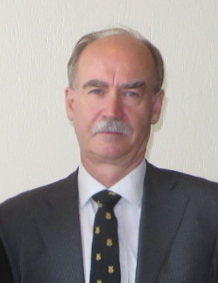 Kevin Charles Prince合作论文数Spectroscopy, Photoemission and Dynamics Group, Elettra Sincrotrone Trieste/Swinburne University of Technology7M. Matteucci合作论文数6Sergo Rudi合作论文数6
 Renzo Rosei合作论文数Sincrotrone Trieste6
 Alessandro Baraldi合作论文数Sincrotrone Trieste, S.c.p.A.6
 Luca Rumiz合作论文数5
 Nicola Mahne合作论文数5Fava Claudio合作论文数5Raimondi Lorenzo合作论文数5C. Rojas合作论文数5
 Federica Bondino合作论文数Consiglio Nazionale delle Ricerche;Elettra Sincrotrone Trieste5
 Marco Finazzi合作论文数Nano-Optics Laboratory, Department of Physics, Politecnico di Milano5Ja Martingago合作论文数4I. Cudin合作论文数4r godnig合作论文数4
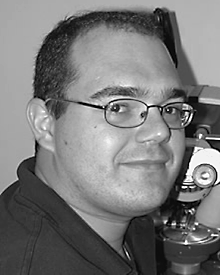 Capotondi Flavio合作论文数Elettra Sincrotrone Trieste4
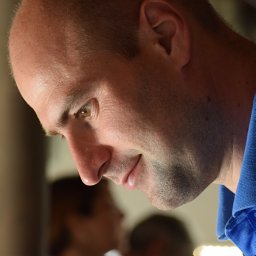 Pedersoli Emanuele合作论文数Fermi, Elettra Sincrotrone Trieste4
 E. Román合作论文数Instituto de Ciencia de Materiales de Madrid (ICMM-CSIC), Cantoblanco, 28049 Madrid, Spain4
 B. Diviacco合作论文数4
 R. Gunnella合作论文数Unitá di Ricerca INFM, Universitá di Camerino4M Te Plate合作论文数4Carlo Callegari合作论文数Elettra - Sincrotrone Trieste S.C.p.A.4Enrico Allaria合作论文数Elettra-Sincrotrone Trieste S.C.p.A., 34151 Basovizza (Trieste), Italy4M. Barnaba合作论文数4R. Gobessi合作论文数3Mv Russo合作论文数3D. Spiga合作论文数3D. Giuressi合作论文数3Comin Alberto合作论文数NanoPhysics and NanoChemistry Units, Istituto Italiano di Tecnologia3
 Alberto Lutman合作论文数SLAC National Accelerator Laboratory, Stanford University3Daniel S. Morton合作论文数3
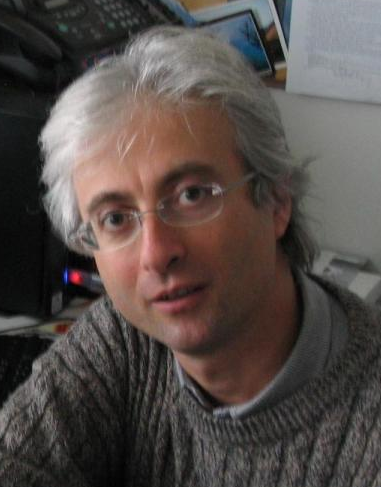 Andrea Di Cicco合作论文数School of Science and Technology, University of Camerino3Giovanni Polzonetti合作论文数3
 Claudio Pellegrini合作论文数Physics & Astronomy Department, College of Physical Sciences, University of California at Los Angeles3Burkhard Kaulich合作论文数3
 Ivano Alessandri合作论文数Laboratorio di Strutturistica Chimica;Dipartimento di Ingegneria Meccanica;Università di Brescia;Laboratorio di Strutturistica Chimica, Università di Brescia3Giovanna Iucci合作论文数3




