Considering the time children spend in schools and the impact this time has on their present and future lives, developing a better understanding of their school experiences is crucial for those interested in childhoods and children. Such understanding requires methodologies that respect children’s evolving capacities and rights, while addressing the methodological challenges arising from their marginalised position. This paper introduces ‘A School Day,’ a board game for participatory play-based research co-created with children that was used to explore children’s experiences of primary school while in Second Class (7-8 years old) in Ireland. The board game is one of the participatory methods employed in the Children’s School Lives study (CSL), a mixed-method dual-cohort longitudinal study of primary schooling in Ireland, tracking over 4,000 primary school children across 184 schools, with an in-depth qualitative case study analysis carried out in 12 schools. This paper describes the co-creation process of the game as a rights-based method for data collection and uses the evidence of its implementation to argue for the recognition of play as a valuable methodological approach in classroom-based educational research. The approach offers accessible and active opportunities for children to share ‘insider knowledge’ and articulate perspectives on sensitive and complex issues –countering more passive data collection methods, through the ‘universal language’ of play. In this paper, we simultaneously critically reflect on the power imbalances inherent in adult–child relations and the school context, emphasising the importance of reflexivity in employing play as a research tool. By detailing the co-creation, piloting, and implementation processes of the board game, this paper highlights both the methodological possibilities and ethical challenges of playful research. It demonstrates how play can foster meaningful participation, inclusion, and respect for children’s rights and capabilities in qualitative educational research.
Given world immigration patterns, understanding immigrant children’s social inclusion is crucial, especially the role of school characteristics. The current study examines how individual- and school-level factors shape immigrant children’s peer relationship In Ireland, a context that has experienced rapid demographic change by remains underexplored in the literature. Drawing on social network theory, we analyse data from 2244 primary school children across 98 schools, using measures of peer group size, friendship nominations, and network centrality to capture social inclusion. Multilevel regression models show that immigrant children report smaller peer groups compared to non-immigrant peers, while minority language use is consistently associated with lower levels of social centrality. Contrary to expectations, school size and urbanicity had limited effects, and classrooms with a higher proportion of immigrant students were associated with reduced inclusion overall, although immigrant children themselves benefitted somewhat from greater classroom diversity. Family affluence was positively associated with all measures of inclusion, highlighting the role of socioeconomic inequalities alongside migration background. The findings underscore the complex and multifaceted nature of social inclusion, showing that both structural and interpersonal dynamics shape immigrant children’s experiences in Irish schools, and pointing to the need for targeted strategies to address linguistic and socioeconomic barriers.
This study used systematic observation to test the direct and moderating effects of class size on children’s momentary behavioural engagement in learning. Data were collected with 632 children (50.6% girls) in 121 classrooms in 92 schools recruited into the Children’s School Lives national cohort study of Irish primary schooling. The Observational and Research Classroom Learning Evaluation (ORACLE) systematic observation tool was used to observe individual children’s behaviour at 30-seconds intervals across a five-minute period in ordinary lessons of English, mathematics, science and Irish. Multilevel path models identified that behavioural engagement was higher in smaller classes and behavioural disengagement was higher in larger classes. Class size also moderated the impact of several individual differences and classroom composition factors on momentary behavioural engagement. For example, smaller classrooms protected lower ability children from disengaging whereas higher ability children were more likely to stay engaged in larger classes compared to lower ability children. Implications for research, practice and policy are discussed.
Children’s School Lives (CSL) is a mixed methods national cohort study of primary schooling in Ireland. This study aims to provide information on children’s learning, engagement, and wellbeing, in the context of primary school curriculum, pedagogy, and assessment, with a focus on social equality and inclusion. CSL has an accelerated cohort design involving two age cohorts of children across 269 classrooms in 185 schools, their classroom teachers, school principals, and parents. A subsample of 15 schools were selected as case studies for longitudinal qualitative data collection. Cohort A ( N = 1,675, girls = 49%) was first studied in the first year of primary school at age 4/5 years (2019/2020). Cohort B ( N = 2,113, boys = 49%) was first studied in their fourth year of primary school at age 8/9 years (2018/2019). Cohort A was followed up for 4 years in primary school and Cohort B was followed up for 5 years in primary school. Annual surveys have been administered to both cohorts of children ( N = 3,788) in classrooms by trained teacher-fieldworkers, and approximately 700 parents, 120 classroom teachers, and 180 school principals using online methods. The case study fieldworkers visit schools annually to collect data with children using focus group and individual interviews, and participatory methods including photovoice. Fieldworkers interview case study classroom teachers, principals, parents, and grandparents. Children and teachers are observed in all classrooms using the Observational Research and Classroom Learning Evaluation (ORACLE) systematic tool, and in case study classrooms using the Classroom Assessment Learning System (CLASS).
Teacher professionalism has become a key focus of education policy worldwide, however, there is no common understanding of what a ‘professional’ teacher means. Existing studies rely mostly on the experiences of teachers in high income, industrialised and predominantly Western contexts, while teachers’ experiences in the Global South are rarely addressed. This paper aims to contribute to this discussion examining perceptions of teacher professionalism at the national and local level in Sierra Leone. The study draws on a longitudinal mixed-methods study, incorporating both survey and ethnographic fieldwork in one of the poorest rural districts of northern Sierra Leone. The analysis revealed a disconnect between the neoliberal concepts found in the national policies and understanding of professionalism at the grassroots level that is focused on extended social roles of teachers within communities. It problematizes the uncritical application of global Western-based concepts to other contexts and shows an urgent need of an open dialogue on teacher professionalism that would include multiple views and perspectives.
Care and education are deeply intertwined, yet the crucial role grandparents play in supporting children's learning often goes unrecognized beyond the private spheres of family life. This paper explores how grandparents navigate new boundaries between love, care, and learning with their grandchildren, in increasingly individualized societies. Drawing on biographical narratives from 12 grandparents of children in the earlier years of primary schooling in Ireland, it explores how intergenerational 'bridges' between the affective domains of home and school operate as practices of pedagogic care. We argue that recognizing grandparents' roles in a wider context of intensified family and working life, can foster reciprocal learning practices that benefit children within the earlier years of primary schooling.
This study explored the longitudinal dynamics of teacher violence and student wellbeing in rural Sierra Leone, West Africa. The participants, totaling 3170 children with an age range of 5 years to 11 years, were cluster-sampled from a large geographic area to ensure gender balance and representation from diverse linguistic backgrounds and religious affiliations. They were drawn from the Safe Learning Study, which spanned over 5 years and involved 100 schools in rural Sierra Leone. Data collection took place in four waves from November 2018 to May 2021. Participants completed self-report questionnaires pertaining to psychological wellbeing and experiences of violence from teachers. The study employed a random intercept cross-lagged panel model (RICLPM) to examine the relationship between violence and mental health across waves. Across children, a relationship between teacher violence and student wellbeing was observed over time. However, for individual children, higher wellbeing predicted lower instances of violence, and vice versa, although to a weak extent. These findings highlight the complex interplay between violence and wellbeing within the cultural sample. These insights contribute to a deeper understanding of the social dynamics surrounding violence and wellbeing, informing targeted interventions and policy initiatives aimed at creating safer and healthier environments for at-risk populations.
The world-wide COVID-19 pandemic significantly disrupted education, with school closures leading to a shift to remote learning. Existing and emerging research has shown that even a relatively short period of missed school has negative consequences for academic and social outcomes among children and young people, especially for those from more vulnerable families. While emerging research drawing on cross-sectional data has focussed on how the pandemic has affected immigrant youth, there is a paucity of longitudinal studies in this field. In this paper, we used the longitudinal Growing Up in Ireland study to investigate and analyse the wellbeing of migrant-origin 12-year-olds in Ireland during the COVID-19 pandemic. Our research shows that compared to their Irish peers, immigrant adolescents had poorer wellbeing, partly related to differences in family support for remote learning, in experiences of poor-quality interaction with peers and in levels of family strain.
Purpose The purpose of this study is to understand the meaning of the term well-being as conceptualised by parents, grandparents, principals and teachers in the Irish primary education system. Design/methodology/approach A hermeneutic phenomenological approach was adopted to understand the nature and meaning of the phenomenon of well-being. Interviews were carried out with 54 principals, teachers, parents and grandparents from a representative sample of primary schools in Ireland. Each participant was asked the same, open, question: “What does well-being mean to you?” Responses were transcribed verbatim and analysed using a combination of the principles of the hermeneutic circle and Braun and Clarke’s framework for thematic analysis. Findings Three conceptualisations of well-being were identified (1) well-being is about being happy, (2) well-being is about being healthy and safe and (3) well-being is something you “do”. Originality/value To the best of our knowledge this paper is the first of its kind to describe how well-being is conceptualised by adults in Irish primary school contexts. In particular it highlights how neoliberal conceptualisations of well-being as a “thing”, a commodity exchanged on assumptions of individualism, moralism and bio-economism, have crept into the education of our youngest citizens.
The transition from preschool to primary school is a pivotal developmental period in children's and their families' lives. However, not all families have equal access to resources and some parents face additional barriers to the types of transition and school readiness activities they participate in compared families with higher social capital. Using quantitative data from the Children's School Lives (CSL) national longitudinal study of Irish primary schooling, we examined the relationship between social and cultural capital and parents' beliefs and participation in academic school readiness activities with their child. A multigroup structural equation model was estimated with online survey data collected from 477 parents to explore these relationships for first time parents and parents who previously experienced the transition with an older child. Results indicated that school connections through an older child may have an impact on parents' academic readiness beliefs and practices during the transition to primary school, particularly for non-native English speakers, and parents with lower levels of education or occupations. The study highlights the need for clear, culturally sensitive policies and information sharing between schools and first time families about school culture and expectations in order to support families during this crucial developmental period.
The theoretical development of the ‘new sociology of childhood,’ coinciding with the recognition of children’s right to express their voice and have it heard on matters affecting them, has inspired the proliferation of participatory methods in research with and by children. This paper addresses a gap in the methodological literature by comparing two such participatory methods, focus group discussions and photovoice, in an exploration of care in children’s school lives. Drawing on the narratives of 49 Second Class children (typically aged eight to nine years) participating in Ireland’s national longitudinal study of primary schooling, Children School Lives ( https://www.cslstudy.ie ), the paper details the data collection, processing, and analysis associated with each method, as well as the emergent themes arising from each. We draw on our exploration of care in children’s school lives in order to illustrate the comparison of the two participatory methods. Our comparative analysis underscores the greater complexity associated with the data collection, processing, and analysis for photovoice. In addition, emergent themes suggest two distinct discourses on care arising from each method. While narratives from focus group discussions offer descriptive accounts of children’s experiences, photovoice data provide a more personal, emotive, and in-depth account of care in children’s school lives. Methodological decisions taken in this study and implications for future research which employs participatory methods with children are discussed and positioned within the wider literature.
All schools possess a duty of care towards their students. However, this duty of care falls unevenly across schools, with those serving low-income communities often responding to the material and psychological effects of poverty as a priority. This duty of care for such schools was placed into stark relief during the period of COVID-19 school closures, when structural inequalities in society became particularly pronounced. Previous research has drawn distinctions between different forms of caring enacted in schools serving low-income communities. These range from practices centred on children’s academic learning to those more concerned with children’s welfare and well-being—which, for the purposes of this paper, we term as academic nurturing and affective nurturing respectively. Others recognise the need for schools in low-income communities to perform a dual role and engage in both forms of nurturing simultaneously—which we term as critical nurturing. This paper presents findings based on case studies from three designated disadvantaged primary schools in Ireland during pandemic-related closures. It draws on interviews from the Children’s School Lives longitudinal study with the teachers, principals, and families of four Junior Infant children (typically aged four to five years). Our findings suggest a typology of nurturing pedagogies, with academic and affective nurturing emphasised to varying degrees across our three schools during this period. Narratives from interviewees also demonstrate the central role of school culture and leadership in achieving critical nurturing, with significant social justice implications for the education of children in schools serving low-income communities.
The COVID-19 pandemic caused worldwide educational disruption. This paper addresses a gap in the literature relating to the impact of the pandemic on learning experiences of children in rural communities in the Global South, particularly in earlier years of schooling. Children in these communities are at considerable disadvantage in comparison to their urban peers due to poor school infrastructure and challenges in recruitment and retention of teachers. Drawing on a mixed-methods study of primary school children, their teachers and families in rural Sierra Leone, both during and immediately after school closures, the paper highlights how primary schools and their communities responded to the pandemic and how this influenced children's engagement with their learning. While national planning focused on pandemic control measures and provision of some remote learning support, findings highlight challenges for poor rural communities in accessing basic learning supports and the consequent disruption to children's education.
The concept of 'pedagogic voice' emphasises the capacity of children to express their views on matters related to teaching, learning and curriculum. 'Pedagogic voice' aligns with children's rights to be listened to and the extent to which their views are fully considered and acted upon. Combined, these rights based approaches positively shape children's learning experiences. This paper draws on quantitative and qualitative data from the longitudinal mixed methods cohort study Children's School Lives to explore children's voice. Grounded in the sociology of pedagogic voice literature and building upon research on children's participatory rights, the paper explores children's experiences of being heard and actively participating in decision-making processes in diverse primary school settings in Ireland. It analyses children's voice by looking at their capacity to influence their own learning, contrasting their experiences and perspectives, to those of their teachers. Findings illustrate the interplay between children's and teachers' narratives regarding children's voice and their pedagogical encounters to explore the impact on teaching and learning processes, highlighting structural challenges to the realisation of children's voice in primary classrooms in Ireland.
During the COVID19 crisis, school closure was a frequent feature of Government responses. The Children's School Lives (CSL) national cohort study of primary schooling in Ireland had to be adapted and transferred online as an interim response to the unprecedented impact that the pandemic had on the research environment. Adapting longitudinal qualitative research in response to a global pandemic brought specific challenges. In addition to moving data collection to remote methods, longitudinal studies also needed to maintain a focus on retention of research participants and sustain an analysis that informs the longitudinal design of the study. Based on reflective research practice during the COVID19 pandemic and through the collaborative production of methodological knowledge, this paper contributes to the literature on remote research during times of crisis. However, it also extends this literature as the methodological learning can be applied beyond the very particular circumstances of a pandemic.
This phenomenological research draws upon Pinar's concept of currere to frame the lived experiences of Cian, a young boy in an economically disadvantaged primary school in Ireland. By adapting Pinar's 4-stages of currere research (regressive, progressive, analytic and synthetic), we explore Cian's personal and academic lived experiences over a 2-year period, and his growing feelings of academic disengagement. The paper portrays the complex interactions between Cian's personal and academic lived experiences and demonstrates how he simultaneously internalised and yet resisted his primary school experiences. Embedded within Cian's narrative are snapshots of teachers under pressure, struggling to support the individual learning needs of vulnerable children in line with standardised curricular demands, and the negative impact this can have upon learners like Cian. We argue that adapting Pinar's methodology to focus upon children's voices in education is valuable at a time of curriculum change within Irish primary education, challenging 'efficiency-based' curriculum narratives and re-centring children's well-being and holistic development.
The current study examined whether delivering wellbeing interventions in schools impacted anxiety development in middle childhood. Schools have an important role to play in addressing children’s anxiety through daily practice in classrooms and by implementing specialist wellbeing interventions that support children’s coping. A nationally representative sample of Irish primary school children (N = 2313; 48.9% male) were surveyed when they were in second class (M age 8.09 years, SD = 0.39) and fourth class (M age 9.96 years, SD = 0.40) of primary school. Teachers reported on wellbeing interventions in schools. Key findings from moderation analyses suggest that family affluence and being female predicted a greater increase in anxiety development and that wellbeing interventions interacted with family affluence to reduce anxiety development for more affluent children. These findings can be used to strengthen the design and implementation of wellbeing interventions for a more efficacious approach to minimising children’s anxiety development.
There is a large body of research on parents’ engagement with schools but much less is known about whether this differs for migrant and native parents. The chapter draws on national-level data in relation to teacher perceptions of immigrant parent contact with them, and interest in, their children’s education, in addition to qualitative analysis of patterns of engagement between immigrant parents and their teachers/principals in a number of primary schools. Teachers report lower levels of contact with non-Western European parents and tend to see them as less interested in their children’s education. Contrary to the perceptions of teachers, immigrant parents report high levels of interest in their children’s education but face challenges in navigating the Irish education system. Their differing levels of linguistic, social and cultural know how cut across their capacities and confidence to become more directly involved, and visible, with their children’s schooling. Schools also varied in their levels of readiness to engage with immigrant parents, especially those who presented as the ethnic ‘other’ (those from Africa, Asia and Eastern Europe). The chapter highlights the importance of inter-cultural competence and pro-active engagement by schools in fostering meaningful engagement with immigrant parents.
 Seaneen Sloan合作论文数University College Dublin32
 Jennifer E. Symonds合作论文数30
 Elena Samonova合作论文数Sch Educ, Univ Coll Dublin16
 Kathleen Lynch合作论文数School of Education, University College Dublin16
 Bernie Grummell合作论文数16
 Gabriela Martinez Sainz合作论文数UCD Sch Educ, UCD13
 Daniel Capistrano合作论文数12
 Ciaran Sugrue合作论文数12Barbara Moore合作论文数6Deirdre McGillicuddy合作论文数6Aimee Smith合作论文数School of Education, University College Dublin6
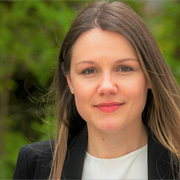 Olga Ioannidou合作论文数Department of Education, University of Oxford;School of Education, University College Dublin6Mags Crean合作论文数6
 Giuseppe Bolotta合作论文数Univ Durham4
 Giulio D'Urso合作论文数University College Dublin4
 Aoife Crummy合作论文数3
 Declan Fahie合作论文数3
 Anne Trine Kjørholt合作论文数3Elizabeth Tobin合作论文数2Emma Farrell合作论文数Sch Educ, Univ Coll Dublin2
 Morten Greaves合作论文数Lebanese Amer Univ2Merike Darmody合作论文数2
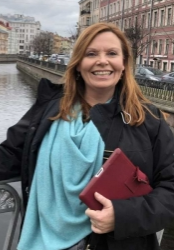 Sharon Bessell合作论文数Crawford School of Public Policy, College of Asia and the Pacific, The Australian National University2Richard Byrne合作论文数2
 Gill Crozier合作论文数Department of Education, School of Education, University of Roehampton2
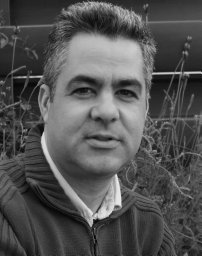 Spyros Spyrou合作论文数Surgical Department, General Hospital2
 Emer Smyth合作论文数Economic and Social Research Institute Dublin2Wendy Luttrell合作论文数2
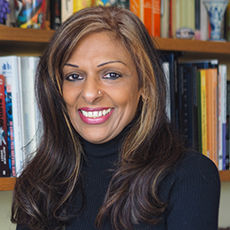 Kalwant Bhopal合作论文数The Department of Education and Social Justice, School of Education, College of Social Sciences, University of Birmingham2Tom Cockburn合作论文数2
 Firouz Gaini合作论文数2M. Crean合作论文数1Sean Gleasure合作论文数1Le Ngoc Thao合作论文数1Lea Janine A. Gajardo合作论文数1dona papastylianou合作论文数1Sofia Johari合作论文数1Margaret Crean合作论文数1Sinead Downey合作论文数1nic ghiolla phadraig合作论文数1Elizabeth Welty合作论文数1Eva Vivian Justine合作论文数1
 William Kinsella合作论文数1John Roderick Madarcos合作论文数1
 Prawesti Wulandari合作论文数1
 Margaret Kernan合作论文数1
 Gavin Murphy合作论文数University College Dublin School of Education1
 Benjamin M Torsney合作论文数Policy Org & Leadership Studies Dept, Temple Univ1
 Carya Maharja合作论文数Ctr Sustainable Energy & Resources Management, Univ Nas1




