The near-complete and articulated skeleton of a new iguanodontian dinosaur, Haolong dongi gen. et sp. nov., from the Lower Cretaceous of northeastern China, preserves exquisitely fossilized skin. The integument includes large overlapping scutate scales along the tail and tuberculate scales around the neck and thorax markedly different from the scale pattern described in other iguanodontians. Remarkably, these scales are interspersed with cutaneous spikes preserved at the cellular level. Tomographic and histological analyses reveal a hollow, cylindrical structure composed of a cornified stratum corneum overlying a pluristratified epidermis with keratinocytes preserved to the level of nuclei, surrounding a porous central dermal pulp. These spikes differ structurally from known protofeathers in non-avian dinosaurs and scaly spines in extant squamates, suggesting a distinct evolutionary origin. Their morphology and distribution imply a primary role in predator deterrence, with potential secondary functions in thermoregulation or mechanoreception. This discovery provides unprecedented insight into the microanatomy of non-avian dinosaur skin and highlights the complexity of skin evolution in ornithischian dinosaurs.
Feathers originate as protofeathers before birds, in pterosaurs and basal dinosaurs. What characterizes a feather is not only its outgrowth, but its barb cells differentiation and a set of beta-corneous proteins. Reticula appear concomitantly with feathers, as small bumps on plantar skin, made only of keratins. Avian scales, with their own set of beta-corneous proteins, appear more recently than feathers on the shank, and only in some species. In the chick embryo, when feather placodes form, all the non-feather areas of the integument are already specified. Among them, midventral apterium, cornea, reticula, and scale morphogenesis appear to be driven by negative regulatory mechanisms, which modulate the inherited capacity of the avian ectoderm to form feathers. Successive dermal/epidermal interactions, initiated by the Wnt/β-catenin pathway, and involving principally Eda/Edar, BMP, FGF20 and Shh signaling, are responsible for the formation not only of feather, but also of scale placodes and reticula, with notable differences in the level of Shh, and probably FGF20 expressions. This sequence is a dynamic and labile process, the turning point being the FGF20 expression by the placode. This epidermal signal endows its associated dermis with the memory to aggregate and to stimulate the morphogenesis that follows, involving even a re-initiation of the placode.
All living jawed vertebrates possess teeth or did so ancestrally. Integumental surface also includes the cornea. Conversely, no other anatomical feature differentiates the clades so readily as skin appendages do, multicellular glands in amphibians, hair follicle/gland complexes in mammals, feathers in birds, and the different types of scales. Tooth-like scales are characteristic of chondrichthyans, while mineralized dermal scales are characteristic of bony fishes. Corneous epidermal scales might have appeared twice, in squamates, and on feet in avian lineages, but posteriorly to feathers. In contrast to the other skin appendages, the origin of multicellular glands of amphibians has never been addressed. In the seventies, pioneering dermal-epidermal recombination between chick, mouse and lizard embryos showed that: (1) the clade type of the appendage is determined by the epidermis; (2) their morphogenesis requires two groups of dermal messages, first for primordia formation, second for appendage final architecture; (3) the early messages were conserved during amniotes evolution. Molecular biology studies that have identified the involved pathways, extending those data to teeth and dermal scales, suggest that the different vertebrate skin appendages evolved in parallel from a shared placode/dermal cells unit, present in a common toothed ancestor, c.a. 420 mya.
Recent studies on the origin of feathers have been stimulated by discoveries of feather-like structures in various nonavian theropod dinosaurs from Late Jurassic to Early Cretaceous deposits in northeastern China. Filamentous integumentary structures are also known in two ornithischian dinosaurs from China, but whether these filaments form part of the evolutionary lineage of feathers has been controversial. Kulindadromeus zabaikalicus, a basal neornithischian dinosaur from the Jurassic of Siberia, preserves diverse integumentary structures, including monofilaments, more complex protofeather structures and scales on its tail and distal parts of its limbs. These exceptionally preserved specimens suggest that integumental features were diversified even in ornithischian dinosaurs and that "protofeather"-like structures were potentially widespread among the entire dinosaur clade.
There are close connections in terms of genomic regulation between numerous regularly arrayed structures in the epidermis, including denticles in sharks, dermal scales in teleost fish, epidermal scales in reptiles, feathers in birds, and hairs in Feathers have long been regarded as the innovation that drove the success of birds. However, feathers have been reported from close dinosaurian relatives of birds, and now from ornithischian dinosaurs and pterosaurs, the cousins of dinosaurs. Incomplete preservation makes these reports controversial. If true, these findings shift the origin of feathers back 80 million years before the origin of birds. Gene regulatory networks show the deep homology of scales, feathers, and hairs. Hair and feathers likely evolved in the Early Triassic ancestors of mammals and birds, at a time when synapsids and archosaurs show independent evidence of higher metabolic rates (erect gait and endothermy), as part of a major resetting of terrestrial ecosystems following the devastating end-Permian mass extinction. mammals.
While every jawed vertebrate, or its recent ancestor, possesses teeth, skin appendages are characteristic of the living clades: skin denticles (odontodes) in chondrichthyans, dermal scales in teleosts, ducted multicellular glands in amphibians, epidermal scales in squamates, feathers in birds and hair-gland complexes in mammals, all of them showing a dense periodic patterning. While the odontode origin of teleost scales is generally accepted, the origin of both feather and hair is still debated. They appear long before mammals and birds, at least in the Jurassic in mammaliaforms and in ornithodires (pterosaurs and dinosaurs), and are contemporary to scales of early squamates. Epidermal scales might have appeared several times in evolution, and basal amniotes could not have developed a scaled dry integument, as the function of hair follicle requires its association with glands. In areas such as amnion, cornea or plantar pads, the formation of feather and hair is prevented early in embryogenesis, but can be easily reverted by playing with the Wnt/BMP/Shh pathways, which both imply the plasticity and the default competence of ectoderm. Conserved ectodermal/mesenchymal signalling pathways lead to placode formation, while later the crosstalk differs, as well as the final performing tissue(s): both epidermis and dermis for teeth and odontodes, mostly dermis for teleosts scales and only epidermis for squamate scale, feather and hair. We therefore suggest that tooth, dermal scale, epidermal scale, feather and hair evolved in parallel from a shared placode/dermal cell unit, which was present in a common ancestor, an early vertebrate gnathostome with odontodes, ca. 420 million years ago.
This chapter summarizes the development of the mouse integument, which forms the external body envelope, and its associated appendages. We trace the origin of the epidermis (and other integumental epithelia) from the ectoderm and the origin of the dermis (and other stroma) from the mesenchyme of various source populations, depending on body region. We note how these two components interact, via signaling cross-talk, in the formation of diverse integumental appendages, including multiple types of hair, and eight types of glands, including the deeply penetrating mammary glands. Due to space constraints, we omit discussion of claws, pigmentation, and oral mucosa, as well as skin immune and sensory cells.
We propose to study the wound healing in Zebrafish by using firstly a differential approach for modelling morphogens diffusion and cell chemotactic motion, and secondly a hybrid model of tissue regeneration, where cells are considered as individual objects and molecular concentrations are described by partial differential equations.
BACKGROUND: The cornea is an ectodermal/neural crest derivative formed through a cascade of molecular mechanisms to give rise to the specific optical features necessary for its refractory function. Moreover, during cornea formation and maturation, epithelial stem cells are sequestered to ensure a constant source for renewal in the adult. RESULTS: Recent progress in the molecular and stem cell biology of corneal morphogenesis and renewal shows that it can serves as a paradigm for epithelial /mesenchymal organ biology. This review will synthesize historical knowledge together with recent data to present a consistent overview of cornea specification, formation, maturation, and maintenance. CONCLUSIONS: This should be of interest not only to developmental biologists but also ophthalmologists, as several human vision problems are known to be rooted in defects in corneal development. Developmental Dynamics 243:1226–1241, 2014. © 2014 Wiley Periodicals, Inc.
Middle Jurassic to Early Cretaceous deposits from northeastern China have yielded varied theropod dinosaurs bearing feathers. Filamentous integumentary structures have also been described in ornithischian dinosaurs, but whether these filaments can be regarded as part of the evolutionary lineage toward feathers remains controversial. Here we describe a new basal neornithischian dinosaur from the Jurassic of Siberia with small scales around the distal hindlimb, larger imbricated scales around the tail, monofilaments around the head and the thorax, and more complex featherlike structures around the humerus, the femur, and the tibia. The discovery of these branched integumentary structures outside theropods suggests that featherlike structures coexisted with scales and were potentially widespread among the entire dinosaur clade; feathers may thus have been present in the earliest dinosaurs.
Lingham-Soliar questions our interpretation of integumentary structures in the Middle-Late Jurassic ornithischian dinosaur Kulindadromeus as feather-like appendages and alternatively proposes that the compound structures observed around the humerus and femur of Kulindadromeus are support fibers associated with badly degraded scales. We consider this hypothesis highly unlikely because of the taphonomy and morphology of the preserved structures.
Background: The corneal epithelium (CE) overlays a stroma, which is derived from neural crest cells, and appears to be committed during chick development, but appears still labile in adult rabbit. Its specification was hitherto regarded as resolved and dependent upon the lens, although without experimental support. Here, we challenged CE fate by changing its environment at different stages. Results: Recombination with a dermis showed that CE commitment is linked to stroma formation, which results in Pax6 stabilization in both species. Surgical ablation shows that CE specification has already taken place when the lens placode invaginates, while removal of the early lens placode led to lens renewal. To block lens formation, bone morphogenetic protein (BMP) signaling, one of its last inducing factors, was inhibited by over‐expression of Gremlin in the ocular ectoderm. This resulted in lens‐less embryos which formed a corneal epithelium if they survived 2 weeks. Conclusion: The corneal epithelium and lens share a common pool of precursors. The adoption of the CE fate might be dependent on the loss of a lens placode favoring environment. The corneal fate is definitively stabilized by the migration of Gremlin‐expressing neural crest cells in the lens peripheral ectoderm. Developmental Dynamics 242:401–413, 2013. © 2013 Wiley Periodicals, Inc.
We propose a new scenario for mammary evolution based on comparative review of early mammary development among mammals. Mammary development proceeds through homologous phases across taxa, but evolutionary modifications in early development produce different final morphologies. In monotremes, the mammary placode spreads out to form a plate-like mammary bulb from which more than 100 primary sprouts descend into mesenchyme. At their distal ends, secondary sprouts develop, including pilosebaceous anlagen, resulting in a mature structure in which mammary lobules and sebaceous glands empty into the infundibula of hair follicles; these structural triads (mammolobular-pilo-sebaceous units or MPSUs) represent an ancestral condition. In marsupials a flask-like mammary bulb elongates as a sprout, but then hollows out; its secondary sprouts include hair and sebaceous anlagen (MPSUs), but the hairs are shed during nipple formation. In some eutherians (cat, horse, human) MPSUs form at the distal ends of primary sprouts; pilosebaceous components either regress or develop into mature structures. We propose that a preexisting structural triad (the apocrine-pilo-sebaceous unit) was incorporated into the evolving mammary structure, and coupled to additional developmental processes that form the mammary line, placode, bulb and primary sprout. In this scenario only mammary ductal trees and secretory tissue derive from ancestral apocrine-like glands. The mammary gland appears to have coopted signaling pathways and genes for secretory products from even earlier integumentary structures, such as odontode (tooth-like) or odontode-derived structures. We speculate that modifications in signal use (such as PTHrP and BMP4) may contribute to taxonomic differences in MPSU development.
In zoology it is well known that birds are characterized by the presence of feathers, and mammals by hairs. Another common point of view is that avian scales are directly related to reptilian scales. As a skin embryologist, I have been fascinated by the problem of regionalization of skin appendages in amniotes throughout my scientific life. Here I have collected the arguments that result from classical experimental embryology, from the modern molecular biology era, and from the recent discovery of new fossils. These arguments shape my view that avian ectoderm is primarily programmed toward forming feathers, and mammalian ectoderm toward forming hairs. The other ectoderm derivatives - scales in birds, glands in mammals, or cornea in both classes - can become feathers or hairs through metaplastic process, and appear to have a negative regulatory mechanism over this basic program. How this program is altered remains, in most part, to be determined. However, it is clear that the regulation of the Wnt/beta-catenin pathway is a critical hub. The level of beta-catenin is crucial for feather and hair formation, as its down-regulation appears to be linked with the formation of avian scales in chick, and cutaneous glands in mice. Furthermore, its inhibition leads to the formation of nude skin and is required for that of corneal epithelium. Here I propose a new theory, to be further considered and tested when we have new information from genomic studies. With this theory, I suggest that the alpha-keratinized hairs from living synapsids may have evolved from the hypothetical glandular integument of the first amniotes, which may have presented similarities with common day terrestrial amphibians. Concerning feathers, they may have evolved independently of squamate scales, each originating from the hypothetical roughened beta-keratinized integument of the first sauropsids. The avian overlapping scales, which cover the feet in some bird species, may have developed later in evolution, being secondarily derived from feathers.
Danielle Dhouailly received her Bachelor of Science degree (Biology) from Paris University. She then worked on a Ph.D. with Philippe Sengel at Grenoble University. After that, she went to Canada and the USA to work with Drs. M. Hardy, R. Sawyer and H. Sun before going back to Grenoble and starting her own laboratory. In the 1970s, she began a series of creative epithelial-mesenchymal recombination experiments among chicken feathers, mouse hairs and lizard scales, and later between rabbit cornea / mouse hairs. Through these original experiments, she elegantly demonstrated that the dermis initiates the formation of cutaneous appendages, while their type is specified by the class and regional origin of the epidermis. Subsequently she showed that the induction of an ectodermal organ, even in an adult epithelium, provokes the appearance of the related tissue stem cells. These works pioneered the concepts which are used in stem cell biology today. Her laboratory now works on the molecular mechanisms underlying these processes. Her papers are typically characterized by an initial insightful observation, followed by rigorous experiments and thoughtful discussions. They are rich with different shades of perspectives, almost like a piece of impressionist art. She loves gardening and her pets. She considers herself a good observer and hard worker driven by curiosity. Her best moments occur when she suddenly becomes enlightened as to an explanation of a basic concept when looking at experimental results or discussing ideas with colleagues. She believes that good results last forever, although interpretations can change. Her advice to young scientists is to be rigorous at the bench, to think hard, and not to be shy to speak up. The following is the story of how this young, female naturalist grew into a well-respected developmental biologist.
Feathers, like hairs, first appear as primordia consisting of an epidermal placode associated with a dermal condensation that is necessary for the continuation of their differentiation. Previously, the BMPs have been proposed to inhibit skin appendage formation. We show that the function of specific BMPs during feather development is more complex. BMP2 and BMP7, which are expressed in both the epidermis and the dermis, are involved in an antagonistic fashion in regulating the formation of dermal condensations, and thus are both necessary for subsequent feather morphogenesis. BMP7 is expressed earlier and functions as a chemoattractant that recruits cells into the condensation, whereas BMP2 is expressed later, and leads to an arrest of cell migration, likely via its modulation of the EIIIA fibronectin domain and α4 integrin expression. Based on the observed cell proliferation, chemotaxis and the timing of BMP2 and BMP7 expression, we propose a mathematical model, a reaction-diffusion system, which not only simulates feather patterning, but which also can account for the negative effects of excess BMP2 or BMP7 on feather formation.
During embryonic development, feathers appear first as primordia consisting of an epidermal placode associated with a dermal condensation. When 7-day chick embryo dorsal skin fragments showing three rows of feather primordia are cultured, they undergo a complete reorganization, which involves the down-regulation of morphogenetic genes and dispersal of dermal fibroblasts, leading to the disappearance of primordia. This loss of organisation is followed by de novo differentiation events. We have used this model to study potential factors involved in the formation of dermal condensations. Activation of Integrins by extracellular Manganese or intracellular Calcium prevents the initial disappearance of the dermal condensations. New primordia formation occurs even after inhibition of the Notch pathway albeit with some fusion between primordia. In conclusion, dermal fibroblast migration requires beta1-Integrin whereas the stability of dermal condensations could depend on Notch/Integrin interaction.
 Jp Viallet合作论文数16Jacques Thélu合作论文数11
 Tung-Tien Sun合作论文数School of Medicine, New York University8Catherine Chaloin-Dufau合作论文数7
 Frederic Michon合作论文数7
 Isabel Olivera合作论文数7Ingrid Fliniaux合作论文数Institute of Biotechnology, University of Helsinki6
 David Pearton合作论文数Reproductive Technologies, AgResearch Crown Research Institute6
 Bertrand Favier合作论文数Institut de Genetique et de Biologie Moleculaire et Cellulaire;Institut Albert Bonniot;Institut de Genetique et de Biologie Moleculaire et Cellulaire, Institut Albert Bonniot5
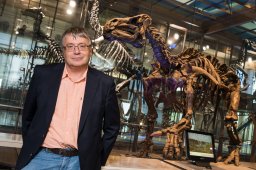 Pascal Godefroit合作论文数Directorate Earth & Hist Life, Royal Belgian Inst Nat Sci5
 Colin Jahoda合作论文数Department of Biosciences, Durham University5B Kanzler合作论文数4Philippe Sengel合作论文数4Fabrice Prin合作论文数Francis Crick Inst, London, England4
 Jacques Demongeot合作论文数University Grenoble Alpes4Margaret H. Hardy合作论文数4
 Maria Eithne McNamara合作论文数4
 Rachida Cadi合作论文数3
 Benoit Kanzler合作论文数3M Manabe合作论文数3S Blanchet合作论文数3
 Olivier Pourquié合作论文数Department of Genetics, Harvard Medical School, Harvard University;Harvard Stem Cell Institute, Harvard University;Brigham and Women's Hospital3Sinitsa Sofia M合作论文数3Viallet Jean合作论文数3Esther Ruberte合作论文数3Philippe Sengel合作论文数3
 Michael J. Benton (Mike Benton)合作论文数Department of Geology|University of Bristol3Ferraris Corinne合作论文数3Olav T. Oftedal合作论文数3Jean-Jacques Michaille合作论文数3J M Garnier合作论文数2Ying Yang合作论文数2Ge Rogers合作论文数2Genevieve Chevalier合作论文数2sandrine blanchet合作论文数2Yuri L. Bolotsky合作论文数2Arthur Zelent合作论文数2TT SUN合作论文数2M. Haftek合作论文数2
 Robert M Lavker合作论文数Department of Dermatology, Feinberg School of Medicine, Northwestern University2
 Denis Duboule合作论文数Department of Genetics and Evolution, Faculty of Sciences, University of Geneva;EPFL2
 Sandra Galvin合作论文数2Krust Andrée合作论文数2Ferraris C合作论文数2
 Alexander Sizov合作论文数2
 Frederic Cambazard合作论文数2M. Kieny合作论文数2
 Guy Serre合作论文数Unité Différenciation Epithéliale et Autoimmunité Rhumatoïde, Université Toulouse III - Paul Sabatier2Sylvain Missier合作论文数2




