Pleistocene water bodies have been studied using the paleolimnological approach, which traces environmental changes using particular subfossils as ecological proxies, rather than analysis of the paleocommunities themselves. Within a given taphocoenosis, the presence and quantity of animals are related to environmental conditions rather than to community types where relationships between taxa are stabilized during their long-term co-occurrence and are (at least partially) more important than the particular environmental conditions at the time of deposition, which may have experienced significant seasonal and inter-seasonal variations. Here, we analyze Branchiopoda (Crustacea) of two paleolocalities in the Transbaikalian Region of Russia: Urtuy (MIS3) and Nozhiy (older than 1.5 million years). Cladocerans Daphnia (Ctenodaphnia) magna, D. (C.) similis, D. (Daphnia) pulex, Ceriodaphnia pulchella-reticulata, C. laticaudata, Simocephalus sp., Moina cf. brachiata, M. macropopa clade, Chydorus cf. sphaericus, Capmtocercus sp. and anostracans Branchinecta cf. paludosa, and Streptocephalus (Streptocephalus) sp. are found in two localities. With the exception of the last taxon, which now occurs in the southern Holarctic, all other taxa inhabit the Transbaikalian Region. Within Eurasia, the steppe zone has the greatest diversity of large branchiopods and a high diversity of some cladocerans, such as subgenus Daphnia (Ctenodaphnia) and Moina sp. Here we demonstrated that the branchiopod community in shallow steppe water bodies has been unchanged since at least the Pleistocene, demonstrating long-term morphological and ecological stasis.
Recent studies on the origin of feathers have been stimulated by discoveries of feather-like structures in various nonavian theropod dinosaurs from Late Jurassic to Early Cretaceous deposits in northeastern China. Filamentous integumentary structures are also known in two ornithischian dinosaurs from China, but whether these filaments form part of the evolutionary lineage of feathers has been controversial. Kulindadromeus zabaikalicus, a basal neornithischian dinosaur from the Jurassic of Siberia, preserves diverse integumentary structures, including monofilaments, more complex protofeather structures and scales on its tail and distal parts of its limbs. These exceptionally preserved specimens suggest that integumental features were diversified even in ornithischian dinosaurs and that "protofeather"-like structures were potentially widespread among the entire dinosaur clade.
Diverse epidermal appendages including grouped filaments closely resembling primitive feathers in non-avian theropods, are associated with skeletal elements in the primitive ornithischian dinosaur Kulindadromeus zabaikalicus from the Kulinda locality in south-eastern Siberia. This discovery suggests that “feather-like” structures did not evolve exclusively in theropod dinosaurs, but were instead potentially widespread in the whole dinosaur clade. The dating of the Kulinda locality is therefore particularly important for reconstructing the evolution of “feather-like” structures in dinosaurs within a chronostratigraphic framework. Here we present the first dating of the Kulinda locality, combining U-Pb analyses (LA-ICP-MS) on detrital zircons and monazites from sedimentary rocks of volcaniclastic origin and palynological observations. Concordia ages constrain the maximum age of the volcaniclastic deposits at 172.8 ± 1.6 Ma, corresponding to the Aalenian (Middle Jurassic). The palynological assemblage includes taxa that are correlated to Bathonian palynozones from western Siberia, and therefore constrains the minimum age of the deposits. The new U-Pb ages, together with the palynological data, provide evidence of a Bathonian age—between 168.3 ± 1.3 Ma and 166.1 ± 1.2 Ma—for Kulindadromeus. This is older than the previous Late Jurassic to Early Cretaceous ages tentatively based on local stratigraphic correlations. A Bathonian age is highly consistent with the phylogenetic position of Kulindadromeus at the base of the neornithischian clade and suggests that cerapodan dinosaurs originated in Asia during the Middle Jurassic, from a common ancestor that closely looked like Kulindadromeus. Our results consequently show that Kulindadromeus is the oldest known dinosaur with “feather-like” structures discovered so far.
The palynological and macrofloral assemblages from the Lower Member of the Ukurey Formation have been studied based on the materials from a section exposed along the Kulinda Ravine (Olov Depression, Transbaikalia). This section is of special interest due to the occurrence of ornithischian dinosaurs. Based on palynological and palaeobotanical data, the studied deposits are dated as Middle Jurassic (Bathonian). Specific features of the palynological assemblages allow the correlation of the studied interval with Western Siberian palynozones calibrated by ammonite and foraminiferal successions. The resulting biostratigraphy suggests that the lower extent of the Ukurev Formation is not restricted to the Upper Jurassic as previously assumed. Lacustrine origin of the Lower Member of the Ukurev Formation is confirmed based on palaeoenvironmental analysis, showing changes of the terrestrial vegetation, associated with climatic conditions and fluctuations of the lake-level. Palaeobotanical and palynological data suggest that Middle Jurassic floras of eastern regions of Central Asia, southern regions of Siberia and Far East, as well as northern regions of China exhibit similar features.
Three Transbaikalian localities of dinosaur remains confined to concretions of the Tarbagatai Coal Field, coal deposits of the Arbagarskaya deposits, and tuffaceous sedimentary deposits of the Ukureiskaya Formation of the Olov Depression (Kulinda locality) are considered. In concretions, dinosaur fossils co-occur with fragmentary and complete skeletons of Salmo and Palaeoniscidae and tuffaceous sedimentary beds of volcanic lakes have yielded fossils of temporary inhabitants, such as notostracans, conchostracans, izophlebiid dragonflies, ostracods, and plants with index species of the Late Jurassic Unda–Daya Assemblage. These characteristics can be used in searching for Jurassic dinosaur burials in Mongolia. The horizons with concretions are known in the Tormkhon, Tevsh, Unduruhin, Anda-Khuduk, and Ulanereg formations. Remains of notostracans and izophlebiid dragonflies were recorded in the Ulugei Formation and terrigenous deposits of the Khalgyn-Ula locality and mass burials of large izophlebiid dragonflies and Palaeoniscidae have occur in the Dorogot Formation.
One of the most interesting Mesozoic Lagerstätten, Shar Teg in southwestern Mongolia, is reviewed. The geological structure and oryctocoenoses of Shar Teg are described. Shar Teg is one of the most diverse Jurassic Lagerstätten in terms of fossils represented. Fossils from Shar Teg include aquatic and terrestrial plants, mollusks, crustaceans, insects, fishes, amphibians, reptiles, and mammals. Insects are the most diverse group. To date, a total of 297 species of 161 families and 22 orders have been described or recorded in Shar Teg, making it possible to reconstruct comprehensively the Jurassic biota of the locality. The oryctocoenosis composition is peculiar; it includes only six species described from other localities. The oryctocoenosis appears to link the faunas of eastern Asia, Central Asia, and Europe. A total of 31 new species are described.
Middle Jurassic to Early Cretaceous deposits from northeastern China have yielded varied theropod dinosaurs bearing feathers. Filamentous integumentary structures have also been described in ornithischian dinosaurs, but whether these filaments can be regarded as part of the evolutionary lineage toward feathers remains controversial. Here we describe a new basal neornithischian dinosaur from the Jurassic of Siberia with small scales around the distal hindlimb, larger imbricated scales around the tail, monofilaments around the head and the thorax, and more complex featherlike structures around the humerus, the femur, and the tibia. The discovery of these branched integumentary structures outside theropods suggests that featherlike structures coexisted with scales and were potentially widespread among the entire dinosaur clade; feathers may thus have been present in the earliest dinosaurs.
Lingham-Soliar questions our interpretation of integumentary structures in the Middle-Late Jurassic ornithischian dinosaur Kulindadromeus as feather-like appendages and alternatively proposes that the compound structures observed around the humerus and femur of Kulindadromeus are support fibers associated with badly degraded scales. We consider this hypothesis highly unlikely because of the taphonomy and morphology of the preserved structures.
 Svetlana Aleksandrovna Reshetova合作论文数4
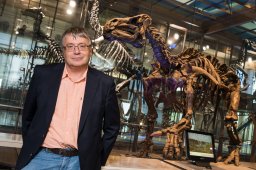 Pascal Godefroit合作论文数Directorate Earth & Hist Life, Royal Belgian Inst Nat Sci4
 Maria Eithne McNamara合作论文数3
 Dhouailly Danielle合作论文数3
 Andrei O. Frolov合作论文数2Yuri L. Bolotsky合作论文数2
 Aude Cincotta合作论文数School of Biological, Earth and Environmental Sciences, University College Cork2
 Alexander Sizov合作论文数2
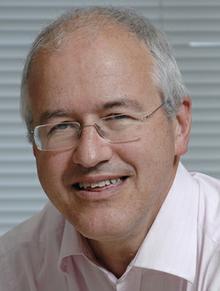 Michael J. Benton (Mike Benton)合作论文数Department of Geology|University of Bristol2
 Ekaterina Pestchevitskaya合作论文数2Paul Spagna合作论文数2D. V. Vassilenko合作论文数1A. G. Ponomarenko合作论文数1Valentina S. Markevich合作论文数1Yu. M. Gubin合作论文数1IRINA M. MASHCHUK合作论文数1A. Yu. Popov合作论文数1
 A. A. Zharov合作论文数1
 Anna N Neretina合作论文数AN Severtsov Inst Ecol & Evolut, Leninsky Prospect 33, Moscow 119071, Russia1Alexander V. Khramov合作论文数Russian Academy of Sciences, Russian Academy of Sciences1Elena D. Lukashevich合作论文数Palaeontological Institute;Russian Academy of Sciences1
 Alexey Kotov合作论文数Laboratory for Ecology of Aquatic Communities and Invasions, A.N. Severtsov Institute of Ecology and Evolution of Russian Academy of Sciences1
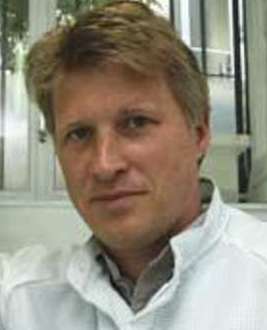 Axel Gerdes合作论文数Institut fur Geowissenschaften, Goethe-Universität Frankfurt am Main1Alexei Bashkuev合作论文数1D. S. Aristov合作论文数1Nina D. Sinitshenkova合作论文数1
 Johan Yans合作论文数Facultés Universitaires Notre-Dame de la Paix1
 Evgeny V. Yan合作论文数1
 Vinciane Debaille合作论文数Laboratoire G-Time, Université Libre de Bruxelles1
 D. Christopher Rogers合作论文数EcoAnalysts , Inc1I. D. Sukatsheva合作论文数1




