The electron injector comprises a number of components, including a 5 MeV electron RF photoinjector, a 25-meter-long low energy (≤40 MeV) beamline and a ~100-meter-long high energy (≤300 MeV) beamline. ParameterValue Beam Energy 20 MeV -300 MeV Bunch Charge < 10 fC -3.2 nC per pulse Bunch Train (Macropulse) 0.5 -9 MHz for up to 1 ms (3000 bunches, 3 MHz nominal) Bunch Train Frequency 1 -5 Hz Bunch Length Range: 0.9 -70 ps (Nominal: 5 ps) Bunch Emittance 50 MeV, 50 pC/pulse Horz: 1.6 ± 0.2 μm Vert: 3.4 ± 0.1 μm Beam momentum 50-150 MeV/c Beam current 4 mA (e-), 8 mA (p+) Perimeter 40 m RF voltage 300 V RF frequency 30 MHz, 2.14 MHz
Particle accelerators and storage rings have been transformative instruments of discovery, and, for many applications, innovations in particle-beam cooling have been a principal driver of that success 1 . Stochastic cooling (SC), one of the most important conceptual and technological advances in this area 2 – 6 , cools a beam through granular sampling and correction of its phase-space structure, thus bearing resemblance to a ‘Maxwell’s demon’. The extension of SC from the microwave regime up to optical frequencies and bandwidths has long been pursued, as it could increase the achievable cooling rates by three to four orders of magnitude and provide a powerful tool for future accelerators. First proposed nearly 30 years ago, optical stochastic cooling (OSC) replaces the conventional microwave elements of SC with optical-frequency analogues and is, in principle, compatible with any species of charged-particle beam 7 , 8 . Here we describe a demonstration of OSC in a proof-of-principle experiment at the Fermi National Accelerator Laboratory’s Integrable Optics Test Accelerator 9 , 10 . The experiment used 100-MeV electrons and a non-amplified configuration of OSC with a radiation wavelength of 950 nm, and achieved strong, simultaneous cooling of the beam in all degrees of freedom. This realization of SC at optical frequencies serves as a foundation for more advanced experiments with high-gain optical amplification, and advances opportunities for future operational OSC systems with potential benefit to a broad user community in the accelerator-based sciences.
Experiments were performed at the Fermilab Accelerator Science and Technology (FAST) facility to elucidate the effects of long-range wakefields (LRWs) in TESLA-type superconducting rf cavities. In particular, we investigated the higher-order modes (HOMs) generated in the eight cavities of a cryomodule (CM) due to off-axis steering with correctors located ~4 m upstream of the CM. We have observed correlated submacropulse centroid slews of a few-hundred microns and centroid oscillations at ~240 kHz in the rf BPM data after the CM. The entrance energy into the CM was 25 MeV, and the exit energy was 100 MeV with 125 pC/b and 400 pC/b in 50-bunch pulse trains. These experimental results were evaluated for machine learning training aspects which will be used to inform the commissioning plan for the Linac Coherent Light Source-II injector CM.
Electron-cooling offers a relatively simple scheme to enable high-luminosity collisions in future electron-ion and hadron colliders. Contemplated TeV-energy hadron colliders require relativistic (sub 100 MeV) high-charge [${\cal O}(\mbox{nC})$] electron beams with a specific transverse eigenemittance partition. This paper discusses the generation of high-charge ($Q\le 3.2$~nC) 40 MeV electron bunches with eigenemittance partition consistent with requirements associated with electron-cooling option for future electron-ion colliders. The supporting experiment was performed at the FAST facility at FermiLab. The data are compared with numerical simulations and the results discussed in the context of beam requirement for future electron-ion colliders.
Optical Stochastic Cooling (OSC) is an optical-bandwidth extension of Stochastic Cooling that could advance the state-of-the-art cooling rate in beam cooling by three to four orders of magnitude [1-3]. The concept of OSC was first suggested in the early 1990s by Zolotorev, Zholents and Mikhailichenko, and replaced the microwave hardware of SC with optical analogs, such as wigglers and optical amplifiers. A number of variations on the original OSC concept have been proposed, and while a variety of proof-of-principle demonstrations and operational uses have been considered, the concept was not experimentally demonstrated up to now [4-9]. An OSC R&D program has been underway at IOTA for the past several years [4]. Run #3 of the IOTA ring, which began in Nov. 2020 and concluded in Aug. 2021, was focused on the worlds first experimental demonstration of OSC. The experimental program was successful in demonstrating and characterizing the OSC physics with the major outcomes including strong cooling in one, two and three dimensions, validation of the theoretical models of OSC and the demonstration of OSC with a single electron. This report briefly describes the activities and major milestones of the OSC program during Run #3. Detailed descriptions of the OSC theory, conceptual design and hardware elements can be found in reference [4].
We report direct observations of submicropulse beam centroid shifts (head-tail kicks) correlated with short-range wakefields generated by off-axis electron-beam steering in Tesla-type superconducting rf cavities. The experiments were performed at the Fermilab Accelerator Science and Technology (FAST) Facility using its unique configuration of a photocathode rf gun injecting beam into two separated nine-cell cavities. The cavities are in series with corrector magnets and beam position monitors (BPMs) located before, between, and after them. The off-axis steering in the cavity was guided by the rf BPM data and higher-order mode circuitry targeting the first and second dipole passbands. The centroid shifts of up to 300 pm from head to tail of the similar to 10-ps-long micropulses at 500 pC/b in a 3-MHz pulse train were measured via optical transition radiation at a downstream screen with a Hamamatsu C5680 synchroscan streak camera. We also showed that we could compensate such kicks from the first cavity with the shortrange wakefields (SRWs) in the second cavity, and we observed the dilution of the beam size in the tail of the pulses. A simple numerical model of the SRW effect in a single Tesla cavity is compared to the experiment successfully. In principle, these fundamental results may be scaled to cryomodule configurations of major free-electron laser (FEL) facilities such as the European XFEL, Linac Coherent Light Source or LCLS-II XFEL, and the conceptual international linear collider.
scheduled to start in Summer of 2018. Both lowand highenergy beam lines are equipped with an array of diagnostics including beam position monitors, wall current monitor, and beam imaging stations to monitor beam parameters during tuning, operation and studies. Beam emittance in particular is of critical importance for both commissioning of the IOTA ring as well as operation of the ICS and other experiments. (In this paper the emittance normally means RMS emittance unless specifically defined.) In order to measure the emittance of the beam quickly and accurately a real-time emittance measurement has been developed based on a multi-slit method [4] in the low-energy beamline. In addition to the emittance, this method provides Twiss parameters that may be used in beamline simulation programs to properly match with low energy beamline lattice to the CM. Emittance of the highenergy beam is measured with standard quad scan approach. In this report we present results from emittance studies using both methods during the 2017 300 MeV beam commissioning run (Fig. 1).
We report the direct observations of the correlation of higher order modes (HOMs) generated by off-axis electron beam steering in TESLA-type SCRF cavities and submacropulse beam centroid shifts (with the potential concomitant effect on averaged beam size and emittance). The experiments were performed at the Fermilab Accelerator Science and Technology (FAST) facility using its unique configuration of a PC rf gun injecting beam into two separated 9-cell cavities in series with corrector magnets and beam position monitors (BPMs) located before, between, and after them. The ~100-kHz oscillations with up to 300μm amplitudes at downstream locations were observed in a 3-MHz micropulse repetition rate beam with charges of 100, 300, 500, and 1000 pC/b, although the effects were much reduced at 100 pC/b. INTRODUCTION The interest in beam quality preservation through accelerator structures [1] continues as the community constructs larger facilities and pushes toward brighter beams. Several major facilities depend on the superconducting RF TESLA-type L-band accelerator modules [2,3] including the FLASH free-electron laser (FEL) [4], the European XFEL [5], the under-construction LCLS-II XFEL [6], the proposed MaRIE XFEL at Los Alamos [7], and the International Linear Collider (ILC) under consideration in Japan [8]. A recent study at FLASH using one specific TE111 HOM showed that the root mean squared (rms) relative alignments were about 342 μm for the 40 cavities in the 5 cryomodules with some close to 600 μm off axis [9]. The assessment of the effects on beam quality of such implementations warrants further study as higher brightness electron beams are sought and achieved. We have explored the effects of beam-induced higher order modes on the pulse train at the Fermilab Accelerator Science and Technology (FAST) facility which is based on TESLA-type cavities [10]. Direct measurement of the transverse magnetic dipole modes’ power in the first two passbands as outcoupled were tracked and correlated with the beam motion as a complement of studies on cavity misalignments [9,11-15]. Initial calculations reproduced a key feature of the phenomena. In principle, these results may be scaled to cryomodule configurations of major accelerator facilities. EXPERIMENTAL SETUP/TECHNIQUES The FAST linac [15] is based on an L-band rf photocathode (PC) gun which generates and accelerates an electron beam with a 3-MHz micropulse (or bunch (b)) repetition rate up to 5 MeV. The gun’s Cs2Te photocathode is irradiated by the UV component of the drive laser system [16]. The two HOM-instrumented SCRF capture cavities denoted CC1 and CC2 follow [15]. These accelerate the electron beam up to 50 MeV for transport through the remaining low energy beamline as shown in Fig. 1. Under nominal low-energy operation conditions, the magnet at beamline location 122 bends the beam downward into the low energy absorber to provide a final beam energy measurement. This and other nominal beam parameters for these studies are summarized in Table 1. Table 1: Beam Parameters at the FAST Linac For the purposes of these studies, the final beam energy was kept constant at 33 MeV with a range of micropulse charges utilized as indicated. The basic diagnostics for the HOM studies include the rf BPMs (denoted as B1xx) located before, between, and after the two cavities as shown in Fig. 1 as well as ten BPMs before the low energy spectrometer dipole. These are supplemented by the imaging screens inserted into beam line vacuum crosses (Xyyy) denoted at X107, X111, X121, and X124. The HOM couplers Beam Parameter Units Value Micropulse Charge pC 100-1000 Micropulse Rep. rate MHz 1,3 Beam sizes (sigma) μm 100-1200 Emittance Norm. Bunch length Total Energy mm mrad
Many modern and future particle accelerators employ high gradient superconducting RF (SRF) to generate beams of high energy, high intensity and high brightness for research in high energy and nuclear physics, basic energy sciences, etc. In this paper we report the record performance large-scale SRF system with average beam accelerating gradient matching the International Linear Collider (ILC) specification of 31.5 MV m(-1). Design of the eight cavity 1.3 GHz SRF cryomodule, its performance without the beam and results of the system commissioning with high intensity electron beam at Fermilab Accelerator Science and Technology (FAST) facility are presented. We also briefly discuss opportunities for further beam studies and tests at FAST including those on even higher gradient and more efficient SRF acceleration, as well as exploration of the system performance with full ILC-type beam specifications.
We report the direct observations of sub-macropulse beam centroid oscillations correlated with higher order modes (HOMs) which were generated by off-axis electron beam steering in TESLA-type superconducting RF cavities. The experiments were performed at the Fermilab Accelerator Science and Technology (FAST) facility using its unique configuration of a photocathode rf gun injecting beam into two separated 9-cell cavities in series with corrector magnets and beam position monitors (BPMs) located before, between, and after them. Oscillations of ~100 kHz in the vertical plane and ~380 kHz in the horizontal plane with up to 600-{\mu}m amplitudes were observed in a 3-MHz micropulse repetition rate beam with charges of 100, 300, 500, and 1000 pC/b. However, the effects were much reduced at 100 pC/b. The measurements were based on HOM detector circuitry targeting the first and second dipole passbands, rf BPM bunch-by-bunch array data, imaging cameras, and a framing camera. Calculations reproduced the oscillation frequencies of the phenomena in the vertical case. In principle, these fundamental results may be scaled to cryomodule configurations of major accelerator facilities.
Canonical-angular-momentum (CAM) dominated beams can be formed in photoinjectors by applying an axial magnetic field on the photocathode surface. Such a beam possess asymmetric eigenemittances and is characterized by the measure of its magnetization. CAM removal with a set of skew-quadrupole magnets maps the beam eigenemittances to the conventional emittances along each transverse degree of freedom, thereby yielding a flat beam with asymmetric transverse emittance. In this paper, we report on the experimental generation of CAM dominated beam and their subsequent transformation into flat beams at the Fermilab Accelerator Science and Technology (FAST) facility 1 . Our results are compared with numerical simulations and possible applications of the produced beams are discussed.
We present modeling and measurements of flattop amplification of a laser pulse train in a diode pumped Nd:YLF system. We establish a theoretical model, accounting for the transverse Gaussian shape of an amplified laser beam, in order to explain remaining slopes in the pulse train energy. The influence of the transverse Gaussian shape on the train's flatness has been experimentally verified. Based on the model we are able to increase the total amplification of a long train of infrared seed beam in the drive laser system at the Fermilab Accelerator Science and Technology facility. The single-pass amplifier improvements resulted in a gain of ∼7 with flat output pulse train for up to 1000 seed pulses.
The Integrable Optics Test Accelerator (IOTA) is a storage ring for advanced beam physics research currently being built and commissioned at Fermilab. It will operate with protons and electrons using injectors with momenta of 70 and 150 MeV/c, respectively. The research program includes the study of nonlinear focusing integrable optical beam lattices based on special magnets and electron lenses, beam dynamics of space-charge effects and their compensation, optical stochastic cooling, and several other experiments. In this article, we present the design and main parameters of the facility, outline progress to date and provide the timeline of the construction, commissioning and research. The physical principles, design, and hardware implementation plans for the major IOTA experiments are also discussed.
X-rays have widespread applications in science and industry, but developing a simple, compact, and highquality X-ray source remains a challenge. Our collaboration has explored the possible use of channeling radiation driven by a 50 MeV low-emittance electron beam to produce narrowband hard X-rays with photon energy of 40 to 140 keV [1-3]. Here we present the simulated X-ray spectra including the background bremsstrahlung contribution, and a description of the required optimization of the relevant electron-beam parameters necessary to maximize brilliance of the resulting X-ray beam. Results are presented from our test of this, carried out at the Fermilab Accelerator Science & Technology (FAST) facility’s 50MeV low-energy electron injector. As a result of the beam parameters, made possible by the photo-injector based SRF linac, the average brilliance at FAST was expected to be about one order of magnitude higher than that in previous experiments.
Masking a dispersive beamline segment such as a dogleg or a chicane is a simple way to shape a beam in the longitudinal and transverse space. This technique is often employed to generate arbitrary bunch profiles for beam/laser-driven accelerators and FEL undulators or even to reduce background noise from dark currents in electron linacs. We have been investigating a beammodulation of a slit-masked chicane at the electron injector beamline of the Fermilab Accelerator Science and Technology (FAST) facility. With the chicane design parameters (bending angle of 18, bending radius of 0.95 m and R56 ~ 0.19 m) and a nominal beam of 3 ps bunch length, Elegant simulations showed that a slit-mask with slit period 900 m and aperture width 300 m induces a modulation with bunch-to-bunch space of about 187 m (0.25 nC), 270 m (1 nC) and 325 m (3.2 nC) with 3 ~ 6% correlated energy spread: An initial energy modulation pattern has been observed in the electron spectrometer downstream of the masked chicane using a micro-pulse charge of 270 pC and 40 micro-pulses. The first Optical Transition Radiation (OTR) signals of the longitudinally modulated beam were measured with a Martin-Puplett interferometer and a synchro-scan streak camera at a station between the chicane and spectrometer.
The low energy part of the FAST linear accelerator based on 1.3 GHz superconducting RF cavities was successfully commissioned. During commissioning, beam based model dependent methods were used to correct linear lattice and trajectory. Lattice correction algorithm is based on analysis of beam shape from profile monitors and trajectory responses to dipole correctors. Trajectory responses to field gradient variations in quadrupoles and phase variations in superconducting RF cavities were used to correct bunch offsets in quadrupoles and accelerating cavities relative to their magnetic axes. Details of used methods and experimental results are presented.
With ever increasing demands for intensities in modern accelerators, the understanding of space-charge effects becomes crucial. Herein are presented measurements of optically shaped picosecond-long electron beams in a superconducting L-band linac over a wide range of charges, from 0.2 nC to 3.4 nC. At low charges, the shape of the electron beam is preserved, while at higher charge densities, modulations on the beam convert to energy modulations. Energy profile measurements using a spectrometer and time profile measurements using a streak camera reveal the dynamics of longitudinal space-charge on MeV-scale electron beams.
Particle accelerators are host to myriad nonlinear and complex physical phenomena. They often involve a multitude of interacting systems, are subject to tight performance demands, and should be able to run for extended periods of time with minimal interruptions. Often times, traditional control techniques cannot fully meet these requirements. One promising avenue is to introduce machine learning and sophisticated control techniques inspired by artificial intelligence, particularly in light of recent theoretical and practical advances in these fields. Within machine learning and artificial intelligence, neural networks are particularly well-suited to modeling, control, and diagnostic analysis of complex, nonlinear, and time-varying systems, as well as systems with large parameter spaces. Consequently, the use of neural network-based modeling and control techniques could be of significant benefit to particle accelerators. For the same reasons, particle accelerators are also ideal test-beds for these techniques. Many early attempts to apply neural networks to particle accelerators yielded mixed results due to the relative immaturity of the technology for such tasks. The purpose of this paper is to re-introduce neural networks to the particle accelerator community and report on some work in neural network control that is being conducted as part of a dedicated collaboration between Fermilab and Colorado State University (CSU). We describe some of the challenges of particle accelerator control, highlight recent advances in neural network techniques, discuss some promising avenues for incorporating neural networks into particle accelerator control systems, and describe a neural network-based control system that is being developed for resonance control of an RF electron gun at the Fermilab Accelerator Science and Technology (FAST) facility, including initial experimental results from a benchmark controller.
In photocathodes the achievable electron-beam parameters are controlled by the laser used to trigger the photoemission process. Non-ideal laser distribution hampers the final beam quality. Laser inhomogeneities, for instance, can be amplified by space-charge force and result in fragmented electron beams. To overcome this limitation laser shaping methods are routinely employed. In the present paper we demonstrate the use of simple microlens arrays to dramatically improve the transverse uniformity. We also show that this arrangement can be used to produce transversely-patterned electron beams. Our experiments are carried out at the Argonne Wakefield Accelerator facility.
 Jinhao Ruan合作论文数19
 James Santucci合作论文数12Thurman-Keup R合作论文数11Alex H. Lumpkin合作论文数11d broemmelsiek合作论文数9
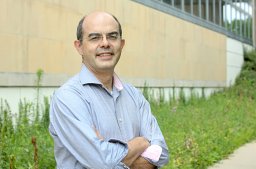 Philippe Piot合作论文数Department of Physics and Northern Illinois Center for Accelerator & Detector Development, Northern Illinois University9Elvin Harms合作论文数8
 Alexander Romanov合作论文数Arrhythmia Department, State Research Institute of Circulation Pathology8
 Sergei Nagaitsev合作论文数Department of Physics, Old Dominion University;Brookhaven National Laboratory;Jefferson Lab7
 Giulio Stancari合作论文数7d crawford合作论文数6
 Alexander Valishev合作论文数Fermi National Accelerator Laboratory6Darren Crawford合作论文数5
 Aliaksei Halavanau合作论文数SLAC National Accelerator Laboratory, Stanford University5Kermit Carlson合作论文数5Jerry Leibfritz合作论文数5
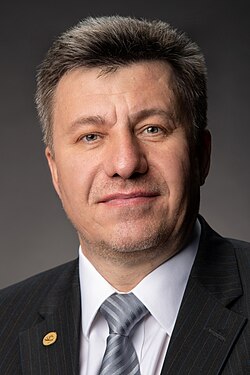 Vladimir Shiltsev合作论文数Fermi National Accelerator Laboratory5P. Prieto合作论文数4
 Jayakar Charles Tobin Thangaraj合作论文数4
 Nnabuk Okon Eddy合作论文数Department of Chemistry;Ahmadu Bello University;Department of Chemistry, Ahmadu Bello University4W. Schappert合作论文数3Oa Nezhevenko合作论文数3
 Auralee Edelen合作论文数Natl Accelerator Lab, SLAC3John Reid合作论文数3Cullerton, E.合作论文数3
 Arden Warner合作论文数3Brian Chase合作论文数3Henryk Piekarz合作论文数3B. Chase合作论文数3
 Valeri Lebedev合作论文数Fermi National Accelerator Laboratory3Dennis Nicklaus合作论文数3J. Makara合作论文数2
 Andy Hocker合作论文数Fermi National Accelerator Laboratory2curtis baffes合作论文数2p stabile合作论文数2
 Ihar Lobach合作论文数Dept Phys, Univ Chicago2p varghese合作论文数2Y. Pischalnikov合作论文数2J. Jarvis合作论文数2A. Dick合作论文数2
 Yuriy Pischalnikov合作论文数2Daniel Mihalcea合作论文数2J. G. Power合作论文数2Michael Kucera合作论文数2
 Bruce Carlsten合作论文数Los Alamos National Laboratory2Brian L. Beaudoin合作论文数University of Maryland2Kip Bishofberger合作论文数Los Alamos National Laboratory2Wei Gai合作论文数2




