The inclusive cross sections for charm (cc) and bottom (bb) quark-antiquark pair production in proton-proton, proton-antiproton, and proton-nucleus collisions are studied over a wide range of center-of-mass energies, √(s)≈ 10 GeV–400 TeV. All existing data over √(s)≈ 10 GeV–14 TeV are collected and compared to calculations at next-to-next-to-leading-order (NNLO) accuracy using the new fixed-order MaunaKea open-source code for varying sets of parton distribution functions (PDFs). Relative to next-to-leading-order (NLO) predictions, the NNLO cross sections are enhanced by up to a factor of two, with the associated theoretical scale uncertainties reduced by the same amount, leading to agreement with experimental data over the full range of collision energies. The NNLO results are also compared with NLO predictions obtained within the SACOT-m__T general-mass variable-flavour-number scheme. Despite still sizable theoretical and experimental uncertainties, cc cross section at multi-TeV energies can provide extra constraints on the gluon density at very small-x in global PDF analyses. In the bottom sector, more precise cross section measurements at low energies, √(s)≈ 10–100 GeV, can help constraint the bottom-quark pole mass.
Limits on spin-0 axion-like-particles (ALPs) coupling to photons are reinterpreted as constraints on massive spin-2 graviton-like-particles (GLPs) with universal coupling α_G/M_P (where M_P is the reduced Planck mass) to the Standard Model fields. A minimally model-dependent recasting is performed, exploiting the formally analogous production and detection mechanisms for both particle types, based on the Primakoff and Gertsenshtein effects, i.e., photon-axion/graviton conversion. Constraints originally derived in the ALP mass vs. photon-coupling plane (m_a, g_aγ) are translated into the corresponding bounds in the GLP (m_G, α_G/M_P) parameter space over the full mass range, m_a,G≈ 10^-20–10^14eV probed in current and future experimental setups including cavity-based detectors (haloscopes and resonant upconversion devices), helioscopes, magnetometers, optical interferometers, beam dumps, fixed-target, and collider experiments, as well as astrophysical and cosmological constraints. Generic scenarios are considered in which GLPs are a dark matter candidate and not. Whereas current ALP searches do not set stronger bounds on massive spin-2 particles than fifth-force tests, future magnetometers, two-beam interferometers, and upconversion experiments have the potential to provide very strong sensitivity, down to α_G/M_P≈ 10^-32GeV^-1, for light graviton-like particles with m_G≲ 10^-8eV. These future detectors exhibit comparatively greater sensitivity to massive gravitons than to axions. For massive gravitons at the TeV scale, exclusive diphoton decay searches, employed in ALP studies, offer a complementary approach to standard searches for spin-2 resonances in other inclusive final states.
Measurements of hadronic final states in e^{+}e^{-} e + e − collisions at centre-of-mass (CM) energies below the Z peak can notably extend the FCC-ee physics reach in terms of precision quantum chromodynamics (QCD) studies. Hadronic final states can be studied over a range of hadronic energies \sqrt{s_\mathrm{had}} ≈ 20-80\,\mathrm{GeV} s h a d ≈ 20 − 80 G e V by exploiting events with hard initial- and final-state QED radiation (ISR/FSR) during the high-luminosity Z-pole run, as well as in dedicated short (about one month long) e^{+}e^{-} e + e − runs at CM energies \sqrt{s} ≈ 40\,\mathrm{GeV} s ≈ 40 G e V and 60\,\mathrm{GeV} 60 G e V . Using realistic estimates and fast detector simulations, we show that data samples of about 10^{9} 10 9 hadronic events can be collected at the FCC-ee at each of the low-CM-energy points. Such datasets can be exploited in a variety of precision QCD measurements, including studies of light-, heavy-quark and gluon jet properties, hadronic event shapes, fragmentation functions, and nonperturbative dynamics. This will offer valuable insights into strong interaction physics, complementing data from nominal FCC-ee runs at higher center-of-mass energies, \sqrt{s} ≈ 91, 160, 240, s ≈ 91 , 160 , 240 , and 365\,\mathrm{GeV} 365 G e V .
The strong coupling constant α_s is a fundamental parameter of the Standard Model. Its precise determination is essential for accurately predicting, studying, and understanding processes at the Large Hadron Collider and future experiments such as the Future Circular Collider. Event shape and correlator observables measured at electron-positron colliders provide one of the cleanest environments for extracting α_s, thanks to their sensitivity to α_s and the availability of high-precision data from the Large Electron-Positron Collider. More broadly, such observables provide an ideal setting to develop and test our understanding of the perturbative and non-perturbative elements of Quantum Chromodynamics, which will underpin the field's precision and discovery frontiers for decades to come. Despite these advances, significant discrepancies persist between different determinations of α_s from event shapes, both in the extracted central values and estimated uncertainties. This document motivates the establishment of a dedicated Task Force to coordinate a community-wide effort addressing these open questions. We report on the first two-day meeting held at CERN in November 2025, summarizing the scientific discussion and documenting the experimental analyses identified as priorities during the meeting, as well as the concrete list of tasks to be carried out by the theory community in preparation for future meetings.
We report a detailed simulation study of the search for s-channel Higgs boson production in e^+e^- collisions at a center-of-mass (c.m.) energy of √(s)=125 GeV at the CERN Future Circular Collider (FCC-ee), as a means to constrain the electron Yukawa coupling, y_e. The process of interest is e^+e^-→ H→ WW^*→ℓ^+ jj with four different WW^* final states considered, involving both on- and off-shell W bosons decaying either into dileptons (ℓ^± = e^± and μ^±, including those from τ^± decays) or into dijets (jj). Signal and background events are discriminated through a multiclass gradient boosted decision tree exploiting a comprehensive set of kinematic and topological variables across the four final-state categories. Assuming a monochromatized c.m. energy spread of 4.1 MeV, yielding a σ_e^+e^-→ H = 280 ab resonant cross section, and an integrated luminosity of 10 ab^-1, the analysis achieves a combined statistical significance of 2.0 standard deviations. This corresponds to an upper limit on the coupling modifier κ_e = y_e/y_e^ SM≲ 1.35 at 95% confidence level, and provides the most stringent constraint on the electron Yukawa coupling achieved in simulation-based studies to date.
We present a survey of rare and exclusive few-body decays of the standard model (SM) Higgs boson, defined as those into two to four final particles with branching fractions ℬ≲ 10^-5. Studies of such decays can be exploited to constrain Yukawa couplings of quarks and leptons, probe flavour-changing Higgs decays, estimate backgrounds for exotic Higgs decays into beyond-SM particles, and/or confirm quantum chromodynamics factorization with small nonperturbative corrections. We collect the theoretical ℬ values for about 70 unobserved Higgs rare decay channels, indicating their current experimental limits, and estimating their expected bounds in p-p collisions at the HL-LHC. Among those, we include 20 new decay channels computed for the first time for ultrarare Higgs boson decays into photons and/or neutrinos, radiative quark-flavour-changing exclusive decays, and radiative decays into leptonium states. This survey can help guide and prioritize upcoming experimental and theoretical studies of unobserved Higgs boson decays.
The cross sections for the single exclusive production of (pseudo)scalar and (pseudo)tensor hadrons, as well as of even-spin QED bound states formed by pairs of opposite-charge leptons or hadrons, are estimated for photon-fusion processes in ultraperipheral collisions (UPCs) of proton-proton, protonFuture Circular Collider, as well as in proton-air interactions at the highest energies reached by cosmic rays impinging on Earth. The UPC cross sections are computed in the equivalent photon approximation with realistic photon fluxes from the charged form factors of proton, lead, gold, and nitrogen ions. The production of four types of even-spin systems are considered: quarkonium (spin-0, 2,4 meson bound states, from the lightest pi 0 meson up to toponium), exotic hadrons (including candidate multiquark states), leptonium (positronium, dimuonium, and ditauonium), as well as mesonium (pionium, kaonium, D-onium, and B-onium) and baryonium (notably, protonium) QED atoms. The expected yields at the different colliders are presented for about 50 such even-spin composite resonances, for which the ALICE and LHCb experiments have potential reconstruction capabilities at the LHC. The impact of the diphoton decays of such even-spin states is also discussed as resonant backgrounds in the measurement of light-by-light scattering (gamma gamma -> gamma gamma) over m gamma gamma approximate to 0.1-15-GeV masses in Pb-Pb UPCs at the LHC.
The forward–backward (FB) asymmetry of b quarks in e^+e^- collisions at the Z pole measured at LEP, A__fb^0,b= 0.0992± 0.0016 , remains today one of the electroweak precision observables with the largest disagreement (2.4 σ ) with respect to the Standard Model prediction, (A__fb^0,b)__th = 0.1030 ± 0.0002 . Beyond the dominant statistical uncertainties, QCD effects, such as b-quark showering and hadronization, are the leading sources of A__fb^0,b systematic uncertainty, and have not been revised in the last twenty years. We reassess the QCD uncertainties of the eight original A__fb^0,b LEP measurements, using modern parton shower pythia 8 and vincia simulations with nine different implementations of soft and collinear radiation as well as of parton fragmentation. Our analysis, combined with NNLO massive b-quark corrections independently computed, indicates total propagated QCD uncertainties of ∼ 0.7 ∼ 0.3 A__fb^0,b= 0.0995± 0.0016 average, with a data-theory tension slightly reduced from 2.4 σ to 2.2 σ . Confirmation or resolution of this long-term discrepancy requires a new high-luminosity e^+e^- collider collecting orders-of-magnitude more data at the Z pole to significantly reduce the dominant A__fb^0,b statistical uncertainties, and to improve our understanding of b-quark showering and hadronization.
We explore the potential for discovering massive graviton-like spin-2 particles, interacting with standard model fields. These particles are produced in collisions involving photons at the Large Hadron Collider (LHC) and electron-positron ( e^+ e^- ) collisions. Our investigation utilizes an effective theory, both with and without universal couplings. Specifically, we focus on a massive graviton, denoted as G, that is coupled to the electromagnetic field. The decay of G leads to a resonant excess of diphotons over the light-by-light scattering continuum at the LHC, as well as triphoton final states in e^+e^- colliders. By analyzing existing data, we establish the exclusion limits on the graviton-photon coupling, reaching down to approximately g_Gγ≈ 1–0.05 TeV^-1 for graviton masses ranging from m_G ≈ 100 MeV to 2 TeV. With their expected full integrated, in the low-mass range, significant enhancements are anticipated at Belle II, potentially improving these bounds by a factor of 100. Conversely, at higher masses, the High-Luminosity Large Hadron Collider (HL-LHC) is expected to enhance limits by a factor of 4.
The European Strategy for Particle Physics (ESPP) reflects the vision and presents concrete plans of the European particle physics community for advancing human knowledge in fundamental physics. The ESPP is updated every five-to-six years through a community-driven process. It commences with the submission of specific proposals and other input from the community at large, outlining projects envisioned for the near-, mid-, and long-term future. All submitted contributions are evaluated by the Physics Preparatory Group (PPG), and a preliminary analysis is presented at a Symposium meant to foster a broad community discussion on the scientific value and feasibility of the various ideas proposed. The outcomes of the analysis and the deliberations at the Symposium are synthesized in the current Briefing Book, which provides an important input in the deliberations of the Strategy recommendations by the European Strategy Group (ESG).
Abstract Next-to-leading-order (NLO) quantum electrodynamics (QED) corrections to the production of muon and tau pairs in photon-photon collisions, γγ → μ + μ − , τ + τ − , are calculated in the equivalent photon approximation. We mostly consider γγ processes in ultraperipheral collisions of hadrons at the LHC, but the γγ → τ + τ − process in e+e − collisions at LEP is also discussed. The NLO terms are found to modify the total fiducial cross sections by up to 5%, increasing the tails of the dilepton acoplanarity and transverse momentum distributions, and depleting by up to 15% the yields at high masses, with respect to the leading-order predictions including the very small virtuality of the colliding photons. At the LHC, the calculations obtained with the charge form factor for protons and lead ions including the NLO QED corrections improve the data-theory agreement for all measured differential distributions, and prove an indispensable ingredient for the extraction of precision quantities in photon-photon processes, such as the anomalous magnetic moment of the tau lepton.
The measurement of electron Yukawa coupling ($y_{e}$) via direct *s*-channel Higgs production at $\sim$125 GeV centre-of-mass (CM) energy is significantly facilitated at the FCC-ee, provided that the CM energy spread can be reduced to a level comparable to the natural width of the Higgs boson. This reduction is possible through the “monochromatization” concept, which involves generating opposite correlations between spatial position and energy deviation in the colliding beams. Following initial parametric studies for this collision mode, three different interaction region optics designs, each featuring nonzero horizontal, vertical, or combined dispersion at the interaction point, have been proposed based on the Version 2022 of the FCC-ee Global Hybrid Correction optics. In this paper, we benchmark the upper limits contours on $y_{e}$ with simulated CM energy spread and luminosity using Guinea-Pig, in order to assess, optimize, and compare their physics performances.
High-momentum two-particle correlations are a useful tool for studying jet-quenching effects in the quark-gluon plasma. Angular correlations between neutral-pion triggers and charged hadrons with transverse momenta in the range 4–12 GeV/c and 0.5–7 GeV/c, respectively, have been measured by the PHENIX experiment in 2014 for Au+Au collisions at √(s__NN)=200 GeV. Suppression is observed in the yield of high-momentum jet fragments opposite the trigger particle, which indicates jet suppression stemming from in-medium partonic energy loss, while enhancement is observed for low-momentum particles. The ratio and differences between the yield in Au+Au collisions and p+p collisions, I_AA and Δ_AA, as a function of the trigger-hadron azimuthal separation, Δϕ, are measured for the first time at the Relativistic Heavy Ion Collider. These results better quantify how the yield of low-p_T associated hadrons is enhanced at wide angle, which is crucial for studying energy loss as well as medium-response effects.
The production of six energetic jets in proton-proton (pp) collisions at the LHC is studied as a means to directly observe for the first time the simultaneous scattering of three partons. The single-parton-scattering (SPS) cross sections for the production 2-, 3-, 4-, and 6-jets in pp collisions at center-of-mass energies of √(s) = 14 TeV, are calculated up to next-to-leading-order (NLO) accuracy in perturbative quantum chromodynamics with the MadGraph5_aMC@NLO and ALPGEN codes complemented with Pythia-8 for parton showering, hadronization, and decays. Jets are reconstructed using the anti-k_T algorithm with distance parameter R=0.4. Assuming factorization of multiple hard-scattering probabilities in terms of SPS cross sections, the contributions to six-jet production from double- (DPS) and triple- (TPS) parton scatterings are derived. We find that the TPS contributions represent a ≈20% (≈1%) fraction of the total 6-jets yields for minimum jet transverse momenta of p_T,min = 20 (40) GeV. A detailed multivariate analysis with realistic simulations of fully reconstructed jet samples for the TPS signal and DPS and SPS backgrounds indicates that TPS can be observed in events with six jets with p_T,min=40 GeV each, by collecting an integrated luminosity of 𝒪(50 pb^-1) in a dedicated low-pileup run at the LHC.
Opportunities for searches for axionlike particles (ALPs) coupling to photons in e(+)e(-) collisions at the Future Circular Collider (FCC-ee) and International Linear Collider (ILC) are investigated. We perform a study of the photon-fusion production of ALPs decaying into two photons, e(+)e(-)->(pi)e(+)a(gamma gamma)e(-), over the light-by-light continuum background, for the planned FCC-ee and ILC center-of-mass energies and integrated luminosities. An analysis of the feasibility measurements is presented using parametrized simulations for two types of detectors. Upper limits at 95% confidence level (C.L.) on the cross section for ALP production, sigma(gamma gamma -> a ->gamma gamma), and on the ALP-photon coupling are obtained over the m(a)approximate to 0.1-1000 GeV ALP mass range, and compared to current and future collider searches. Production cross sections down to sigma(gamma gamma -> a ->gamma gamma)approximate to 1 fb (1 ab) will be probed at m(a)approximate to 1 (300) GeV, corresponding to constraints on the axion-photon coupling as low as g(a gamma gamma )approximate to 2 x 10(-3) TeV-1.
The CERN LHC is not only the current energy-frontier collider for parton-parton collisions, but has proven a powerful photon collider providing photon-photon (γγ) collisions at center-of-mass energies and luminosities never reached before. The latest theoretical developments implemented in the gamma-UPC Monte Carlo (MC) event generator, which can calculate arbitrary exclusive final state produced via γγ fusion in ultraperipheral collisions (UPCs) of protons and/or nuclei at the LHC, are presented. These include azimuthal modulations of dilepton pairs produced in the γγ→ℓ^+ℓ^- process, and neutron emission probabilities for photoexcited lead ions in PbPb UPCs. A few comparisons of the results of the updated gamma-UPC v.1.6 code to relevant RHIC and LHC data are presented.
We perform an extensive survey of rare and exclusive few-body decays -- defined as those with branching fractions $\mathcal{B} \lesssim 10^{-5}$ and two or three final particles -- of the Higgs, Z, W bosons, and the top quark. Such rare decays can probe physics beyond the Standard Model (BSM), constitute a background for exotic decays into new BSM particles, and provide precise information on quantum chromodynamics factorization with small nonperturbative corrections. We tabulate the theoretical $\mathcal{B}$ values for almost 200 rare decay channels of the four heaviest elementary particles, indicating the current experimental limits in their observation. Among those, we have computed for the first time ultrarare Higgs boson decays into photons and/or neutrinos, H and Z radiative decays into leptonium states, radiative H and Z quark-flavour-changing decays, and semiexclusive top-quark decays into a quark plus a meson, while updating predictions for a few other rare H, Z, and top quark partial widths. The feasibility of measuring each of these unobserved decays is estimated for p-p collisions at the high-luminosity Large Hadron Collider (HL-LHC), and for $e^+e^-$ and p-p collisions at the future circular collider (FCC).
Theoretical predictions for particle production cross sections and decays at colliders rely heavily on perturbative Quantum Chromodynamics (QCD) calculations, expressed as an expansion in powers of the strong coupling constant alpha S . The current O(1%) uncertainty of the QCD coupling evaluated at the reference Z boson mass, alpha S(mZ2)=0.1179 +/- 0.0009 , is one of the limiting factors to more precisely describe multiple processes at current and future colliders. A reduction of this uncertainty is thus a prerequisite to perform precision tests of the Standard Model as well as searches for new physics. This report provides a comprehensive summary of the state-of-the-art, challenges, and prospects in the experimental and theoretical study of the strong coupling. The current alpha S(mZ2) world average is derived from a combination of seven categories of observables: (i) lattice QCD, (ii) hadronic tau decays, (iii) deep-inelastic scattering and parton distribution functions fits, (iv) electroweak boson decays, hadronic final-states in (v) e+e-, (vi) e-p, and (vii) p-p collisions, and (viii) quarkonia decays and masses. We review the current status of each of these seven alpha S(mZ2) extraction methods, discuss novel alpha S determinations, and examine the averaging method used to obtain the world-average value. Each of the methods discussed provides a 'wish list' of experimental and theoretical developments required in order to achieve the goal of a per-mille precision on alpha S(mZ2) within the next decade.
Opportunities for searches for phenomena beyond the Standard Model (BSM) using heavy-ions beams at high energies are outlined. Different BSM searches proposed in the last years in collisions of heavy ions, mostly at the Large Hadron Collider, are summarized. A few concrete selected cases are reviewed including searches for axion-like particles, anomalous τ electromagnetic moments, magnetic monopoles, and dark photons. Expectations for the achievable sensitivities of these searches in the coming years are given. Studies of CP violation in hot and dense QCD matter and connections to ultrahigh-energy cosmic rays physics are also mentioned.
We study the discovery potential of massive graviton-like spin-2 particles coupled to standard model fields, produced in photon-photon collisions at the Large Hadron Collider (LHC) as well as in electron-positron (e+e−) collisions, within an effective theory with and without universal couplings. Our focus is on a massive graviton G coupled to the electromagnetic field, which decays via G→γγ and leads to a resonant excess of diphotons over the light-by-light scattering continuum at the LHC, and of triphoton final states at e+e− colliders. Based on similar searches performed for pseudoscalar axion-like particles (ALPs), and taking into account the different cross sections, γγ partial widths, and decay kinematics of the pseudoscalar and tensor particles, we reinterpret existing experimental bounds on the ALP-γ coupling into G-γ ones. Using the available data, exclusion limits on the graviton-photon coupling are set down to gGγ≈1–0.05 TeV−1 for masses mG≈100 MeV–2 TeV. Such bounds can be improved by factors of 100 at Belle II in the low-mass region, and of 4 at the HL-LHC at high masses, with their expected full integrated luminosities.
 Byung-Sik Hong合作论文数Department of Physics, College of Science, Korea University304
 Serguei Afanasiev合作论文数Joint Institute for Nuclear Research, Dubna, Russia273
 Julia Velkovska合作论文数244R. Granier De Cassagnac合作论文数Laboratoire Leprince-Ringuet, Ecole Polytechnique, IN2P3-CNRS, Palaiseau, France241
 Dipanwita Dutta合作论文数Homi Bhabha National institute;Nuclear Physics Division, Bhabha Atomic Research Centre238
 Mate Csanad合作论文数Faculty of Natural Sciences, Eötvös Loránd University;Department of Atomic Physics, Eötvös Loránd University233C. Maguire合作论文数Ctr Brasileiro Pesquisas Fis232
 Victoria Greene合作论文数Department of Physics and Astronomy, Vanderbilt University229
 Yajun Mao (冒亚军)合作论文数School of Physics, Peking University222
 Márton Nagy合作论文数Department of Atomic Physics, ELTE Institute of Physics and Astronomy, Faculty of Natural Sciences, Eötvös Loránd University217
 Marcus Hohlmann合作论文数Florida Institute of Technology216Abhay Deshpande合作论文数Brookhaven National Laboratory213
 Mickey Chiu合作论文数Physics Department, Brookhaven National Laboratory;NEXO;PHENIX213
 Tatsuya Chujo合作论文数Institute of Physics, University of Tsukuba;Division of Physics, Faculty of Pure and Applied Sciences, University of Tsukuba213
 Yasuyuki Akiba合作论文数RHIC Physics Research Laboratory, Nishina Center for Accelerator-Based Science, RIKEN213S. Bathe合作论文数211
 Bernd Bassalleck合作论文数Department of Physics and Astronomy, The University of New Mexico211Walter Sondheim合作论文数Los Alamos National Laboratory209O. Dietzsch合作论文数209
 Kazuyoshi Kurita (栗田和好)合作论文数Department of Physics, College of Science, Rikkyo University;Center for Development and Support of Higher Education, Rikkyo University207
 Alexei Denisov合作论文数Department of Experimental Physics, Institute for High Energy Physics206F. Matathias合作论文数205A. Bazilevsky合作论文数204A. Glenn合作论文数204S. F. Pate合作论文数204M. Grosse Perdekamp合作论文数Department of Physics, University of California204P. L. McGaughey合作论文数Los Alamos National Laboratory203T. Ichihara合作论文数203
 Paul Constantin合作论文数ELI-NP, IFIN-HH203
 Melvin L. Brooks合作论文数Los Alamos National Laboratory202g bunce合作论文数201Olivier Drapier合作论文数CNRS201
 Ryugo Hayano合作论文数University of Tokyo201S. Esumi合作论文数201
 Achim Franz合作论文数Physics Department, Brookhaven National Laboratory201Terry Awes合作论文数Oak Ridge National Laboratory201
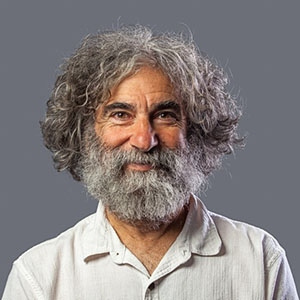 Ed Hartouni合作论文数Lawrence Livermore National Laboratory201
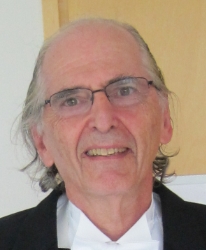 Michael J. Tannenbaum合作论文数Physics Department, Brookhaven National Laboratory200
 Marzia Rosati合作论文数Department of Physics and Astronomy, Iowa State University200Anders Oskarsson合作论文数Division of Particle and Nuclear Physics, Department of Physics, Faculty of Science, Lund University199Shoji Nagamiya合作论文数199V. Bumazhnov合作论文数198A. S. Nyanin合作论文数198
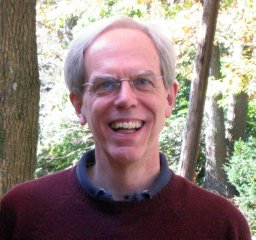 John Haggerty合作论文数Physics Department, Brookhaven National Laboratory197
 Hideki Hamagaki (浜垣秀樹)合作论文数Division of Fundamental Science, Institute for Innovative Science and Technology, Nagasaki Institute of Applied Science197S. Kametani合作论文数197W Xie合作论文数197
 Yaroslav A. Berdnikov合作论文数Department of Experimental Nuclear Physics, Peter the Great St. Petersburg Polytechnic University;High Energy Physics Division, Petersburg Nuclear Physics Institute197
 Toru Sugitate (杉立徹)合作论文数Hiroshima University196




