In this paper, we explore the use of an automated thermal scanning facility aimed at searching for molecular defects in nuclear track detectors (NTDs). Our system uses a thermal camera mounted on a CNC (computer numerical control) platform to scan the entire surface of the plates under different thermal conditions. Our setup allows the control of the plate temperature and the movement of the camera on three axes. We have developed a custom software that allows the control of the camera movement, heating the pad supporting the NTD plate and acquiring images from the thermal camera. We show images captured using both, our custom software and the camera software, presenting a sequence of images taken with our custom software, aimed at covering the entire surface of the plate and another sequence taken over time on the same spot, to enhance the image quality. We also show preliminary processing of the images and discuss the results.
This search for Magnetic Monopoles (MMs) and High Electric Charge Objects (HECOs) with spins 0, 1/2 and 1, uses for the first time the full MoEDAL detector, exposed to 6.6 fb^-1 proton-proton collisions at 13 TeV. The results are interpreted in terms of Drell-Yan and photon-fusion pair production. Mass limits on direct production of MMs of up to 10 Dirac magnetic charges and HECOs with electric charge in the range 5e to 350e were achieved. The charge limits placed on MM and HECO production are currently the strongest in the world. MoEDAL is the only LHC experiment capable of being directly calibrated for highly-ionizing particles using heavy ions and with a detector system dedicated to definitively measuring magnetic charge.
This summary of the second Terrestrial Very-Long-Baseline Atom Interferometry (TVLBAI) Workshop provides a comprehensive overview of our meeting held in London in April 2024 (Second Terrestrial Very-Long-Baseline Atom Interferometry Workshop, Imperial College, April 2024), building on the initial discussions during the inaugural workshop held at CERN in March 2023 (First Terrestrial Very-Long-Baseline Atom Interferometry Workshop, CERN, March 2023). Like the summary of the first workshop (Abend et al. in AVS Quantum Sci. 6:024701, 2024), this document records a critical milestone for the international atom interferometry community. It documents our concerted efforts to evaluate progress, address emerging challenges, and refine strategic directions for future large-scale atom interferometry projects. Our commitment to collaboration is manifested by the integration of diverse expertise and the coordination of international resources, all aimed at advancing the frontiers of atom interferometry physics and technology, as set out in a Memorandum of Understanding signed by over 50 institutions (Memorandum of Understanding for the Terrestrial Very Long Baseline Atom Interferometer Study).
This corrects the article DOI: 10.1103/PhysRevLett.126.071801.
This document presents a summary of the 2023 Terrestrial Very-Long-Baseline Atom Interferometry Workshop hosted by CERN. The workshop brought together experts from around the world to discuss the exciting developments in large-scale atom interferometer (AI) prototypes and their potential for detecting ultralight dark matter and gravitational waves. The primary objective of the workshop was to lay the groundwork for an international TVLBAI proto-collaboration. This collaboration aims to unite researchers from different institutions to strategize and secure funding for terrestrial large-scale AI projects. The ultimate goal is to create a roadmap detailing the design and technology choices for one or more km-scale detectors, which will be operational in the mid-2030s. The key sections of this report present the physics case and technical challenges, together with a comprehensive overview of the discussions at the workshop together with the main conclusions.
We report on a search for magnetic monopoles (MMs) produced in ultraperipheral Pb-Pb collisions during Run 1 of the LHC. The beam pipe surrounding the interaction region of the CMS experiment was exposed to 184.07 μb^{-1} of Pb-Pb collisions at 2.76 TeV center-of-mass energy per collision in December 2011, before being removed in 2013. It was scanned by the MoEDAL experiment using a SQUID magnetometer to search for trapped MMs. No MM signal was observed. The two distinctive features of this search are the use of a trapping volume very close to the collision point and ultrahigh magnetic fields generated during the heavy-ion run that could produce MMs via the Schwinger effect. These two advantages allowed setting the first reliable, world-leading mass limits on MMs with high magnetic charge. In particular, the established limits are the strongest available in the range between 2 and 45 Dirac units, excluding MMs with masses of up to 80 GeV at a 95% confidence level.
We summarise the discussions at a virtual Community Workshop on Cold Atoms in Space concerning the status of cold atom technologies, the prospective scientific and societal opportunities offered by their deployment in space, and the developments needed before cold atoms could be operated in space. The cold atom technologies discussed include atomic clocks, quantum gravimeters and accelerometers, and atom interferometers. Prospective applications include metrology, geodesy and measurement of terrestrial mass change due to, e.g., climate change, and fundamental science experiments such as tests of the equivalence principle, searches for dark matter, measurements of gravitational waves and tests of quantum mechanics. We review the current status of cold atom technologies and outline the requirements for their space qualification, including the development paths and the corresponding technical milestones, and identifying possible pathfinder missions to pave the way for missions to exploit the full potential of cold atoms in space. Finally, we present a first draft of a possible road-map for achieving these goals, that we propose for discussion by the interested cold atom, Earth Observation, fundamental physics and other prospective scientific user communities, together with the European Space Agency (ESA) and national space and research funding agencies.
Abstract A search for highly electrically charged objects (HECOs) and magnetic monopoles is presented using 2.2 $$\hbox {fb}{^{-1}}$$ fb - 1 of $$p-p$$ p - p collision data taken at a centre of mass energy (E $$_{CM}$$ CM ) of 8 TeV by the MoEDAL detector during LHC’s Run-1. The data were collected using MoEDAL’s prototype Nuclear Track Detectord array and the Trapping Detector array. The results are interpreted in terms of Drell–Yan pair production of stable HECO and monopole pairs with three spin hypotheses (0, 1/2 and 1). The search provides constraints on the direct production of magnetic monopoles carrying one to four Dirac magnetic charges and with mass limits ranging from 590 GeV/c $$^{2}$$ 2 to 1 TeV/c $$^{2}$$ 2 . Additionally, mass limits are placed on HECOs with charge in the range 10e to 180e, where e is the charge of an electron, for masses between 30 GeV/c $$^{2}$$ 2 and 1 TeV/c $$^{2}$$ 2 .
B. Acharya, J. Alexandre, P. Benes, B. Bergmann, S. Bertolucci, A. Bevan, H. Branza, P. Burian, M. Campbell, Y. M. Cho, M. de Montigny, A. De Roeck, J. R. Ellis, M. El Sawy, M. Fairbairn, D. Felea, M. Frank, O. Gould, J. Hays, A. M. Hirt, D. L. J. Ho, P. Q. Hung, J. Janecek, M. Kalliokoski, A. Korzenev, D. H. Lacarrère, C. Leroy, G. Levi, A. Lionti, A. Maulik, A. Margiotta, N. Mauri, N. E. Mavromatos, P. Mermod † , L. Millward, V. A. Mitsou, I. Ostrovskiy ∗ , P.-P. Ouimet, J. Papavassiliou, B. Parker, L. Patrizii, G. E. Păvălaş, J. L. Pinfold, L. A. Popa, V. Popa, M. Pozzato, S. Pospisil, A. Rajantie, R. Ruiz de Austri, Z. Sahnoun, M. Sakellariadou, A. Santra, S. Sarkar, G. Semenoff, A. Shaa, G. Sirri, K. Sliwa, R. Soluk, M. Spurio, M. Staelens, M. Suk, M. Tenti, V. Togo, J. A. Tuszyński, A. Upreti, V. Vento, O. Vives
B. Acharya,a,2 J. Alexandre, P. Beneš, B. Bergmann, A. Bevan, T. Billoud, H. Branzas, P. Burian, f M. Campbell, S. Cecchini, Y. M. Cho, M. de Montigny, j A. De Roeck, J. R. Ellis, M. M. H. El Sawy, M. Fairbairn, D. Felea, M. Frank, D. Garvey, J. Hays, A. M. Hirt, J. Janeček, M. Kalliokoski, A. Korzenev, D. H. Lacarrère, C. Leroy, G. Levi, A. Lionti, P. Mánek,b,3 A. Maulik, j A. Margiotta, N. Mauri, N. E. Mavromatos, L. Meduna, P. Mermod, L. Millward, V. A. Mitsou, I. Ostrovskiy, P.-P. Ouimet, j ,u J. Papavassiliou, B. Parker, L. Patrizii, G. E. Păvălaş, J. L. Pinfold, j L. A. Popa, V. Popa, M. Pozzato, S. Pospíšil, A. Rajantie, R. Ruiz de Austri, Z. Sahnoun, M. Sakellariadou, A. Santra, S. Sarkar, G. Semenoff, A. Shaa, j G. Sirri, K. Sliwa, P. Smolyanskiy, R. Soluk, j M. Spurio, M. Staelens, j M. Suk, M. Tenti,1 V. Togo, J. A. Tuszyński, j A. Upreti, V. Vento, O. Vives, A. Wall and E. White Theoretical Particle Physics & Cosmology Group, Physics Dept., King’s College London, UK IEAP, Czech Technical University in Prague, Czech Republic IFIC, Universitat de València CSIC, Valencia, Spain School of Physics and Astronomy, Queen Mary University of London, UK Institute of Space Science, Bucharest Măgurele, Romania f Faculty of Electrical Engineering, University of West Bohemia, Pilsen, Czech Republic Experimental Physics Department, CERN, Geneva, Switzerland INFN, Section of Bologna, Bologna, Italy Center for Quantum Spacetime, Sogang University, Seoul, Korea Physics Department, University of Alberta, Edmonton, Alberta, Canada National Institute of Chemical Physics & Biophysics, Tallinn, Estonia Theoretical Physics Department, CERN, Geneva, Switzerland Basic Science Department, Faculty of Engineering, The British University in Egypt, Cairo, Egypt Department of Physics, Concordia University, Montréal, Québec, Canada Department of Earth Sciences, Swiss Federal Institute of Technology, Zurich, Switzerland Helsinki Institute of Physics, University of Helsinki, Finland Département de Physique Nucléaire et Corpusculaire, Université de Genève, Geneva, Switzerland Département de Physique, Université de Montréal, Québec, Canada INFN, Section of Bologna & Department of Physics & Astronomy, University of Bologna, Italy Department of Physics and Astronomy, University of Alabama, Tuscaloosa, Alabama, USA Physics Department, University of Regina, Regina, Saskatchewan, Canada v Institute for Research in Schools, Canterbury, UK
The MoEDAL trapping detector consists of approximately 800 kg of aluminum volumes. It was exposed during run 2 of the LHC program to 6.46 fb^{-1} of 13 TeV proton-proton collisions at the LHCb interaction point. Evidence for dyons (particles with electric and magnetic charge) captured in the trapping detector was sought by passing the aluminum volumes comprising the detector through a superconducting quantum interference device (SQUID) magnetometer. The presence of a trapped dyon would be signaled by a persistent current induced in the SQUID magnetometer. On the basis of a Drell-Yan production model, we exclude dyons with a magnetic charge ranging up to five Dirac charges (5g_{D}) and an electric charge up to 200 times the fundamental electric charge for mass limits in the range 870-3120 GeV and also monopoles with magnetic charge up to and including 5g_{D} with mass limits in the range 870-2040 GeV.
Timepix3 devices are hybrid pixel detectors developed within the Medipix3 collaboration at CERN providing a simultaneous measurement of energy (ToT) and time of arrival (ToA) in each of its 256$\times$256 pixels (pixel pitch: 55 µm). The timestamp resolution below 2 ns allows a measurement of charge carrier drift times, so that particle trajectories can be reconstructed in 3D on a microscopic level ($z$-resolution: 30-60 µm). The 3D trajectory reconstruction methodology developed elsewhere is validated against simulated data providing ground truth information of the incident angles. The detector response functions and the achievable track angular resolutions are determined. For the first time, data taken with Timepix3 in the MoEDAL experiment are presented. After extracting singly charged minimum ionizing particle (MIP) tracks from the mixed radiation field using characteristic track features, their impact angles are evaluated. The directionality of the MIP radiation field is shown in elevation angle ($\theta$) versus azimuthal angle ($\phi$) maps, "unfolded" using the simulated detector responses to an omnidirectional radiation field.
A search for highly electrically charged objects (HECOs) and magnetic monopoles is presented using 2.2 fb − 1 of p-p collision data taken at a centre of mass energy (E CM ) of 8 TeV by the MoEDAL detector during LHC’s Run-1. The data were collected using MoEDAL’s prototype Nuclear Track Detector array and the Trapping Detector array. The results are interpreted in terms of Drell-Yan pair production of stable HECO and monopole pairs with three spin hypotheses (0, 1/2 and 1). The search provides constraints on the direct production of magnetic monopoles carrying one to four Dirac magnetic charges (4 g D ) and with mass limits ranging from 590 GeV to 1 TeV. Additionally, mass limits are placed on HECOs with charge in the range 10 e to 180 e , where e is the charge of an electron, for masses between 30 GeV and 1 TeV.
In Grossu et al., (2019) we proposed a Chaos Many-Body Engine (CMBE) quark toy-model for the Compressed Baryonic Matter (CBM) energies. We started from the following assumptions: (1) the system can be decomposed into a set of two or three-body quark “elementary systems”, i.e. “white” color charged, mesonic or baryonic systems; (2) the bi-particle force is limited to the domain of each elementary system; (3) the physical solution conforms to the minimum potential energy requirement. In the present work we used graph theory for identifying those sets (clusters) of elementary systems close enough to form a bound system (through the exchange of same color charged quarks). In this approach, the cluster production could be understood as an effect of the chaotic behavior of the system. As a direct application, we estimated the pentaquark production probability obtained in p + p collisions, at a center-of-mass energy between 10 and 100 GeVNew version program summaryProgram Title: Chaos Many-Body Engine (CMBE)CPC Library link to program files: http://dx.doi.org/10.17632/rh5txj3n4g.2Licensing provisions: GPLv2Programming language: C# 7.3.External routines: BigRational structure (Microsoft).Journal reference of previous version: Computer Physics Communications 239C (2019) 149-152Does the new version supersede the previous version?: Yes.Nature of problem: Estimate the Pentaquark production in nuclear relativistic collisions.Solution method: Clustering algorithm for identifying all five-body quark white systems.Reasons for the new version: Added the Pentaquark identification new feature.Summary of revisions: •Migration from .Net Framework 4.0 to .Net Framework 4.7.1•In [1] we implemented a quark confinement algorithm for decomposing the system into a set of two or three-body quark “elementary systems”, i.e. “white” color charged, mesonic or respectively, baryonic systems, in agreement with the minimum potential energy requirement. In this work we added a new O(n3) algorithm (QcdQuarkBagPentaQuarkAlgorithm class), developed in agreement with the SOLID principles, for the identification of those sets (clusters) of elementary systems close enough to form a bound system (through the exchange of same color charged quarks). Taking this into account the system was associated with an undirected graph G [2,3], whose nodes are the elementary systems. Two nodes are connected if the distance between their geometrical centers is lower than the sum of their radii. Thus, each cluster could be associated to a maximal connected subgraph of G.•Unit tests (QcdQuarkBagPentaQuarkAlgorithmTests class) for checking the new algorithm.•In [1] we proposed a quark toy-model for proton–proton collisions at CBM energies [4]. The model was extended for estimating the pentaquark [5] production probability, as seen in Fig. 1. In this approach, the pentaquark production could be understood as a direct effect of the chaotic behavior of the system [6,7]. Thus, for each center-of-mass energy (s∈10,100GeV) we simulated 2,000 events by choosing Simulations\Quark Collision from the menu and storing the pentaquark multiplicity at t=300 Fm/c in the quark.pentaquark.log.csv file, generated into the simulation output folder. The collision parameter was given random values in the [0.2, 1.1] Fm range.ReferencesI.V. Grossu, C. Besliu, Al. Jipa, D. Felea, E. Stan, T. Esanu, Implementation of quark confinement and retarded interactions algorithms for Chaos Many-Body Engine, Computer Physics Communications 239C (2019) pp. 149-152, DOI: https://doi.org/10.1016/j.cpc.2019.01.023Alan Gibbons, Algorithmic Graph Theory, Cambridge University Press, 1985.I.V. Grossu, C. Besliu, Al. Jipa, C.C. Bordeianu, D. Felea, E. Stan, T. Esanu, Code C# for chaos analysis of relativistic many-body systems, Computer Physics Communications 181 (2010) 1464–1470, https://doi.org/10.1016/j.cpc.2010.04.015A. Abuhoza et al, The CBM Collaboration, Nuclear Physics A, Volumes 904--905, 2 May 2013, Pages 1059c-1062cA. Abdivaliev, C. Besliu et al., Yad.Fiz.29, v.6, 1979.St. Grosu, Quelques effets des fluctuations de la barrière de potentiel a la surface des conducteurs, Studii si cercetari de fizica, 1, XI, 1960D. Felea, C.C. Bordeianu, I.V. Grossu, C. Besliu, Al. Jipa, A.-A. Radu and E. Stan, Intermittency route to chaos for the nuclear Billiard, EPL, 93 (2011) 42001, DOI: 10.1209∕0295−5075∕93∕42001
Gravitational wave astronomy has been already a well-established research domain for many years. Moreover, after the detection by LIGO/Virgo collaboration, in 2017, of the first gravitational wave signal emitted during the collision of a binary neutron star system, that was accompanied by the detection of other types of signals coming from the same event, multi-messenger astronomy has claimed its rights more assertively. In this context, it is of great importance in a gravitational wave experiment to have a rapid mechanism of alerting about potential gravitational waves events other observatories capable to detect other types of signals (e.g. in other wavelengths) that are produce by the same event. In this paper, we present the first progress in the development of a neural network algorithm trained to recognize and characterize gravitational wave patterns from signal plus noise data samples. We have implemented two versions of the algorithm, one that classifies the gravitational wave signals into 2 classes, and another one that classifies them into 4 classes, according to the mass ratio of the emitting source. We have obtained promising results, with 100% training and testing accuracy for the 2-class network and approximately 95% for the 4-class network. We conclude that the current version of the neural network algorithm demonstrates the ability of a well-configured and calibrated Bidirectional Long-Short Term Memory software to classify with very high accuracy and in an extremely short time gravitational wave signals, even when they are accompanied by noise. Moreover, the performance obtained with this algorithm qualifies it as a fast method of data analysis and can be used as a low-latency pipeline for gravitational wave observatories like the future LISA Mission.
We present a study on the possibility of searching for long-lived supersymmetric partners with the MoEDAL experiment at the LHC. MoEDAL is sensitive to highly ionising objects such as magnetic monopoles or massive (meta)stable electrically charged particles. We focus on prospects of directly detecting long-lived sleptons in a phenomenologically realistic model which involves an intermediate neutral long-lived particle in the decay chain. This scenario is not yet excluded by the current data from ATLAS or CMS, and is compatible with astrophysical constraints. Using Monte Carlo simulation, we compare the sensitivities of MoEDAL versus ATLAS in scenarios where MoEDAL could provide discovery reach complementary to ATLAS and CMS, thanks to looser selection criteria combined with the virtual absence of background. It is also interesting to point out that, in such scenarios, in which charged staus are the main long-lived candidates, the relevant mass range for MoEDAL is compatible with a potential role of Supersymmetry in providing an explanation for the anomalous events observed by the ANITA detector.
We present a preliminary study on the possibility to search for massive long-lived electrically charged particles at the MoEDAL detector. MoEDAL is sensitive to highly ionising objects such as magnetic monopoles or massive (meta-)stable electrically charged particles and we focus on the latter in this paper. Requirements on triggering or reducing the cosmic-ray and cavern background, applied in the ATLAS and CMS analyses for long-lived particles, are not necessary at MoEDAL, due to its completely different detector design and extremely low background. On the other hand, MoEDAL requires slow-moving particles, resulting in sensitivity to massive states with typically small production cross sections. Using Monte Carlo simulations, we compare the sensitivities of MoEDAL versus ATLAS/CMS for various long-lived particles in supersymmetric models, and we seek a scenario where MoEDAL can provide discovery reach complementary to ATLAS and CMS.
We are proposing Gravitational-wave Lunar Observatory for Cosmology (GLOC) [1] – a first of its kind fundamental physics experiment on the surface of the Moon. The experiment would access gravitational-waves (GWs) in the frequency range of deci-Hz to 5 Hz, a challenging regime for all Earthbased detectors and space missions. We find that such a lunar-based experiment can survey & 70% of the observable volume of our universe without significant background contamination. This unprecedented sensitivity makes GLOC a powerful cosmic probe for Dark Energy, Dark Matter and physics beyond the Standard Model. In particular, it will independently trace the Hubble expansion rate up to redshift z ∼ 3, provide the strongest limits on the sub-solar Dark Matter candidates and test ΛCDM cosmology up to z ∼ 100. Furthermore, it will have a unique access to GWs from Type Ia supernovae, thus aiding calibration of the standard candles.
In Grossu et al. (2012) we presented a Chaos Many-Body Engine (CMBE) toy-model for chaos analysis of relativistic nuclear collisions at 4.5 A GeV/c (the SKM 200 collaboration) which was later extended to Cu+Cu collisions at the maximum RHIC-BNL energy. Inspired by existing quark billiards, the main goal of this work was extending CMBE to partons. Thus, we first implemented a confinement algorithm founded on some intuitive assumptions (Grossu et al., 2016): (1) the system can be decomposed into a set of two or three-body quark white clusters; (2) the bi-particle force is limited to the domain of each cluster; (3) the physical solution conforms to the minimum potential energy requirement. Color conservation was also treated as part of the reactions logic module. As an example of use, we proposed a toy-model for p+p collisions at root s = 10 GeV and we compared it with HIJING. Another direction of interest was related to retarded interactions. Following this purpose, we implemented an Euler retarded algorithm and we tested it on a simple two-body system with attractive inverse-square-law force. In this particular test case we noticed the interesting fact that the Virial coefficient is sub-unitary and reaches the expected value (one) as the interaction speed approaches infinity. On the other hand, the time reverse functionality implemented in CMBE v03 could be used together with retardation for analyzing the Loschmidt paradox. Regarding the application design, it is important to mention the code was refactored to SOLID. In this context, we have also written more than one hundred unit and integration tests, which represent an important indicator of application logic validity. (C) 2019 Elsevier B.V. All rights reserved.
 Andrei Gheata合作论文数CERN150
 Fedor Guber合作论文数Institute for Nuclear Research, Russian Academy of Sciences;Department of Experimental Physics, Russian Academy of Sciences143
 M. Floris合作论文数139Mohammad Irfan合作论文数139
 Mikhail Ippolitov合作论文数National Research Nuclear University MEPhI;Quark Matter Laboratory, Kurchatov Institute138
 Austin Harton合作论文数Chicago State University137
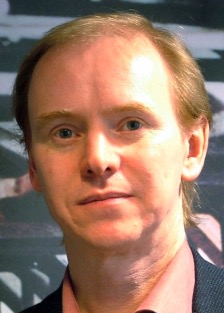 David Evans合作论文数School of Physics and Astronomy, University of Birmingham137
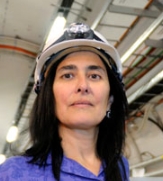 Nora De Marco合作论文数Istituto Nazionale di Fisica Nucleare136
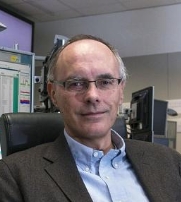 Paolo Giubellino合作论文数Istituto Nazionale di Fisica Nucleare;Technische Universität Darmstadt;GSI Helmholtz Centre for Heavy Ion Research136M. Gallio合作论文数136
 Pasquale Di Nezza合作论文数Laboratori Nazionali di Frascati, Istituto Nazionale di Fisica Nucleare135
 O. Dordic合作论文数Dept Phys, Univ Oslo134
 Premomoy Ghosh合作论文数Variable Energy Cyclotron Centre134
 Alberto Martin Gago Medina合作论文数Departamento de Ciencias, Pontificia Universidad Católica del Perú134K. F. Hetland合作论文数College Faculty of Engineering, Bergen University134
 Alessandro De Falco合作论文数Dipartimento di Fisica, Università di Cagliari133
 Ulrich Frankenfeld合作论文数GSI Helmholtzzentrum für Schwerionenforschung GmbH133
 P. Ganoti合作论文数Dept Phys, Natl & Kapodistrian Univ Athens133B. Guerzoni合作论文数133P. Cortese合作论文数133
 Smbat Grigoryan合作论文数Veksler and Baldin Laboratory of High Energy Physics, Joint Institute for Nuclear Research132
 Yuri Kharlov合作论文数Experimental Physics Division, National Research Centre “Kurchatov Institute”;Laboratory of Fundamental Interactions, Moscow Institute of Physics and Technology132I. Ilkiv合作论文数132S. Gorbunov合作论文数132
 Leticia Cunqueiro Mendez合作论文数Dipartimento di Fisica, Sapienza Università di Roma132
 Tatsuya Chujo合作论文数Institute of Physics, University of Tsukuba;Division of Physics, Faculty of Pure and Applied Sciences, University of Tsukuba132
 Indranil Das合作论文数Saha Institute of Nuclear Physics132E. M. Fiore合作论文数132
 Taku Gunji (郡司卓)合作论文数Center for Nuclear Study, Graduate School of Science, The University of Tokyo131
 Hideki Hamagaki (浜垣秀樹)合作论文数Division of Fundamental Science, Institute for Innovative Science and Technology, Nagasaki Institute of Applied Science131
 Thomas J. Humanic合作论文数Department of Physics, College of Arts and Sciences, The Ohio State University131
 Marek Bombara合作论文数Institute of Physics, Faculty of Science, Univerzita Pavla Jozefa Šafárika v Košiciach;Department of Nuclear and Subnuclear Physics, Faculty of Science, Univerzita Pavla Jozefa Šafárika v Košiciach131
 Helen Caines合作论文数Wright Laboratory, Department of Physics, Yale University;Brookhaven National Laboratory131
 Marco Bregant合作论文数Departamento de Física Nuclear, Instituto de Física, Universidade de São Paulo;Subatech, CNRS131
 Thomas Dietel合作论文数Sioux Technologies131Elena G. Ferreiro合作论文数131
 Eleazar Cuautle Flores合作论文数Departamento de Altas Energías, Instituto de Ciencias Nucleares, Universidad Nacional Autónoma de México131
 Stefania Beolè合作论文数Department of Physics, University of Torino131
 Jesus Guillermo Contreras Nuno合作论文数Czech Technical University in Prague;Cinvestav131
 Wisla Carena合作论文数CERN130
 Satyajit Jena合作论文数Department of Physcal Sciences, Indian Institute of Science Education and Research Mohali130Daniele De Gruttola合作论文数130M. Estienne合作论文数SUBATECH, Ecole des Mines de Nantes, Université de Nantes, CNRS-IN2P3, Nantes, France130Natalia Grion合作论文数130A. Dobrin合作论文数130P. Dupieux合作论文数130L. Ducroux合作论文数130
 Christoph Blume合作论文数Institut für Kernphysik, Goethe-Universität Frankfurt am Main130
 Javier Castillo合作论文数Nuclear Physics Division, CEA;Institut de Recherche sur les Lois Fondamentales de l'Univers, CEA130




