We present the results of a finite element analysis of the electro-optical non-equivalence of planar electrical substitution radiometers with vertically aligned carbon nanotube absorbers, operating at either room or cryogenic temperature. These detectors are the basis of the new room temperature standards of the Laboratory for Atmospheric and Space Physics' (LASP) Total solar irradiance Radiometer Facility and the Spectral solar irradiance Radiometer Facility, and the NIST Boulder open beam cryogenic radiometer facility. We show that the detector of our cryogenic electrical substitution radiometer has no significant electro-optical non-equivalence. Further, we also show that with careful detector design, the non-equivalence can be minimized at room temperature. It was found that in general the non-equivalence cannot be deduced from the temperature mismatch between the electrical and the optical states without considering the conductance mismatch and optical power input. The results are regarded as being precise rather than absolute to account for potentially unknown modeling errors. The numerical accuracy is typically less than 5 ppm.
Abstract This work describes two achievements to a key data set. First, we present version 2 of the Total and Spectral Solar Irradiance Sensor‐1 Hybrid Solar Reference Spectrum (TSIS‐1 HSRS), which has recently been recognized as a new solar irradiance reference standard (https://calvalportal.ceos.org/). Second, we present a new “full spectrum extension” of the TSIS‐1 HSRS. The TSIS‐1 HSRS observational composite solar irradiance reference spectrum spans 0.202–2.730 μm and encompasses more than 97% of the energy in the total solar irradiance (TSI). Version 2 is an incremental update that corrects the radiometric baseline between 0.202 and 0.210 μm and updates the solar lines at wavelengths longward of 0.743 μm to those listed in the most recent database. The full spectrum extension builds off version 2 of the TSIS‐1 HSRS and supports applications that require a solar spectrum encompassing nearly 100% of the energy in the TSI. It spans 0.115–200 μm and was developed by incorporating additional observations and theoretical knowledge where no direct observations currently exist.
We present the results of a recent, extensive measurement campaign validating the traceability of the solar irradiance record and Earth radiation budget data. The campaign also established future traceability, thus ensuring confidence in the continuing climate-data record. The total solar irradiance radiometer facility (TRF) at the Laboratory for Atmospheric and Space Physics (LASP) Boulder, uses a liquid helium cooled cryogenic radiometer as the reference standard for the validation of spaceflight total solar irradiance (TSI) instrumentation. In 2008 the radiometer was directly compared to the National Institute of Standards and Technology (NIST) Primary Optical Watt Radiometer (POWR) at a wavelength of 532.12 nm. At TSI power levels, a correction factor of 1.000 306 with an associated standard uncertainty (u) of 0.000 098, was reported for the TRF radiometer scale when using external voltage measurement electronics, and not correcting for cavity heating non-equivalence or cavity absorptance. The TRF radiometer has recently been revalidated at LASP using a POWR calibrated silicon photodiode trap transfer standard named TT4. We report a correction factor of 0.999 787, u = 0.000 285 to align the TRF radiometer scale with the current NIST POWR scale. A new room temperature reference standard radiometer was established. It measured 133 parts per million (ppm) higher than POWR using the same silicon transfer standard as above, and in a separate direct measurement, 168 ppm lower than the TRF radiometer shuttered at 400 s full shutter cycle. The difference agrees within stated uncertainties. A correction of 0.999 867, u = 0.000 247 will align the new radiometer scale with the NIST radiant power scale of POWR.
The Earth radiation budget, a 40-year data record of the balance between solar radiation reaching the Earth and the amount reflected, and emitted from the Earth, is a key climate record for determining whether the Earth is warming or cooling. The need for accurate and cost-effective space-based measurements is driving the technology development of broadband bolometers and linear microbolometer arrays. We describe the performance of microfabricated bolometers and 1 x 32 linear microbolometer arrays developed for this purpose. To accurately measure the total outgoing radiation from 0.3 μm to over 100 μm, consisting of reflected shortwave solar radiation and emitted longwave thermal radiation, a vertically aligned carbon nanotube thermal absorber is incorporated with an electrical substitution heater that provides on-board calibration capabilities. A silicon nitride heat link is used to optimize response time while minimizing noise and the inequivalence between thermal and optical heating. The devices operate at room temperature with noise floors at nW/√Hz or lower at the measurement frequency of 7 Hz. Response times below 10 ms have been demonstrated in closed-loop operation using the electrical heater. Thin film Pt thermistors measure the change in microbolometer temperature. The deposition of the thin film thermistors has been optimized to maximize the temperature coefficient of resistance, which is key to meeting the demanding signal-to-noise requirement of this application.
We present a new solar irradiance reference spectrum representative of solar minimum conditions between solar cycles 24 and 25. The Total and Spectral Solar Irradiance Sensor‐1 (TSIS‐1) Hybrid Solar Reference Spectrum (HSRS) is developed by applying a modified spectral ratio method to normalize very high spectral resolution solar line data to the absolute irradiance scale of the TSIS‐1 Spectral Irradiance Monitor (SIM) and the CubeSat Compact SIM (CSIM). The high spectral resolution solar line data are the Air Force Geophysical Laboratory ultraviolet solar irradiance balloon observations, the ground‐based Quality Assurance of Spectral Ultraviolet Measurements In Europe Fourier transform spectrometer solar irradiance observations, the Kitt Peak National Observatory solar transmittance atlas, and the semi‐empirical Solar Pseudo‐Transmittance Spectrum atlas. The TSIS‐1 HSRS spans 202–2730 nm at 0.01 to ∼0.001 nm spectral resolution with uncertainties of 0.3% between 460 and 2365 nm and 1.3% at wavelengths outside that range.
Multi-wall vertically aligned carbon nanotubes (VACNTs) are nearly ideal absorbers due to their exceptionally low reflectance over a broad wavelength range. Integrating VACNTs as bolometer absorbers, however, can be difficult due to their high growth temperature and fragile nature. Despite these challenges, we have microfabricated many different types of VACNT bolometers, ranging from cryogenic optical power primary standards to room temperature satellite-based solar irradiance monitors and broadband infrared microbolometers. Advantages our VACNT bolometers provide over the bolometers they replace vary by application, but can be reduced size and time constant, increased absorption, and/or microfabrication instead of hand assembly. Depending on the application and operating conditions, our VACNT bolometers are designed with a variety of thermistors and weak thermal links. The thermistors used include commercial surface mount chips, superconducting transition-edge sensors, and vanadium oxide (VOx). Weak thermal links include silicon nitride (SiNx) membranes, Si bridges, and laser-cut polyimide. We summarize a wide variety of microfabricated bolometers with VACNT absorbers that measure optical power levels spanning over seven orders of magnitude.
 Erik Richard合作论文数Department of Chemistry and Biochemistry, University of Colorado12
 Peter Pilewskie合作论文数9
 Nathan A. Tomlin合作论文数6
 John H Lehman合作论文数National Institute of Standards and Technology6
 Odele Coddington合作论文数Laboratory for Atmospheric and Space Physics, University of Colorado Boulder;Department of Atmospheric and Oceanic Sciences, College of Arts and Sciences, University of Colorado Boulder6
 Karl Heuerman合作论文数5
 Greg Kopp合作论文数4C. J. E. Straatsma合作论文数4Thomas N. Woods合作论文数Laboratory for Atmospheric and Space Physics|University of Colorado , Boulder3
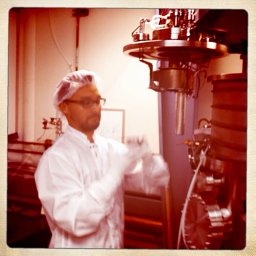 Chris Yung合作论文数3
 Malcolm White合作论文数Biomedical Sciences Research Complex, School of Biology, University of St Andrews3Jerald W. Harder合作论文数3K. Chance合作论文数2Michael Chambliss合作论文数2
 Steffen Mauceri合作论文数Jet Prop Lab, CALTECH2
 Drake, Ginger A.合作论文数2
 Kang Sun合作论文数2
 Stephane Beland合作论文数2
 Michelle Stephens合作论文数2L. Sandoval合作论文数1thomas p sparn合作论文数1Joel Rutkowski合作论文数1M S Stephens合作论文数1Steven V. Penton合作论文数1
 Atasi Dan合作论文数National Institute of Standards and Technology1W. Zheng合作论文数Lab Atmospher & Space Phys LASP1Julian Gieseler合作论文数1
 Matthieu Denoual合作论文数1Keith R. Lykke合作论文数1
 Xiong Liu合作论文数Atomic and Molecular Physics Division, Harvard-Smithsonian Center for Astrophysics1
 Erica Antunes合作论文数Laboratório Associado de Sensores e Materiais, Instituto Nacional de Pesquisas Espaciais1Zach Castleman合作论文数1Igor Vayshenker合作论文数1S. I. Woods合作论文数1
 Martin Snow合作论文数University of Colorado Laboratory for Atmospheric and Space Physics1
 Bill Mcclintock合作论文数Laboratory for Atmospheric and Space Physics, University of Colorado1Ping-Shine Shaw合作论文数1




