The first implementation of NASA’s Total and Spectral Solar Irradiance Sensor (TSIS-1) launched on December 15th, 2017, and was integrated into the International Space Station (ISS) to measure both the total solar irradiance (TSI) and the solar spectral irradiance (SSI). The direct measurement of the SSI is made by the LASP Spectral Irradiance Monitor (SIM) and provides data essential to interpreting how the Earth system responds to solar spectral variability. Extensive advances in TSIS-1 SIM instrument design and new SI-traceable spectral irradiance calibration techniques have resulted in improved absolute accuracy with uncertainties of less than 0.5% over the continuous 200–2400 nm spectral range. Furthermore, improvements in the long-term spectral stability corrections provide lower trend uncertainties in SSI variability measurements. Here we present the early results of the TSIS-1 SIM measurements covering the first 5 years of operations. This time period includes the descending phase of solar cycle 24, the last solar minimum, and the ascending phase of solar cycle 25. The TSIS-1 SIM SSI results are compared to previous measurements both in the absolute scale of the solar spectrum and the time dependence of the SSI variability. The TSIS-1 SIM SSI spectrum shows lower IR irradiance (up to 6% at 2400 nm) and small visible increases (~0.5%) from some previous reference solar spectra. Finally, initial comparisons are made to current NRLSSI2 and SATIRE-S SSI model results and offer opportunities to validate model details both for short-term (solar rotation) spectral variability and, for the first time, the longer-term (near half solar cycle) spectral variability across the solar spectrum from the UV to the IR.
The Colorado Ultraviolet Transit Experiment (CUTE) is a 6U NASA CubeSat carrying on-board a low-resolution, near-ultraviolet (2479–3306 Å) spectrograph. It has a Cassegrain telescope with a rectangular primary to maximize the collecting area, given the shape of the satellite bus, and an aberration correcting grating to improve the image quality, and thus spectral resolution. CUTE, launched on the of 2021 September 27th to a Low Earth Orbit, is designed to monitor transiting extra-solar planets orbiting bright, nearby stars to improve our understanding of planet atmospheric escape and star-planet interaction processes. We present here the CUTE autONomous daTa ReductiOn pipeLine, developed for reducing CUTE data. The pipeline has been structured with a modular approach, which also considers scalability and adaptability to other missions carrying on-board a long-slit spectrograph. The CUTE data simulator has been used to generate synthetic observations used for developing and testing the pipeline functionalities. The pipeline has been tested and updated employing flight data obtained during commissioning and initial science operations of the mission.
An understanding of solar variability over a broad spectral range and broad range of timescales is needed by scientists studying Earth’s climate. The Total and Spectral Solar Irradiance Sensor (TSIS) Spectral Irradiance Monitor (SIM), is designed to measure solar spectral irradiance (SSI) with unprecedented accuracy from 200 nm to 2400 nm. SIM started daily observations in March 2018. To maintain its accuracy over the course of its anticipated 5-year mission and beyond, TSIS SIM needs to be corrected for optical degradation, common for solar viewing instruments. The differing long-term trends of various independent solar-irradiance records attest to the challenge at hand. The correction of TSIS SIM for optical degradation is based on piecewise linear fits that bring the three instrument channels into agreement. It is fundamentally different to the correction applied to the TSIS SIM predecessor on SORCE. The correction facilitates reproducibility, uncertainty estimation and is measurement-based. Corrected, integrated TSIS SIM SSI agrees with independent observations of total solar irradiance to within 45 ppm as well as various solar-irradiance models. TSIS SIM SSI is available at: http://lasp.colorado.edu/lisird/.
The long-term balance between Earth's absorption of solar energy and emission of radiation to space is a fundamental climate measurement. Total solar irradiance (TSI) has been measured from space, uninterrupted, for the past 40 years via a series of instruments. The Compact Total Irradiance Monitor (CTIM) is a CubeSat instrument that will demonstrate next-generation technology for monitoring total solar irradiance. It includes novel silicon-substrate room temperature vertically aligned carbon nanotube (VACNT) bolometers. The CTIM, an eight-channel 6U CubeSat instrument, is being built for a target launch date in late 2020. The basic design is similar to the SORCE, TCTE and TSIS Total Irradiance Monitors (TIM). Like TSIS TIM, it will measure the total irradiance of the Sun with an uncertainty of 0.0097% and a stability of <0.001%/year. The underlying technology, including the silicon substrate VACNT bolometers, has been demonstrated at the prototype-level. During 2019 we will build and test an engineering model of the detector subsystem. Following the testing of the engineering detector subsystem, we will build a flight detector unit and integrate it with a 6U CubeSat bus during late 2019 and 2020, in preparation for an on-orbit demonstration in 2021.
 Erik Richard合作论文数Department of Chemistry and Biochemistry, University of Colorado5
 Stephane Beland合作论文数4
 Peter Pilewskie合作论文数4
 Odele Coddington合作论文数Laboratory for Atmospheric and Space Physics, University of Colorado Boulder;Department of Atmospheric and Oceanic Sciences, College of Arts and Sciences, University of Colorado Boulder4
 Dave Harber合作论文数3Tom Woods合作论文数2Steven V. Penton合作论文数2D. Harber合作论文数2
 Steffen Mauceri合作论文数Jet Prop Lab, CALTECH2L. Sandoval合作论文数1Joel Rutkowski合作论文数1Nicholas DeCicco合作论文数1Alan Sims合作论文数1Marc Miller合作论文数1Paul Smith合作论文数1Arika Egan合作论文数1S. Ambily合作论文数Indian Institute of Astrophysics1Courtney Peck合作论文数Natl Ctr Environm Informat, NOAA1Manfred Steller合作论文数1Brian T. Fleming合作论文数1
 A. G. Sreejith合作论文数Laboratory for Atmospheric and Space Physics, University of Colorado Boulder;Arika.Egan@colorado.edu;Space Research Institute, Austrian Academy of Sciences;Space Research Institute, University of Colorado Boulder1
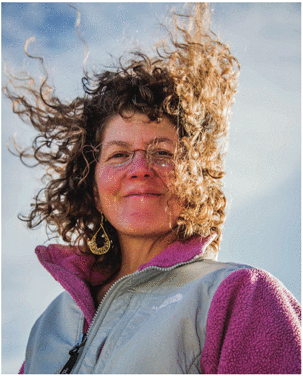 Drake, Ginger A.合作论文数1
 Nathan A. Tomlin合作论文数1Thomas N. Woods合作论文数Laboratory for Atmospheric and Space Physics|University of Colorado , Boulder1
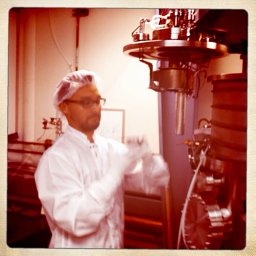 Chris Yung合作论文数1
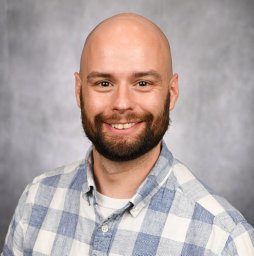 Malcolm White合作论文数Biomedical Sciences Research Complex, School of Biology, University of St Andrews1Zach Castleman合作论文数1
 Michelle Stephens合作论文数1Jerald W. Harder合作论文数1
 John H Lehman合作论文数National Institute of Standards and Technology1
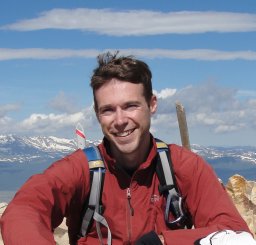 Kevin France合作论文数University of Colorado1Nicholas Nell合作论文数1
 Luca Fossati合作论文数Institut für Weltraumforschung, ÖAW;Space Research Institute, Austrian Academy of Sciences1




