This report, summarising work achieved in the context of the LHC Dark Matter Working Group, investigates the phenomenology of $t$-channel dark matter models, spanning minimal setups with a single dark matter candidate and mediator to more complex constructions closer to UV-complete models. For each considered class of models, we examine collider, cosmological and astrophysical implications. In addition, we explore scenarios with either promptly decaying or long-lived particles, as well as featuring diverse dark matter production mechanisms in the early universe. By providing a unified analysis framework, numerical tools and guidelines, this work aims to support future experimental and theoretical efforts in exploring $t$-channel dark matter models at colliders and in cosmology.
Data from particle physics experiments are unique and are often the result of a very large investment of resources. Given the potential scientific impact of these data, which goes far beyond the immediate priorities of the experimental collaborations that obtain them, it is imperative that the collaborations and the wider particle physics community publish and preserve sufficient information to ensure that this impact can be realised, now and into the future. The information to be published and preserved includes the algorithms, statistical information, simulations and the recorded data. This publication and preservation requires significant resources, and should be a strategic priority with commensurate planning and resource allocation from the earliest stages of future facilities and experiments.
Semi-visible jets arise in strongly interacting dark sectors, resulting in jets overlapping with the missing transverse momentum direction. The implementation of semi-visible jets is done using the Pythia Hidden Valley module to mimic the QCD sector showering in so-called dark shower. In this work, only heavy flavour Standard Model quarks are considered in dark shower, resulting in a much less ambiguous collider signature of semi-visible jets compared to the democratic production of all five quark flavours in dark shower. The constraints from available searches on this signature are presented, and it is shown the signal reconstruction can be improved by using variable-radius jets. Finally a search strategy is suggested.
This report summarises the talks and discussions that took place over the course of the MITP Youngst@rs Colours in Darkness workshop 2023. All talks can be found at https://indico.mitp.uni-mainz.de/event/377/.
The coronavirus disease 2019 (COVID-19) has developed into a pandemic. Data-driven techniques can be used to inform and guide public health decision- and policy-makers. In generalizing the spread of a virus over a large area, such as a province, it must be assumed that the transmission occurs as a stochastic process. It is therefore very difficult for policy and decision makers to understand and visualize the location specific dynamics of the virus on a more granular level. A primary concern is exposing local virus hot-spots, in order to inform and implement non-pharmaceutical interventions. A hot-spot is defined as an area experiencing exponential growth relative to the generalised growth of the pandemic. This paper uses the first and second waves of the COVID-19 epidemic in Gauteng Province, South Africa, as a case study. The study aims provide a data-driven methodology and comprehensive case study to expose location specific virus dynamics within a given area. The methodology uses an unsupervised Gaussian Mixture model to cluster cases at a desired granularity. This is combined with an epidemiological analysis to quantify each cluster's severity, progression and whether it can be defined as a hot-spot.
Streams of event weights in particle-level Monte Carlo event generators are a convenient and immensely CPU-efficient approach to express systematic uncertainties in phenomenology calculations, providing systematic variations on the nominal prediction within a single event sample. But the lack of a common standard for labelling these variation streams across different tools has proven to be a major limitation for event-processing tools and analysers alike. Here we propose a well-defined, extensible community standard for the naming, ordering, and interpretation of weight streams that will serve as the basis for semantically correct parsing and combination of such variations in both theoretical and experimental studies.
A bstract A search for the exclusive decays of the Higgs and Z bosons to a ϕ or ρ meson and a photon is performed with a pp collision data sample corresponding to an integrated luminosity of up to 35 . 6 fb −1 collected at $$ \sqrt{s}=13 $$ s = 13 TeV with the ATLAS detector at the CERN Large Hadron Collider. These decays have been suggested as a probe of the Higgs boson couplings to light quarks. No significant excess of events is observed above the background, as expected from the Standard Model. Upper limits at 95% confidence level were obtained on the branching fractions of the Higgs boson decays to ϕ γ and ρ γ of 4 . 8 × 10 −4 and 8 . 8 × 10 −4 , respectively. The corresponding 95% confidence level upper limits for the Z boson decays are 0 . 9 × 10 −6 and 25 × 10 −6 for ϕ γ and ρ γ, respectively.
A search for leptoquarks decaying into the bτ final state is performed using Run 2 proton-proton collision data from the Large Hadron Collider, corresponding to an integrated luminosity of 139 fb−1 at √(s) = 13 TeV recorded by the ATLAS detector. The benchmark models considered in this search are vector leptoquarks with electric charge of 2/3e and scalar leptoquarks with an electric charge of 4/3e. No significant excess above the Standard Model prediction is observed, and 95
In many lower-and-middle income countries including South Africa, data access in health facilities is restricted due to patient privacy and confidentiality policies. Further, since clinical data is unique to individual institutions and laboratories, there are insufficient data annotation standards and conventions. As a result of the scarcity of textual data, natural language processing (NLP) techniques have fared poorly in the health sector. A cause of death (COD) is often determined by a verbal autopsy (VA) report in places without reliable death registration systems. A non-clinician field worker does a verbal autopsy (VA) report using a set of standardized questions as a guide to uncover symptoms of a COD. This analysis focuses on the textual part of the VA report as a case study to address the challenge of adapting NLP techniques in the health domain. We present a system that relies on two transfer learning paradigms of monolingual learning and multi-source domain adaptation to improve VA narratives for the target task of the COD classification. We use the Bidirectional Encoder Representations from Transformers (BERT) and Embeddings from Language Models (ELMo) models pre-trained on the general English and health domains to extract features from the VA narratives. Our findings suggest that this transfer learning system improves the COD classification tasks and that the narrative text contains valuable information for figuring out a COD. Our results further show that combining binary VA features and narrative text features learned via this framework boosts the classification task of COD.
This Letter reports the observation of WWW production and a measurement of its cross section using 139 fb^{-1} of proton-proton collision data recorded at a center-of-mass energy of 13 TeV by the ATLAS detector at the Large Hadron Collider. Events with two same-sign leptons (electrons or muons) and at least two jets, as well as events with three charged leptons, are selected. A multivariate technique is then used to discriminate between signal and background events. Events from WWW production are observed with a significance of 8.0 standard deviations, where the expectation is 5.4 standard deviations. The inclusive WWW production cross section is measured to be 820±100 (stat)±80 (syst) fb, approximately 2.6 standard deviations from the predicted cross section of 511±18 fb calculated at next-to-leading-order QCD and leading-order electroweak accuracy.
The first measurement of longitudinal decorrelations of harmonic flow amplitudes v_{n} for n=2-4 in Xe+Xe collisions at sqrt[s_{NN}]=5.44 TeV is obtained using 3 μb^{-1} of data with the ATLAS detector at the LHC. The decorrelation signal for v_{3} and v_{4} is found to be nearly independent of collision centrality and transverse momentum (p_{T}) requirements on final-state particles, but for v_{2} a strong centrality and p_{T} dependence is seen. When compared with the results from Pb+Pb collisions at sqrt[s_{NN}]=5.02 TeV, the longitudinal decorrelation signal in midcentral Xe+Xe collisions is found to be larger for v_{2}, but smaller for v_{3}. Current hydrodynamic models reproduce the ratios of the v_{n} measured in Xe+Xe collisions to those in Pb+Pb collisions but fail to describe the magnitudes and trends of the ratios of longitudinal flow decorrelations between Xe+Xe and Pb+Pb. The results on the system-size dependence provide new insights and an important lever arm to separate effects of the longitudinal structure of the initial state from other early and late time effects in heavy-ion collisions.
This study used the recent ATLAS jet substructure measurements to see if any improvements can be made to the commonly used Pythia8 Monash and A14 tunes.
This paper presents a search for direct top squark pair production in events with missing transverse momentum plus either a pair of jets consistent with Standard Model Higgs boson decay into b-quarks or a same-flavour opposite-sign dilepton pair with an invariant mass consistent with a Z boson. The analysis is performed using the proton–proton collision data at \n$$\\sqrt{s}=13$$\n\n TeV collected with the ATLAS detector during the LHC Run-2, corresponding to an integrated luminosity of 139 fb\n$$^{-1}$$\n\n. No excess is observed in the data above the Standard Model predictions. The results are interpreted in simplified models featuring direct production of pairs of either the lighter top squark (\n$$\\tilde{t}_1$$\n\n) or the heavier top squark (\n$$\\tilde{t}_2$$\n\n), excluding at 95% confidence level \n$$\\tilde{t}_1$$\n\n and \n$$\\tilde{t}_2$$\n\n masses up to about 1220 and 875 GeV, respectively.
This report presents the activities of the `New Physics' working group for the `Physics at TeV Colliders' workshop (Les Houches, France, 10--28 June, 2019). These activities include studies of direct searches for new physics, approaches to exploit published data to constrain new physics, as well as the development of tools to further facilitate these investigations. Benefits of machine learning for both the search for new physics and the interpretation of these searches are also presented.
The production cross-sections for W +/- and Z bosons are measured using ATLAS data corresponding to an integrated luminosity of 4.0 pb-1 collected at a centre-ofmass energy v s = 2.76 TeV. The deca ...
 Joey W Huston合作论文数Department of Physics & Astronomy, College of Natural Science, Michigan State University320
 S. M. Farrington合作论文数316Sandro De Cecco合作论文数316
 Dante Amidei合作论文数Department of Physics, College of Literature, Science, and the Arts, University of Michigan313
 Steven Errede合作论文数Department of Physics, The Grainger College of Engineering, University of Illinois Urbana-Champaign312
 S. Giagu合作论文数INFN Sezione di Roma, Sapienza University309
 Alison Lister合作论文数Department of Physics & Astronomy, Faculty of Science, The University of British Columbia306
 Joseph Boudreau合作论文数Department of Physics and Astronomy, University of Pittsburgh300
 Ben Brau合作论文数Department of Physics, College of Natural Sciences, University of Massachusetts Amherst299C. Blocker合作论文数299
 Melissa Franklin合作论文数Department of Physics, Harvard University298
 Bruce Barnett合作论文数William H. Miller III Department of Physics and Astronomy, Krieger School of Arts and Sciences, Johns Hopkins University294
 Alberto Annovi合作论文数INFN292
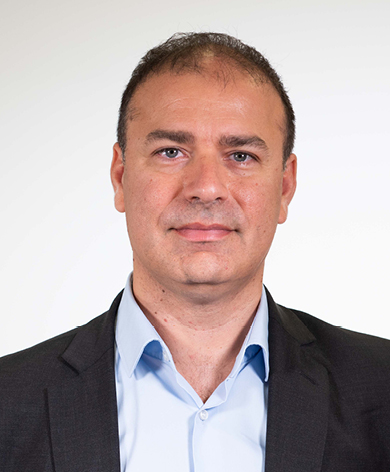 Lucio Cerrito合作论文数Dipartimento di Fisica, Università degli studi di Tor Vergata292
 Ashutosh V. Kotwal合作论文数Department of Physics, Trinity College of Arts & Sciences, Duke University292
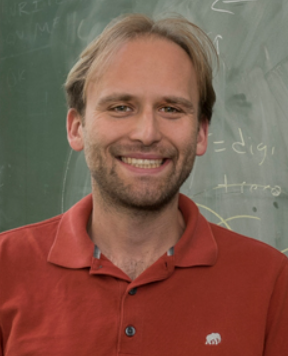 John Adelman合作论文数Department of Physics, Northern Illinois University290A. Cerri合作论文数A.G. Clark289I. Gorelov合作论文数284
 Thomas J Lecompte合作论文数SLAC National Accelerator Laboratory, Stanford University281
 Roman Lysák合作论文数Department of Experimental Particle Physics, Division of Elementary Particle Physics, Institute of Physics of the Czech Academy of Sciences281
 Paolo Mastrandrea合作论文数Sezione di Pisa, INFN;CERN280
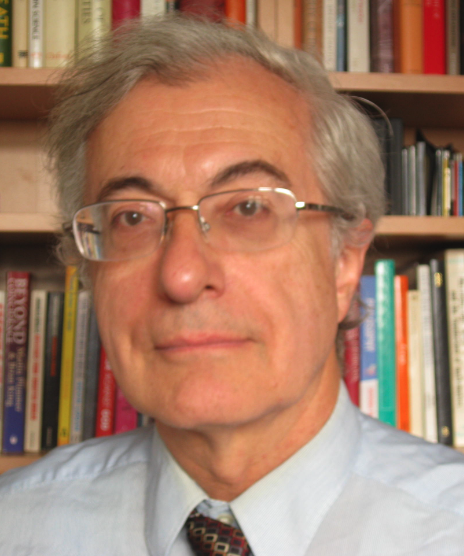 Peter J. Bussey合作论文数School of Physics & Astronomy, University of Glasgow279Shaoqi Hou合作论文数279Carl Haber合作论文数Physics Division, Lawrence Berkeley National Laboratory279N. Kimura合作论文数278M. A. Ciocci合作论文数275R. E. Blair合作论文数University of Bologna274
 C. Bromberg合作论文数Michigan State University, USA274F. Crescioli合作论文数273
 Mario Paolo Giordani合作论文数Dipartimento Politecnico di Ingegneria e Architettura, Università degli Studi di Udine273
 Suen Hou (侯書雲)合作论文数Institute of Physics, Academia Sinica267
 Nils Krumnack合作论文数Department of Physics and Astronomy, College of Liberal Arts and Sciences, Iowa State University265P. Giannetti合作论文数INFN Sezione di Pisa264
 Chris Hays合作论文数Department of Physics, University of Oxford262
 Andrey Loginov合作论文数CERN261M. D'Onofrio合作论文数Univ Liverpool261V. Boisvert合作论文数260Andrea Bocci合作论文数CERN259
 Anadi Canepa合作论文数Fermi National Accelerator Laboratory258S. Leone合作论文数256Nikos D. Giokaris合作论文数University of Athens255
 Adrian Buzatu合作论文数U. Grundler, R.C. Group254F. Garberson合作论文数253
 Pierre-Hugues Beauchemin合作论文数Department of Physics and Astronomy, School of Arts and Sciences, Tufts University251
 Daniela Bortoletto合作论文数Department of Physics, University of Oxford251J. Antos合作论文数250
 Giorgio Chiarelli合作论文数Istituto Nazionale di Fisica Nucleare250
 Bárbara Álvarez González合作论文数Departamento de Física, Universidad de Oviedo248
 Julien Donini合作论文数Laboratoire de Physique de Clermont Auvergne, Institut National De Physique Nucléaire Et De Physique Des Particules, CNRS;Université Clermont Auvergne247




