In this work an innovative readout for multi-channel photodetectors is proposed, and the results of the prototype test are presented. This readout concept is based on the equalization and on the analog sum of a programmable number of channels. A configurable sum of individual channel signals allows for a reduction in the number of digitized channels, lowering the costs of future calorimeter granularity enhancement projects. A potential application of this new readout is in ATLAS-like hadron calorimeters.
In this work an innovative readout for multi-channel photodetectors is proposed, and the results of the prototype test are presented. This readout concept is based on the equalization and on the analog sum of a programmable number of channels. A configurable sum of individual channel signals allows for a reduction in the number of digitized channels, lowering the costs of future calorimeter granularity enhancement projects. A potential application of this new readout is in ATLAS-like hadron calorimeters.
Using proton-antiproton collision data corresponding to an integrated luminosity of 8.8 fb -1 collected in Tevatron Run 2, CDF performed a high precision measurement of the W mass. This result, 80433.5±6.4±6.9 MeV, is the most precise so far, and shows a discrepancy of 76 with Standard Model expectations.
A bstract A search for the exclusive decays of the Higgs and Z bosons to a ϕ or ρ meson and a photon is performed with a pp collision data sample corresponding to an integrated luminosity of up to 35 . 6 fb −1 collected at $$ \sqrt{s}=13 $$ s = 13 TeV with the ATLAS detector at the CERN Large Hadron Collider. These decays have been suggested as a probe of the Higgs boson couplings to light quarks. No significant excess of events is observed above the background, as expected from the Standard Model. Upper limits at 95% confidence level were obtained on the branching fractions of the Higgs boson decays to ϕ γ and ρ γ of 4 . 8 × 10 −4 and 8 . 8 × 10 −4 , respectively. The corresponding 95% confidence level upper limits for the Z boson decays are 0 . 9 × 10 −6 and 25 × 10 −6 for ϕ γ and ρ γ, respectively.
A search for leptoquarks decaying into the bτ final state is performed using Run 2 proton-proton collision data from the Large Hadron Collider, corresponding to an integrated luminosity of 139 fb−1 at √(s) = 13 TeV recorded by the ATLAS detector. The benchmark models considered in this search are vector leptoquarks with electric charge of 2/3e and scalar leptoquarks with an electric charge of 4/3e. No significant excess above the Standard Model prediction is observed, and 95
The total and differential Higgs boson production cross-sections are measured through a combined statistical analysis of the H → ZZ* → 4ℓ and H → γγ decay channels. The results are based on a dataset of 139 fb−1 of proton–proton collisions at a centre-of-mass energy of 13 TeV, recorded by the ATLAS detector at the Large Hadron Collider. The measured total Higgs boson production cross-section is 55.5_-3.8^+4.0 pb, consistent with the Standard Model prediction of 55.6 ± 2.5 pb. All results from the two decay channels are compatible with each other, and their combination agrees with the Standard Model predictions. A combined statistical interpretation of the measured fiducial cross-sections as a function of the Higgs boson transverse momentum is performed in order to probe the Yukawa couplings to the bottom and charm quarks. A similar interpretation is performed by including also the constraints from the measurements of Higgs boson production in association with a W or Z boson in the H → bb and cc decay channels.
INFN is recognized as an Italian excellence in science. Born in 1951, over time it created a world-wide network of activities spanning from high-energy physics at the most powerful accelerators, to the search for Dark Matter and rare events in deep underground laboratories, flanking the operations of four national laboratories in Italy. However, until a couple of decades ago, its role was not adequately appreciated by the Italian public at large. Since the beginning of the millennium INFN unfurled a strategy aimed not only to promote its image, but also to improve the transfer of knowledge acquired in its operation to different actors. In this paper we will deal with the improvement of outreach, presenting the strategies pursed, and some of the paths followed to this aim. Due to space limitations only a schematic view of a twenty-something years of work will be presented. In the conclusion we will report the results of an external evaluation of our efforts. In this paper we will not discuss the program of refresher courses for teachers, despite their relevance in our strategy to improve INFN participation in lifelong learning activities for the Italian society. Likewise, despite its centrality to improve INFN capability in the realm of outreach, we will not present the training program aimed to our personnel involved in science communication, and we will not touch the complex activity recently started to assess the impact of INFN communication efforts. Finally, we do not discuss the initiatives and the strategies pursued in 2020-2022 due to the COVID19 pandemia, despite the importance of outreach actions taken by the Institute.
 Dante Amidei合作论文数Department of Physics, College of Literature, Science, and the Arts, University of Michigan1239
 Daniela Bortoletto合作论文数Department of Physics, University of Oxford1143
 Bruce Barnett合作论文数William H. Miller III Department of Physics and Astronomy, Krieger School of Arts and Sciences, Johns Hopkins University1141
 Melissa Franklin合作论文数Department of Physics, Harvard University1125
 Giorgio Apollinari合作论文数Fermi National Accelerator Laboratory1120
 Steven Errede合作论文数Department of Physics, The Grainger College of Engineering, University of Illinois Urbana-Champaign1115
 Franco Bedeschi合作论文数Istituto Nazionale di Fisica Nucleare Sezione di Pisa1106
 Arie Bodek合作论文数Department of Physics and Astronomy, School of Arts & Sciences, University of Rochester1098
 Luc Demortier合作论文数Laboratory of Experimental High Energy Physics, The Rockefeller University1071K. Goulianos合作论文数1065C. Grosso-Pilcher合作论文数1045Alvin Laasanen合作论文数Purdue University1039
 Joseph Boudreau合作论文数Department of Physics and Astronomy, University of Pittsburgh1036
 Pawel De Barbaro合作论文数Department of Physics and Astronomy, School of Arts and Sciences, University of Rochester;CERN1031
 C. Bromberg合作论文数Michigan State University, USA1030Andrew Beretvas合作论文数1028
 Joey W Huston合作论文数Department of Physics & Astronomy, College of Natural Science, Michigan State University1026
 Michael S. Gold合作论文数Department of Physics and Astronomy, The University of New Mexico1023S. Leone合作论文数1018G. Bellettini合作论文数1013
 Duncan Carlsmith合作论文数Department of Physics, College of Letters & Science, University of Wisconsin-Madison1006V. E. Barnes合作论文数1002
 Jacobo Konigsberg合作论文数Institute for High Energy Physics and Astrophysics, University of Florida;Department of Physics, College of Liberal Arts and Sciences, University of Florida998
 Patrick Lukens合作论文数Particle Physics Division, Fermi National Accelerator Laboratory993
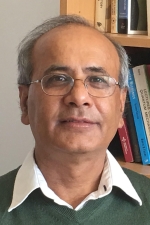 Anwar Bhatti合作论文数Department of Physics, College of Computer, Mathematical, & Natural Sciences, University of Maryland988G. Busetto合作论文数Universita degli Studi987
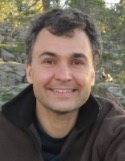 Bill Ashmanskas合作论文数Department of Physics & Astronomy, College of Arts & Sciences, University of Pennsylvania982
 Ray Culbertson合作论文数Fermi National Accelerator Laboratory978A. Cerri合作论文数A.G. Clark975James Bellinger合作论文数Department of Physics, University of Wisconsin–Madison973M. A. Ciocci合作论文数972P. Giannetti合作论文数INFN Sezione di Pisa972
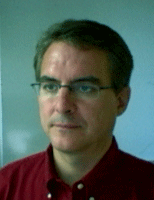 John S. Conway合作论文数Department of Physics and Astronomy, University of California, Davis965
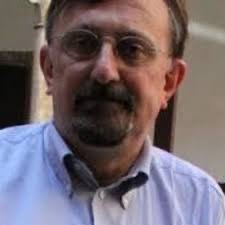 Gianluca Introzzi合作论文数Department of Physics, University of Pavia959
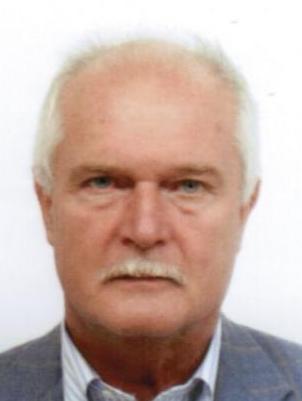 Dario Bisello合作论文数Department of Physics and Astronomy "Galileo Galilei", University of Padova957Paolo Giromini合作论文数954Af Garfinkel合作论文数947D. Benjamin合作论文数946
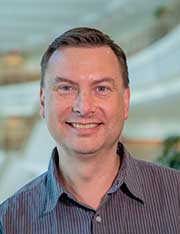 Jay R. Dittmann合作论文数Department of Physics, College of Arts and Sciences, Baylor University941
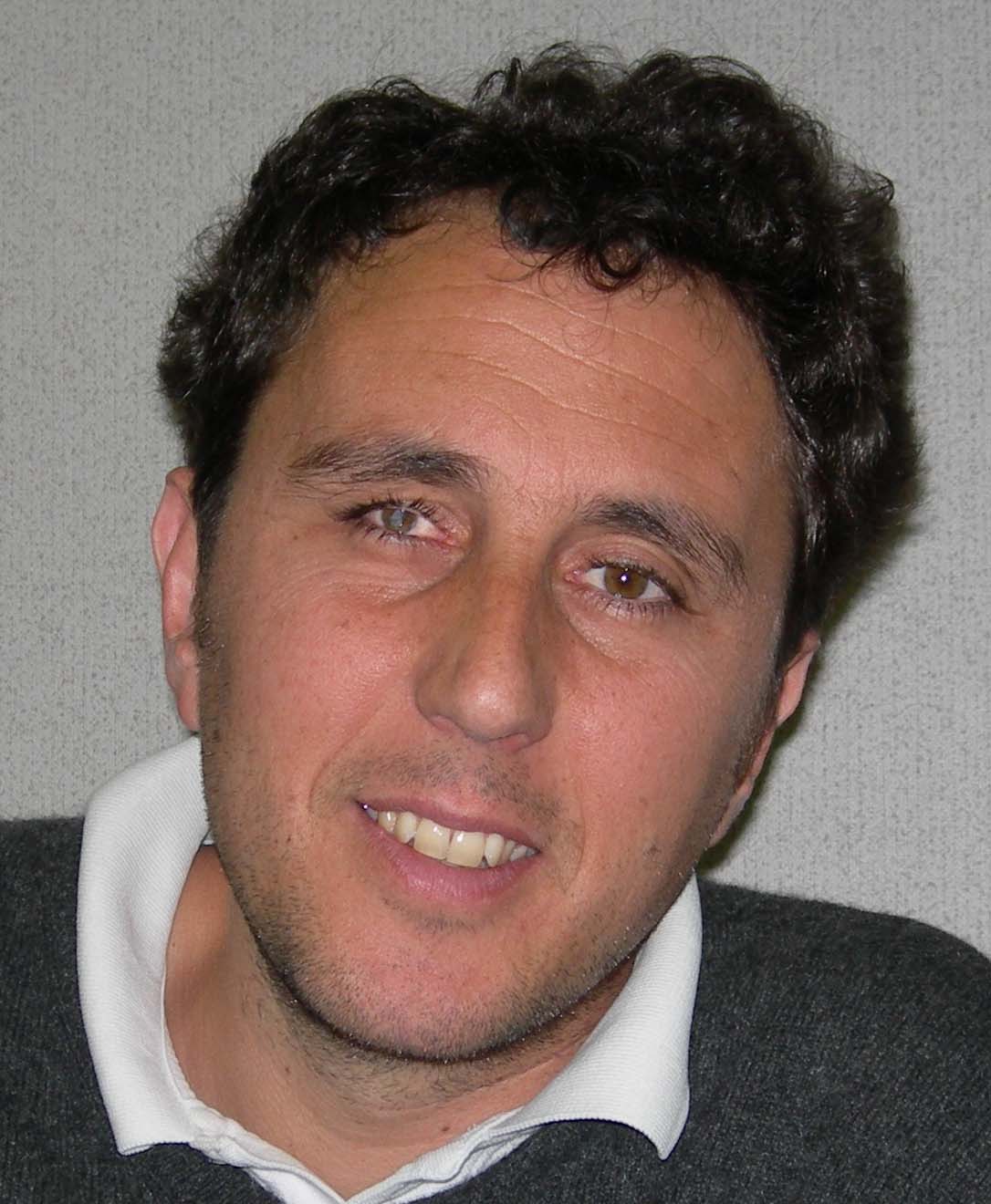 Fabio Happacher合作论文数Istituto Nazionale di Fisica Nucleare938D. Lucchesi合作论文数936
 Morris Binkley合作论文数Collider Detector Facility Department, Fermi National Accelerator Laboratory935Marco Cordelli合作论文数Laboratori Nazionali di Frascati, Istituto Nazionale di Fisica Nucleare926K. Burkett合作论文数924
 Lee G. Pondrom合作论文数Department of Physics, University of Wisconsin–Madison917
 Angela Barbaro-Galtieri合作论文数Physics Division, Lawrence Berkeley National Laboratory916
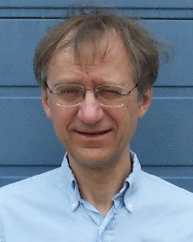 Howard S. Budd合作论文数Department of Physics and Astronomy, School of Arts & Sciences, University of Rochester912
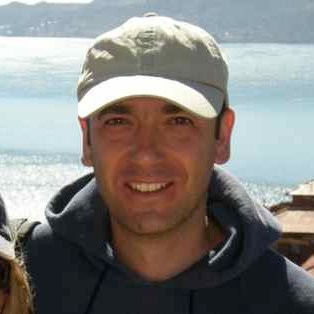 Niccolò Moggi合作论文数Department of Industrial Engineering, University of Bologna905G. Latino合作论文数INFN Sezione di Firenze, Università di Firenze901




