Sentiment analysis has attracted particular attention from researchers because it is valuable for various real-world applications, such as opinion mining and market analysis in business. Unlike existing methods that use a natural language approach for sentiment analysis, this study uses a computer vision approach. In addition, the existing work ignores applications to multi-lingual text (English and Kannada, which is the language of Karnataka state, India). To the best of our knowledge, this is the first work that uses images of handwritten text. Our observations indicate that positive handwriting typically features thick strokes, good quality, and well-formed, readable characters. Negative handwriting tends to be sloppy and overwritten, making it difficult to read. Neutral handwriting exhibits neither distinctly positive nor negative traits. To extract these features, we propose a new model based on a polar transform to identify characteristics that distinguish three classes. Changes in theta and distance within the polar transform produce unique cluster points related to each class. The extracted features are then encoded using a convolutional neural network (CNN) in a novel manner. We test our method on our own dataset and compare the results with state-of-the-art methods, demonstrating the superiority of our approach. The code and dataset are available at https://github.com/prajwalkumarprof/A-new-Polar-Transform-Based-Text-Sentiment-Analysis.git.
Computing is an indispensable component of nearly all technologies and is ubiquitous for vast segments of society. It is also essential to discoveries and innovations in most disciplines. However, while past grand challenges in science have involved computing as one of the tools to address the challenge, these challenges have not been principally about computing. Why has the computing community not yet produced challenges at the scale of grandeur that we see in disciplines such as physics, astronomy, or engineering? How might we go about identifying similarly grand challenges? What are the grand challenges of computing that transcend our discipline's traditional boundaries and have the potential to dramatically improve our understanding of the world and positively shape the future of our society? There is a significant benefit in us, as a field, taking a more intentional approach to "grand challenges." We are seeking challenge problems that are sufficiently compelling as to both ignite the imagination of computer scientists and draw researchers from other disciplines to computational challenges. This paper emphasizes the importance, now more than ever, of defining and pursuing grand challenges in computing as a field, and being intentional about translation and realizing its impacts on science and society. Building on lessons from prior grand challenges, the paper explores the nature of a grand challenge today emphasizing both scale and impact, and how the community may tackle such a grand challenge, given a rapidly changing innovation ecosystem in computing. The paper concludes with a call to action for our community to come together to define grand challenges in computing for the next decade and beyond.
Challenging handwritten text detection is important for several real-world applications such as digitizing documents, grading student exam answers and writer identification. to enhance the recognizer performance. Due to unconstrained and free writing styles, handwritten text often includes both legible, neatly written text and illegible, sloppy text. In this work, "challenging text" refers to handwriting that is difficult to read due to factors like sloppiness, overwriting, crossed-out lines, and shakiness. This work aims to propose a method for the classification of challenging text and restoring character shapes such that an appropriate recognition method can be used to achieve better recognition performance for challenging text. We propose a tri-channel-based CNN for classification by considering words as input. Further, to strengthen the feature extraction, the proposed work extracts seven features based on characteristics of text, such as connectivity, spacing between characters, stroke width, edge strength, and quality of text. The extracted seven features are supplied to the CNN along with the features extracted by the Tri-channel network for classification. The input image of the challenging text is supplied to the combination of U-Net and BiLSTM networks for restoring the character shapes. The effectiveness of the proposed method is demonstrated by conducting a variety of experiments. Our method outperforms the state-of-the-art methods in terms of average classification rate.
Artificial intelligence (AI) is increasingly being adopted in most industries, and for applications such as note taking and checking grammar, there is typically not a cause for concern. However, when constitutional rights are involved, as in the justice system, transparency is paramount. While AI can assist in areas such as risk assessment and forensic evidence generation, its "black box" nature raises significant questions about how decisions are made and whether they can be contested. This paper explores the implications of AI in the justice system, emphasizing the need for transparency in AI decision-making processes to uphold constitutional rights and ensure procedural fairness. The piece advocates for clear explanations of AI's data, logic, and limitations, and calls for periodic audits to address bias and maintain accountability in AI systems.
Personality trait identification from social media data has many applications in health monitoring, education, candidate screening, and business. Personality trait identification using text and images published on Social media (Twitter) is challenging due to unpredictable text and the background in the personality trait images. Unlike the existing studies that use multimodal (image and text) for the classification of personality traits images, this study fuses the text of emotions, text in the personality traits image, and image information. We believe that there is a strong correlation between emotion and personality traits. This observation motivated us to combine the textual features of emotional images, text in personality traits images, and image features. The above observations are captured through transformer encoders and multiple convolutional layers, followed by max-pool layers. Before feeding to transformers, our method extracts text in the personality trait images, resulting in text regions and non-text regions separately. Then, the proposed model obtains captions for the emotion and personality trait images. To integrate the strengths of the features extracted from emotion and personality text and images, the proposed work introduces a bilinear fusion approach, which fuses features and modalities. The experiments are conducted on different standard datasets of personality trait images to demonstrate the effectiveness of classification. A comparative study with state-of-the-art methods shows that our method is superior to existing methods. Experiments are also conducted on different races and genders to validate bias and fairness.
In the fast-evolving field of information retrieval (IR), the integration of generative AI technologies such as large language models (LLMs) is transforming how users search for and interact with information. Recognizing this paradigm shift at the intersection of IR and generative AI (IR-GenAI), a visioning workshop supported by the Computing Community Consortium (CCC) was held in July 2024 to discuss the future of IR in the age of generative AI. This workshop convened 44 experts in information retrieval, natural language processing, human-computer interaction, and artificial intelligence from academia, industry, and government to explore how generative AI can enhance IR and vice versa, and to identify the major challenges and opportunities in this rapidly advancing field. This report contains a summary of discussions as potentially important research topics and contains a list of recommendations for academics, industry practitioners, institutions, evaluation campaigns, and funding agencies.
Handwritten documents possess immense significance in domains such as law, history, and administration. However, they are vulnerable to forgery, which can undermine their credibility and reliability. This paper aims to establish a dependable technique for identifying altered text in handwritten document images, even in scenarios with high levels of noise and blur. Our study investigates 10 distinct categories of handwritten text that have been altered through various forgery operations. The suggested approach employs the deep neural architectures VGG16 and Resnet50 as feature extractors. The architecture comprises three parts: Feature extraction using individual models, a feature fusion layer, and a classification layer. Initially, we optimize the training process and feature extraction using VGG16 and ResNet50. The feature vectors obtained from both models are then fused together in the feature fusion layer and input into the classification layer for the classification task. Experiments are conducted on a custom-created dataset as well as benchmark datasets including ICPR FDC, IMEI Forged Number, and Kundu to demonstrate that the proposed method is superior to existing approaches.
Gender identification at the word level in a multi-script environment is challenging due to variations posed by free-style handwriting of individuals and geographical differences in writing styles. This paper presents a new approach, Multi-Orientation-Scale Gabor Response Fusion (MOSGF), for gender identification at the word level using handwritten text. Our method has two steps: (i) word segmentation from unconstrained lines and (ii) gender identification at the word level. In the first step, the method explores the number of zero crossing points and gradient information for word segmentation from handwritten text lines. In the second step, employs Gabor responses at different orientations and scales to detect fine details in female and male handwriting. For each Gabor response, the proposed model estimates the correlation between average templates of all Gabor responses and the individual Gabor response to extract global consistency in writing. To strengthen correlation features, the proposed method uses the Mahalanobis distance measure, which extracts local similarity. Further, the proposed approach fuses correlation coefficient and distance-based features in a novel way. The fused features are then fed to a Neural Network (NN) for gender identification. Experiments on our dataset, which comprises Roman (English), Chinese, Farsi (Persian), Arabic, and Indian scripts, and a benchmark dataset, namely, IAM which includes English text, KHATT which includes Arabic, and QUWI which includes both English and Arabic, show that the proposed system outperforms the existing methods in terms of word segmentation and gender identification.
Disease identification for fruits and leaves in the field of agriculture is important for estimating production, crop yield, and earnings for farmers. In the specific case of pomegranates, this is challenging because of the wide range of possible diseases and their effects on the plant and the crop. This study presents an adaptive histogram-based method for solving this problem. Our method describe is domain independent in the sense that it can be easily and efficiently adapted to other similar smart agriculture tasks. The approach explores colour spaces, namely, Red, Green, and Blue along with Grey. The histograms of colour spaces and grey space are analysed based on the notion that as the disease changes, the colour also changes. The proximity between the histograms of grey images with individual colour spaces is estimated to find the closeness of images. Since the grey image is the average of colour spaces (R, G, and B), it can be considered a reference image. For estimating the distance between grey and colour spaces, the proposed approach uses a Chi-Square distance measure. Further, the method uses an Artificial Neural Network for classification. The effectiveness of our approach is demonstrated by testing on a dataset of fruit and leaf images affected by different diseases. The results show that the method outperforms existing techniques in terms of average classification rate.
Following the fourth edition of the workshop on Reproducible Research in Pattern Recognition (RRPR) at the International Conference on Pattern Recognition (ICPR), this paper reports the main discussions that were held during and after the workshop. In particular, the integration of reproducible research inside an international conference was the first main axis of reflection. Further discussions addressed the ways of initiating or imposing reproducible research, as well as the problem of performance comparisons of published research papers that emerges due to the fact that the reported results are often based on different implementations and datasets.
HAL is a multi-disciplinary open access archive for the deposit and dissemination of scientific research documents, whether they are published or not. The documents may come from teaching and research institutions in France or abroad, or from public or private research centers. L’archive ouverte pluridisciplinaire HAL, est destinée au dépôt et à la diffusion de documents scientifiques de niveau recherche, publiés ou non, émanant des établissements d’enseignement et de recherche français ou étrangers, des laboratoires publics ou privés. Reproducible Research in Pattern Recognition: Third International Workshop, RRPR 2021 Bertrand Kerautret, Miguel Colom, Adrien Krähenbühl, Daniel Lopresti, Pascal Monasse, Hugues Talbot
Due to the proliferation of sports-related multimedia content on the WWW, effective visual search and retrieval present interesting research challenges. These are caused by poor image quality, a wide range of possible camera points of view, pose variations on the part of athletes engaged in playing a sport, deformations of text appearing on sports person’s clothing and uniforms in motion, occlusions caused by other objects, etc. To address these challenges, this paper presents a new method for detecting text on human bodies in sports images. Unlike most existing methods, which attempt to exploit locations of a player’s torso, face, and skin, we propose an end-to-end episodic learning approach that employs inductive learning criteria for detecting clothing regions in an image, which are, in turn, then used for text detection. Our method integrates a Residual Network (ResNet) and Pyramidal Pooling Module (PPM) for generating a spatial attention map. The Progressive Scalable Expansion Algorithm (PSE) is adapted for text detection from these regions. Experimental results on our own dataset as well as several benchmarks (like RBNR and MMM which contain images of runners in marathons, and Re-ID which is a person re-identification dataset) demonstrate that the proposed method outperforms existing methods in terms of precision and F1-score. We also present results for sports images chosen from natural scene text detection datasets such as CTW1500 and MS-COCO to show the proposed method is effective and reliable across a range of inputs.
By all measures, wireless networking has seen explosive growth over the past decade. Fourth Generation Long Term Evolution (4G LTE) cellular technology has increased the bandwidth available for smartphones, in essence, delivering broadband speeds to mobile devices. The most recent 5G technology is further enhancing the transmission speeds and cell capacity, as well as, reducing latency through the use of different radio technologies and is expected to provide Internet connections that are an order of magnitude faster than 4G LTE. Technology continues to advance rapidly, however, and the next generation, 6G, is already being envisioned. 6G will make possible a wide range of powerful, new applications including holographic telepresence, telehealth, remote education, ubiquitous robotics and autonomous vehicles, smart cities and communities (IoT), and advanced manufacturing (Industry 4.0, sometimes referred to as the Fourth Industrial Revolution), to name but a few. The advances we will see begin at the hardware level and extend all the way to the top of the software "stack." Artificial Intelligence (AI) will also start playing a greater role in the development and management of wireless networking infrastructure by becoming embedded in applications throughout all levels of the network. The resulting benefits to society will be enormous. At the same time these exciting new wireless capabilities are appearing rapidly on the horizon, a broad range of research challenges loom ahead. These stem from the ever-increasing complexity of the hardware and software systems, along with the need to provide infrastructure that is robust and secure while simultaneously protecting the privacy of users. Here we outline some of those challenges and provide recommendations for the research that needs to be done to address them.
Recently developed sophisticated image processing techniques and tools have made easier the creation of high-quality forgeries of handwritten documents including financial and property records. To detect such forgeries of handwritten documents, this paper presents a new method by exploring the combination of Chebyshev-Harmonic-Fourier-Moments (CHFM) and deep Convolutional Neural Networks (D-CNNs). Unlike existing methods work based on abrupt changes due to distortion created by forgery operation, the proposed method works based on inconsistencies and irregular changes created by forgery operations. Inspired by the special properties of CHFM, such as its reconstruction ability by removing redundant information, the proposed method explores CHFM to obtain reconstructed images for the color components of the Original, Forged Noisy and Blurred classes. Motivated by the strong discriminative power of deep CNNs, for the reconstructed images of respective color components, the proposed method used deep CNNs for forged handwriting detection. Experimental results on our dataset and benchmark datasets (namely, ACPR 2019, ICPR 2018 FCD and IMEI datasets) show that the proposed method outperforms existing methods in terms of classification rate.
Strategic, sustained Federal investments in intelligent infrastructure will increase safety and resilience, improve efficiencies and civic services, and broaden employment opportunities and job growth nationwide. The technologies that comprise intelligent infrastructure can also provide keys to solving some of the most vexing challenges we face today, including confronting future pandemics and natural disasters, achieving sustainability and energy efficiency goals, and advancing social justice. Enabling those technologies effectively will require investment in the associated computing research as well, beyond and in concert with the basic building projects. In 2017, the Computing Community Consortium (CCC) produced a series of intelligent infrastructure whitepapers, and in 2020 CCC issued a set of companion whitepapers on closely related topics. Here we briefly survey those earlier works, and then highlight four themes of rising national prominence where intelligent infrastructure can also play an enabling role, driven by experiences with the COVID-19 pandemic and the social justice movement. We conclude with recommendations for the necessary research investments.
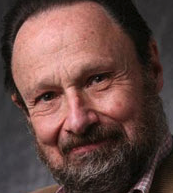 George Nagy合作论文数Department of Electrical, Computer, and Systems Engineering, Rensselaer Polytechnic Institute;Johnsson Engineering Center, Rensselaer Polytechnic Institute35
 Jiangying Zhou合作论文数18
 Shivakumara Palaiahnakote合作论文数School of Science, Engineering & Environment, University of Salford18
 Umapada Pal合作论文数Computer Vision & Pattern Recognition Unit, Computer and Communication Sciences Division, Indian Statistical Institute16
 Jin Chen合作论文数15
 Tong Lu (路通)合作论文数National Key Laboratory for Novel Software Technology, Department of Computer Science and Technology, Nanjing University14
 Andrew Tomkins合作论文数Google11Bart Lamiroy合作论文数INPL-LORIA, Ecole des Mines11
 Elisa Barney合作论文数Electrical and Computer Engineering Department;Boise State University11
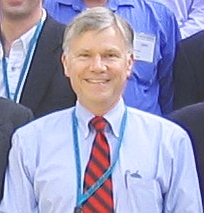 Henry S. Baird合作论文数Department of Computer Science & Engineering, P.C. Rossin College of Engineering & Applied Science, Lehigh University9Jy Zhou合作论文数8
 Jianying Hu合作论文数7
 Fabian Monrose合作论文数College of Engineering, School of Electrical and Computer Engineering, Georgia Institute of Technology7
 Gordon Wilfong合作论文数Nokia;Bell Labs7George R. Thoma合作论文数Lister Hill National Center for Biomedical Communications, U.S. National Library of Medicine6
 Venu Govindaraju合作论文数Center for Unified Biometrics and Sensors, Department Computer Science and Engineering, School of Engineering and Applied Sciences, University at Buffalo, The State University of New York;NSF National AI Institute for Exceptional Education6
 Lokesh Nandanwar合作论文数Fac Comp Sci Informat Technol, Univ Malaya5Yaoyao Zhu合作论文数5
 Sharon X. Huang合作论文数Department of Informatics and Intelligent Systems, College of Information Sciences and Technology, Penn State University;Institute for Computational and Data Sciences, Penn State University;Huck Institutes of the Life Sciences, Penn State University5Lucas Ballard合作论文数5K. Inthavisas合作论文数Department of Computer Science & Engineering, Lehigh University5R. Kashi合作论文数4zhibin lei合作论文数4Harkness, C.L.合作论文数4
 Chilin Shih合作论文数Center for East Asian & Pacific Studies, Illinois Global Institute, College of Liberal Arts and Sciences, University of Illinois at Urbana-Champaign4
 Sharad Seth合作论文数Department of Computer Science and Engineering, University of Nebraska-Lincoln4
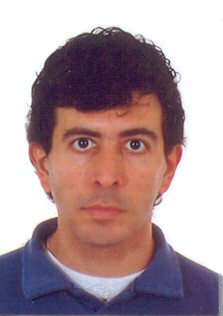 Josep Lladós合作论文数Computer Vision Center - Computer Science Department4
 Sameer Antani合作论文数Lister Hill National Center for Biomedical Communications, National Library of Medicine, National Institutes of Health4
 Zhiyun Xue (薛智韵)合作论文数Natl Lib Med, NIH4
 Pinaki Nath Chowdhury合作论文数ISIZE Technologies;SketchX;SketchX Lab of Center for Vision, Speech and Signal Processing, University of Surrey3
 Raghavendra Ramachandra合作论文数Department of Information Security and Communication Technology, Faculty of Information Technology and Electrical Engineering, Norwegian University of Science and Technology3
 Koichi Kise (黄濑浩一)合作论文数Graduate School of Engineering, Osaka Metropolitan University3
 Wen Cheng合作论文数3
 Seiichi Uchida (内田誠一)合作论文数Department of Advanced Information Technology, Faculty of Information Science and Electrical Engineering, Kyushu University3
 Klara Nahrstedt合作论文数Siebel School of Computing and Data Science, The Grainger College of Engineering, University of Illinois Urbana-Champaign3Ashutosh Joshi合作论文数Rensselaer Polytechnic Institute3
 Jon Louis Bentley合作论文数Bell Laboratories3Richard Hughey合作论文数Computer Engineering3Jeffrey Esakov合作论文数3Sui-Yu Wang合作论文数Department of Computer Science and Engineering, Lehigh University3
 Shwetak Patel合作论文数Paul G. Allen School of Computer Science & Engineering, University of Washington3
 Hiromichi Fujisawa合作论文数Perceptual Computing Laboratory, Waseda University;Research and Development Group, Hitachi3
 Bertrand Kerautret合作论文数LORIA- Campus Scientifique3
 Prateek Sarkar合作论文数Palo Alto Research Center, CA3Kris Popat合作论文数Xerox Palo Alto Research Center3Rodney Long合作论文数National Library of Medicine, National Institutes of Health, Bethesda, MD 20894, USA3Ramanujan Kashi合作论文数3
 Kavallieratou Ergina合作论文数Department of Information, University of the Aegean3




