Artificial intelligence (AI) is increasingly being adopted in most industries, and for applications such as note taking and checking grammar, there is typically not a cause for concern. However, when constitutional rights are involved, as in the justice system, transparency is paramount. While AI can assist in areas such as risk assessment and forensic evidence generation, its "black box" nature raises significant questions about how decisions are made and whether they can be contested. This paper explores the implications of AI in the justice system, emphasizing the need for transparency in AI decision-making processes to uphold constitutional rights and ensure procedural fairness. The piece advocates for clear explanations of AI's data, logic, and limitations, and calls for periodic audits to address bias and maintain accountability in AI systems.
The diagnosis of autism spectrum disorder (ASD) is a complex, challenging task as it depends on the analysis of interactional behaviors by psychologists rather than the use of biochemical diagnostics. In this paper, we present a modeling approach to ASD diagnosis by analyzing acoustic/prosodic and linguistic features extracted from diagnostic conversations between a psychologist and children who either are typically developing (TD) or have ASD. We compare the contributions of different features across a range of conversation tasks. We focus on finding a minimal set of parameters that characterize conversational behaviors of children with ASD. Because ASD is diagnosed through conversational interaction, in addition to analyzing the behavior of the children, we also investigate whether the psychologist's conversational behaviors vary across diagnostic groups. Our results can facilitate fine-grained analysis of conversation data for children with ASD to support diagnosis and intervention.
Commonly-used transformer language models depend on a tokenization schema which sets an unchangeable subword vocabulary prior to pre-training, destined to be applied to all downstream tasks regardless of domain shift, novel word formations, or other sources of vocabulary mismatch. Recent work has shown that "token-free" models can be trained directly on characters or bytes, but training these models from scratch requires substantial computational resources, and this implies discarding the many domain-specific models that were trained on tokens. In this paper, we present XRayEmb, a method for retrofitting existing token-based models with character-level information. XRayEmb is composed of a character-level "encoder" that computes vector representations of character sequences, and a generative component that decodes from the internal representation to a character sequence. We show that incorporating XRayEmb's learned vectors into sequences of pre-trained token embeddings helps performance on both autoregressive and masked pre-trained transformer architectures and on both sequence-level and sequence tagging tasks, particularly on non-standard English text.
We introduce a new keyphrase generation approach using Generative Adversarial Networks (GANs). For a given document, the generator produces a sequence of keyphrases, and the discriminator distinguishes between human-curated and machine-generated keyphrases. We evaluated this approach on standard benchmark datasets. We observed that our model achieves state-of-the-art performance in the generation of abstractive keyphrases and is comparable to the best performing extractive techniques. Although we achieve promising results using GANs, they are not significantly better than the state-of-the-art generative models. To our knowledge, this is one of the first works that use GANs for keyphrase generation. We present a detailed analysis of our observations and expect that these findings would help other researchers to further study the use of GANs for the task of keyphrase generation.
A fact machine receives a comment string from a webpage and segments the comments into sub-conversations. The fact machine also identifies entities within comments or draft comments as well as a sentiment and/or attributes associated with the entity. The fact machine then queries a knowledge base for facts relating to the entity, the attributes, and/or the sentiment. The fact machine then provides the facts to a user prior to the user posting a draft comment.
Visual Speech Recognition (VSR) is the process of recognizing or interpreting speech by watching the lip movements of the speaker. Recent machine learning based approaches model VSR as a classification problem; however, the scarcity of training data leads to error-prone systems with very low accuracies in predicting unseen classes. To solve this problem, we present a novel approach to zero-shot learning by generating new classes using Generative Adversarial Networks (GANs), and show how the addition of unseen class samples increases the accuracy of a VSR system by a significant margin of 27% and allows it to handle speaker-independent out-of-vocabulary phrases. We also show that our models are language agnostic and therefore capable of seamlessly generating, using English training data, videos for a new language (Hindi). To the best of our knowledge, this is the first work to show empirical evidence of the use of GANs for generating training samples of unseen classes in the domain of VSR, hence facilitating zero-shot learning. We make the added videos for new classes publicly available along with our code(1).
In this paper, we present a new corpus consisting of sentences from Hindi short stories annotated for five different discourse modes argumentative, narrative, descriptive, dialogic and informative. We present a detailed account of the entire data collection and annotation processes. The annotations have a very high inter-annotator agreement (0.87 k-alpha). We analyze the data in terms of label distributions, part of speech tags, and sentence lengths. We characterize the performance of various classification algorithms on this dataset and perform ablation studies to understand the nature of the linguistic models suitable for capturing the nuances of the embedded discourse structures in the presented corpus.
In this paper, we formulate keyphrase extraction from scholarly articles as a sequence labeling task solved using a BiLSTM-CRF, where the words in the input text are represented using deep contextualized embeddings. We evaluate the proposed architecture using both contextualized and fixed word embedding models on three different benchmark datasets, and compare with existing popular unsupervised and supervised techniques. Our results quantify the benefits of: (a) using contextualized embeddings over fixed word embeddings; (b) using a BiLSTM-CRF architecture with contextualized word embeddings over fine-tuning the contextualized embedding model directly; and (c) using domain-specific contextualized embeddings (SciBERT). Through error analysis, we also provide some insights into why particular models work better than the others. Lastly, we present a case study where we analyze different self-attention layers of the two best models (BERT and SciBERT) to better understand their predictions.
This report documents the program and the outcomes of Dagstuhl Seminar 19182 “Multi-Document Information Consolidation”. At this 5-day Dagstuhl seminar, an interdisciplinary collection of leading researchers discussed and develop research ideas to address multi-documents in machine learning and NLP systems. In particular, the seminar addressed four major topics: 1) how to represent information in multi-document repositories; 2) how to support inference over multi-document repositories; 3) how to summarize and visualize multi-document repositories for decision support; and 4) how to do information validation on multi-document repositories. General talks as well as topic-specific talks were given to stimulate the discussion between the participants, which lead to various new research ideas. Seminar April 28–May 3, 2019 – http://www.dagstuhl.de/19182 2012 ACM Subject Classification Information systems → Information retrieval, Computing methodologies → Machine learning
Annotation is the labeling of data by human effort. Annotation is critical to modern machine learning, and Bloomberg has developed years of experience of annotation at scale. This report captures a wealth of wisdom for applied annotation projects, collected from more than 30 experienced annotation project managers in Bloomberg's Global Data department.
An NLP model’s ability to reason should be independent of language. Previous works utilize Natural Language Inference (NLI) to understand the reasoning ability of models, mostly focusing on high resource languages like English. To address scarcity of data in low-resource languages such as Hindi, we use data recasting to create NLI datasets for four existing text classification datasets. Through experiments, we show that our recasted dataset is devoid of statistical irregularities and spurious patterns. We further study the consistency in predictions of the textual entailment models and propose a consistency regulariser to remove pairwise-inconsistencies in predictions. We propose a novel two-step classification method which uses textual-entailment predictions for classification task. We further improve the performance by using a joint-objective for classification and textual entailment. We therefore highlight the benefits of data recasting and improvements on classification performance using our approach with supporting experimental results.
This report documents the program and the outcomes of Dagstuhl Seminar 19182 “Multi-Document Information Consolidation”. At this 5-day Dagstuhl seminar, an interdisciplinary collection of leading researchers discussed and develop research ideas to address multi-documents in machine learning and NLP systems. In particular, the seminar addressed four major topics: 1) how to represent information in multi-document repositories; 2) how to support inference over multi-document repositories; 3) how to summarize and visualize multi-document repositories for decision support; and 4) how to do information validation on multi-document repositories. General talks as well as topic-specific talks were given to stimulate the discussion between the participants, which lead to various new research ideas.
Visual speech recognition (VSR) is the task of recognizing spoken language from video input only, without any audio. VSR has many applications as an assistive technology, especially if it could be deployed in mobile devices and embedded systems. The need for intensive computational resources and large memory footprint are two major obstacles in deploying neural network models for VSR in a resource constrained environment. We propose a novel end-to-end deep neural network architecture for word level VSR called MobiVSR with a design parameter that aids in balancing the model's accuracy and parameter count. We use depthwise 3D convolution along with channel shuffling for the first time in the domain of VSR and show how it makes our model efficient. MobiVSR achieves an accuracy of 70% on a challenging Lip Reading in the Wild dataset with 6 times fewer parameters and 20 times smaller memory footprint than the current state of the art. MobiVSR can also be compressed to 6 MB by applying post training quantization.
Pallavi Patil, Kriti Myer, Ronak Zala, Arpit Singh, Sheshera Mysore, Andrew McCallum, Adrian Benton, Amanda Stent. Proceedings of the 23rd Conference on Computational Natural Language Learning (CoNLL). 2019.
Every fiscal quarter, companies hold earnings calls in which company executives respond to questions from analysts. After these calls, analysts often change their price target recommendations, which are used in equity research reports to help investors make decisions. In this paper, we examine analysts' decision making behavior as it pertains to the language content of earnings calls. We identify a set of 20 pragmatic features of analysts' questions which we correlate with analysts' pre-call investor recommendations. We also analyze the degree to which semantic and pragmatic features from an earnings call complement market data in predicting analysts' post-call changes in price targets. Our results show that earnings calls are moderately predictive of analysts' decisions even though these decisions are influenced by a number of other factors including private communication with company executives and market conditions. A breakdown of model errors indicates disparate performance on calls from different market sectors.
Speech Reconstruction is the task of recreation of speech using silent videos as input. In the literature, it is also referred to as lipreading. In this paper, we design an encoder-decoder architecture which takes silent videos as input and outputs an audio spectrogram of the reconstructed speech. The model, despite being a speaker-independent model, achieves comparable results on speech reconstruction to the current state-of-the-art speaker-dependent model. We also perform user studies to infer speech intelligibility. Additionally, we test the usability of the trained model using bilingual speech.
Technical and fundamental analysis are traditional tools used to analyze individual stocks; however, the finance literature has shown that the price movement of each individual stock correlates heavily with other stocks, especially those within the same sector. In this paper we propose a general purpose market representation that incorporates fundamental and technical indicators and relationships between individual stocks. We treat the daily stock market as a "market image" where rows (grouped by market sector) represent individual stocks and columns represent indicators. We apply a convolutional neural network over this market image to build market features in a hierarchical way. We use a recurrent neural network, with an attention mechanism over the market feature maps, to model temporal dynamics in the market. We show that our proposed model outperforms strong baselines in both short-term and long-term stock return prediction tasks. We also show another use for our market image: to construct concise and dense market embeddings suitable for downstream prediction tasks.
Visual speech recognition (VSR) is the task of recognizing spoken language from video input only, without any audio. VSR has many applications as an assistive technology, especially if it could be deployed in mobile devices and embedded systems. The need of intensive computational resources and large memory footprint are two of the major obstacles in developing neural network models for VSR in a resource constrained environment. We propose a novel end-to-end deep neural network architecture for word level VSR called MobiVSR with a design parameter that aids in balancing the model's accuracy and parameter count. We use depthwise-separable 3D convolution for the first time in the domain of VSR and show how it makes our model efficient. MobiVSR achieves an accuracy of 73\% on a challenging Lip Reading in the Wild dataset with 6 times fewer parameters and 20 times lesser memory footprint than the current state of the art. MobiVSR can also be compressed to 6 MB by applying post training quantization.
 Srinivas Bangalore合作论文数Interactions, LLC17
 Giuseppe (Pino) Di Fabbrizio合作论文数Harvard Business School13
 James F. Allen合作论文数Department of Computer Science, Hajim School of Engineering & Applied Sciences, University of Rochester11
 Marilyn Walker合作论文数Department of Computer Science, University of California, Santa Cruz;Baskin School of Engineering, University of California, Santa Cruz;Natural Language and Dialogue Systems Lab, University of California, Santa Cruz10
 Michael Johnston合作论文数Center for Human-Computer Communication;Graduate Institute of Science and Technology, Oregon;Center for Human-Computer Communication, Oregon Graduate Institute of Science and Technology9
 Debanjan Mahata合作论文数Bloomberg LP8
 George Ferguson合作论文数Dept. of Computer Science
University of Rochester8
George Ferguson合作论文数Dept. of Computer Science
University of Rochester8 Steve Whittaker合作论文数Department of Computational Media, Baskin School of Engineering, University of California, Santa Cruz;Psychology Department, University of California, Santa Cruz8
 Rajiv Ratn Shah合作论文数Department of Computer Science and Engineering, Indraprastha Institute of Information Technology, Delhi8
 Richard Sproat (史伯樂)合作论文数Sakana AI7
 Lucian Galescu合作论文数University of Rochester7
 Svetlana Stoyanchev合作论文数Stony Brook University7
 Aasish Pappu合作论文数7
 Mirella Lapata合作论文数Institute for Language, Cognition and Computation, School of Informatics, The University of Edinburgh6
 Brian Roark合作论文数Google, Inc.6
 Martin Molina合作论文数Department of Artificial Intelligence, Universidad Politécnica de Madrid6
 Yaman Kumar Singla合作论文数Adobe;University at Buffalo;Indraprastha Institute of Information Technology, Delhi6
 David Weir合作论文数5
 Massimo Poesio合作论文数School of Electronic Engineering and Computer Science, Queen Mary University of London5Gregory Aist合作论文数5
 Gerald Penn合作论文数Faculty of Arts and Science, University of Toronto;Department of Computer Science, University of Toronto;International Computer Science Institute, University of California at Berkeley5Thorsten Brants合作论文数Google5
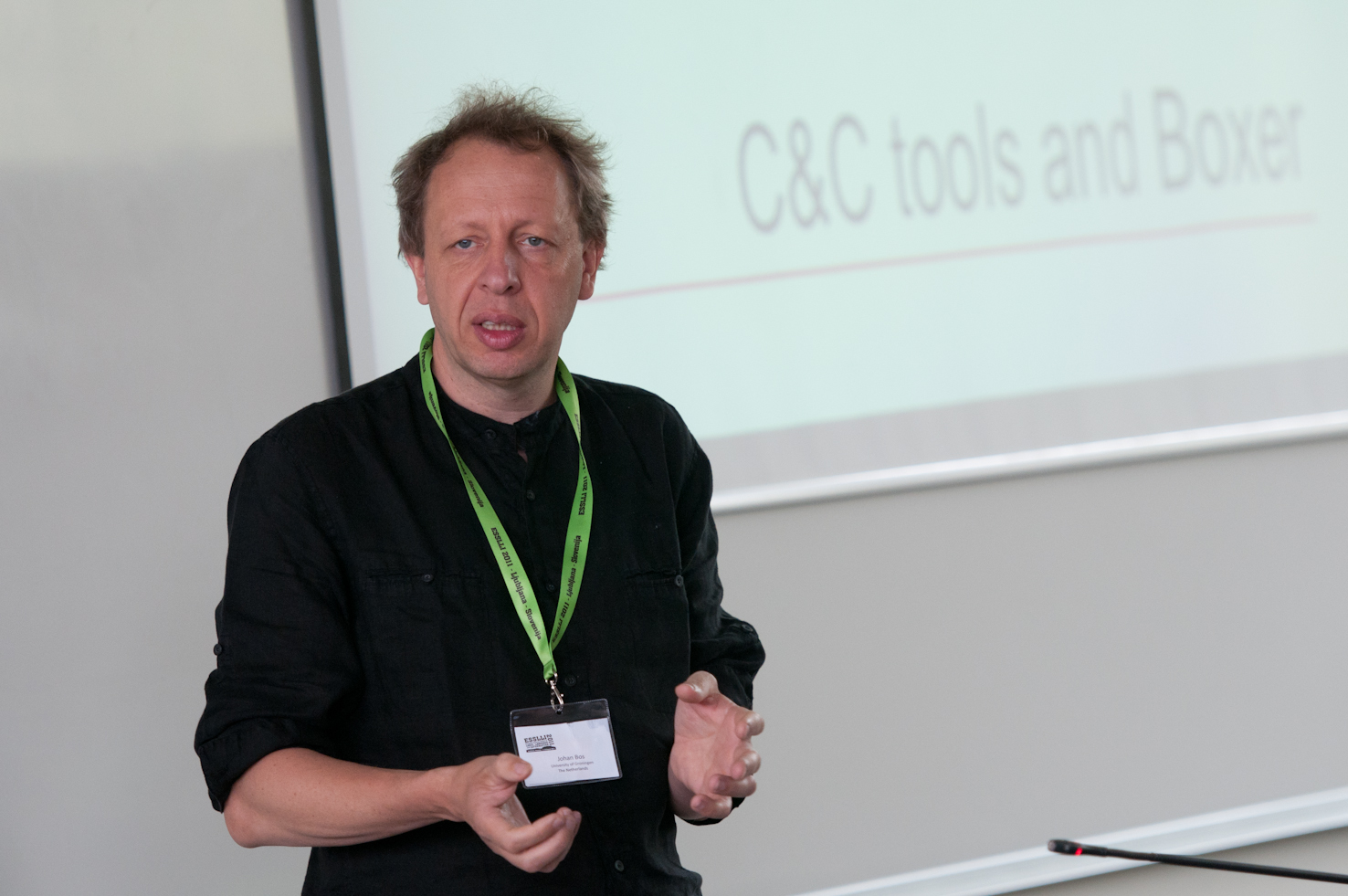 Johan Bos合作论文数University of Groningen5
 Jill Burstein合作论文数Educational Testing Service5Gunaranjan Vasireddy合作论文数5
 George Foster合作论文数Google5I.V. Ramakrishnan合作论文数Department of Computer Science ;State University of New York5Donna K. Byron合作论文数5
 Kevin Knight (武凯文)合作论文数Didi Global5
 Ilija Zeljkovic合作论文数5Hui Guo合作论文数4Anja Belz合作论文数4Mark-Jan Nederhof合作论文数4Haimin Zhang合作论文数Bloomberg4Mark Johnson合作论文数4
 Emiel Krahmer合作论文数Department of Communication and Cognition, School of Humanities and Digital Sciences, Tilburg University4
 Pascale Fung (冯雁)合作论文数Centre for Artificial Intelligence Research, Hong Kong University of Science and Technology;Department of Electronic & Computer Engineering, Hong Kong University of Science and Technology;AMI - Advanced Machine Intelligence4
 James Pustejovsky合作论文数Volen Center for Complex Systems, Michtom School of Computer Science, Brandeis University;Department of Computer Science, Brandeis University4
 Harold Somers合作论文数School of Computer Science at The University of Manchester4
 Paola Merlo合作论文数Department of Linguistics, Faculty of Humanities, University of Geneva;Interdisciplinary Research Group Computational Learning and Computational Linguistics4
 Diamantino Caseiro合作论文数Google4
 Mark Dras合作论文数Macquarie University, Sydney, Australia4
 Michael Collins合作论文数Google Research;Department of Computer Science, Columbia University4
 Antal Van Den Bosch合作论文数Language and Speech Technology at Radboud University4
 Yevgen Borodin合作论文数Department of Computer Science, Stony Brook University;Charmtech Labs LLC4
 Philip Resnik合作论文数Department of Linguistics, College of Arts & Humanities, University of Maryland;Department of Computer Science, University of Maryland;Institute for Advanced Computer Studies, University of Maryland4
 Yashar Mehdad合作论文数Airbnb4
 Michael Strube合作论文数Natural Language Processing Group, Heidelberg Institute for Theoretical Studies;Computational Linguistics Department, University of Heidelberg4
 Dan Roth合作论文数Department of Computer and Information Science, University of Pennsylvania;University of Illinois at Urbana-Champaign;Oracle4




