In their seminal work, Fermi, Pasta, Ulam and Tsingou explored the connection between statistical mechanics and dynamical properties, such as chaos and ergodicity. Even today, seventy years later, the topic is not fully understood: while most results of statistical mechanics require the ergodic hypothesis to be rigorously proved, there are many indications that these predictions, both in and out of equilibrium, hold even in the absence of a rigorous form of ergodicity. Motivated by the above considerations, in this work we reconsider the point of view that the relevant ingredients for the validity of statistical mechanics are the large number of degrees of freedom and the choice of extensive observables, while the details of the dynamics do not play an essential role. This is the idea behind Khinchin's famous proof of the typicality of macroscopic observables at equilibrium. We extend this perspective to the context of non equilibrium, by investigating the thermalization properties of both harmonic (integrable) and nonharmonic (chaotic) oscillator chains initially prepared in out-of-equilibrium conditions. In integrable systems, thermalization occurs, or not, depending on the observable. In the chaotic regime, instead, thermalization is reached by any observable, although the relaxation timescale might be larger than the observation time.
We present a simplified theory for semiflexible flagella under the action of a traveling-wave perturbation that emulates the organized active forces generated by molecular motors, capable of inducing beating patterns to the filament. By modeling the flagellum as a worm-like chain (WLC), we explore the interplay (competition) between the externally applied perturbation and the intrinsic bending rigidity of the filament. Our analysis aims to understand how this interplay can lead to a selection of conformations with the spatiotemporal behavior resembling the beating dynamics of axonemes such as those in sperm tails, in Chlamydomonas cilia, or eukaryotic flagella in general. Through a systematic analysis of the WLC's response to traveling-wave perturbations, we try to identify the key parameters that mostly influence the mechanical waveform profiles.
We establish an analytical criterion for dynamical thermalization within harmonic systems, applicable to both classical and quantum models. Specifically, we prove that thermalization of various observables-such as particle energies in physically relevant random quadratic Hamiltonians-is typical for large systems (N >> 1) with initial conditions drawn from the microcanonical distribution. Moreover, we show that thermalization can also arise from nontypical initial conditions, where only a finite fraction of the normal modes is excited. A different choice of initial conditions, such as all the initial energy localized in a single particle, instead leads to energy equipartition without thermalization. Since the models we consider are integrable, our findings provide a general dynamical basis for an approach to thermalization that bypasses chaos and ergodicity, focusing instead on the physical requirement that thermodynamic observables depend on a large number of normal modes, and they build a bridge between the classical and quantum theories of thermalization.
Due to their relevance to geophysical systems, the investigation of multiscale systems through the lens of statistical mechanics has gained popularity in recent years. The aim of our work is the characterization of the nonequilibrium properties of the well-known two-scales Lorenz96 model, a dynamical system much used for testing ideas in geophysics, by studying either higher-order correlation functions or response to external perturbations of the energy. These tools in both equilibrium (inviscid) or non-equilibrium (viscous) systems provide clear evidence of their suitability for detecting time-reversal symmetry breaking and for characterizing transport properties also in this class of models. In particular, we characterize how localized energy perturbations are transported between the different scales, highlighting that perturbations of synoptic variables greatly impact advective variables but perturbations of the latter have a practically negligible effect on synoptic scales. Finally, we show that responses of global observables to finite size perturbations strongly depend on the perturbation protocol. This prevents the physical understanding of the system from observations of the relaxation process alone, a fact often overlooked.
In the study of stochastic processes, identifying the parity under time-reversal is essential to verify detailed balance, and to compute the entropy production rate (which is, otherwise, ambiguously defined). While in many cases the correct time-reversal symmetry is suggested by physical arguments, for generic processes the identification is not trivial: as a result, systems at thermal equilibrium may be mistakenly interpreted as non-equilibrium ones. We focus on the reversible deterministic dynamics of a slow variable coupled to many degrees of freedom acting as a thermal bath. We show that the time-reversal symmetry of the slow variable is preserved when passing to an effective stochastic description, independently of the nature of the bath. In turn, for generic 2-dimensional continuous Markov processes, we provide a criterion to identify the time-reversal parity rules under which the dynamics is at equilibrium (if any). The case of the Lotka-Volterra model is discussed as an example.
Current research in statistical mechanics mostly concerns the investigation of out-of-equilibrium, irreversible processes, which are ubiquitous in nature and still far from being theoretically understood. Even the precise characterization of irreversibility is the object of an open debate: while in the context of Hamiltonian systems the one-century-old proposal by M. Smoluchowski looks still valid (a process appears irreversible when the initial state has a recurrence time that is long compared to the time of observation [1]), in dissipative systems, particularly in the case of stochastic processes, the problem is more involved, and quantifying the "degree of irreversibility" is a pragmatic need. The most employed strategies rely on the estimation of entropy production: this quantity, although mathematically well-defined, is often difficult to compute, especially when analyzing experimental data. Moreover, being a global observable, entropy production fails to capture specific aspects of irreversibility in extended systems, such as the role of different currents and their spatial development. This review aims to address various conceptual and technical challenges encountered in the analysis of irreversibility, including the role of the coarse-graining procedure and the treatment of data in the absence of complete information. The discussion will be mostly based on simple models, analytically treatable, and supplemented by examples of complex, more realistic non-equilibrium systems.
Random exchange kinetic models are widely employed to describe the conservative dynamics of large interacting systems. Due to their simplicity and generality, they are quite popular in several fields, from statistical mechanics to biophysics and economics. Here, we study a version where bounds on the individual shares of a globally conserved quantity are introduced. We analytically show that this dynamic allows stationary states with population inversion, described by Boltzmann statistics at negative absolute temperature, if the conserved quantity has the physical meaning of an energy. The proposed model therefore provides a privileged system for the study of thermalization towards a negative temperature state. First, the genuine equilibrium nature of the stationary state is verified by checking the detailed balance condition. Then, an H-theorem is proven, ensuring that such equilibrium condition is reached by a monotonic increase in the Boltzmann entropy. We also provide analytical and numerical evidence that a large intruder in contact with the system thermalizes, suggesting a practical way to design a thermal bath at negative temperature.
We present a simplified theory for semiflexible flagella under the action of a traveling-wave perturbation that emulates the organized active forces generated by molecular motors, capable of inducing beating patterns to the filament. By modeling the flagellum as a worm-like chain (WLC), we explore the interplay (competition) between the externally applied perturbation and the intrinsic bending rigidity of the filament. Our analysis aims to understand how this interplay can lead to a selection of conformations with the spatiotemporal behavior resembling the beating dynamics of axonemes such as those in sperm tails, in Chlamydomonas cilia, or eukaryotic flagella in general. Through a systematic analysis of the WLC's response to traveling-wave perturbations, we try to identify the key parameters that mostly influence the flagellar motion and shape its beating-like profiles.
We present a data-driven emulator, a stochastic weather generator (SWG), suitable for estimating probabilities of prolonged heat waves in France and Scandinavia. This emulator is based on the method of analogs of circulation to which we add temperature and soil moisture as predictor fields. We train the emulator on an intermediate complexity climate model run and show that it is capable of predicting conditional probabilities (forecasting) of heat waves out of sample. Special attention is payed that this prediction is evaluated using a proper score appropriate for rare events. To accelerate the computation of analogs, dimensionality reduction techniques are applied and the performance is evaluated. The probabilistic prediction achieved with SWG is compared with the one achieved with a convolutional neural network (CNN). With the availability of hundreds of years of training data, CNNs perform better at the task of probabilistic prediction. In addition, we show that the SWG emulator trained on 80 years of data is capable of estimating extreme return times of order of thousands of years for heat waves longer than several days more precisely than the fit based on generalized extreme value distribution. Finally, the quality of its synthetic extreme teleconnection patterns obtained with SWG is studied. We showcase two examples of such synthetic teleconnection patterns for heat waves in France and Scandinavia that compare favorably to the very long climate model control run.
Nowadays many tools, e.g. fluctuation relations, are available to characterize the statistical properties of non-equilibrium systems. However, most of these tools rely on the assumption that the driving noise is normally distributed. Here we consider a class of Markov processes described by Langevin equations driven by a mixture of Gaussian and Poissonian noises, focusing on their non-equilibrium properties. In particular, we prove that detailed balance does not hold even when correlation functions are symmetric under time reversal. In such cases, a breakdown of the time reversal symmetry can be highlighted by considering higher order correlation functions. Furthermore, the entropy production may be different from zero even for vanishing currents. We provide analytical expressions for the average entropy production rate in several cases. We also introduce a scale dependent estimate for entropy production, suitable for inference from experimental signals. The empirical entropy production allows us to discuss the role of spatial and temporal resolutions in characterizing non-equilibrium features. Finally, we revisit the Brownian gyrator introducing an additional Poissonian noise showing that it behaves as a two dimensional linear ratchet. It has also the property that when Onsager relations are satisfied its entropy production is positive although it is minimal. We conclude discussing estimates of entropy production for partially accessible systems, comparing our results with the lower bound provided by the thermodynamic uncertainty relations.
Sampling rare events such as extreme heatwaves whose return period is larger than the length of available observations requires developing and benchmarking new simulation methods. There is growing interest in applying deep learning alongside already existing statistical approaches to better generate and predict rare events. Our goal is to benchmark Stochastic Weather Generator (SWG) [1] based on analogs of circulation, soil moisture and temperature as a tool for sampling tails of distribution as well as forecasting heatwaves in France and Scandinavia using data from General Circulation Model (GCM). Analog method has been successfully implemented in rare event algorithms for low dimensional climate models [2]. SWG is implemented using a Markov chain with hidden states (.e.g. geopotential height at 500 hPa) with Euclidean metric. When applying such methods to climate data two challenges emerge: a large number of degrees of freedom and the difficulty of including slow drivers such as soil moisture alongside circulation patterns. Consequently, we are going to discuss ways of adjusting the distance metric of the analog Markov chain and dimensionality reduction techniques such as EOFs and variational auto encoder. By choosing the correct combination of weighted variables in the Euclidean metric and using analogs of only 100 years and generating long synthetic sequences we are able to correctly estimate return times of order 7000 years, which is validated based on a 7200 year long control run. The teleconnection patterns generated thus also look reliable compared to the control run. Next we compare SWG forecasts of heatwaves with a direct supervised approach based on a Convolutional Neural Network (CNN). Both CNN and SWG are trained and validated on exactly the same GCM runs which allows us to conclude that CNN performs better in both regions. One could consider SWG as a baseline approach for CNN for this task.[1] Yiou, P. and Jézéquel, A., https://doi.org/10.5194/gmd-13-763-2020, 2020[2] D. Lucente at al. https://10.1088/1742-5468/ac7aa7, 2022[3] DP Kingma, M Welling - https://doi.org/10.48550/arXiv.1312.6114, 2013[4] G. Miloshevich, at al - https://doi.org/10.48550/arXiv.2208.00971, 2022
The characterization of the distance from equilibrium is a debated problem in particular in the treatment of experimental signals. If the signal is a one-dimensional time series, such a goal becomes challenging. A paradigmatic example is the angular diffusion of a rotator immersed in a vibro-fluidized granular gas. Here, we experimentally observe that the rotator's angular velocity exhibits significant differences with respect to an equilibrium process. Exploiting the presence of two relevant timescales and non-Gaussian velocity increments, we quantify the breakdown of time-reversal asymmetry, which would vanish in the case of a 1D Gaussian process. We deduce a new model for the massive probe, with two linearly coupled variables, incorporating both Gaussian and Poissonian noise, the latter motivated by the rarefied collisions with the granular bath particles. Our model reproduces the experiment in a range of densities, from dilute to moderately dense, with a meaningful dependence of the parameters on the density. We believe the framework proposed here opens the way to a more consistent and meaningful treatment of out-of-equilibrium and dissipative systems.
Data from experiments and theoretical arguments are the two pillars sustaining the job of modeling physical systems through inference. In order to solve the inference problem, the data should satisfy certain conditions that depend also upon the particular questions addressed in a research. Here we focus on the characterization of systems in terms of a distance from equilibrium, typically the entropy production (time-reversal asymmetry) or the violation of the Kubo fluctuation-dissipation relation. We show how general, counterintuitive and negative for inference, is the problem of the impossibility to estimate the distance from equilibrium using a series of scalar data which have a Gaussian statistics. This impossibility occurs also when the data are correlated in time, and that is the most interesting case because it usually stems from a multi-dimensional linear Markovian system where there are many timescales associated to different variables and, possibly, thermal baths. Observing a single variable (or a linear combination of variables) results in a one-dimensional process which is always indistinguishable from an equilibrium one (unless a perturbation-response experiment is available). In a setting where only data analysis (and not new experiments) is allowed, we propose as a way out the combined use of different series of data acquired with different parameters. This strategy works when there is a sufficient knowledge of the connection between experimental parameters and model parameters. We also briefly discuss how such results emerge, similarly, in the context of Markov chains within certain coarse-graining schemes. Our conclusion is that the distance from equilibrium is related to quite a fine knowledge of the full phase space, and therefore typically hard to approximate in real experiments.
Rare events, such as heat waves, floods, or hurricanes, play a crucial role in climate dynamics mainly due to the large impact they have. Predicting the occurrence of such events is thus a major challenge. In this talk, we introduce the relevant mathematical object for predicting a future event: the committor function is the probability that an event will occur, conditioned on the current state of the system. Computing this quantity from observations is an extremely difficult task since rare events have a very low probability of occurring and may not even have been observed in measurements made to date. Similarly, direct simulation of such events with comprehensive climate models comes at a prohibitive computational cost. Hence, rare event algorithms have been devised to simulate rare events efficiently, avoiding the computation of long periods of typical fluctuations. The effectiveness of these algorithms strongly relies on the knowledge of a measure of how close the event of interest is to occur, called the “score function”. The main difficulty is that the optimal score function is the committor function which is exactly the quantity to be computed. Therefore, it is very natural to consider an iterative procedure where the data produced by the algorithm is used to improve the score function, which in turn improves the algorithm, and so on. In this presentation, we propose a data-driven approach for computing the committor function, based on a Markov chain approximation of the dynamics of the system (the analogue method). We first illustrate this approach for a paradigmatic toy model of multistability for atmospheric dynamics with six variables (the Charney-Devore model). Secondly, we apply this methodology to data generated from a climate model, in order to study and predict the occurrence of extreme heat waves. In both cases, we show that it is possible to obtain fairly precise estimates of the committor function, even when few observations are available. In the second part of the talk, we show the advantage of coupling the analogue Markov chain with a rare event algorithm. Indeed, the committor learned with the analogue Markov chain can be used as a score function performing better than user-defined score functions, as we show for the Charney-Devore model. This new approach is promising for studying rare events in complex dynamics: the rare events can be simulated with a minimal prior knowledge and the results are much more precise than those obtained with a user-designed score function.
Many phenomena in the climate system lie in the gray zone between weather and climate: they are not amenable to deterministic forecast, but they still depend on the initial condition. A natural example is mediumrange forecasting, which is inherently probabilistic because it lies beyond the deterministic predictability time of the atmosphere, but for which statistically significant prediction can be made which depend on the current state of the system. Similarly, one may ask the probability of occurrence of an El Niño event several months ahead of time. In this paper, we introduce a quantity which corresponds precisely to this type of prediction problem: the committor function is the probability that an event takes place within a given time window, as a function of the initial condition. We explain the main mathematical properties of this probabilistic concept, and compute it in the case of a low-dimensional stochastic model for El-Niño, the Jin and Timmerman model. In this context, we show that the ability to predict the probability of occurrence of the event of interest may differ strongly depending on the initial state. The main result is the new distinction between intrinsic probabilistic predictability (when the committor function is smooth and probability can be computed which does not depend sensitively on the initial condition) and intrinsic probabilistic unpredictability (when the committor function depends sensitively on the initial condition). We also demonstrate that the Jin and Timmerman model might be the first example of a stochastic differential equation with weak noise for which transition between attractors do not follow the Arrhenius law, which is expected based on large deviation theory and generic hypothesis.
Rare events play a crucial role in many physics, chemistry, and biology phenomena, when they change the structure of the system, for instance in the case of multistability, or when they have a huge impact. Rare event algorithms have been devised to simulate them efficiently, avoiding the computation of long periods of typical fluctuations. We consider here the family of splitting or cloning algorithms, which are versatile and specifically suited for far-from-equilibrium dynamics. To be efficient, these algorithms need to use a smart score function during the selection stage. Committor functions are the optimal score functions. In this work we propose a new approach, based on the analogue Markov chain, for a data-based learning of approximate committor functions. We demonstrate that such learned committor functions are extremely efficient score functions when used with the Adaptive Multilevel Splitting algorithm. We illustrate our approach for a gradient dynamics in a three-well potential, and for the Charney-DeVore model, which is a paradigmatic toy model of multistability for atmospheric dynamics. For these two dynamics, we show that having observed a few transitions is enough to have a very efficient data-based score function for the rare event algorithm. This new approach is promising for use for complex dynamics: the rare events can be simulated with a minimal prior knowledge and the results are much more precise than those obtained with a user-designed score function.
We consider the Prandtl–Tomlinson model in the case of a constant driving force and in the presence of thermal fluctuations. We show that the system dynamics is well reproduced by a simplified description obtained through a Markov process, even in the case of potentials with several minima. After estimating the chain parameters by numerical simulation, we compute the average velocity and friction at varying driving force and temperature. Then we take advantage of this approach for calculating the entropy produced by the system and, in the case of a single minimum potential, to derive its explicit relation with the external force and the mobility at low temperatures. We observe that the coefficient relating the entropy production to the force is not a monotonic function of the temperature.
Many phenomena in the climate system lie in the gray zone between weather and climate: they are not amenable to deterministic forecast, but they still depend on the initial condition. A natural example is medium-range forecasting, which is inherently probabilistic because it lies beyond the predictability time of the atmosphere. Similarly, one may ask the probability of occurrence of an El Niño event several months ahead of time or the probability of occurrence of a heat wave a few weeks in advance based on the observed atmospheric circulation. In this talk, we introduce a quantity which corresponds precisely to this type of prediction problem: the committor function is the probability for an event to occur in the future, as a function of the current state of the system.In the first part of this presentation, we explain the main mathematical properties of this probabilistic concept, and compute it in the case of a low-dimensional stochastic model for El-Niño, the Jin and Timmerman model. This example allows us to show that the ability to predict the probability of occurrence of the event of interest may differ strongly depending on the initial state: in some regions of phase space, the committor function is smooth (intrinsic probabilistic predictability) and in some other regions, it depends sensitively on the initial condition (intrinsic probabilistic unpredictability). We stress that this predictability concept is markedly different from the deterministic unpredictability arising because of chaotic dynamics and exponential sensivity to initial conditions.The second part of the talk is about how to efficiently compute the committor function from data through several data-driven approaches, such as direct estimates, kernel-based methods and neural networks. We discuss two examples: a) the computation of committor function for the Jin and Timmerman model, b) the computation of committor function for extreme heat waves. Both systems are highly nonlinear but, considering the dimensionality of the two, their level of complexity is profoundly different. This therefore allows us to explore and discuss the performance and limits of the different methods proposed.Finally, we propose a method for learning effective dynamics by introducing a Markov chain on the data. Using the Markov chain we are able to quickly and easily compute many interesting quantities of the original system, including the committor function. The goal is to overcome some of the limitations of the methods introduced previously and to develop a robust algorithm that can be useful even in the lack of data.
One of the big challenges today is to appropriately describe heat waves, which are relevant due to their impact on human society. Common characteristics in mid-latitudes involve meanders of the westerly flow and concomitant large anticyclonic anomalies of the geopotential field. These anomalies form the so-called teleconnection patterns, and thus it is natural to ask how robust such structures are in various models and how much data we require to make statistically significant inferences. In addition, it is natural to ask what are the precursor phenomena that would improve forecasting capabilities of the heat waves. In particular, what kind of long term effect does the soil moisture have and how it compares to the respective quantitative contribution to the predictability of the teleconnection patterns.In order to answer these questions we perform various types of regression on a climate model. We construct the composite maps of the geopotential height at 500 hPa and estimate return times of heatwaves of different severity. Of particular interest to us is a committor function, which is essentially a probability a heat wave occurs given the current state of the system. Committor functions can be efficiently computed using the analogue method, which involves learning a Markov chain that produces synthetic trajectories from the real trajectories. Alternatively they can be estimated using machine learning approach. Finally we compare the composite maps in real dynamics to the ones generated by the Markov chain and observe how well the rare events are sampled, for instance to allow extending the return time plots.
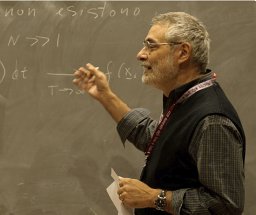 Angelo Vulpiani合作论文数Dipartimento di Fisica;Universita di Roma " La Sapienza;Dipartimento di Fisica, Universita di Roma " La Sapienza9
 Freddy Bouchet合作论文数INLN9
 Corentin Herbert合作论文数Chemin de Borde Rouge7
 Massimiliano Viale合作论文数Ist Sistemi Complessi, UOS Sapienza7
 Andrea Puglisi合作论文数Dipartimento di Fisica6
 Marco Baldovin合作论文数Dipartimento Fis, Univ Roma Sapienza5
 George Miloshevich合作论文数5
 Fabio Cecconi合作论文数Istituto dei Sistemi Complessi, Consiglio Nazionale delle Ricerche3
 Joran Rolland合作论文数Laboratoire d'Hydrodynamique;Ecole Polytechnique;Laboratoire d'Hydrodynamique, Ecole Polytechnique3Niccolò Cocciaglia合作论文数2
 Pascal Yiou合作论文数Laboratoire des Sciences du Climat et de l'Environnement, Institut Pierre-Simon Laplace2
 Paolo Muratore-Ginanneschi合作论文数Niels Bohr Institute2
 Alberto Petri合作论文数Istituto dei Sistemi Complessi, CNR1
 Massimo Cencini合作论文数Dipartimento di Fisica;Universita di Roma " La Sapienza;Dipartimento di Fisica, Universita di Roma " La Sapienza1
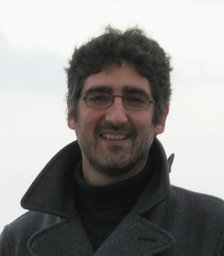 Andrea Gnoli合作论文数Istituto dei Sistemi Complessi-C.N.R. Sezione di Roma-Tor Vergata1
 Francesco Ragone合作论文数Department of Chemistry, University of Salerno1
 Andrea Baldassarri合作论文数Dipartimento di Fisica1




