Olfactory search in turbulent environments is a sensorimotor problem that many animals solve with remarkable efficiency, yet replicating this ability in artificial systems is an enduring challenge because detections are intermittent and wind direction fluctuates strongly, rendering standard search strategies unreliable. We introduce a wind-relative reinforcement-learning framework in which an agent navigates a turbulent plume with a single internal variable - the elapsed time since the last odor detection - and selects actions relative to a locally estimated wind direction filtered through an exponential memory kernel. Policies are trained and evaluated in direct numerical simulations of turbulence, capturing the multi-scale characteristics of velocity and odor fields in natural environments, both in the presence and absence of a mean wind. In a mild mean wind, the learned policy outperforms well-known biomimetic policies such as cast-and-surge regardless of the wind memory time, yet adapts its movement pattern to wind-estimation quality. In isotropic turbulence, performance peaks at an intermediate wind memory time, identifying temporal wind integration as a regime-dependent resource. Our results highlight the importance of developing and validating olfactory-navigation strategies under realistic turbulent conditions, and offer a compact design principle for minimal robotic olfactory navigation and testable predictions for biological search behavior.
Solid aggregates in turbulent suspensions may break under the action of shear stresses. We explore the use of Graph Neural Networks (GNN) to infer aggregate fragmentation once the aggregate structure and flow velocity gradients are known. We consider two models: the first GNN is a classifier, trained to distinguish aggregates that break from those that do not; the second GNN is a regression model, trained to predict the maximal tensile force within each aggregate in a given flow condition. We show that both models complete their task with a high statistical accuracy, and generally perform better than the statistical prediction based on mean field quantities. This work paves the way for future use of Graph Neural Networks to quantify aggregate breakup in large population of aggregates suspended in complex flow configurations.
We examine how heterogeneous swarms, mixing exploratory and exploitative agents with distinct decision rules, consistently outperform homogeneous ones where each agent balances exploration and exploitation individually, performing experiments in two contrasting deployment scenarios. Using odor fields from state-of-the-art direct numerical simulations of the 3D Navier-Stokes equations, we find that policy diversity typically allows the group to reach the source of the odor more efficiently by mitigating the detrimental effects of spatiotemporal turbulent correlations. These findings provide insights into collective search behavior and offer promising strategies for the design of robust, bioinspired search algorithms in engineered systems.
Locating and intercepting a moving target from possibly delayed, intermittent sensory signals is a paradigmatic problem in decision-making under uncertainty, and a fundamental challenge for, e.g., animals seeking prey or mates and autonomous robotic systems. Odor signals are intermittent, strongly mixed by turbulent-like transport, and typically lag behind the true target position, thereby complicating localization. Here, we formulate olfactory pursuit as a partially observable Markov decision process in which an agent maintains a joint belief over the target's position and velocity. Using a discrete run-and-tumble model, we compute quasi-optimal policies by numerically solving the Bellman equation and benchmark them against well-established information-theoretic strategies such as Infotaxis. We show that purely exploratory policies are near-optimal when the target frequently reorients, but fail dramatically when the target exhibits persistent motion. We thus introduce a computationally efficient hybrid policy that combines the information-gain drive of Infotaxis with a "greedy" value function derived from an associated fully observable control problem. Our heuristic achieves near-optimal performance across all persistence times and substantially outperforms purely exploratory approaches. Moreover, our proposal demonstrates strong robustness even in more complex search scenarios, including continuous run-and-tumble prey motion with moderate persistence time, model mismatch, and more accurate plume dynamics representation. Our results identify predictive inference of target motion as the key ingredient for effective olfactory pursuit and provide a general framework for search in information-poor, dynamically evolving environments.
The "butterfly effect", introduced over half a century ago by Edward Lorenz, has shifted from a cornerstone of dynamical systems to a popular metaphor, yet its true physical manifestation in fully developed turbulence spans a spectrum of phenomena from standard chaotic sensitivity to the recently established concept of Eulerian spontaneous stochasticity. This paper presents an attempt at a systematic synthesis that brings these different but interconnected ideas together within the unifying framework of the Finite Size Lyapunov Exponent (FSLE). The FSLE describes the growth rate of perturbations as a function of their scale, enabling a comprehensive characterization of the multiscale physics of turbulent flows. Using the FSLE and the Sabra shell model, extended to include thermal noise, we bridge the classical, small-scale Lyapunov regime with predictability at large scales and its interpretation in terms of Eulerian spontaneous stochasticity. Moreover, using the FSLE and the Kraichnan model, we also illustrate the closely related phenomenon of Lagrangian spontaneous stochasticity. To complete the spectrum of butterfly effects, we also examine the "literal butterfly" scenario of localized, sub-dissipative perturbations. Ultimately, this synthesis clarifies the physical mechanisms that dictate the fundamental boundaries of forecasting in high-Reynolds-number flows.
Navigation in turbulent environments is a fundamental challenge for biological and artificial microswimmers. While most existing studies focus on adapting motility or steering, the role of active morphological changes in navigation remains poorly explored. Here, we investigate a shape-changing spheroidal microswimmer tasked with maximising its displacement from an initial position in two-dimensional stochastic and turbulent flows. Using reinforcement learning (RL), the microswimmer learns to adapt its aspect ratio based on its orientation and local velocity-gradient signals. The learned strategies outperform fixed-shape and short-time-optimal baselines across different flow regimes and remain effective when transferred from stochastic flows to fully resolved turbulence. Guided by the learned policies, we propose a minimal analytical model that captures the essential navigation mechanisms and reproduces the performance across flow regimes. These results show that adaptive morphology provides a robust and physically interpretable control paradigm for microswimmer navigation in complex flows.
We explore the potential of data assimilation (DA) within the multiscale framework of a shell model of turbulence, with a focus on the ensemble Kalman filter (EnKF). The central objective is to understand how measuring mesoscales (i.e., inertial-range scales) enhances the prediction of both large-scale and small-scale intermittent variables, by systematically varying observation frequency and the set of measured scales. We demonstrate that measurements conducted at frequencies that exceed those of the observed scales enable full synchronization of larger scales, provided that at least two adjacent mesoscales are measured. In addition, we benchmark the EnKF against two other DA methods, namely, nudging and ensemble four-dimensional variational method. EnKF is clearly superior to the former and comparable with the latter but achieving the result with a lower computational complexity. Moreover, our results underscore the need for a tailored, scale-aware inflation technique to stabilize the assimilation process, preventing filter divergence and ensuring robust convergence.
Identifying a gas source in turbulent environments presents a significant challenge for critical applications such as environmental monitoring and emergency response. This issue is addressed through an approach that combines distributed Internet of Things smart sensors with an algorithm based on Bayesian inference and Monte Carlo sampling techniques. Employing a probabilistic model of the environment, such an algorithm interprets the gas readings obtained from an array of static sensors to estimate the location of the source. The performance of our methodology is evaluated by its ability to estimate the source's location within a given time frame. To test the robustness and practical applications of the methods under real-world conditions, we deployed an advanced distributed sensors network to gather water vapor data from a controlled source. The proposed methodology performs well when using both the synthetic data generated by the model of the environment and those measured in the real experiment, with the source localization error consistently lower than the distance between one sensor and the next in the array.
Here we show that passive scalars possess a hidden scaling symmetry when considering suitably rescaled fields. Such a symmetry implies (i) universal probability distribution for scalar multipliers and (ii) Perron-Frobenius scenario for the anomalous scaling of structure functions. We verify these predictions with high resolution simulations of a passive scalar advected by a 2D turbulent flow in inverse cascade.
Spatial non-homogeneities can synchronize clusters of spatially-extended oscillators in different frequency plateaus. Motivated by physiological rhythms, we fully characterize the phase diagram of a Ginzburg-Landau (GL) model with a gradient of frequencies. For large gradients and diffusion, the rest state is stable, and the linear spectrum around it maps onto the non-Hermitian Bloch-Torrey equation. When complex pairs of eigenvalues turn unstable, precursors of plateaus grow, separated by defects where the GL amplitude vanishes. Nonlinear effects either saturate the amplitude of plateaus or lead to a phase-locked state, with saddle-node bifurcations separating the two regimes. In the region of plateaus, we trace the formation of defects to a non-linear renormalization of the diffusivity, and determine the scaling of their number and length vs dynamical parameters.
We introduce TURB-Scalar, an open-access database comprising approximately 400 uncorrelated snapshots of two-dimensional turbulent velocity and passive scalar fields, obtained from the turbulent inverse cascade regime. These data are generated through Direct Numerical Simulations (DNS) of the advection-diffusion equation for a passive scalar, θ, with resolution N=4096. The database serves as a versatile benchmark for the development and testing of both physics-based and data-driven modeling approaches. The scalar field exhibits intermittent statistics with universal anomalous scaling, making TURB-Scalar a valuable resource for studying turbulent transport phenomena. The database is available at http://smart-turb.roma2.infn.it.
Current research in statistical mechanics mostly concerns the investigation of out-of-equilibrium, irreversible processes, which are ubiquitous in nature and still far from being theoretically understood. Even the precise characterization of irreversibility is the object of an open debate: while in the context of Hamiltonian systems the one-century-old proposal by M. Smoluchowski looks still valid (a process appears irreversible when the initial state has a recurrence time that is long compared to the time of observation [1]), in dissipative systems, particularly in the case of stochastic processes, the problem is more involved, and quantifying the "degree of irreversibility" is a pragmatic need. The most employed strategies rely on the estimation of entropy production: this quantity, although mathematically well-defined, is often difficult to compute, especially when analyzing experimental data. Moreover, being a global observable, entropy production fails to capture specific aspects of irreversibility in extended systems, such as the role of different currents and their spatial development. This review aims to address various conceptual and technical challenges encountered in the analysis of irreversibility, including the role of the coarse-graining procedure and the treatment of data in the absence of complete information. The discussion will be mostly based on simple models, analytically treatable, and supplemented by examples of complex, more realistic non-equilibrium systems.
We investigate the role of policy heterogeneity in enhancing the olfactory search capabilities of cooperative agent swarms operating in complex, real-world turbulent environments. Using odor fields from direct numerical simulations of the Navier-Stokes equations, we demonstrate that heterogeneous groups, with exploratory and exploitative agents, consistently outperform homogeneous swarms where the exploration-exploitation tradeoff is managed at the individual level. Our results reveal that policy diversity enables the group to reach the odor source more efficiently by mitigating the detrimental effects of spatial correlations in the signal. These findings provide new insights into collective search behavior in biological systems and offer promising strategies for the design of robust, bioinspired search algorithms in engineered systems.
The problem of locating an odour source in turbulent flows is central to key applications such as environmental monitoring and disaster response. We address this challenge by designing an algorithm based on Bayesian inference, which uses odour measurements from an ensemble of static sensors to estimate the source position through a stochastic model of the environment. The problem is difficult because of the multiscale and out-of-equilibrium properties of turbulent transport, which lack accurate analytical and phenomenological modelling, thus preventing a guaranteed convergence for Bayesian approaches. To overcome the risk of relying on a single unavoidably wrong model approximation, we propose a method to rank 'many wrong models' and to blend their predictions. We evaluated our weighted Bayesian update algorithm by its ability to estimate the source location with predefined accuracy and/or within a specified time frame and compare it to standard Monte Carlo sampling methods. To demonstrate the robustness and potential applications of both approaches under realistic environmental conditions, we use high-quality direct numerical simulations of the Navier-Stokes equations to mimic the turbulent transport of odours in presence of a strong mean wind. Despite minimal prior information on the source and environmental conditions, our proposed approach consistently proves to be more accurate, reliable, and robust than Monte Carlo methods, thus showing promise as a new tool for addressing the odour source localisation problem in real-world scenarios.
Here we show that passive scalars possess a hidden scaling symmetry when considering suitably rescaled fields. Such a symmetry implies (i) universal probability distribution for scalar multipliers and (ii) Perron-Frobenius scenario for the anomalous scaling of structure functions. We verify these predictions with high resolution simulations of a passive scalar advected by a 2D turbulent flow in inverse cascade.
Lagrangian acceleration has been investigated both experimentally and numerically in the past, and it has been shown to exhibit extreme fluctuations, which have been rationalized as events in which tracer particles get trapped into vortical structures such as vortex tubes or filaments. Here, we consider the statistics of acceleration within the multifractal framework, as in Biferale et al., Phys. Rev. Lett. 93, 064502 (2004), and investigate the statistics of Lagrangian acceleration using shell models of turbulence, as in Boffetta et al., Phys. Rev. E 66, 066307 (2002), that-by construction-do not contain vortical structures. Our analysis reveals that, despite not accounting for specific coherent vortex structures, the multifractal model accurately captures the extreme intermittent fluctuations observed in the acceleration, with predictions that remain robust across a wide range of Reynolds numbers.
The statistical properties of turbulent flows are fundamentally different from those of systems at equilibrium due to the presence of an energy flux from the scales of injection to those where energy is dissipated by the viscous forces: a scenario dubbed "direct energy cascade." From a statistical mechanics point of view, the cascade picture prevents the existence of detailed balance, which holds at equilibrium, e.g., in the inviscid and unforced case. Here, we aim at characterizing the nonequilibrium properties of turbulent cascades in a shell model of turbulence by studying an asymmetric time-correlation function and the relaxation behavior of an energy perturbation, measured at scales smaller or larger than the perturbed one. We contrast the behavior of these two observables in both nonequilibrium (forced and dissipated) and equilibrium (inviscid and unforced) cases. Finally, we show that equilibrium and nonequilibrium physics coexist in the same system, namely, at scales larger and smaller, respectively, of the forcing scale.
Identifying a gas source in turbulent environments presents a significant challenge for critical applications such as environmental monitoring and emergency response. This issue is addressed through an approach that combines distributed IoT smart sensors with an algorithm based on Bayesian inference and Monte Carlo sampling techniques. Employing a probabilistic model of the environment, such an algorithm interprets the gas readings obtained from an array of static sensors to estimate the location of the source. The performance of our methodology is evaluated by its ability to estimate the source's location within a given time frame. To test the robustness and practical applications of the methods under real-world conditions, we deployed an advanced distributed sensors network to gather water vapor data from a controlled source. The proposed methodology performs well when using both the synthetic data generated by the model of the environment and those measured in the real experiment, with the source localization error consistently lower than the distance between one sensor and the next in the array.
We propose a minimal model of microswimmer based on immersed boundary methods. We describe a swimmer (either pusher or puller) as a distribution of point forces, representing the swimmer's flagellum and body, with only the latter subjected to no-slip boundary conditions with respect to the surrounding fluid. In particular, our model swimmer consists of only three beads (two for the body and one for the flagellum) connected by inextensible and rigid links. When the beads are collinear, standard straight swimming is realized and, in the absence of propulsion, we demonstrate that the swimmer's body behaves as an infinitely thin rod. Conversely, by imposing an angle between body and flagellum the swimmer moves on circular orbits. We then discuss how two swimmers, in collinear or non-collinear geometry, scatter upon encounter. Finally, we explore the dynamics of a large number of swimmers reacting to one another only via hydrodynamic interactions, and exemplify their complex collective dynamics in both straight and circular swimmers.
Abstract The statistical properties of turbulent flows are fundamentally different from those of systems at equilibrium due to the presence of an energy flux from the scales of injection to those where energy is dissipated by the viscous forces: a scenario dubbed “direct energy cascade”. Here, we aim at characterizing the non-equilibrium properties of turbulent cascades in a shell model of turbulence by studying an asymmetric time-correlation function and the relaxation behavior of an energy perturbation, measured at scales smaller or larger than the perturbed one. We shall contrast the behavior of these two observables in both non-equilibrium (forced and dissipated) and equilibrium (inviscid and unforced) cases. Finally, we shall show that equilibrium and non-equilibrium physics coexist in the same system, namely at scales larger and smaller, respectively, of the forcing scale.
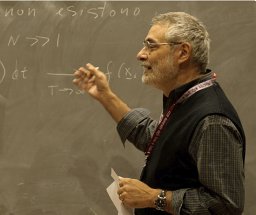 Angelo Vulpiani合作论文数Dipartimento di Fisica;Universita di Roma " La Sapienza;Dipartimento di Fisica, Universita di Roma " La Sapienza50
 Luca Biferale合作论文数Department of Physics, University of Roma, Tor Vergata35
 Davide Vergni合作论文数Dipartimento di Fisica and INFM, Università di Roma “La Sapienza”24
 Fabio Cecconi合作论文数Istituto dei Sistemi Complessi, Consiglio Nazionale delle Ricerche21
 Guido Boffetta合作论文数Dipartimento di Fisica, Università degli studi di Torino20
 Andrea Puglisi合作论文数Dipartimento di Fisica19
 Lorenzo Piro合作论文数Max Planck Inst Dynam & Self Org, D-37077 Gottingen, Germany13F. De Lillo合作论文数Dipartimento di Fisica;Universita di Torino;Dipartimento di Fisica, Universita di Torino12Stefano Musacchio合作论文数Dept. of Physics and INFN, University of Torino10
 Federico Toschi合作论文数Department of Applied Physics and Science Education, Eindhoven University of Technology;Department of Mathematics and Computer Science, Eindhoven University of Technology;Centre of Excellence for Multiscale Phenomena, Eindhoven University of Technology9
 Jeremie Bec合作论文数CNRS UMR6202, Observatoire de la Côte d’Azur9
 Antonio Celani合作论文数INLN CNRS9
 Simone Pigolotti合作论文数Niels Bohr Institute9
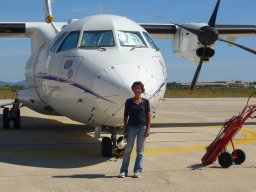 Alessandra S. Lanotte合作论文数Sezione di Lecce, CNR-ISAC and INFN9Massimo De Pietro合作论文数5Francesco Borra合作论文数Dipartimento Fis, Sapienza Univ Roma5
 Alessandro Torcini合作论文数Sistemi Complessi4Francesco Michele Ventrella合作论文数3Michael Barry合作论文数3Niccolò Cocciaglia合作论文数3Fabio Bonaccorso合作论文数3
 Mihir Durve合作论文数Istituto Italiano di Tecnologia, Center for Life Nano Science@La Sapienza3
 Matteo Borgnino合作论文数Dept Earth & Environm Sci, Univ Milano Bicocca3
 Alessandro Sozza合作论文数CNR–ISC (National Research Council - Institute for Complex Systems), Rome, Italy3
 Stefano Berti合作论文数Unité de Mécanique de Lille Joseph Boussinesq (UML), Univ. Lille3
 Roman Stocker合作论文数Oceans, Massachusetts Institute of Technology;Department of Civil, Environmental and Geomatic Engineering, ETH Zurich3
 Bernhard Mehlig合作论文数Department of Physics, University of Gothenburg3
 William (Mack) Durham合作论文数Department of Physics and Astronomy, Faculty of Science, The University of Sheffield3
 Eric Climent合作论文数Facultad de Ciencias Químicas, Universidad Complutense de Madrid3
 Francesco Ginelli合作论文数Institut des Systemes3
 Chiara Calascibetta合作论文数2
 Marco Baldovin合作论文数Dipartimento Fis, Univ Roma Sapienza2
 Andrea Ria合作论文数Univ Pisa, Dept Informat Engn, I-56122 Pisa, Italy2
 Miguel Ángel Muñoz Martínez合作论文数Department of Electromagnetism and Matter Physics, Facultad de Ciencias, Catedrático de Universidad/"Carlos I" Institute of Theoretical and Computational Physics, Catedrático de Universidad2
 Fabio Santoni合作论文数Dipartimento Di Ingegneria Astronautica, Elettrica Ed Energetica, Sapienza University of Rome2
 Andrea Cavagna合作论文数Istituto dei Sistemi Complessi, Consiglio Nazionale delle Ricerche2
 Giovanni Gallavotti合作论文数Dipartimento di Fisica, University of Rome La Sapienza2
 Stefania Melillo合作论文数2
 Luca Roselli合作论文数Dipartimento di Ingegneria, Università di Perugia;Luna Geber Engineering2
 Stefania Bonafoni合作论文数Department of Electronic and Information Engineering, University of Perugia2
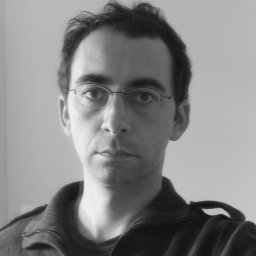 Enrico Calzavarini合作论文数Laboratoire de Physique;Ecole Normale Superieure de Lyon;Universite de Lyon;Laboratoire de Physique, Universite de Lyon2
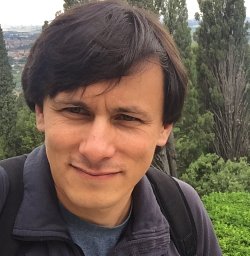 Alexei A. Mailybaev合作论文数Institute of Mechanics, Lomonosov Moscow State University2
 Leonardo Parisi合作论文数2
 Luigi Palatella合作论文数Dipartimento di Fisica;Universita di Pisa;Dipartimento di Fisica, Universita di Pisa2
 Fabrizio Piergentili合作论文数DIEM-II Faculty of Engineering, University of Bologna “ALMA MATER”,2Iacopo Nannipieri合作论文数1Marco Rando合作论文数1
 Leonardo Balocchi合作论文数1Marco Acernese合作论文数1




