Anatomic and functional features of the normal and abnormal mitral valve are reviewed. Of 1,010 personally studied necropsy patients with severe (functional class III or IV, New York Heart Association) cardiac dysfunction from primary valvular heart disease, 434 (43%) had mitral stenosis (MS) with or without mitral regurgitation (MR): unassociated with aortic valve stenosis or regurgitation or with tricuspid valve stenosis in 189 (44%) patients, and associated with aortic stenosis in 152 (35%), with pure (no element of stenosis) aortic regurgitation in 65 (15%) patients, and with tricuspid valve stenosis with or without aortic valve stenosis in 28 (6%) patients. The origin of MS was rheumatic in all 434 patients. Of the 1,010 necropsy patients, 165 (16%) had pure MR (papillary muscle dysfunction excluded): unassociated with aortic valve stenosis or regurgitation or with tricuspid valve stenosis in 97 (59%) patients, and associated with pure aortic regurgitation in 45 (27%) and with aortic valve stenosis in 23 (14%) patients. When associated with dysfunction of the aortic valve, pure MR was usually rheumatic in origin, but when unassociated with aortic valve dysfunction it was usually non-rheumatic in origin. Review of operatively excised mitral valves in patients with pure MR unassociated with aortic valve dysfunction disclosed mitral valve prolapse (most likely an inherent congenital defect) as the most common cause of MR. Excluding the patients with MR from coronary heart disease (papillary muscle dysfunction), mitral prolapse was the cause of MR in 60 (88%) of the other 68 patients, and a rheumatic origin was responsible in only 3 of the 68 patients, all 68 of whom were >30 years of age.Mitral anular calcification in persons aged >65 years is usually associated with calcific deposits in the aortic valve cusps and in the coronary arteries. Because calcium in each of these 3 sites is common in older individuals residing in the Western World, it is most reasonable to view mitral anular calcification in older individuals as a manifestation of atherosclerosis. Mitral anular calcium appears to be extremely uncommon in persons with total serum cholesterol levels <150 mg/dl. Mitral anular calcium may produce mild MR and, if the deposits are heavy enough, MS.
Shortness of breath is a common complaint encountered in both the ambulatory and acute care setting. In patients infected with the human immunodeficiency virus, dyspnea often heralds the onset of a potentially life-threatening opportunistic infection. We present a case of a rare cause of dyspnea in the general population and to our knowledge the first such case reported in the setting of human immunodeficiency virus infection in the United States.
Although the efficacy of sublingual nitroglycerin in relieving anginal attacks in patients with ischemic heart disease remains unquestioned, the role of the orally administered, so-called long-acting, nitrates in preventing angina is less certain. Originally, skepticism concerned whether such agents reach the systemic circulation in active forms. 1 Needleman P Blehm DJ Rotskoff KS Relationship between glutathione-dependent denitration and the vasodilator effectiveness of organic nitrates. J Pharmacol Exp Ther. 1969; 165 PubMed Google Scholar Recent studies have demonstrated, however, that within 15 minutes of ingestion, nitrates effect a decrease in left ventricular volume, a fall in systemic arterial pressure, a reflex rise in heart rate, a fall in left ventricular ejection time index, improvement in segmental wall motion, and improvement in exercise capacity. 2 Glancy DL Richter MA Ellis EV et al. Effect of the swallowed isosorbide dinitrate on blood pressure, heart rate and exercise capacity in patients with coronary artery disease. Am J Med. 1977; 62 PubMed Google Scholar 3 Hardarson T Henning H O'Rourke RA Prolonged salutary effects of isosorbide dinitrate and nitroglycerin ointment on regional left ventricular function. Am J Cardiol. 1977; 40 PubMed Google Scholar Both the magnitude and duration of the effects appear to be dose-related. 2 Glancy DL Richter MA Ellis EV et al. Effect of the swallowed isosorbide dinitrate on blood pressure, heart rate and exercise capacity in patients with coronary artery disease. Am J Med. 1977; 62 PubMed Google Scholar
Prolapse of the mitral valve is described in two patients with the Ebstein's anomaly of the tricuspid valve. This association has not been described previously. It is probable, however, that this association is not a rare one, but that clinical features of the prolapsing mitral valve are obscured by those resulting from the malformed tricuspid valve. Opportunity also was provided to study anatomically the mitral valve of a patient known to have a systolic click and a late systolic murmur (the Barlow syndrome). Although there have been several anatomic descriptions of floppy mitral valve at necropsy, they have been extremely rare in patients known to have the classic auscultatory features of the Barlow syndrome.
Twenty-two patients underwent cardiac catheterization before and an average of five months after aorto-coronary bypass operation (ACBO). Two groups were examined: 10 patients with all grafts patent, and 12 patients with one or more grafts occluded. All patients improved symptomatically, regardless of graft patency. However, in the occluded group, left ventricular end-diastolic pressure (LVEDP) increased (4.4 ± 2.2 mm Hg, P < 0.05), stroke volume index fell (9.8 ± 3.1 ml/m2, P < 0.05), ejection fraction decreased (10 ± 4%, P < 0.05), and left ventricular stroke work index fell (12 ± 3 g-m/m2, P < 0.01).Qualitative analysis of segmental left ventricular contractility was performed. Of 28 segments supplied by patent grafts, six improved and nine deteriorated. Of 22 segments supplied by occluded grafts, none improved and eight deteriorated. Frequently no angiographically demonstrable basis for the segmental deterioration was evident.We concluded that while ACBO may appreciably benefit severely symptomatic patients, our results do not substantiate the claim that ACBO should be recommended when the primary surgical goal is preservation or enhancement of myocardial function.
The long-term results of aortic valve replacement were reviewed in all 88 patients with isolated aortic regurgitation and all 103 patients with isolated aortic stenosis who were operated upon at the National Heart and Lung Institute from 1963 to 1971. Survival curves were compared to determine whether any of 30 preoperative clinical and hemodynamic findings correlated with long-term survival. The indices that were of predictive value in patients with aortic regurgitation were found to be different from those in aortic stenosis. Symptoms, cardiac index, and cardiothoracic ratio did not influence survival in patients with aortic regurgitation. In these patients, survival was inversely correlated with the level of left ventricular end-diastolic pressure (LVEDP): six-year survival was 74% in patients with LVEDP ≤ 10 mm Hg, 41% with LVEDP 11-20 ( P < .05), and 30% with LVEDP > 20 ( P < .01). Survival also was lower in patients with aortic regurgitation who had elevated pulmonary arterial and left atrial pressures, and in patients with electrocardiographic evidence of severe left ventricular hypertrophy (LVH). Using an LVH point score method (Romhilt-Estes), 56% of patients with a score ≤ 6 survived six years; 29% with a score > 6 survived ( P < .02). Survival in aortic stenosis did not relate to any of the above, but did correlate with preoperative functional class. Five-year survival was 70% in class II, but only 40% in class III-IV ( P < .02). Moreover, cardiothoracic ratio in patients with aortic stenosis correlated with survival in an unexpected way. Eleven of 31 patients with cardiothoracic ratio ≤ .45 had sudden unexplained death postoperatively, compared to only six of 72 patients with cardiothoracic ratio > .45 ( P < .01). This difference did not correlate with postoperative hemodynamic measurements, including magnitude of the transprosthetic gradient. We conclude that certain preoperative indices are of value in predicting long-term prognosis after valve replacement for aortic regurgitation and for aortic stenosis, but that the specific predictive indices for the two groups differ.
Eighteen patients were catheterized before and nine months (average) after mitral and/or tricuspid valve replacement with the Kay-Shiley prosthesis. In 14 patients with Kay-Shiley mitral prostheses, average cardiac index rose from 2.2 L/min/M2 preoperatively to 2.8 postoperation, average left atrial mean pressure fell from 26 to 18 mm Hg, and the average left atrioventricular mean diastolic gradient decreased from 15 to 8 mm Hg. In eight patients with Kay-Shiley tricuspid prostheses, average cardiac index rose from 1.74 to 2.54 L/min/M2, average right atrial mean pressure fell from 13 to 10 mmHg, and the average mean diastolic gradient across the tricuspid prostheses was 4 mmHg. The in vivo effective orifice areas of the Kay-Shiley mitral and tricuspid prostheses averaged 75 percent of the in vitro orifice areas. Kay-Shiley mitral prostheses were used only when the left ventricle was too small to accommodate a Starr-Edwards prosthesis; consequently, the Kay-Shiley protheses employed were small, accounting in part for significant prosthetic stenosis observed in some patients. Eighteen patients were catheterized before and nine months (average) after mitral and/or tricuspid valve replacement with the Kay-Shiley prosthesis. In 14 patients with Kay-Shiley mitral prostheses, average cardiac index rose from 2.2 L/min/M2 preoperatively to 2.8 postoperation, average left atrial mean pressure fell from 26 to 18 mm Hg, and the average left atrioventricular mean diastolic gradient decreased from 15 to 8 mm Hg. In eight patients with Kay-Shiley tricuspid prostheses, average cardiac index rose from 1.74 to 2.54 L/min/M2, average right atrial mean pressure fell from 13 to 10 mmHg, and the average mean diastolic gradient across the tricuspid prostheses was 4 mmHg. The in vivo effective orifice areas of the Kay-Shiley mitral and tricuspid prostheses averaged 75 percent of the in vitro orifice areas. Kay-Shiley mitral prostheses were used only when the left ventricle was too small to accommodate a Starr-Edwards prosthesis; consequently, the Kay-Shiley protheses employed were small, accounting in part for significant prosthetic stenosis observed in some patients.
Long-term follow-up is described of seven patients with fistulae between a coronary artery and the right atrium or right ventricle. Left-to-right shunt flow ranged from minimal to 2.2:1. Of six patients followed 3½ to 17 years (average 10) without operation, five demonstrated symptomatic, electrocardiographic, hemodynamic, and angiographic stability. In the sixth patient, a second angiographic study, performed 15 years after the first one, showed the right coronary artery to be occluded proximal to its fistulous communication with the right ventricle, and a left-to-right shunt could no longer be detected. Four of the seven patients underwent operative closure of a fistulous opening into the right atrium, and all four have been restudied postoperatively. Right heart pressures and the degree of dilatation of the involved coronary artery were essentially unchanged following operation. One patient, who had a moderate-sized shunt preoperatively, noted alleviation of her fatigue and demonstrated electrocardiographic improvement. Analysis of flow dynamics did not suggest that the shunt predisposed to shear-induced intimal damage of the dilated feeding coronary artery, but did suggest such changes might occur in the narrow fistulous communication. We conclude that little anatomic and functional change occurs in patients with coronary artery fistulae and small-to-moderate shunts over rather prolonged medical follow-up periods, and that operative closure does not reduce the size of the dilated proximal coronary artery. Since it is unclear whether the abnormality predisposes to premature coronary atherosclerosis, a better understanding of the natural history of the disease is necessary before the precise role of operation in patients with small-to-moderate shunts can be defined.
A video-based system is described that determines ventricular volume from cineangiograms by automated border recognition or by manually assisted video planimetry. Analog circuits are utilized to provide on-line volume calculations. A computer system is used to calculate complex indexes of ventricular function from simultaneously obtained pressure and volume data. Although the system requires considerable effort to establish, it has many potential applications. A video-based system is described that determines ventricular volume from cineangiograms by automated border recognition or by manually assisted video planimetry. Analog circuits are utilized to provide on-line volume calculations. A computer system is used to calculate complex indexes of ventricular function from simultaneously obtained pressure and volume data. Although the system requires considerable effort to establish, it has many potential applications.
Late results of mitral valve replacement for papillary muscle rupture (four patients) or fibrosis without rupture (five patients) are described for the first time. Patients underwent operation 3 months to more than 13 years (median 14 months) after the onset of severe mitral regurgitation. Preoperatively all had holosystolic murmurs, atrial and ventricular gallops, cardiomegaly and cardiac failure. Three had class III and six had class IV functional capacity (New York Heart Association Classification). Atrial fibrillation developed in the three patients who had mitral regurgitation for more than 3 years. Left atrial mean pressure (average 27 mm Hg) and V waves (average 46 mm Hg) were greatly increased in all but one patient, and cardiac index (average 2.0 liters/min per m2) was reduced in all but one. No finding distinguished patients with rupture from those without rupture. The left ventricular angiogram was the best preoperative guide to postoperative results. Of five patients with poor left ventricular contractions, four died (one suddenly 2 days postoperatively and three with cardiac failure, two 6 months and one 62 months postoperatively); 4 months after operation one is limited by the residua of a cerebral embolus. None of the three studied postoperatively showed hemodynamic improvement. In contrast, of four patients with fair or good left ventricular contractions preoperatively, three have class I or II functional capacity 23, 60, 64 months, respectively, after operation, and one died suddenly 41 months after operation. All three studied postoperatively showed marked hemodynamic improvement. Late results of mitral valve replacement for papillary muscle rupture (four patients) or fibrosis without rupture (five patients) are described for the first time. Patients underwent operation 3 months to more than 13 years (median 14 months) after the onset of severe mitral regurgitation. Preoperatively all had holosystolic murmurs, atrial and ventricular gallops, cardiomegaly and cardiac failure. Three had class III and six had class IV functional capacity (New York Heart Association Classification). Atrial fibrillation developed in the three patients who had mitral regurgitation for more than 3 years. Left atrial mean pressure (average 27 mm Hg) and V waves (average 46 mm Hg) were greatly increased in all but one patient, and cardiac index (average 2.0 liters/min per m2) was reduced in all but one. No finding distinguished patients with rupture from those without rupture. The left ventricular angiogram was the best preoperative guide to postoperative results. Of five patients with poor left ventricular contractions, four died (one suddenly 2 days postoperatively and three with cardiac failure, two 6 months and one 62 months postoperatively); 4 months after operation one is limited by the residua of a cerebral embolus. None of the three studied postoperatively showed hemodynamic improvement. In contrast, of four patients with fair or good left ventricular contractions preoperatively, three have class I or II functional capacity 23, 60, 64 months, respectively, after operation, and one died suddenly 41 months after operation. All three studied postoperatively showed marked hemodynamic improvement.
 Se Epstein合作论文数15Andrew G. Morrow合作论文数From the Clinic of Surgery, National Heart Institute Bethesda11
 William C. Roberts合作论文数Baylor University Medical Center10L M Higgs合作论文数8Kp Obrien合作论文数7Shepherd R L合作论文数5K P O'Brien合作论文数3Stephen E. Epstein合作论文数3R L Reis合作论文数2M A Richter合作论文数2Pwt Brandt合作论文数2Morrow A G合作论文数2Robert L. Reis合作论文数2Rp Seningen合作论文数1Kishor D. Shah合作论文数1SB ITSCOITZ合作论文数1WILLIAM C. ROBERTS合作论文数1Jw Hirshfeld合作论文数1Gm Folger合作论文数1VT DEVITA合作论文数1Ml Marcus合作论文数1Ce Clark合作论文数1Hirshfel.Jw合作论文数1N S Braunwald合作论文数1MA DOUGLAS合作论文数1Ra Massumi合作论文数1Harrison L H合作论文数1
 Frank I. Marcus合作论文数Sarver Heart Center, College of Medicine - Tucson, The University of Arizona1Gerry J L合作论文数1Stinson E B合作论文数1Stellingworth M A合作论文数1Kelley G P合作论文数1
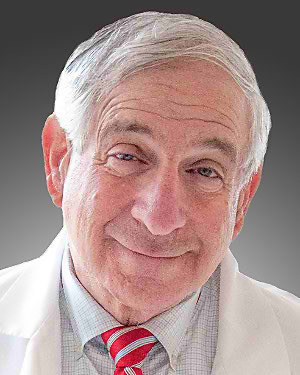 Barry J. Maron合作论文数Department of Cardiology, Lahey Hospital & Medical Center;Hypertrophic Cardiomyopathy Center, Lahey Hospital & Medical Center;Mayo Clinic1Edward B. Stinson合作论文数1Herman K. Gold合作论文数1Edward M. Mullin合作论文数1William H Schuette合作论文数1
 Gordon A. Ewy合作论文数Department of Medicine, College of Medicine – Tucson, The University of Arizona;Division of Cardiology, Sarver Heart Center, College of Medicine – Tucson, The University of Arizona1Melvin L. Marcus合作论文数1Richard B. Jaffe合作论文数1Fred A. Lopez合作论文数1Willard C. Whitehouse合作论文数1Ali Mehrizi合作论文数1Michael Cuadra合作论文数1John W. Yarbrough合作论文数1PD FRAZIER合作论文数1




