This study compares the flow resistance of Resonance tube (RT) and Lax Vox tube (LVT) when submerged 2 cm and 10 cm in water, as well as phonation into the tubes in these conditions.In the in vitro experiment, the air pressure for flow rates of 60–600 mL/s was measured at the tube inlet, when the outer end of the tube was submerged 2 cm and 10 cm below water surface in 30°, 45°, and 90° angle. In the in vivo experiment, 14 subjects phonated in habitual loudness and loudly into both tubes, with the outer end 2 cm and 10 cm in water. RT was immersed in a 45° angle and LVT in a 90° angle in water. Oral pressure, contact quotient from electroglottographic signal, and sound pressure level were studied. Sensations during phonation were reported in an interview.Flow resistance was slightly lower with LVT than with RT, and slightly lower for smaller immersion angles. In habitual loudness, transglottic pressure and frequency of oral pressure variation were lower for LVT phonation and amplitude of oral pressure variation was higher for LVT 2 cm in water. Some subjects preferred RT, whereas others preferred LVT or reported no differences between them.The tubes differed slightly in flow resistance. Higher oral pressure oscillation with LVT 2 cm in water may offer stronger massage effect on vocal folds.
Palm pollination can be quite diverse but has been poorly studied. This paper describes the life cycle of Derelomus chamaeropsis, a Coleoptera that inhabits the inflorescences of the Mediterranean dwarf palm Chamaerops humilis. D. chamaeropsis is specific to Chamaerops inflorescences, where it eats pollen and the rachis of inflorescences on pistillate plants. They usually lay eggs only on staminate inflorescences where larvae develop and bore into the inflorescence rachis. Larvae do not develop on pistillate inflorescences, except for cases with almost no fruit development. Pistillate plants can thus protect themselves from weevil predation. When visiting pistillate inflorescences, weevils can feed on rachis but usually do not find the brood place reward. Pollination is thus by deceit and weevils should be selected to avoid pistillate inflorescences. D. chamaeropsis pupate within the rachis of staminate inflorescences, but disperse before collecting pollen, thus staminate plants do not have an individual advantage in breeding weevils. However, because larvae develop on dead tissues, the costs of larval development are likely to be low for the plant. This study provides a new example of pollination symbiosis where the pollinator develops on the plant it pollinates, and illustrates how the evolutionary functioning of such relationships can be diverse.
Cytomegalovirus (CMV) infection has been associated with coronary artery disease, but it is unknown whether the virus can causally contribute to atherogenesis. To determine whether the virus has this capacity, we infected an atherosclerotic-prone mouse strain (C57BL/6J apoE-/-) with murine CMV. At 14 days of age, 30 mice received CMV (30000 pfu) ip and 30 received virus free media. At 13 and 16 weeks atherosclerotic lesion size was measured from aortic sinus cross-sections. Infection did not alter plasma levels of cholesterol, triglycerides, and high density lipoprotein (HDL); however, 4 weeks after infection IFNgamma levels were elevated (infection vs control: 156+/-49 vs 50+/-22 pg/ml, P=0.04). No differences in lesion size were present at 13 weeks post infection. However, by 16 weeks mean aortic sinus lesion area (mm(2)x10(3)+/-SEM; N=75) in the CMV-infected mice was significantly greater than in uninfected mice (74+/-6 vs 57+/-6; P=0.04). CMV caused the greatest increase (34%) in lesion size in females (103+/-9 vs 77+/-10; P=0.05; N=35). These results provide additional evidence implicating CMV as a causal agent of atherosclerosis, at least in an animal model.
Coronary heart disease (CHD) contributes substantially to illness and death worldwide. Experimental studies demonstrate that infection can stimulate atherogenic processes. This review presents a spectrum of data regarding the link between CHD and infection. In addition, the need for improved diagnostic tools, the significance of multiple pathogens, and potential intervention strategies are discussed.
In this initial study, we found that autoantibodies against actin and myosin were present during and after an acute coronary syndrome. Moreover, they correlated with persistent troponin-I elevation at follow-up, and with late myocardial infarction.
 Robert O Bonow合作论文数Division of Cardiology, Department of Medicine, Feinberg School of Medicine, Northwestern University7
 Bj Maron合作论文数6Richard O. Cannon合作论文数Translational Medicine Branch, National Heart, Lung, and Blood Institute6
 Martin Leon合作论文数Center for Interventional Vascular Therapy, Columbia University Medical Center4Mary Susan Burnett合作论文数4Peter C Westman合作论文数3R Waksman合作论文数3
 Edward M. Stolper合作论文数Division of Geological and Planetary Sciences, California Institute of Technology3Douglas R. Rosing合作论文数3
 Toren Finkel合作论文数Division of Cardiology, University of Pittsburgh;Department of Medicine, University of Pittsburgh;Coloma Therapeutics3Ian D. Hutcheon合作论文数3D.Luke Glancy合作论文数3
 Michael J Lipinski合作论文数3Philip A. Ludbrook合作论文数2Tm Johnson合作论文数2Am Goorin合作论文数2Dd Cuthbertson合作论文数2Dr Redwood合作论文数2MICHAEL R. ROSEN合作论文数2Ce Clark合作论文数2Yf Zhou合作论文数2Km Kent合作论文数2Jeffrey S. Borer合作论文数2M KALINER合作论文数2C Berkebile合作论文数2Se Lipshultz合作论文数2Ms Burnett合作论文数2S Zbinden合作论文数2Epstein M L合作论文数2
 George A. Beller合作论文数School of Medicine, University of Virginia2Laurie Leshin Watson合作论文数2
 David B. Peden合作论文数Children's Research Institute, School of Medicine, UNC;Department of Surgery, School of Medicine, UNC;Department of Microbiology & Immunology, School of Medicine, UNC;Department of Epidemiology, Gillings School of Global Public Health, UNC2
 Robert W. O'Rourke合作论文数O'Rourke Lab, Department of Surgery, University of Michigan Medical School2Morrow A G合作论文数2Shepherd R L合作论文数2Michael E. Cain合作论文数2
 Burton E. Sobel合作论文数University of Vermont Colchester Research Facility2Donald B. Doty合作论文数2Richard E. Kerber合作论文数2
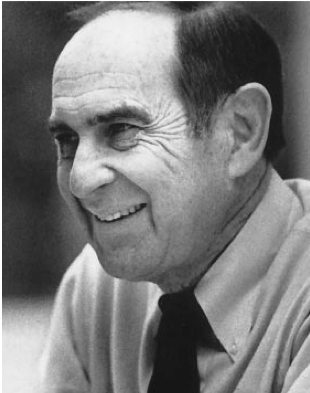 Abraham M. Rudolph合作论文数School of Medicine, University of California San Francisco2
 Charles Higgins合作论文数Department of Radiology and Biomedical Imaging, School of Medicine, University of California2J. Stone合作论文数2Peter B. Corr合作论文数2
 Juan C Frias合作论文数2Melanie Miller合作论文数2
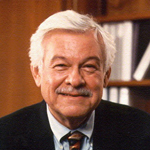 Gustav Schonfeld合作论文数Division of Endocrinology, Metabolism & Lipid Research, John T. Milliken Department of Internal Medicine, Washington University2Johnross合作论文数2
 M. Teresa Albelda合作论文数2Edith Speir合作论文数2




