We present a new measurement of the positive muon magnetic anomaly, a_{μ}≡(g_{μ}-2)/2, from the Fermilab Muon g-2 Experiment using data collected in 2019 and 2020. We have analyzed more than 4 times the number of positrons from muon decay than in our previous result from 2018 data. The systematic error is reduced by more than a factor of 2 due to better running conditions, a more stable beam, and improved knowledge of the magnetic field weighted by the muon distribution, ω[over ˜]_{p}^{'}, and of the anomalous precession frequency corrected for beam dynamics effects, ω_{a}. From the ratio ω_{a}/ω[over ˜]_{p}^{'}, together with precisely determined external parameters, we determine a_{μ}=116 592 057(25)×10^{-11} (0.21 ppm). Combining this result with our previous result from the 2018 data, we obtain a_{μ}(FNAL)=116 592 055(24)×10^{-11} (0.20 ppm). The new experimental world average is a_{μ}(exp)=116 592 059(22)×10^{-11} (0.19 ppm), which represents a factor of 2 improvement in precision.
The Mu2e experiment at Fermilab will search for the neutrinoless μ−→e− conversion in the field of an aluminum nucleus. The Mu2e data-taking plan assumes two running periods, Run I and Run II, separated by an approximately two-year-long shutdown. This paper presents an estimate of the expected Mu2e Run I search sensitivity and includes a detailed discussion of the background sources, uncertainties of their prediction, analysis procedures, and the optimization of the experimental sensitivity. The expected Run I 5σ discovery sensitivity is Rμe=1.2×10⁻¹⁵, with a total expected background of 0.11±0.03 events. In the absence of a signal, the expected upper limit is Rμe<6.2×10⁻¹⁶ at 90% CL. This represents a three order of magnitude improvement over the current experimental limit of Rμe<7×10⁻¹³ at 90% CL set by the SINDRUM II experiment.
Bent silicon crystals mounted on high-accuracy angular actuators were installed in the CERN Super Proton Synchrotron (SPS) and extensively tested to assess the feasibility of crystal-assisted collimation in circular hadron colliders. The adopted layout was exploited and regularly upgraded for about a decade by the UA9 Collaboration. The investigations provided the compelling evidence of a strong reduction of beam losses induced by nuclear inelastic interactions in the aligned crystals in comparison with amorphous orientation. A conceptually similar device, installed in the betatron cleaning insertion of CERN Large Hadron Collider (LHC), was operated through the complete acceleration and storage cycle and demonstrated a large reduction of the background leaking from the collimation region and radiated into the cold sections of the accelerator and the experimental detectors. The implemented layout and the relevant results of the beam tests performed in the SPS and in the LHC with stored proton and ion beams are extensively discussed.
The Mu2e experiment at Fermilab will measure the rate for neutrinoless-conversion of negative muons into electrons with never-before-seen precision. This experiment will use a pulsed 8 GeV proton beam with pulses separated by 1.7 µs. To suppress beam induced backgrounds to this process, a set of dipoles operating at 300 kHz and 4.4 MHz have been developed that will reduce the fraction of out-of-time protons at the level of 10 −10 or less. Selection of magnetic ferrite material for construction must be carefully considered given the high repetition rate and duty cycle that can lead to excess heating in conventional magnetic material. A model of the electromagnetic and thermal properties of candidate ferrite materials has been constructed. Magnetic permeability, in-ductance, and power loss were measured at the two operating frequencies in toroidal ferrite samples as well as in the ferrites from which prototype magnets were built. Additionally, the outgassing rates of the ferrite material was measured to determine vacuum compatibility. The outcome of this work is a detailed specification of the electrical and mechanical details of the ferrite material required for this application.
We present the first results of the Fermilab National Accelerator Laboratory (FNAL) Muon g-2 Experiment for the positive muon magnetic anomaly a_{μ}≡(g_{μ}-2)/2. The anomaly is determined from the precision measurements of two angular frequencies. Intensity variation of high-energy positrons from muon decays directly encodes the difference frequency ω_{a} between the spin-precession and cyclotron frequencies for polarized muons in a magnetic storage ring. The storage ring magnetic field is measured using nuclear magnetic resonance probes calibrated in terms of the equivalent proton spin precession frequency ω[over ˜]_{p}^{'} in a spherical water sample at 34.7 °C. The ratio ω_{a}/ω[over ˜]_{p}^{'}, together with known fundamental constants, determines a_{μ}(FNAL)=116 592 040(54)×10^{-11} (0.46 ppm). The result is 3.3 standard deviations greater than the standard model prediction and is in excellent agreement with the previous Brookhaven National Laboratory (BNL) E821 measurement. After combination with previous measurements of both μ^{+} and μ^{-}, the new experimental average of a_{μ}(Exp)=116 592 061(41)×10^{-11} (0.35 ppm) increases the tension between experiment and theory to 4.2 standard deviations.
The Muon g-2 Experiment plans to use the Fermilab Recycler Ring for forming the proton bunches that hit its production target. The proposed scheme uses one RF system, 80 kV of 2.5 MHz RF. In order to avoid bunch rotations in a mismatched bucket, the 2.5 MHz is ramped adiabatically from 3 to 80 kV in 90 ms. In this study, the interaction of the primary proton beam with the production target for the Muon g-2 Experiment is numerically examined.
The anomalous magnetic moment of the muon is one of the most precisely measured quantities in experimental particle physics. Its latest measurement at Brookhaven National Laboratory deviates from the Standard Model expectation by approximately 3.5 standard deviations. The goal of the new experiment, E989, now under construction at Fermilab, is a fourfold improvement in precision. Here, we discuss the details of the future measurement and its current status.
The Muon (g-2) Experiment, E989 at Fermilab, will measure the muon anomalous magnetic moment a factor-of-four more precisely than was done in E821 at the Brookhaven National Laboratory AGS. The E821 result appears to be greater than the Standard-Model prediction by more than three standard deviations. When combined with expected improvement in the Standard-Model hadronic contributions, E989 should be able to determine definitively whether or not the E821 result is evidence for physics beyond the Standard Model. After a review of the physics motivation and the basic technique, which will use the muon storage ring built at BNL and now relocated to Fermilab, the design of the new experiment is presented. This document was created in partial fulfillment of the requirements necessary to obtain DOE CD-2/3 approval.
Crystal channeling technology has offered various opportunities in accelerator community with a viability of ultrahigh gradient (TV/m) acceleration for future HEP collider in Energy Frontier. The major challenge of the channeling acceleration is that ultimate acceleration gradients might require high power driver at hard x-ray regime (~ 40 keV), exceeding those conceivable for x-rays as of today, though x-ray lasers can efficiently excite solid plasma and accelerate particles inside a crystal channel. Moreover, only disposable crystal accelerators are possible at such high externally excited fields which would exceed the ionization thresholds destroying the atomic structure, so acceleration will take place only in a short time before full dissociation of the lattice. Carbon- based nanostructures have great potential with a wide range of flexibility and superior physical strength, which can be applied to channeling acceleration. This paper present beam-driven channeling acceleration concept with CNTs and discuss feasible experiments with the Advanced Superconducting Test Area (ASTA) in Fermilab and beyond.
A wide range of diffusion and beam loss mechanisms were studied during the Tevatron Run II commissioning and operations. Many of them were well known [Coulomb scattering, residual gas and intrabeam scattering (IBS)] but required substantial studies and deeper theoretical insights because of unique experimental conditions and beam parameters.
Beam-beam forces and collision optics can strongly affect beam lifetime, dynamic aperture, and halo formation in particle colliders. Extensive analytical and numerical simulations are carried out in the design and operational stage of a machine to quantify these effects, but experimental data is scarce. The technique of small-step collimator scans was applied to the Fermilab Tevatron collider and to the CERN Large Hadron Collider to study the effect of collisions on transverse beam halo dynamics. We describe the technique and present a summary of the first results on the dependence of the halo diffusion coefficient on betatron amplitude in the Tevatron and in the LHC.
An enhancement to the T-980 bent crystal collimation experiment at the Tevatron has been completed. The enhancement was the installation of a pixel telescope inside the vacuum-sealed beam pipe of the Tevatron. The telescope is comprised of six CMS PSI46 pixel plaquettes, arranged as three stations of horizontal and vertical planes, with the CAPTAN system for data acquisition and control. The purpose of the pixel telescope is to measure beam profiles produced by bent crystals under various conditions. The telescope electronics inside the beam pipe initially were not adequately shielded from the image current of the passing beams. A new shielding approach was devised and installed, which resolved the problem. The noise issues encountered and the mitigating techniques are presented herein, as well as some preliminary results from the telescope.
Experimental measurements of beam halo diffusion dynamics with collimator scans are reviewed. The concept of halo control with a hollow electron beam collimator, its demonstration at the Tevatron, and its possible applications at the LHC are discussed.
The T980 crystal collimation experiment is underway at the Tevatron to determine if this technique could increase 980 GeV beam-halo collimation efficiency at high-energy hadron colliders such as the Tevatron and the LHC. T980 also studies various crystal types and parameters. The setup has been substantially enhanced during the Summer 2009 shutdown by installing a new O-shaped crystal in the horizontal goniometer, as well as adding a vertical goniometer with two alternating crystals (O-shaped and multi-strip) and additional beam diagnostics. First measurements with the new system are quite encouraging, with channeled and volume-reflected beams observed on the secondary collimators as predicted. Investigation of crystal collimation efficiencies with crystals in volume reflection and channeling modes are described in comparison with an amorphous primary collimator. Results on the system performance are presented for the end-of-store studies and for entire collider stores. The first investigation of colliding beam collimation simultaneously using crystals in both the vertical and horizontal plane has been made in the regime with horizontally channeled and vertically volume-reflected beams. Planning is underway for significant hardware improvements during the FY10 summer shutdown and for dedicated studies during the final year of Tevatron operation and also for a "post-collider beam physics running" period.
The T-980 bent crystal collimation experiment at the Tevatron has recently acquired substantial enhancements. First, two new crystals - a 16-strip one manufactured and characterized by the INFN Ferrara group and a quasi-mosaic crystal manufactured and characterized by the PNPI group. Second, a two plane telescope with 3 high-resolution pixel detectors per plane along with corresponding mechanics, electronics, control and software has been manufactured, tested and installed in the E0 crystal region. The purpose of the pixel telescope is to measure and image channeled (CH), volume-reflected (VR) and multiple volume-reflected (MVR) beam profiles produced by bent crystals. Third, an ORIGIN-based system has been developed for thorough analysis of experimental and simulation data. Results of analysis are presented for different types of crystals used from 2005 to present for channeling and volume reflection including pioneering tests of two-plane crystal collimation at the collider, all in comparison with detailed simulations.
The transverse beam diffusion rate vs. particle oscillation amplitude was measured in the Tevatron using collimator scans. All collimator jaws except one were retracted. As the jaw of interest was moved in small steps, the local shower rates were recorded as a function of time. By using a diffusion model, the time evolution of losses could be related to the diffusion rate at the collimator position. Preliminary results of these measurements are presented.
Collimation of proton and antiproton beams in the Tevatron collider is required to protect CDF and D0 detectors and minimize their background rates, to keep irradiation of superconducting magnets under control, to maintain long-term operational reliability, and to reduce the impact of beam-induced radiation on the environment. In this article we briefly describe the design, practical implementation and performance of the collider collimation system, methods to control transverse and longitudinal beam halo and two novel collimation techniques tested in the Tevatron.
A VME-based data acquisition system for beam-loss monitors has been developed and is in use in the Tevatron and Main Injector accelerators at the Fermilab complex. The need for enhanced beam-loss protection when the Tevatron is operating in collider-mode was the main driving force for the new design. Prior to the implementation of the present system, the beam-loss monitor system was disabled during collider operation and protection of the Tevatron magnets relied on the quench protection system. The new Beam-Loss Monitor system allows appropriate abort logic and thresholds to be set over the full set of collider operating conditions. The system also records a history of beam-loss data prior to a beam-abort event for post-abort analysis. Installation of the Main Injector system occurred in the fall of 2006 and the Tevatron system in the summer of 2007. Both systems were fully operation by the summer of 2008. In this paper we report on the overall system design, provide a description of its normal operation, and show a number of examples of its use in both the Main Injector and Tevatron.
 g annala合作论文数11
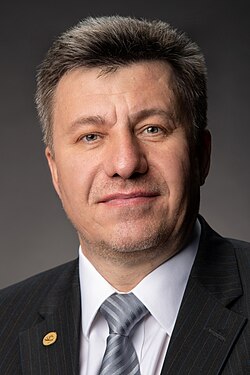 Vladimir Shiltsev合作论文数Fermi National Accelerator Laboratory11Nikolai Mokhov合作论文数Theory and Modeling Group, Fermi National Accelerator Laboratory10
 Alexander Valishev合作论文数Fermi National Accelerator Laboratory9
 Todd R. Johnson合作论文数College of P ..., The University of Texas School of Biomedical Informatics at Houston7
 Giulio Stancari合作论文数7
 Valentina Previtali合作论文数6
 Mike Syphers合作论文数Northern Illinois University6J. P. Miller合作论文数5
 Brian Drendel合作论文数5D. Allspach合作论文数5J. P. Morgan合作论文数5R. Chislett合作论文数5V. Tishchenko合作论文数5B. Casey合作论文数5J. Mott合作论文数5
 r assmann合作论文数Lab Nazl Frascati5
 Themis Bowcock合作论文数5
 s b dabagov合作论文数MEPhI, NR Nuclear University5
 Mark Lancaster合作论文数Particle Physics Group, Department of Physics and Astronomy, University of Manchester5P. Winter合作论文数5
 Chiara Ferrari合作论文数Institut fur Astrophysik5
 D. Hampai合作论文数INFN- Laboratori Nazionali di Frascati Via E. Fermi5I. B. Logashenko合作论文数5
 Nicholas A Pohlman合作论文数5A. I. Drozhdin合作论文数5Ioanis Kourbanis合作论文数5L. Welty-Rieger合作论文数4M. Eads合作论文数4M. Iacovacci合作论文数4C. Schlesier合作论文数4N. Kinnaird合作论文数4V. Guidi合作论文数4R. Osofsky合作论文数4Erdem Motuk合作论文数4H. Friedsam合作论文数4
 Lee Roberts合作论文数Department of Physics, College of Arts & Sciences, Boston University4
 William Morse合作论文数Department of Physics, Brookhaven National Laboratory4H. Nguyen合作论文数4Rm Carey合作论文数4
 David Kawall合作论文数Department of Physics, College of Natural Sciences, University of Massachusetts, Amherst4
 A. Chapelain合作论文数Cornell University4
 Viktoriya Zvoda合作论文数University of Illinois at Chicago4M. Warren合作论文数4d stratakis合作论文数4A. T. Fienberg合作论文数4D. A. Sweigart合作论文数4
 Kjeld Oleg Eyser合作论文数Physics Department, Brookhaven National Laboratory4
 Mary Convery合作论文数Fermi National Accelerator Laboratory4




