We have studied the ground state of the unbound, very neutron-rich isotope of hydrogen H-5, using the He-6(d, He-3)H-5 reaction in inverse kinematics at a bombarding energy of E(He-6) = 55A MeV. The present results suggest a ground-state resonance energy E-R = 2.4 +/- 0.3 MeV above the H-3 + 2n threshold, with an intrinsic width of Gamma = 5.3 +/- 0.4 MeV in the H-5 system. Both the resonance energy and width are higher than those reported in some, but not all previous studies of H-5. The previously unreported He-6(d, t)He-5(g.s). reaction is observed in the same measurement, providing a check on the understanding of the response of the apparatus. The data are compared to expectations from direct two-neutron and dineutron decay. The possibility of excited states of H-5 populated in this reaction is discussed using different calculations of the He-6 -> H-5 + p spectroscopic overlaps from shell-model and ab initio nuclear-structure calculations.
We have studied the $^{14,15}\mathrm{C}(d,^{3}\mathrm{He})^{13,14}\mathrm{B}$ proton-removing reactions in inverse kinematics. The $(d,^{3}\mathrm{He})$ reaction probes the proton occupation of the target ground state, and also provides spectroscopic information about the final states in $^{13,14}\mathrm{B}$. The experiments were performed using $^{14,15}\mathrm{C}$ beams from the ATLAS accelerator at Argonne National Laboratory. The reaction products were analyzed with the HELIOS device. Angular distributions were obtained for transitions from both reactions. The $^{14}\mathrm{C}$-beam data reveal transitions to excited states in $^{13}\mathrm{B}$ that suggest configurations with protons outside the $\ensuremath{\pi}(0{p}_{3/2})$ orbital, and some possibility of proton cross-shell $0p\text{\ensuremath{-}}1s0d$ excitations, in the $^{14}\mathrm{C}$ ground state. The $^{15}\mathrm{C}$-beam data confirm the existence of a broad ${2}^{\ensuremath{-}}$ excited state in $^{14}\mathrm{B}$. The experimental data are compared to the results of shell-model calculations.
The sequential breakup of $E/A=65.5\text{-MeV}\phantom{\rule{4pt}{0ex}}^{7}\mathrm{Be}$ and $E/A=36.6\text{-MeV}\phantom{\rule{4pt}{0ex}}^{6}\mathrm{Li}$ projectiles excited through inelastic interactions with $^{9}\mathrm{Be}$ target nuclei has been studied. For events where the target nucleus remained in its ground state, significant alignment of the excited projectile's spin axis parallel or antiparallel to the beam direction was observed. This unusual spin alignment was found to be largely independent of the projectile's scattering angle and it was deduced that the target nucleus has a significant probability of changing its spin orientation during the interaction. It is proposed that the unusual spin alignment is a consequence of the molecular structure of the $^{9}\mathrm{Be}$ nucleus.
We have studied the nucleus 14B using the 13B(d,p)14B and 15C(d,3He)14B reactions. The two reactions provide complementary information about the negative-parity 1s1/2 and 0d5/2 neutron single-particle states in 14B. The data from the (d,p) reaction give neutron-spectroscopic strengths for these levels, and the (d,3He) results confirm the existence of a broad 2- excited state suggested in the literature. Together these results provide estimates of the sd-shell neutron effective single-particle energies in 14B.
The (d, alpha) reaction is highly selective, favoring final states in which the removed neutron and proton are completely aligned in a J = 2j configuration. We have studied the C-14,C-15(d, alpha)B-12,B-13 reactions in inverse kinematics using the Helical Orbit Spectrometer (HELIOS) at Argonne National Laboratory. In B-12, the reaction strongly favors the population of a known 3(+) state at 5.61 MeV, and for B-13, we observe a possible unreported doublet of states at high excitation energy, probably corresponding to the B-12(3(+)) state coupled to the 1s(1/2) neutron from the C-15 ground state. In contrast to single-nucleon transfer, deuteron-transfer reactions have not been widely studied with exotic nuclei.
Suppression of multiplicity fluctuations has been observed for three light fermions (protons, tritons and 3He) in the multifragmentation of reconstructed hot quasi-projectiles produced in collisions of 32S (45 MeV/nucleon) with 112Sn. This suppression, predicted by recent calculations, is attributed to Pauli blocking and has also been observed in experiments with trapped Fermi gases. Experimental results on nuclear temperature and density employing a quantal approach based on momentum and multiplicity fluctuations are also presented. The extracted temperatures show a noticeable reduction when compared to a similarly derived classical method. This reduction in temperature is in agreement with previous predictions indicating that classically derived methods overpredict nuclear temperature as they do not take into account the Fermi motion of the nucleons. The present results underline the role of quantum statistics in nuclear disassembly and suggest the need for proper quantum treatment when dealing with the thermodynamic properties of fragmenting heavy ions.
The single-neutron properties of N = 51 nuclei have been studied with the (d,p )a nd (α, 3 He) reactions, at beam energies of 15 and 50 MeV respectively, on 88 Sr, 90 Zr, and 92 Mo targets. The light reaction products were momentum analyzed using a conventional magnetic spectrometer. Additionally, the 2 H( 86 Kr,p) reaction was measured at a beam energy of 10 MeV/u, where outgoing light ions were analyzed using a helical-orbit spectrometer. Absolute cross sections and angular distributions corresponding to the population of different final states in the heavy product were obtained for each reaction. Spectroscopic factors were extracted and centroids of the single-particle strength were deduced. The observations appear consistent with calculations based on an evolution of single-particle structure driven by the nucleon-nucleon forces acting between valence protons and neutrons.
S. Bedoor,1 A. H. Wuosmaa,1,* J. C. Lighthall,1,† M. Alcorta,2 B. B. Back,2 P. F. Bertone,2,‡ B. A. Brown,3 C. M. Deibel,4 C. R. Hoffman,2 S. T. Marley,1,2,§ R. C. Pardo,2 K. E. Rehm,2 A. M. Rogers,2 J. P. Schiffer,2 and D. V. Shetty1,‖ 1Department of Physics, Western Michigan University, Kalamazoo, Michigan 49008-5252, USA 2Physics Division, Argonne National Laboratory, Argonne, Illinois 60439, USA 3Department of Physics and Astronomy, Michigan State University, East Lansing, Michigan 48824, USA 4Department of Physics and Astronomy, Louisiana State University, Baton Rouge, Louisiana 70803, USA
The nucleosynthetic flow in type I X-ray Bursts (XRBs) is driven by the triple-α, rp and α, p processes.Several intermediate mass nuclei, 22 Mg, 26 Si, 30 S, and 34 Ar, have been identified as possible candidates for waiting points in XRBs.When such a nucleus is reached, the flow stalls due to a (p, γ)-(γ, p) equilibrium and must await β decay unless the (α, p) reaction is fast enough to break out of the waiting point first.A method to study these α p-process reactions has been developed whereby the time-inverse reaction is studied in inverse kinematics using radioactive ion beams produced by the in-flight method at the Argonne National Laboratory ATLAS facility.These time-inverse reactions have been used to study all four of the α, p process waiting points via the p( 25 Al, 22 Mg)α, p( 29 P, 26 Si)α, p( 33 Cl, 30 S)α, and p( 37 K, 34 Ar)α reactions.The data from these studies have been used to determine rates for 22 Mg(α, p) 25 Al, 26 Si(α, p) 29 P, 30 S(α, p) 33 Cl, and 34 Ar(α, p) 37 K and have also been compared with theoretical calculations.The results and possible implications for nucleosynthesis in XRBs will be discussed.
We have used the ${}^{13}$B($d,p$)${}^{14}$B reaction in inverse kinematics to study the properties of states in ${}^{14}$B, the lightest particle-bound $N=9$ isotone. The spectroscopic information, including spins, parities, and spectroscopic factors for the states observed in ${}^{14}$B are used to deduce the wave functions for the low-lying negative parity $\ensuremath{\nu}(\mathit{sd})$ levels, as well as provide information about the evolution of the effective neutron $1{s}_{1/2}\ensuremath{-}0{d}_{5/2}$ single-particle energies. The data confirm that the ground and first-excited states are predominantly $s$ wave in character and are single-neutron halo states. The effective single-particle energies are found to match the trends set by other $N=9$ isotones.
The study of transfer reactions in inverse kinematics is a major focus of existing and future radioactive-ion-beam facilities. One of the obstacles in such measurements is poor Q-value resolution, often several hundred keV, which can prevent the extraction of useful information. At Argonne National Laboratory, it has recently been demonstrated that good Q-value resolution can be achieved by transporting the outgoing ions through a high-field solenoid, measuring their position as a function of energy. This provides several advantages over conventional Si arrays, such as large acceptance, good particle identification, and most importantly a Q-value resolution of better than 100 keV in most cases, including reactions with moderately heavy beams. In this paper, the concept of the solenoidal spectrometer, called HELIOS, will be discussed along with highlights of recent results. DOI:10.5506/APhysPolB.44.349
Equilibration of N/Z in binary breakup of an excited and transiently deformed projectile-like fragment (PLF*), produced in peripheral collisions of 64Zn + 27Al, 64Zn, 209Bi at E/A = 45 MeV, is examined. The composition of emitted light fragments (3<=Z<=6) changes with the decay angle of the PLF*. The most neutron-rich fragments observed are associated with a small rotation angle. A clear target dependence is observed with the largest initial N/Z correlated with the heavy, neutron-rich target. Using the rotation angle as a clock, we deduce that N/Z equilibration persists for times as long as 3-4 zs (1zs = 1 x 10^-21 s = 300 fm/c). The rate of N/Z equilibration is found to depend on the initial neutron gradient within the PLF*.
Two-proton decay is discussed in a number of light isobaric multiplets. For the lightest two-proton emitter, 6Be, the momentum correlations between the three decay products were measured and found to be consistent with quantum-mechanical three-cluster-model calculations. Two-proton decay was also found for two members of the A=8 and A=11 quintets. Finally, a third member of the A=11 sextet, the double isobaric analog of the halo nucleus 11Li in 11B was observed by its two-proton decay.
Two-proton decay is discussed in a number of light isobaric multiplets. For the lightest two-proton emitter, Be-6, the momentum correlations between the three decay products were measured and found to be consistent with quantum-mechanical three-cluster-model calculations. Two-proton decay was also found for two members of the A=8 and A=11 quintets. Finally, a third member of the A=11 sextet, the double isobaric analog of the halo nucleus Li-11 in B-11 was observed by its two-proton decay.
 Sherry J. Yennello合作论文数Department of Chemistry, Texas A&M University114
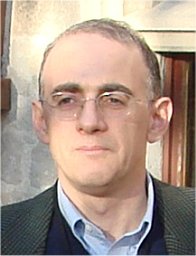 G. A. Souliotis合作论文数Cyclo, tron Institute;Texas A&M University;Cyclotron Institute, Texas A&M University110
 A. Keksis合作论文数51Martin Veselsky合作论文数Institute of Physics, Slovak Academy of Sciences46S. Wuenschel合作论文数41S. N. Soisson合作论文数40Kris Hagel合作论文数37Zachary Kohley合作论文数Cyclotron Institute, Texas A&M University36G. Prete合作论文数35G. Viesti合作论文数34B. C. Stein合作论文数34
 Drazen Fabris合作论文数Department of Mechanical Engineering, School of Engineering, Santa Clara University33Marco Cinausero合作论文数33
 Marcello Lunardon合作论文数Dipartimento di Fisica e Astronomia "Galileo Galilei", Università degli Studi di Padova31S. Galanopoulos合作论文数Cyclotron Institute, Texas A&M University31S. T. Marley合作论文数31K Rehm合作论文数Div Phys, Argonne Natl Lab30
 Giancarlo Nebbia合作论文数INFN and Università di Padova30
 J.C. Lighthall合作论文数Department of Physics, Western Michigan University30l w may合作论文数28Enrico Fioretto合作论文数28C. Deibel合作论文数Div Phys, Argonne Natl Lab27V. Rizzi合作论文数LNL-INFN26
 C. R. Hoffman合作论文数Department of Physics;Florida State University;Department of Physics, Florida State University26
 Shadi Bedoor合作论文数25
 John P. Schiffer合作论文数Physics Division, Argonne National Laboratory;University of Chicago25A Ruangma合作论文数24E. Martin合作论文数24
 Birger B. Back合作论文数Low Energy Nuclear Physics Group, Argonne National Laboratory, U.S. Department of Energy Office of Science23Marian Jandel合作论文数Los Alamos National Laboratory23
 Alan Wuosmaa合作论文数Department of Physics, College of Liberal Arts and Sciences, University of Connecticut22Em Winchester合作论文数21R. Wada合作论文数21
 Richard C. Pardo合作论文数Argonne National Laboratory21
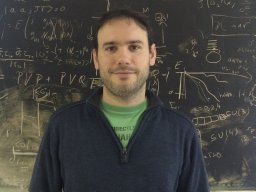 Martin Alcorta合作论文数Instituto de Estructura de la Materia CSIC 28006 Madrid Spain18
 Benjamin P. Kay合作论文数Argonne National Laboratory18L. Qin合作论文数17
 Joseph B. Natowitz合作论文数Texas A&M University17P. Bertone合作论文数16Zbigniew Majka合作论文数16T Keutgen合作论文数15
 R. Tripathi合作论文数Radiochemistry Division, Bhabha Atomic Research Centre15R. K. Choudhury合作论文数Bhabha Atomic Research Centre, Mumbai, India15J. Cibor合作论文数15M. Murray合作论文数14Aldo Bonasera合作论文数14A. S. Botvina合作论文数14S. I. Baker合作论文数13




