A bstract A measurement of the $$ {K}^{+}\to {\pi}^{+}\nu \overline{\nu} $$ K + → π + ν ν ¯ decay by the NA62 experiment at the CERN SPS is presented, using data collected in 2021 and 2022. This dataset was recorded, after modifications to the beamline and detectors, at a higher instantaneous beam intensity with respect to the 2016–2018 data taking. Combining NA62 data collected in 2016–2022, a measurement of $$ \mathcal{B}\left({K}^{+}\to {\pi}^{+}\nu \overline{\nu}\right)=\left({13.0}_{-3.0}^{+3.3}\right)\times {10}^{-11} $$ B K + → π + ν ν ¯ = 13.0 − 3.0 + 3.3 × 10 − 11 is reported. With 51 signal candidates observed and an expected background of $$ {18}_{-2}^{+3} $$ 18 − 2 + 3 events, $$ \mathcal{B}\left({K}^{+}\to {\pi}^{+}\nu \overline{\nu}\right) $$ B K + → π + ν ν ¯ becomes the smallest branching ratio measured with a signal significance above 5 σ .
The kaon physics programme, long heralded as a cutting-edge frontier by the European Strategy for Particle Physics, continues to stand at the intersection of discovery and innovation in high-energy physics (HEP). With its unparalleled capacity to explore new physics at the multi-TeV scale, kaon research is poised to unveil phenomena that could reshape our understanding of the Universe. This document highlights the compelling physics case, with emphasis on exciting new opportunities for advancing kaon physics not only in Europe but also on a global stage. As an important player in the future of HEP, the kaon programme promises to drive transformative breakthroughs, inviting exploration at the forefront of scientific discovery.
The KOTO II experiment is proposed to measure the branching ratio of the decay K_L→π^0νν̅ at J-PARC. With a beamline to extract long-lived neutral kaons at 5 degrees from a production target, the single event sensitivity of the decay is 8.5× 10^-13, which is much smaller than the Standard Model prediction 3× 10^-11. This allows searches for new physics beyond the Standard Model and the first discovery of the decay with a significance exceeding 5σ. As the only experiment proposed in the world dedicated to rare kaon decays, KOTO II will be indispensable in the quest for a complete understanding of flavor dynamics in the quark sector. Moreover, by combining efforts from the kaon community worldwide, we plan to develop the KOTO II detector further and expand the physics reach of the experiment to include measurements of the branching ratio of the K_L→π^0ℓ^+ℓ^- decays, studies of other K_L decays, and searches for dark photons, axions, and axion-like particles. KOTO II will therefore obtain a comprehensive understanding of K_L decays, providing further constraints on new physics scenarios with existing K^+ results.
The NA62 experiment at the CERN SPS reports the first detection of a tagged neutrino candidate based on the data collected in 2022. The candidate consists of a K+ -> mu(+)nu(mu) decay where the charged particles are reconstructed and the neutrino is detected through a charged-current interaction in a liquid krypton calorimeter.
A measurement of the K^+→π^+νν decay by the NA62 experiment at the CERN SPS is presented, using data collected in 2021 and 2022. This dataset was recorded, after modifications to the beamline and detectors, at a higher instantaneous beam intensity with respect to the 2016–2018 data taking. Combining NA62 data collected in 2016–2022, a measurement of ℬ(K^+→π^+νν)=(13.0_-3.0^+3.3)×10^-11 is reported. With 51 signal candidates observed and an expected background of 18_-2^+3 events, ℬ(K^+→π^+νν) becomes the smallest branching ratio measured with a signal significance above 5σ.
The NA62 experiment at CERN utilises a differential Cherenkov counter with achromatic ring focus (CEDAR) for tagging kaons within an unseparated monochromatic beam of charged hadrons. The CEDAR-H detector was developed to minimise the amount of material in the path of the beam by using hydrogen gas as the radiator medium. The detector was shown to satisfy the kaon tagging requirements in a test-beam before installation and commissioning at the experiment. The CEDAR-H performance was measured using NA62 data collected in 2023.
A sample of 3984 candidates of the K+→π+γγ decay, with an estimated background of 291±14 events, was collected by the NA62 experiment at CERN during 2017–2018. In order to describe the observed di-photon mass spectrum, the next-to-leading order contribution in chiral perturbation theory was found to be necessary. The decay branching ratio in the full kinematic range is measured to be (9.61±0.17)×10−7. The first search for production and prompt decay of an axion-like particle with gluon coupling in the process K+→π+a, a→γγ is also reported.
The NA62 experiment at CERN, configured in beam-dump mode, has searched for dark photon decays in flight to electron-positron pairs using a sample of 1.4×10¹⁷ protons on dump collected in 2021. No evidence for a dark photon signal is observed. The combined result for dark photon searches in lepton–antilepton final states is presented and a region of the parameter space is excluded at 90% confidence level, improving on previous experimental limits for dark photon mass values between 50 and 600 MeV/c2 and coupling values in the range 10−6 to 4×10⁻⁵. An interpretation of the e+e− search result in terms of the emission and decay of an axionlike particle is also presented. Published by the American Physical Society 2024
Recent results from searches for rare kaon decays with the NA62 experiment at CERN are reported, together with the future prospects. A future experiment HIKE, to go beyond NA62, has been proposed to push kaon physics to an unprecedented frontier. The HIKE timescale and expected performance are described. Among the NA62 results, the measurement of the branching ratios of the flavour changing neutral current $K^+\rightarrow\pi^+\mu^+\mu^-$ and the radiative non leptonic $K^+\rightarrow\pi^+\gamma\gamma$ decays are reported, upper limits are given for lepton flavor and lepton number violating decays $K^+\rightarrow\mu^-\nu e^+e^+$ and $K^+\rightarrow\pi^-\pi^0 e^+e^+$. A search for new physics in the branching ratio of the decay $K^+\rightarrow\pi^+ e^+e^-e^+e^-$ is presented
The first search for the lepton number violating decay K+ -> pi(0)pi(-)mu(+)e(+) and lepton flavour violating decays K+ -> pi(0)pi(+)mu-e(+), K+ -> pi(0)pi(+)mu(+)e(-) has been performed using a dataset collected by the NA62 experiment at CERN in 2016-2018. Upper limits of 2.9 x 10(-10), 3.1 x 10(-10) and 5.0 x 10(-10), respectively, are obtained at 90% CL for the branching ratios of the three decays on the assumption of uniform phase-space distributions.
The first search for ultra-rare K+ decays into the π+e+e−e+e− final state is reported, using a dataset collected by the NA62 experiment at CERN in 2017–2018. An upper limit of 1.4×10⁻⁸ at 90% CL is obtained for the branching ratio of the K+→π+e+e−e+e− decay, predicted in the Standard Model to be (7.2±0.7)×10−11. Upper limits at 90% CL are obtained at the level of 10−9 for the branching ratios of two prompt decay chains involving pair-production of hidden-sector mediators: K+→π+aa, a→e+e− and K+→π+S, S→A′A′, A′→e+e−.
The NA62 experiment at CERN, designed to study the ultra-rare decay K+ → π+ νν , has also collected data in beam-dump mode. In this configuration, dark photons may be produced by protons dumped on an absorber and reach a decay volume beginning 80 m downstream. A search for dark photons decaying in flight to μ+μ− pairs is reported, based on a sample of 1.4 × 10¹⁷ protons on dump collected in 2021. No evidence for a dark photon signal is observed. A region of the parameter space is excluded at 90
The flavor-changing neutral current decay [Formula: see text] ([Formula: see text]) is well suited to explore the Standard Model structure. A new measurement of this decay branching fraction and form factor has been performed by the NA62 experiment at CERN based on data collected in 2017–2018. From the selected sample of 28011 [Formula: see text] event candidates with a negligible background, the decay form factor parameters [Formula: see text] and [Formula: see text], as well as the branching fraction [Formula: see text] have been measured.
We report the results of a search for dark photon in-flight decays to μ + μ − pairs at NA62. Dark photons could be produced by dumping protons onto a copper-iron absorber, reach the NA62 decay volume more than 80 m downstream of the dump and decay therein. The measurement is based on data collected in 2021 which correspond to 1.4 × 10¹⁷ dumped protons.
The NA62 experiment at CERN, designed to study the ultra-rare decay $K^+ \to \pi^+\nu\overline{\nu}$, has also collected data in beam-dump mode. In this configuration, dark photons may be produced by protons dumped on an absorber and reach a decay volume beginning 80 m downstream. A search for dark photons decaying in flight to $\mu^+\mu^-$ pairs is reported, based on a sample of $1.4 \times 10^{17}$ protons on dump collected in 2021. No evidence for a dark photon signal is observed. A region of the parameter space is excluded at 90% CL, improving on previous experimental limits for dark photon masses between 215 and 550 MeV$/c^2$.
The K+ -> pi(+) nu(nu) over bar decay, with a very precisely predicted branching ratio of less than 10(-10), is among the best processes to reveal indirect effects of new physics. The NA62 experiment reports the branching ratio measurement BR(K+ -> pi(+) nu(nu) over bar) = (1.06(-0.34)(+0.40)vertical bar(stat) +/- 0.09 vertical bar syst) . 10(-10) at 68% CL, based on the observation of 20 signal candidates with an expected background of 7.0 events from the total data sample collected at the CERN SPS during 2016-2018. This provides evidence for the very rare K+ -> pi(+)nu(nu) over bar decay, observed with a significance of 3.4 sigma. This measurement is also used to set limits on BR(K+ -> pi(+) X), where X is a new feebly interacting scalar or pseudo-scalar particle, foreseen in several new physics scenarios.
Measurement of the ultra-rare K^+→π^+νν decay at the NA62 experiment at CERN requires high-performance particle identification to distinguish muons from pions. Calorimetric identification currently in use, based on a boosted decision tree algorithm, achieves a muon misidentification probability of 1.2 × 10⁻⁵ for a pion identification efficiency of 75
The NA62 experiment at CERN targets the measurement of the ultra-rare K^+→π^+νν decay, and carries out a broad physics programme that includes probes for symmetry violations and searches for exotic particles. Data were collected in 2016–2018 using a multi-level trigger system, which is described highlighting performance studies based on 2018 data.
 C. Djalali合作论文数268
 Marco Battaglieri合作论文数Istituto Nazionale di Fisica Nucleare268M. Khandaker合作论文数266
 Kenneth H. Hicks合作论文数Department of Physics and Astronomy, College of Arts and Sciences, Ohio University263
 Reinhard A. Schumacher合作论文数Department of Physics, Mellon College of Science, Carnegie Mellon University263M Ripani合作论文数261A. Biselli合作论文数260Y. Sharabian合作论文数258Silvia Niccolai合作论文数255E. Pasyuk合作论文数Arizona State University255F. Sabatié合作论文数254
 Mikhail Osipenko合作论文数254M. Ungaro合作论文数254
 Volker Burkert合作论文数Jefferson Lab252
 Kenneth E Livingston合作论文数School of Physics & Astronomy University of Glasgow Glasgow251M. Holtrop合作论文数249M. Guidal合作论文数243G. Niculescu合作论文数241
 Carlos Alberto Salgado Lopez合作论文数Department of Particle Physics, Universidade de Santiago de Compostela;Galician Institute of High Energy Physics, Universidade de Santiago de Compostela239O. Pogorelko合作论文数238Paul Eugenio合作论文数Florida State University238
 G. Rosner合作论文数Department of Physics and Astronomy;University of Glasgow;Department of Physics and Astronomy, University of Glasgow237
 Philip L Cole合作论文数237Gerard P. Gilfoyle合作论文数237
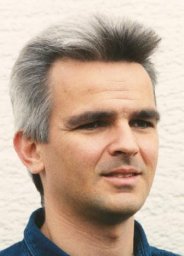 Ralf W. Gothe合作论文数University of South Carolina235
 William J. Briscoe合作论文数Department of Physics, Columbian College of Arts & Sciences, George Washington University234Mauro Taiuti合作论文数233
 Woochan Kim合作论文数232K. Joo合作论文数227S. Strauch合作论文数227F. J. Klein合作论文数226J. W. Price合作论文数225
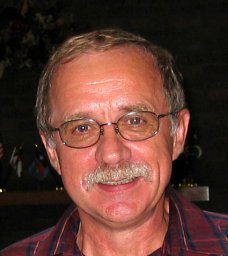 Valery Kubarovsky合作论文数Institute for High Energy Physics225Daniel S. Carman合作论文数223Hovanes Egiyan合作论文数220M. Wood合作论文数University of Pennsylvania219
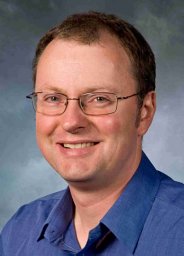 David G. Ireland合作论文数University of Glasgow218Bryan Mckinnon合作论文数University of Glasgow218K. Park合作论文数217Viktor Mokeev合作论文数217
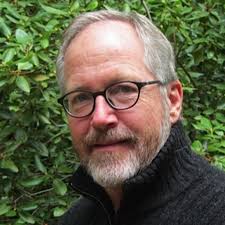 Will Brooks合作论文数Department of Physics, Universidad Técnica Federico Santa María215
 Alexandre Deur合作论文数Thomas Jefferson National Accelerator Facility211
 Enzo De Sanctis合作论文数209K. A. Griffioen合作论文数208M. Mirazita合作论文数208Y. Ilieva合作论文数208
 Brian Raue合作论文数Department of Physics, College of Arts, Sciences & Education, Florida International University208F. X. Girod合作论文数Univ Glasgow207
 Harut Avagyan合作论文数Jefferson Lab;Department of Physics, Columbian College of Arts & Sciences, The George Washington University205




