Grapheme-to-phoneme (G2P) conversion serves as an essential component in Chinese Mandarin text-to-speech (TTS) system, where polyphone disambiguation is the core issue. In this paper, we propose an end-to-end framework to predict the pronunciation of a polyphonic character, which accepts sentence containing polyphonic character as input in the form of Chinese character sequence without the necessity of any preprocessing. The proposed method consists of a pre-trained bidirectional encoder representations from Transformers (BERT) model and a neural network (NN) based classifier. The pre-trained BERT model extracts semantic features from a raw Chinese character sequence and the NN based classifier predicts the polyphonic character's pronunciation according to BERT output. In out experiments, we implemented three classifiers, a fully-connected network based classifier, a long short-term memory (LSTM) network based classifier and a Transformer block based classifier. The experimental results compared with the baseline approach based on LSTM demonstrate that, the pre-trained model extracts effective semantic features, which greatly enhances the performance of polyphone disambiguation. In addition, we also explored the impact of contextual information on polyphone disambiguation.
Audio editing involves the arbitrary manipulation of audio content through precise control. Although text-guided diffusion models have made significant advancements in text-to-audio generation, they still face challenges in finding a flexible and precise way to modify target events within an audio track. We present a novel approach, referred to asPPAE, which serves as a general module for diffusion models and enables precise audio editing. The editing is based on the input textual prompt only and is entirely training-free. We exploit the cross-attention maps of diffusion models to facilitate accurate local editing and employ a hierarchical local-global pipeline to ensure a smoother editing process. Experimental results highlight the effectiveness of our method in various editing tasks.
Today, there have been many achievements in learning the association between voice and face. However, most previous work models rely on cosine similarity or L2 distance to evaluate the likeness of voices and faces following contrastive learning, subsequently applied to retrieval and matching tasks. This method only considers the embeddings as high-dimensional vectors, utilizing a minimal scope of available information. This paper introduces a novel framework within an unsupervised setting for learning voice-face associations. By employing a multimodal encoder after contrastive learning and addressing the problem through binary classification, we can learn the implicit information within the embeddings in a more effective and varied manner. Furthermore, by introducing an effective pair selection method, we enhance the learning outcomes of both contrastive learning and the matching task. Empirical evidence demonstrates that our framework achieves state-of-the-art results in voice-face matching, verification, and retrieval tasks, improving verification by approximately 3%, matching by about 2.5%, and retrieval by around 1.3%.
As deep learning evolves, neural network structures become increasingly sophisticated, bringing a series of new optimisation challenges. For example, deep neural networks (DNNs) are vulnerable to a variety of attacks. Training neural networks under privacy constraints is a method to alleviate privacy leakage, and one way to do this is to add noise to the gradient. However, the existing optimisers suffer from weak convergence in the presence of increased noise during training, which leads to a low robustness of the optimiser. To stabilise and improve the convergence of DNNs, the authors propose a neural dynamics (ND) optimiser, which is inspired by the zeroing neural dynamics originated from zeroing neural networks. The authors first analyse the relationship between DNNs and control systems. Then, the authors construct the ND optimiser to update network parameters. Moreover, the proposed ND optimiser alleviates the non‐convergence problem that may be suffered by adding noise to the gradient from different scenarios. Furthermore, experiments are conducted on different neural network structures, including ResNet18, ResNet34, Inception‐v3, MobileNet, and long and short‐term memory network. Comparative results using CIFAR, YouTube Faces, and R8 datasets demonstrate that the ND optimiser improves the accuracy and stability of DNNs under noise‐free and noise‐polluted conditions. The source code is publicly available at https://github.com/LongJin‐lab/ND .
In the past year, MultiModal Large Language Models (MM-LLMs) have undergone substantial advancements, augmenting off-the-shelf LLMs to support MM inputs or outputs via cost-effective training strategies. The resulting models not only preserve the inherent reasoning and decision-making capabilities of LLMs but also empower a diverse range of MM tasks. In this paper, we provide a comprehensive survey aimed at facilitating further research of MM-LLMs. Initially, we outline general design formulations for model architecture and training pipeline. Subsequently, we introduce a taxonomy encompassing 126 MM-LLMs, each characterized by its specific formulations. Furthermore, we review the performance of selected MM-LLMs on mainstream benchmarks and summarize key training recipes to enhance the potency of MM-LLMs. Finally, we explore promising directions for MM-LLMs while concurrently maintaining a real-time tracking website for the latest developments in the field. We hope that this survey contributes to the ongoing advancement of the MM-LLMs domain.
While recent advancements in speech language modeling have achieved significant progress, they face remarkable challenges in modelling the long acoustic sequence of neural audio codecs. Previous speech language models are compelled to learn acoustic tokens through a multi-stage generation process, which hinders their performance due to error propagation and information loss. In this paper, we introduce \textbf{G}enerative \textbf{P}re-Trained \textbf{S}peech Language Model (GPST), a hierarchical transformer designed for efficient speech language modeling. GPST quantizes audio waveforms into two distinct types of discrete speech representations and integrates them within a hierarchical transformer architecture, allowing for a unified one-stage generation process and enhancing Hi-Res audio generation capabilities. By training on large corpora of raw audio waveforms in an end-to-end unsupervised manner, GPST can generate syntactically consistent speech with diverse speaker identity unconditionally. When provided a brief 3-second prompt, GPST is able to produce natural and coherent personalized speech, demonstrating in-context learning abilities. Moreover, our approach can be easily extended to spoken cross-lingual speech generation by incorporating multi-lingual semantic tokens and universal acoustic tokens. Experimental results indicate that GPST significantly outperforms the existing speech language models in terms of word error rate, speech quality and speaker similarity.
This paper proposes an improved version of DurIAN-E (DurIAN-E 2), which is also a duration informed attention neural network for expressive and high-fidelity text-to-speech (TTS) synthesis. Similar with the DurIAN-E model, multiple stacked SwishRNN-based Transformer blocks are utilized as linguistic encoders and Style-Adaptive Instance Normalization (SAIN) layers are also exploited into frame-level encoders to improve the modeling ability of expressiveness in the proposed the DurIAN-E 2. Meanwhile, motivated by other TTS models using generative models such as VITS, the proposed DurIAN-E 2 utilizes variational autoencoders (VAEs) augmented with normalizing flows and a BigVGAN waveform generator with adversarial training strategy, which further improve the synthesized speech quality and expressiveness. Both objective test and subjective evaluation results prove that the proposed expressive TTS model DurIAN-E 2 can achieve better performance than several state-of-the-art approaches besides DurIAN-E.
Proximal gradient theory has demonstrated its superiority in the compressive sensing field for complex signal recovery. As an early trial in the speech front-end field, we propose OPINE, an optimization-inspired deep unfolding framework to simulate traditional iterative optimization process for multi-channel speech enhancement. Specifically, we formulate the joint optimization of beamforming weights and target speech using the Bayesian maximum a posteriori (MAP) criterion. By splitting and introducing the proximal gradient descent method, the original problem can be formulated into the alternating target solving of two sub-problems. Furthermore, we propose to formulate the proximal function into a more generalized NN-based modules, enabling the end-to-end learning from massive training data. The experiments are conducted on the spatialized LibriSpeech dataset, and quantitative results show that the proposed method can achieve comparable performance over existing advanced baselines.
Text-to-speech (TTS) and singing voice synthesis (SVS) aim at generating high-quality speaking and singing voice according to textual input and music scores, respectively. Unifying TTS and SVS into a single system is crucial to the applications requiring both of them. Existing methods usually suffer from some limitations, which rely on either both singing and speaking data from the same person or cascaded models of multiple tasks. To address these problems, a simplified elegant framework for TTS and SVS, named UniSyn, is proposed in this paper. It is an end-to-end unified model that can make a voice speak and sing with only singing or speaking data from this person. To be specific, a multi-conditional variational autoencoder (MC-VAE), which constructs two independent latent sub-spaces with the speaker- and style-related (i.e. speak or sing) conditions for flexible control, is proposed in UniSyn. Moreover, supervised guided-VAE and timbre perturbation with the Wasserstein distance constraint are leveraged to further disentangle the speaker timbre and style. Experiments conducted on two speakers and two singers demonstrate that UniSyn can generate natural speaking and singing voice without corresponding training data. The proposed approach outperforms the state-of-the-art end-to-end voice generation work, which proves the effectiveness and advantages of UniSyn.
Self-supervised learning (SSL) models confront challenges of abrupt informational collapse or slow dimensional collapse. We propose TriNet, which introduces a novel triple-branch architecture for preventing collapse and stabilizing the pre-training. TriNet learns the SSL latent embedding space and incorporates it to a higher level space for predicting pseudo target vectors generated by a frozen teacher. Our experimental results show that the proposed method notably stabilizes and accelerates pre-training and achieves a relative word error rate reduction (WERR) of 6.06% compared to the state-of-the-art (SOTA) Data2vec for a downstream benchmark ASR task. We will release our code at https://github.com/tencent-ailab/.
Convolutional neural networks have achieved impressive results in areas such as computer vision tasks. Recently, more complex architectures have been designed that add additional operations and connections to the standard architecture to enable deeper network training. A large number of trainable parameters are often required to acquire accurate results. As the number of parameters increases, the network structure becomes more intricate and complex, resulting in low model accuracy and wasted computational resources. Motivated by the promising performance of brain-inspired neural computation principles, a new network structure can be constructed using a composition of the biological connectome. The nematode Caenorhabditis elegans (C. elegans), as the only organism whose connectome has been fully mapped, is suitable to be selected for the construction of neural network structures. In this paper, the neuron connectome of C. elegans is encapsulated as a connectome block and used as the connection pattern of the convolutional layer in the convolutional network. Therefore, this modified convolutional neural network structure is called the nematode connectome neural network (NCNN), and the detailed implementation is presented. Moreover, comparative experiments on the CIFAR-100, CIFAR-10, MNIST, and ImageNet datasets are conducted to fully demonstrate the effectiveness and feasibility of the proposed NCNN model on image classification. In addition, the success of the NCNN also provides new ideas for future network structure design. The source code is publicly available at https://github.com/LongJin-lab/Nematode-Connectome-Neural-Network.
Mapping two modalities, speech and text, into a shared representation space, is a research topic of using text-only data to improve end-to-end automatic speech recognition (ASR) performance in new domains. However, the length of speech representation and text representation is inconsistent. Although the previous method up-samples the text representation to align with acoustic modality, it may not match the expected actual duration. In this paper, we proposed novel representations match strategy through down-sampling acoustic representation to align with text modality. By introducing a continuous integrate-and-fire (CIF) module generating acoustic representations consistent with token length, our ASR model can learn unified representations from both modalities better, allowing for domain adaptation using text-only data of the target domain. Experiment results of new domain data demonstrate the effectiveness of the proposed method.
The mixture of experts (MoE)-based automatic speech recognition (ASR) model can achieve remarkable performance, but pose greater challenges to model deployment for its huge model size. Therefore, it is important to compress the model size and reduce the computational cost. In this paper, we propose a compressed MoE (CMoE) ASR model that simplifies the MoE structure by knowledge distillation and reduces parameter bit-width through quantization, and provide two pipelines (one-stage and two-stage pipelines) to deploy the compression. In quantization, we use binary weight network to quantize the weights to 1-bit for reducing the quantization error and use learned step size quantization to quantize the activations to 4-bit. Experimental results show that the quantized dense network compressed from the MoE based ASR model by our method reduces the size by 150x with very small accuracy loss. The proposed model is expected to be deployed on embedded devices.
This paper introduces an improved duration informed attention neural network (DurIAN-E) for expressive and high-fidelity text-to-speech (TTS) synthesis. Inherited from the original DurIAN model, an auto-regressive model structure in which the alignments between the input linguistic information and the output acoustic features are inferred from a duration model is adopted. Meanwhile the proposed DurIAN-E utilizes multiple stacked SwishRNN-based Transformer blocks as linguistic encoders. Style-Adaptive Instance Normalization (SAIN) layers are exploited into frame-level encoders to improve the modeling ability of expressiveness. A denoiser incorporating both denoising diffusion probabilistic model (DDPM) for mel-spectrograms and SAIN modules is conducted to further improve the synthetic speech quality and expressiveness. Experimental results prove that the proposed expressive TTS model in this paper can achieve better performance than the state-of-the-art approaches in both subjective mean opinion score (MOS) and preference tests.
Audio coding is an essential module in the real-time communication system. Neural audio codecs can compress audio samples with a low bitrate due to the strong modeling and generative capabilities of deep neural networks. To address the poor high-frequency expression and high computational cost and storage consumption, we proposed an integrated framework that utilizes a neural network to model wide-band components and adopts traditional signal processing to compress high-band components according to psychological hearing knowledge. Inspired by auditory perception theory, a perception-based loss function is designed to improve harmonic modeling. Besides, generative adversarial network (GAN) compression is proposed for the first time for neural audio codecs. Our method is superior to prior advanced neural codecs across subjective and objective metrics and allows real-time inference on desktop and mobile.
The wideband or super wideband speech is one of the most prominent features in real-time communication services, with higher resolution spectrum. However, it requires higher computing expenses. In this paper, we introduce the Penguins codec, based on a multi-mode neural speech coding structure that combines sub-band speech processing and applies different strategies from the low band to the high band. Especially, it refers to deep generative networks with perceptual constraint loss functions and knowledge distillations to reconstruct wideband components and bandwidth extension to generate artificial super wideband components. The method results in high-quality speech at very low bitrates. Several subjective and objective experiments, including ablation studies, were organized, and the results proved the merit of the proposed scheme when compared with traditional coding schemes and state-of-the-art neural coding methods.
The ideal goal of voice conversion is to convert the source speaker's speech to sound naturally like the target speaker while maintaining the linguistic content and the prosody of the source speech. However, current approaches are insufficient to achieve comprehensive source prosody transfer and target speaker timbre preservation in the converted speech, and the quality of the converted speech is also unsatisfied due to the mismatch between the acoustic model and the vocoder. In this paper, we leverage the recent advances in information perturbation and propose a fully end-to-end approach to conduct high-quality voice conversion. We first adopt information perturbation to remove speaker-related information in the source speech to disentangle speaker timbre and linguistic content and thus the linguistic information is subsequently modeled by a content encoder. To better transfer the prosody of the source speech to the target, we particularly introduce a speaker-related pitch encoder which can maintain the general pitch pattern of the source speaker while flexibly modifying the pitch intensity of the generated speech. Finally, one-shot voice conversion is set up through continuous speaker space modeling. Experimental results indicate that the proposed end-to-end approach significantly outperforms the state-of-the-art models in terms of intelligibility, naturalness, and speaker similarity.
Diffusion probabilistic models (DPMs) and their extensions have emerged as competitive generative models yet confront challenges of efficient sampling. We propose a new bilateral denoising diffusion model (BDDM) that parameterizes both the forward and reverse processes with a schedule network and a score network, which can train with a novel bilateral modeling objective. We show that the new surrogate objective can achieve a lower bound of the log marginal likelihood tighter than a conventional surrogate. We also find that BDDM allows inheriting pre-trained score network parameters from any DPMs and consequently enables speedy and stable learning of the schedule network and optimization of a noise schedule for sampling. Our experiments demonstrate that BDDMs can generate high-fidelity audio samples with as few as three sampling steps. Moreover, compared to other state-of-the-art diffusion-based neural vocoders, BDDMs produce comparable or higher quality samples indistinguishable from human speech, notably with only seven sampling steps (143x faster than WaveGrad and 28.6x faster than DiffWave). We release our code at https://github.com/tencent-ailab/bddm.
Zero-shot speaker adaptation aims to clone an unseen speaker's voice without any adaptation time and parameters. Previous researches usually use a speaker encoder to extract a global fixed speaker embedding from reference speech, and several attempts have tried variable-length speaker embedding. However, they neglect to transfer the personal pronunciation characteristics related to phoneme content, leading to poor speaker similarity in terms of detailed speaking styles and pronunciation habits. To improve the ability of the speaker encoder to model personal pronunciation characteristics, we propose content-dependent fine-grained speaker embedding for zero-shot speaker adaptation. The corresponding local content embeddings and speaker embeddings are extracted from a reference speech, respectively. Instead of modeling the temporal relations, a reference attention module is introduced to model the content relevance between the reference speech and the input text, and to generate the fine-grained speaker embedding for each phoneme encoder output. The experimental results show that our proposed method can improve speaker similarity of synthesized speeches, especially for unseen speakers.
Speaker identification for overlapped speech presents a great challenge for speaker diarization tasks in meeting scenarios. In order to overcome such challenges, several overlap-aware resegmentation methods based on deep learning have been integrated into speaker diarization systems. In this paper we propose two multi-channel diarization systems which have enhanced capability in detecting overlapped speech and identify speakers via learning spatial features. The first system applies a multi-look strategy to train networks without given the speakers' direction of arrival(DOA), and the other system estimates the DOA of target speakers based on existing diarization results. Both systems aim to estimate the voice activity of speakers in different directions to handle overlapped speech. Experimental results on the AMI corpus show that the relative improvements of both systems can reach 9.4% and 18.1% in term of diarization error rate (DER) against an overlap-aware single-channel system with a BeamformIt front-end.
 Dong Yu (俞栋)合作论文数Tencent AI Lab83
 Chao Weng合作论文数Tencent29
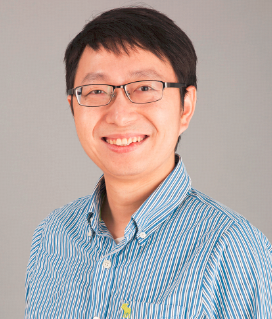 Meng Yu (于濛)合作论文数Tencent AI Lab19
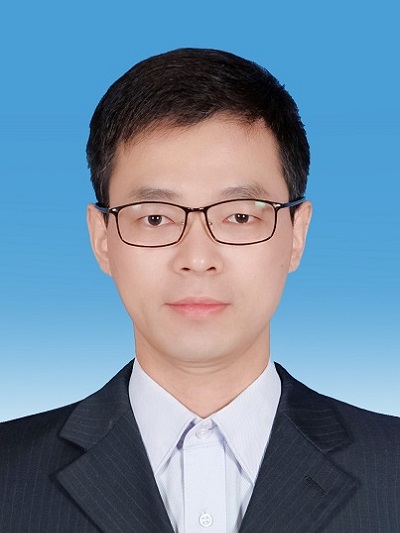 Zhiyong Wu (吴志勇)合作论文数Shenzhen International Graduate School, Tsinghua University19
 Jun Wang合作论文数AI Lab, Tencent18
 Shiyin Kang合作论文数Beijing Kunlun Tech Co Ltd18
 Youfu Li (李友福)合作论文数Department of Mechanical Engineering, City University of Hong Kong15
 Shan Yang合作论文数14
 Na Li合作论文数14
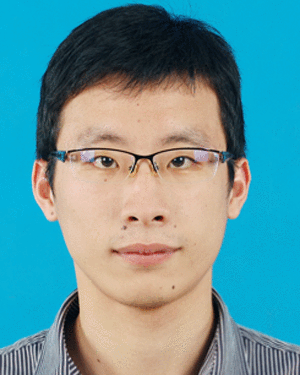 Lianwu Chen合作论文数Tencent14
 Helen Mei Ling Meng (蒙美玲)合作论文数Department of Systems Engineering and Engineering Management, Faculty of Engineering, The Chinese University of Hong Kong13
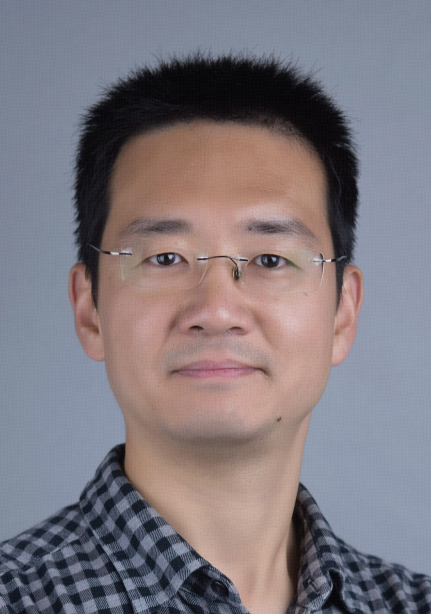 Lei Xie (谢磊)合作论文数Audio, Speech and Language Processing Lab, School of Computer Science, Northwestern Polytechnical University13
 Xixin Wu (吳錫欣)合作论文数12
 Songxiang Liu (刘颂湘)合作论文数Meituan11
 Max W. Y. Lam合作论文数TikTok11
 Xunying Liu (刘循英)合作论文数Department of Systems Engineering and Engineering Management, The Faculty of Engineering, The Chinese University of Hong Kong11
 Guangsen Wang合作论文数Tencent10Na Hu合作论文数iFLYTEK Res, Hefei, Peoples R China9Yuewen Cao合作论文数The Chinese University of Hong Kong8Liqiang He合作论文数7
 Hao Chen合作论文数6Deyi Tuo合作论文数Tencent AI Lab, Shenzhen, Peoples R China6Shulin Feng合作论文数Peking Univ, Key Lab Machine Percept, Beijing, Peoples R China6
 Shi-Xiong (Austin) Zhang合作论文数Capital One6
 Xihong Wu (吴玺宏)合作论文数Institute for Artificial Intelligence, Peking University;School of Electronics Engineering and Computer Science, Peking University6Huang Yiheng合作论文数5Guangzhi Li合作论文数5
 Yuexian Zou (邹月娴)合作论文数School of Electronic and Computer Engineering, Peking University;Advanced Data & Signal Processing Laboratory, Peking University5
 Peng Liu合作论文数College of Information Sciences and Technology, Pennsylvania State University5Guangzhi Lei合作论文数4Helen Meng合作论文数4Xingchen Song (宋星辰)合作论文数4
 Jian Cong合作论文数4Rongzhi Gu合作论文数Peking University4Yi Lei合作论文数4Xuan Ji合作论文数Tencent AI Lab, Shenzhen, Peoples R China4
 Mu Wang (王目)合作论文数School of Computer Science, Beijing University of Posts and Telecommunications4
 Jia Cui合作论文数IBM4
 Chengzhu Yu (俞承柱)合作论文数Meta4
 Jianwei Yu (余建伟)合作论文数Shenzhen Universtiy4Helen M. Meng合作论文数3Mingjie Jin合作论文数3
 Qicong Xie合作论文数3
 Changhe Song合作论文数3
 Dongyang Dai (代东洋)合作论文数Zoom3
 Xiaoyi Qin合作论文数Sun Yat-sen University3Jimeng Zheng合作论文数Tencent AI Lab, Shenzhen, Peoples R China3
 Naijun Zheng合作论文数3Jingbei Li合作论文数3




