The configuration of closed-loop supply chains (CLSCs) for original equipment manufacturers (OEMs) to recover and remarket products has been discussed as a crucial pathway in the transition towards the circular economy (CE). However, in the context of the CE, circular supply chains (CSCs) have an extended role to recover materials and minimize waste that goes beyond the particular firm’s product recovery and remarketing. Thus, the open-loop supply chains (OLSCs) have an equally important role to play as supply chain configurations where actors other than the OEM engage in product and material recovery. While the literature on CLSC is a mature field, studies that analyze the complementary nature of CLSC and OLSC in addressing the transition to the CE are scant. Based on a systematic literature review (2007–2021), this paper contributes to literature by identifying some of the characteristics of OLSC, providing empirical illustrations, and developing a conceptual framework of the open- and closed-loop supply chain continuum.
Supply network collaboration has been recognised as a vital enabler in the transition to a circular economy. Even so, the existing literature has directed limited attention to the nature of these relationships and the motivation behind them. Hence, there is a need to understand the actual activities of actors engaged in collaboration to address this knowledge gap. The steel industry presents an interesting example. Given that more than one-third of the world's steel production originates from scrap, its supply is essential to the survival of the steel industry. Based on an explorative case study, this paper investigates collaboration of steel producers, a procurement intermediary and scrap dealers to facilitate steel recycling. These actors deal with the practical challenge of variation in the quantity and quality of steel scrap by engaging in various types of collaboration. This paper seeks to analyse the nature of these collaborations and answer the question of why actors engage in supply network collaboration. The paper identifies a complex web of relationships and outlines differing motives for and against collaboration, with specific focus on three types. While quality control is the main motive in dyadic vertical collaboration between a buyer and a supplier, efficiency is the main motive for both horizontal collaboration between buyers and lateral collaboration amongst all actors in the supply network. Thus, this paper adds to the conventional wisdom of sequential, dyadic, linear and vertical relationships, providing a deeper understanding of the types of supply network collaboration from the underexplored context of steel recycling.
To navigate sustainability transitions, firms are often prompted to take an active role in business model innovation. Previous research has shown, however, that when attempting to change business models, incumbent firms frequently face challenges concerning the ambiguity of transition pathways. This paper is an inquiry into this intersection between business model innovation and sustainability transitions. Anchored in three case studies of sustainability-driven, pre-commercial projects of emerging technologies, it reveals how groups of organizations collaborate in time-limited, cross-industry networks, to explore potential business models for anticipated, profound, changes in socio-technical systems. Drawing on these findings, the paper introduces the concept of experimental networks and illustrates how experimental networks can facilitate business model innovation in relation to systemic change. By outlining the constituents of the experimental network concept, the paper contributes to theory by uncovering the interplay of interorganizational collaboration and network level business model innovation. In addition, it reveals how experimental networks constitute one way for incumbents to claim agency with respect to emerging sustainability transitions.
In Sweden, Electric Road Systems (ERS) are gaining importance in the quest for sustainable solutions for road transportation. The main driver is the 2018 Swedish climate law that requires a 70% reduction in carbon dioxide emissions by 2030 for domestic transport, excluding aviation, compared to the 2010 level. Due to the urgent need for change, the first decade of ERS evolution has been heavily focused on technological development towards a market-ready technology. Indeed, developing ERS technology is the priority of the two ERS demonstration projects on public roads in Sweden: eHighway E16 (inaugurated: 2016, status: ongoing), and eRoadArlanda (inaugurated: 2018, status: ongoing). Consequently, ERS literature reflects the empirical reality from an evidently technological focal point. However, the nature of ERS makes it a system of systems and couples a large number of stakeholders together, many of them with no previous collaboration. Thus, it is important to address ERS using a holistic focus, including social aspects. The aim of this paper is to uncover the interests and influences of different stakeholder groups in ERS development through the organisation of an ERS project as the unit of analysis. For the purpose of triangulation, the ERS stakeholders in the eRoadArlanda demonstration project have been studied in two separate studies at different points in time and using different methods prior to the comparison of findings. The first study uses interviews and an actor network analysis method to understand the ERS stakeholders' interests, influences, actions, factors and goals selections using causal maps, while the second study uses field data collection with interviews as the primary data source, as well as an iterative approach in order to discuss ERS stakeholders' interest, influence, contribution and motivation with those involved in eRoadArlanda. The findings show the different interest and influence of different stakeholders on ERS development. Further, concerns tend to differ between stakeholder groups, while contribution and motivation also vary among stakeholders within the groups.
The aim of this paper is to investigate the role of supply chain collaboration between buyers and suppliers in the reverse flow of a system of circular supply chains. The empirical context is Swedi ...
When facing business model innovation, a key challenge for incumbent firms is the redefinition of industry and organizational boundaries. Drawing on findings from three cases studies this article s ...
The electric road system (ERS) receives increasing attention as a potential solution to cope with the transition to environmentally friendly heavy road transport. Moving from the initial technology ...
In vehicle repairs, many times locating the cause of error could turn out more time consuming than the reparation itself. Hence a systematic way to accurately predict a fault causing part would con ...
This report is made for a bachelor's degree thesis at KTH within the program Industrial Engineering and Management with a focus on Energy systems and Sustainable Development. The background to the study is the increase in the share of electricity in Sweden generated from renewable sources, where law and policy objectives concerning the emissions of greenhouse gases have been the driving factors. Wind energy is one of these renewable energy sources and the production of electricity from wind energy has over time increased sharply in Sweden.The increased amount of wind power as part of the Swedish energy system places increased demands on the regulation of production in the grid when wind power output varies with wind speed. In the current situation it is mainly water power that is used for the regulation of wind power, but it is mostly developed in northern Sweden and transmission constraints in the power grid mean that its ability to regulate energy production in southern Sweden is limited.The goal of the study is to give an answer to whether there are technologies for energy storage that are appropriate and economically viable for use in Sweden and the current situation of wind power in Sweden. A comprehensive study of the current technologies for energy storage is carried out. A subsequent model of how two of these, Compressed Air Energy Storage and pumped hydropower, affect the energy system in southern Sweden is created.The results from the literature show that for compressed air energy storage in Sweden the geological conditions are absent for storage directly in the bedrock. But in lined, underground rock caverns with steel lining gas can be stored under high pressure, a method that can be used for compressed air energy storage as well. For pumped hydropower there is particular potential for installation in existing dams.The results of the model indicate that pumped hydropower is environmentally and economical viable to apply while the compressed air storage in the current configuration is neither environmentally nor economically appropriate for application in Sweden.
Vi har gjort en kvalitativ undersokning dar syftet ar att undersoka barns tankar kring nedbrytningsprocessen i naturen. Det ar aven att ta reda pa hur barns forestallningar paverkas genom medverkan ...
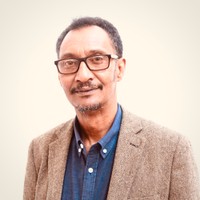 Cali Nuur合作论文数Department of Industrial Economics and Management, School of Industrial Engineering and Management, KTH Royal Institute of Technology3
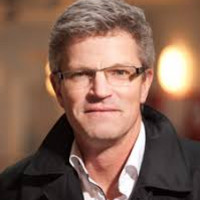 Mats Engwall合作论文数Department of Industrial Economics and Management, KTH Royal Institute of Technology;Scandinavian Academy of Industrial Engineering and Management;European Academy for Industrial Management;The Royal Swedish Academy of Engineering Sciences;Swedish Project Academy;Institute of Management of Innovation and Technology3
 Andreas Feldmann合作论文数Department of Industrial Economics and Management, School of Industrial Engineering and Management, KTH Royal Institute of Technology3
 Matti Kaulio合作论文数Department of Industrial Economics and Management, School of Industrial Engineering and Management, KTH Royal Institute of Technology2
 Emrah Karakaya合作论文数Department of Industrial Economics and Management, School of Industrial Engineering and Management, KTH Royal Institute of Technology2
 Qiuchen Wang合作论文数Corresponding author.1
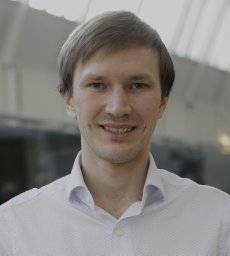 Maxim Miterev合作论文数Michael Smurfit Grad Sch Business, Univ Coll Dublin1
 Sebastiaan Meijer合作论文数Division of Health Informatics and Logistics, Department of Biomedical Engineering and Health Systems, School of Engineering Sciences in Chemistry, Biotechnology and Health, KTH Royal Institute of Technology1
 Anders Tilliander合作论文数Hultgren Laboratory, School of Industrial Engineering and Management, KTH Royal Institute of Technology1




