Christine Korsgaard sees normative generalizations as provisionally universal, in the sense that exceptions to them have reasons for being exceptions and that they could in principle be revised into more specific and precise absolutely universal rules. Do exceptions to normative generalizations have such explanations? Can such generalizations always be revised into or replaced by absolutely universal rules? The answer depends on the structure of practical space, and, specifically, the degree to which normative relations are definable. Distinguishing degrees of definability in practical space opens up paths for generalist and particularist conceptions of normativity.
John Calvin holds that the fall radically changed humanity’s moral and epistemic capacities. Recognizing that should lead Christian philosophers to see that philosophical questions require at least two sets of answers: one reflecting our nature and capacities before the fall, and the other reflecting our nature and capacities after the fall. Our prelapsarian knowledge of God, the right, and the good is direct and noninferential; our postlapsarian knowledge of them is mostly indirect, inferential, and filled with moral and epistemic risk. Only revelation can move us beyond fragmentary and indeterminate moral and theological knowledge.
I extend theories of nonmonotonic reasoning to account for reasons allowing free choice. My approach works with a wide variety of approaches to nonmonotonic reasoning and explains the connection between reasons for kinds of action and reasons for actions or subkinds falling under them. I use an Anderson–Kanger reduction of reason statements, identifying key principles in the logic of reasons.
This chapter examines three of Alvin Plantinga’s arguments for the existence of God: the Putnamian argument (or the argument from global skepticism), the argument from reference, and the Kripke-Wittgenstein argument from plus and quus. They begin with skeptical arguments against the possibility of knowledge, reference, or content and convert them into arguments for God’s existence. The key idea behind these arguments is that content and the knowledge of it are infinitary and normative. These features of content make it impossible to account for a speaker’s content, since a finite being’s dispositions are finite. Content requires a non-naturalistic relation to an infinite set of finite minds or to an infinite mind. The only options for accounting for content are pragmatism and theism. If pragmatism fails, then theism is the only remaining option.
NoûsVolume 52, Issue 2 p. 229-259 ARTICLE Defaulting on Reasons Daniel Bonevac, Daniel Bonevac University of Texas at AustinSearch for more papers by this author Daniel Bonevac, Daniel Bonevac University of Texas at AustinSearch for more papers by this author First published: 11 August 2016 https://doi.org/10.1111/nous.12165Citations: 1Read the full textAboutPDF ToolsRequest permissionExport citationAdd to favoritesTrack citation ShareShare Give accessShare full text accessShare full-text accessPlease review our Terms and Conditions of Use and check box below to share full-text version of article.I have read and accept the Wiley Online Library Terms and Conditions of UseShareable LinkUse the link below to share a full-text version of this article with your friends and colleagues. Learn more.Copy URL Share a linkShare onFacebookTwitterLinkedInRedditWechat Citing Literature Volume52, Issue2June 2018Pages 229-259 RelatedInformation
This paper develops a metaphysically flexible theory of quantification broad enough to incorporate many distinct theories of objects. Quite different, mutually incompatible conceptions of the nature of objects and of reference find representation within it. Some conceptions yield classical first-order logic; some yield weaker logics. Yet others yield notions of validity that are proper extensions of classical logic.
In Book III of the Topics, Aristotle focuses on practical arguments, that is to say, arguments within the space of practical reason—which have an imperative, an ought, or some other normative term (e.g., ‘good’. ‘better’, ‘best’) in their conclusions. He gives commonplaces relating to action, in effect listing reasons for someone to do something. This book of the Topics thus has great interest from the perspective of ethics and practical reasoning. It also has great interest from the perspective of marketing, advertising, and other forms of practical persuasion. How do you get someone to do something? Book III provides Aristotle’s answer. He concentrates on one particular form of the issue: how do you argue that one thing is better than another: that a is better than b (116a1)? Aristotle thinks this gives us the key to other normative questions:
Richard Rorty listsMartin Heidegger among the three greatest philosophers of the twentieth century, along with Ludwig Wittgenstein and John Dewey. Even those who would propose a very different list would agree that Heidegger has been among the most influential philosophers of the past century. His thought underlies later developments in Continental philosophy, from existentialism to postmodernism, and has influenced analytic philosophers such as Wilfrid Sellars, Rorty, and Robert Brandom. It has had an even more sweeping impact on developments in other parts of the humanities, which have abandoned traditional humanistic pursuits in favor of “theory” and embraced a kind of anti-intellectualism dressed in a garb of elaborate verbiage ultimately inspired by and derived from Heidegger. Finally, it has shaped our political discourse and culture, altering our conceptions of ideologies throughout the political spectrum. I will focus here on some concepts central to Being and Time (1927), Heidegger’s greatest and most influential work. They constitute important Acad. Quest. DOI 10.1007/s12129-014-9417-4
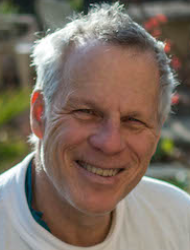 Nicholas Michael Asher合作论文数Institut en Informatique de Toulouse, Universit´e Paul Sabatier6
 Michael Mackert合作论文数5Rew Lynn合作论文数5stephen h phillips合作论文数4Josh Dever合作论文数4Champlin Sara合作论文数Stan Richards School of Advertising and Public Relations, The University of Texas at Austin2David Sosa合作论文数Department of Philosophy, University of Texas at Austin2T. K. Seung合作论文数2
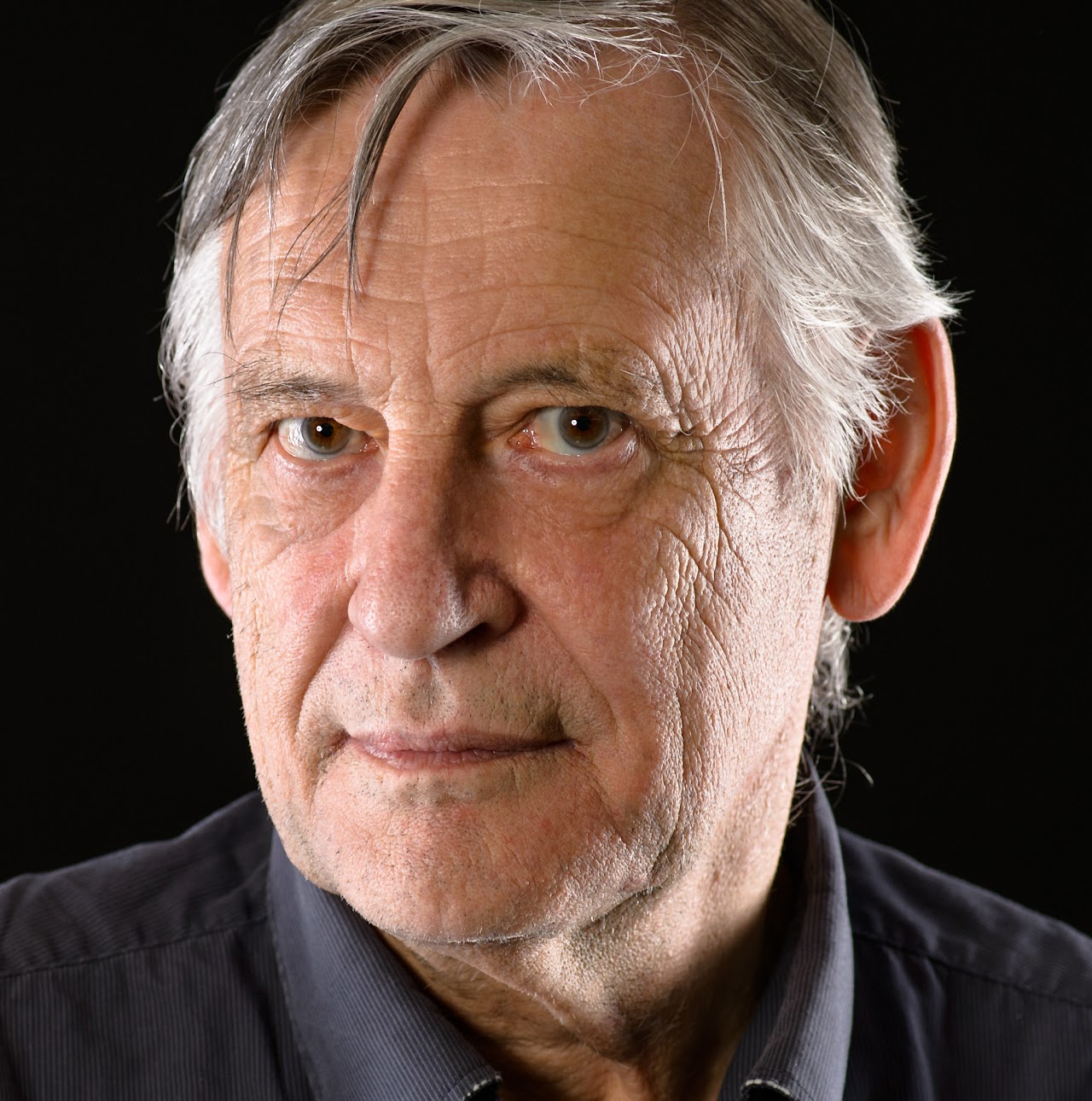 Hans Kamp合作论文数Institute for Natural Language Processing, University of Stuttgart1
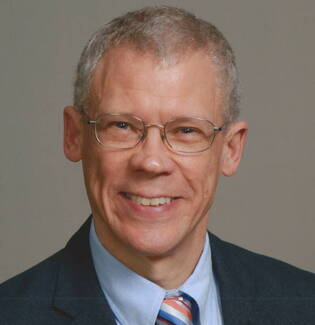 Rob Koons合作论文数Department of Philosophy, College of Liberal Arts, University of Texas at Austin1
 Purushottama Bilimoria合作论文数College of Arts and Sciences, University of San Francisco1




