We present a set of fault injection experiments performed on the ACES (LANL/SNL) Cray XE supercomputer Cielo. We use this experimental campaign to improve the understanding of failure causes and propagation that we observed in the field failure data analysis of NCSA's Blue Waters. We use the data collected from the logs and from network performance counter data 1) to characterize the fault-error-failure sequence and recovery mechanisms in the Gemini network and in the Cray compute nodes, 2) to understand the impact of failures on the system and the user applications at different scale, and 3) to identify and recreate fault scenarios that induce unrecoverable failures, in order to create new tests for system and application design. The faults were injected through special input commands to bring down network links, directional connections, nodes, and blades. We present extensions that will be needed to apply our methodologies of injection and analysis to the Cray XC (Aries) systems.
This paper demonstrates attack induced common-mode failures on an industrial-grade (Tricon) Triple-Modular-Redundant PLC (programmable logic controller) and its impact in a Nuclear Power Plant settings. The attack exploits the fact that during the configuration phase the same control logic is downloaded to all three redundant modules. We describe how an attacker can exploit this vulnerability to embed malicious control logic and how to trigger the attack. The feasibility and the attack impact are evaluated on a testbed, which includes the Tricon PLC as part of a safety protection system in a simulated nuclear power plant.
This work presents a software and hardware framework for a telerobotic surgery safety and motor skill training simulator. The aims are at providing trainees a comprehensive simulator for acquiring essential skills to perform telerobotic surgery. Existing commercial robotic surgery simulators lack features for safety training and optimal motion planning, which are critical factors in ensuring patient safety and efficiency in operation. In this work, we propose a hardware-in-the-loop simulator directly introducing these two features. The proposed simulator is built upon the Raven-II™ open source surgical robot, integrated with a physics engine and a safety hazard injection engine. Also, a Fast Marching Tree-based motion planning algorithm is used to help trainee learn the optimal instrument motion patterns. The main contributions of this work are (1) reproducing safety hazards events, related to da Vinci™ system, reported to the FDA MAUDE database, with a novel haptic feedback strategy to provide feedback to the operator when the underlying dynamics differ from the real robot’s states so that the operator will be aware and can mitigate the negative impact of the safety-critical events, and (2) using motion planner to generate semioptimal path in an interactive robotic surgery training environment.
Today's cyber-physical systems (CPSs) can have very different characteristics in terms of control algorithms, configurations, underlying infrastructure, communication protocols, and real-time requirements. Despite these variations, they all face the threat of malicious attacks that exploit the vulnerabilities in the cyber domain as footholds to introduce safety violations in the physical processes. In this paper, we focus on a class of attacks that impact the physical processes without introducing anomalies in the cyber domain. We present the common challenges in detecting this type of attacks in the contexts of two very different CPSs (i.e., power grids and surgical robots). In addition, we present a general principle for detecting such cyber-physical attacks, which combine the knowledge of both cyber and physical domains to estimate the adverse consequences of malicious activities in a timely manner.
This paper presents a simulation-based safety training simulator for robot assisted surgery. While adverse events occur rarely during training, they could be fatal to the patients if they happen during real surgical procedures and are not handled properly by the surgical team. In this work we propose a hardware-in-the-loop robotic surgery simulator with high fidelity of the robot motion in a simulated environment, which is capable of reproducing adverse events during surgery. The proposed simulator is built upon the Raven-II open source surgical robot, integrated with a simulated surgeon console and a safety hazard injection engine, which automatically injects faults into modules of the robot control software. We simulate representative safety hazards seen in the adverse events, related to da Vinci™ robot, reported to the FDA MAUDE database. A novel haptic feedback strategy is provided to the operator when the underlying dynamics differ from the real robot states.
This paper demonstrates targeted cyber-physical attacks on teleoperated surgical robots. These attacks exploit vulnerabilities in the robot's control system to infer a critical time during surgery to drive injection of malicious control commands to the robot. We show that these attacks can evade the safety checks of the robot, lead to catastrophic consequences in the physical system (e.g., sudden jumps of robotic arms or system's transition to an unwanted halt state), and cause patient injury, robot damage, or system unavailability in the middle of a surgery. We present a model-based analysis framework that can estimate the consequences of control commands through real-time computation of robot's dynamics. Our experiments on the RAVEN II robot demonstrate that this framework can detect and mitigate the malicious commands before they manifest in the physical system with an average accuracy of 90%.
Robotic surgical systems are among the most complex medical cyber-physical systems on the market. Despite significant improvements in design of those systems through the years, there have been ongoing occurrences of safety incidents that negatively impact patients during procedures. This paper presents an approach for systems-theoretic safety assessment of robotic telesurgical systems using software-implemented fault injection. We used a systems-theoretic hazard analysis technique (STPA) to identify the potential safety hazard scenarios and their contributing causes in RAVEN II, an open-source telerobotic surgical platform. We integrated the robot control software with a software-implemented fault injection engine that measures the resilience of system to the identified hazard scenarios by automatically inserting faults into different parts of the software. Representative hazard scenarios from real robotic surgery incidents reported to the U.S. Food and Drug Administration (FDA) MAUDE database were used to demonstrate the feasibility of the proposed approach for safety-based design of robotic telesurgical systems.
This paper presents a simulation framework for recreating the realistic safety hazard scenarios commonly observed in robotic surgical systems, which can be used to prepare surgical trainees for handling safety-critical events during procedures. The proposed simulation platform is composed of a surgical simulator based on an open-source surgical robot platform, Raven II, integrated with a software-based fault-injection engine, which automatically inserts faults into different modules of the robotic software. We demonstrate the value of software-based fault injection for simulating representative safety hazards seen in the adverse events reported to the FDA MAUDE database, by performing experiments both in simulation and on the actual Raven II robot.
We present CloudVal, a framework to validate the reliability of virtualization environment in cloud computing infrastructure. A case study, based on injecting faults in the KVM hypervisor and XEN hypervisor, was conducted to show the viability of the framework. The study shows that due to the architectural differences between KVM and XEN, a direct comparison of the two virtualization systems is not feasible. In order to confidently weigh error resiliency of virtualization systems, more comprehensive studies are required. We believe, however, that the fault injection approach and the fault models proposed in this thesis are a good starting point towards designing and implementing a benchmark which would enable the assessment of different virtualization infrastructures in a common manner.
With the advent of modern technologies, microprocessor-based devices are used to monitor and control critical infrastructures, e.g., electric power grids, oil and gas distribution. However, the security and reliability of these microprocessor-based systems is a significant issue, since they are more susceptible to transient errors and malicious attacks. An error in one of these systems could have a cascading and catastrophic impact on the whole infrastructure. This paper explores the error resiliency of power grid substation devices. A software-implemented fault injection technique is used to induce errors/faults inside devices used in power grid substations. The goal is to test the ability of these systems to compute through errors/faults. Our results demonstrate that a single error in a substation device may render the operator in the control center unable to control the operation of a relay in the substation.
This paper proposes a novel technique for preventing a wide range of data errors from corrupting the execution of applications. The proposed technique enables automated derivation of fine-grained, application-specific error detectors based on dynamic traces of application execution. The technique derives a set of error detectors using rule-based templates to maximize the error detection coverage for the application. A probability model is developed to guide the choice of the templates and their parameters for error-detection. The paper also presents an automatic framework for synthesizing the set of detectors in hardware to enable low-overhead, runtime checking of the application. The coverage of the derived detectors is evaluated using fault-injection experiments, while the performance and area overheads of the detectors are evaluated by synthesizing them on reconfigurable hardware.
We present CloudVal, a framework to validate the reliability of virtualization environment in Cloud Computing infrastructure. A case study, based on injecting faults in the KVM hypervisor and Xen hypervisor, was conducted to show the viability of the framework. The study shows that due to the architectural differences between KVM and Xen, a direct comparison of the two virtualization systems is not feasible. In order to confidently weigh error resiliency of virtualization systems, more comprehensive studies are required. We believe, however, that the fault injection approach and the fault models proposed in this paper are a good starting point towards designing and implementing a benchmark which would enable the assessment of different virtualization infrastructures in a common manner.
This paper presents an approach to conducting experimental studies for the characterization and comparison of the error behavior in different computing systems. The proposed approach is applied to characterize and compare the error behavior of three commercial systems (Linux 2.6 on Pentium 4, Solaris 10 on UltraSPARC IIIi, and AIX 5.3 on POWER 5) under hardware transient faults. The data is obtained by conducting extensive fault injection into kernel code, kernel stack, and system registers with the NFTAPE framework while running the Apache Web server as a workload. The error behavior comparison shows that the Linux system has the highest average crash latency, the Solaris system has the highest hang rate, and the AIX system has the lowest error sensitivity and the least amount of crashes in the more severe categories.
 Zbigniew T. Kalbarczyk合作论文数Coordinated Science Laboratory, The Grainger College of Engineering, University of Illinois at Urbana-Champaign;Department of Electrical and Computer Engineering, The Grainger College of Engineering, University of Illinois at Urbana-Champaign15
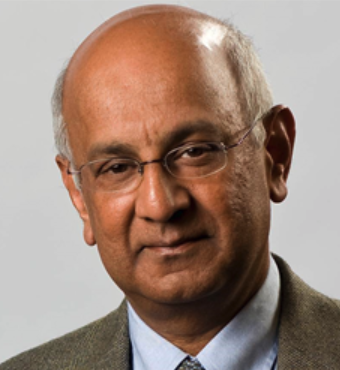 Ravishankar K Iyer合作论文数Departments of Electrical & Computer Engineering, The Grainger College of Engineering, University of Illinois Urbana-Champaign;Armored Computing, Inc.;Center for Reliable and High-Performance Computing, University of Illinois at Urbana-Champaign14
 Homa Alemzadeh合作论文数School of Engineering, University of Tehran7
 Xiao Li合作论文数3Yongkyu An合作论文数2
 Hui Lin合作论文数2Jason Repik合作论文数1Jaishankar Raman合作论文数1Amanda Bonnie合作论文数1Mike Mason合作论文数1Mike Showerman合作论文数1Saurabh Jha合作论文数Department of Radiology, Perelman School of Medicine, University of Pennsylvania1
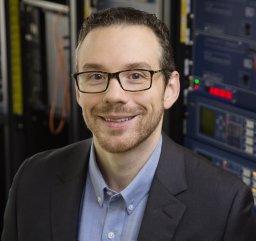 Tim Yardley合作论文数1
 Andrew Lewis合作论文数1
 Jim M. Brandt合作论文数1Fei Deng合作论文数1
 Greiner Annette合作论文数UC Berkeley School of Information1
 William H. Sanders合作论文数Department of Electrical and Computer Engineering, College of Engineering, Carnegie Mellon University;Discovery Partners Institute, University of Illinois System;Department of Electrical and Computer Engineering, University of Illinois Urbana-Champaign;Advanced Digital Sciences Center, University of Illinois Urbana-Champaign;Information Trust Institute, University of Illinois Urbana-Champaign;Coordinated Science Laboratory, University of Illinois Urbana-Champaign;Department of Computer Science, University of Illinois Urbana-Champaign1Thenkurussi Kesavadas合作论文数Dept. of Mechanical and Aerospace Engineering, University at Buffalo1Giacinto Paolo Saggese合作论文数1 Kuan-Yu Tseng合作论文数1
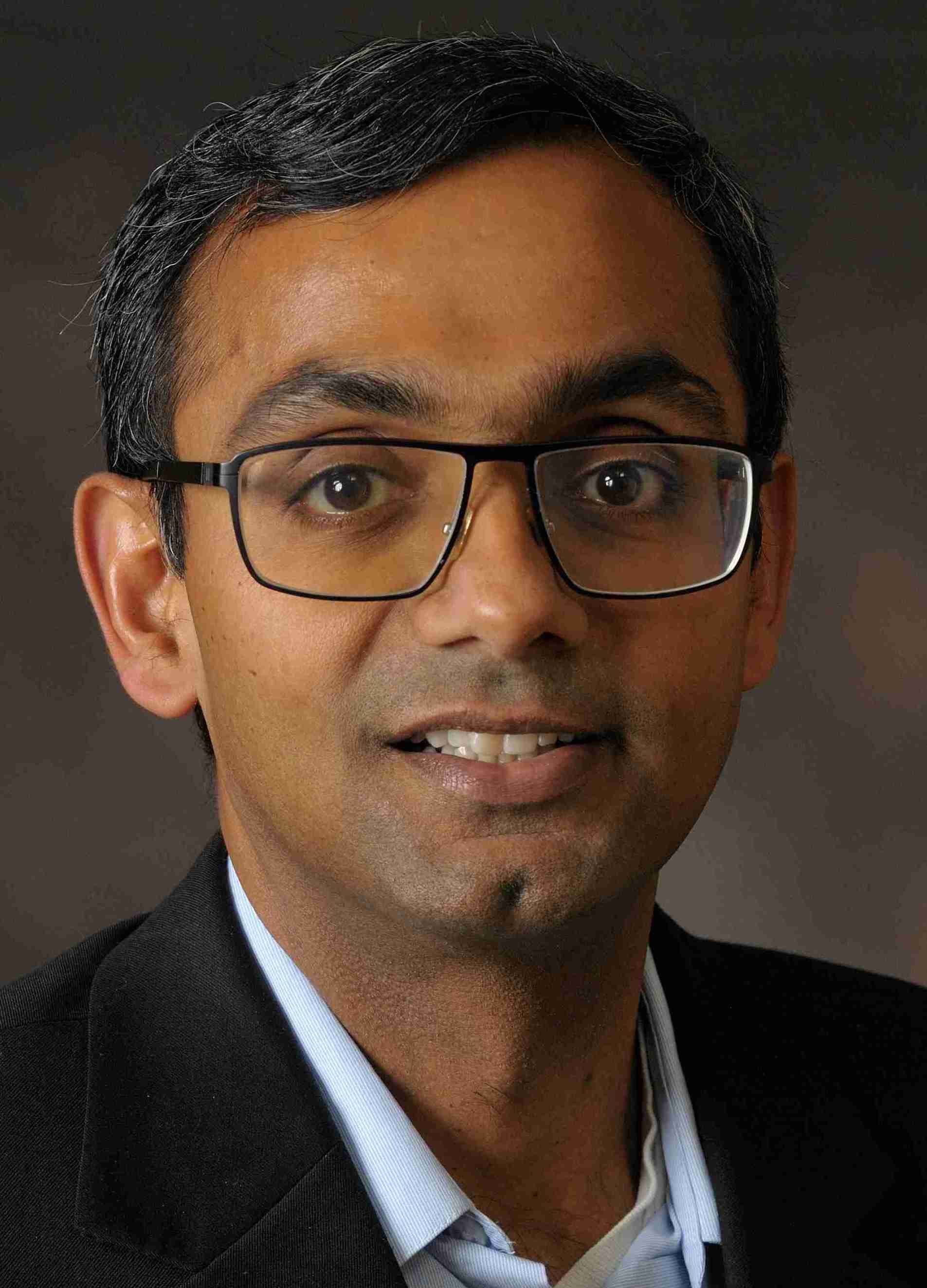 Karthik Pattabiraman合作论文数Department of Electrical and Computer Engineering, Faculty of Applied Science, The University of British Columbia1
 Nancy Leveson合作论文数Engineering Systems Laboratory, Department of Aeronautics and Astronautics, Massachusetts Institute of Technology1
 Cuong Manh Pham合作论文数University of Illinois at Urbana-Champaign1
 Rizwan Uddin合作论文数Department of Nuclear,Plasma and Radiological Engineering,University of Illinois at Urbana-Champaign1Ann C. Gentile合作论文数Sandia National Laboratories1
 Valerio Formicola合作论文数Università degli Studi di Napoli "Parthenope"1
 Larry Kaplan合作论文数Cray Inc.1
 Jeremy Enos合作论文数1
 Gabriela Jacques-Silva合作论文数1




