We present a set of fault injection experiments performed on the ACES (LANL/SNL) Cray XE supercomputer Cielo. We use this experimental campaign to improve the understanding of failure causes and propagation that we observed in the field failure data analysis of NCSA's Blue Waters. We use the data collected from the logs and from network performance counter data 1) to characterize the fault-error-failure sequence and recovery mechanisms in the Gemini network and in the Cray compute nodes, 2) to understand the impact of failures on the system and the user applications at different scale, and 3) to identify and recreate fault scenarios that induce unrecoverable failures, in order to create new tests for system and application design. The faults were injected through special input commands to bring down network links, directional connections, nodes, and blades. We present extensions that will be needed to apply our methodologies of injection and analysis to the Cray XC (Aries) systems.
We explore the performance cost of virtualisation for the fast growing application domain of genomics. Traditionally, scientific applications have been considered too high-performance to pay the performance cost of virtualisation. However, as the demand for computing power for genomics is ever-increasing, the cloud can become an attractive way to meet the scaling challenge presented by Next-Generation Sequencing (NGS). We seek to explore the feasibility of running an NGS pipeline in a cloud, and in doing so consider two prevalent short-read sequence alignment programs, BWA and Novoalign. We executed those applications in three separate open-source system virtualisation solutions: the KVM hypervisor, the Xen para-virtualised hypervisor, and Linux Containers. We compare the runtime in each environment against the runtime of the same system without virtualisation and measure the relative performance of each hypervisor. We investigate and reduce as much as possible any overhead, presenting tuning suggestions for cloud implementers and users. Overall, we find that the overhead introduced by virtualisation can be reduced to low single-digit percentages, a cost we believe to be more than acceptable, especially given that two of the three solutions, Xen and Containers, exhibit near-zero overhead.
Many current VM monitoring approaches require guest OS modifications and are also unable to perform application level monitoring, reducing their value in a cloud setting. This paper introduces hprobes, a framework that allows one to dynamically monitor applications and operating systems inside a VM. The hprobe framework does not require any changes to the guest OS, which avoids the tight coupling of monitoring with its target. Furthermore, the monitors can be customized and enabled/disabled while the VM is running. To demonstrate the usefulness of this framework, we present three sample detectors: an emergency detector for a security vulnerability, an application watchdog, and an infinite-loop detector. We test our detectors on real applications and demonstrate that those detectors achieve an acceptable level of performance overhead with a high degree of flexibility.
 Zbigniew T. Kalbarczyk合作论文数Coordinated Science Laboratory, The Grainger College of Engineering, University of Illinois at Urbana-Champaign;Department of Electrical and Computer Engineering, The Grainger College of Engineering, University of Illinois at Urbana-Champaign4
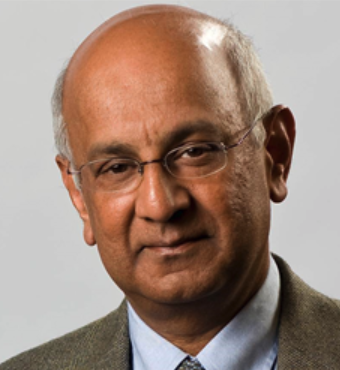 Ravishankar K Iyer合作论文数Departments of Electrical & Computer Engineering, The Grainger College of Engineering, University of Illinois Urbana-Champaign;Armored Computing, Inc.;Center for Reliable and High-Performance Computing, University of Illinois at Urbana-Champaign4
 Zachary Estrada合作论文数3
 Cuong Manh Pham合作论文数University of Illinois at Urbana-Champaign3Lok Yan合作论文数Air Force Research Laboratory, Information Directorate in Rome2Jason Repik合作论文数1Gary Wang合作论文数1Amanda Bonnie合作论文数1Mike Mason合作论文数1Mike Showerman合作论文数1Saurabh Jha合作论文数Department of Radiology, Perelman School of Medicine, University of Pennsylvania1
 Jim M. Brandt合作论文数1Zachary Stephens合作论文数1
 Daniel Chen合作论文数1
 Jingwei Huang (黄经纬)合作论文数Tencent1
 Greiner Annette合作论文数UC Berkeley School of Information1
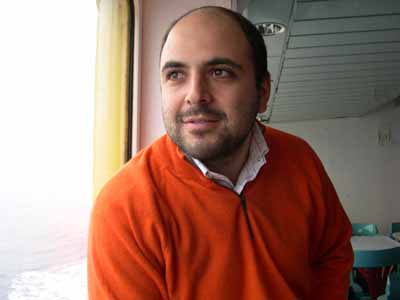 Domenico Cotroneo合作论文数University of Napoli Federico II;Computer Engineering ;Dipartimento di Informatica e Sistemistica1
 Jun Ho Huh合作论文数Samsung Electronics1
 Antonio Pecchia合作论文数Università degli Studi di Napoli Federico II1Ann C. Gentile合作论文数Sandia National Laboratories1
 Valerio Formicola合作论文数Università degli Studi di Napoli "Parthenope"1
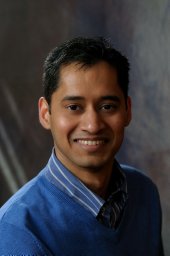 Rakesh Bobba合作论文数College of Engineering, Oregon State University;School of Electrical Engineering and Computer Science, Oregon State University;Oregon Cybresecurity Center of Excellence1
 Larry Kaplan合作论文数Cray Inc.1
 Aashish Sharma合作论文数Lawrence Berkeley National Laboratory1
 Jeremy Enos合作论文数1
 David M. Nicol合作论文数Advanced Digital Sciences Centre, University of Illinois at Urbana-Champaign;Critical Infrastructure Resilience Institute, University of Illinois at Urbana-Champaign;Information Trust Institute, University of Illinois at Urbana-Champaign1




