We present an analysis of seeing, temperature, humidity and wind speed measurements taken over the last ten years with the MaunaKea Atmospheric Monitor (MKAM) located at the summit of Maunakea. The instrument has been functional since 2009, taking several measurements of seeing every night it was in operation. It was graciously provided to the Maunakea Observatories by the Thirty Meter Telescope (TMT). We also report on seasonal and long term trends of weather and seeing and explore the influence of the El Nino Southern Oscillation (ENSO) on temperature and seeing variation at the summit of Maunakea.
In May 2019 SpaceX launched its first batch of 60 Starlink communication satellites, which surprised astronomers and laypeople with their appearance in the night sky. Astronomers have only now, a little over a year later, accumulated enough observations of constellation satellites like those being launched by SpaceX and OneWeb, and run computer simulations of their likely impact when fully deployed, to thoroughly understand the magnitude and complexity of the problem. This research informed the discussion at the Satellite Constellations 1 (SATCON1) workshop held virtually 29 June to 2 July 2020 and led to recommendations for observatories and constellation operators. The SATCON1 report concludes that the effects on astronomical research and on the human experience of the night sky range from "negligible" to "extreme."
(Abridged) The Maunakea Spectroscopic Explorer (MSE) is an end-to-end science platform for the design, execution and scientific exploitation of spectroscopic surveys. It will unveil the composition and dynamics of the faint Universe and impact nearly every field of astrophysics across all spatial scales, from individual stars to the largest scale structures in the Universe. Major pillars in the science program for MSE include (i) the ultimate Gaia follow-up facility for understanding the chemistry and dynamics of the distant Milky Way, including the outer disk and faint stellar halo at high spectral resolution (ii) galaxy formation and evolution at cosmic noon, via the type of revolutionary surveys that have occurred in the nearby Universe, but now conducted at the peak of the star formation history of the Universe (iii) derivation of the mass of the neutrino and insights into inflationary physics through a cosmological redshift survey that probes a large volume of the Universe with a high galaxy density. MSE is positioned to become a critical hub in the emerging international network of front-line astronomical facilities, with scientific capabilities that naturally complement and extend the scientific power of Gaia, the Large Synoptic Survey Telescope, the Square Kilometer Array, Euclid, WFIRST, the 30m telescopes and many more.
We present the first optical identification and confirmation of a sample of supernova remnants (SNRs) in the nearby galaxy NGC 3344. Using high spectral and spatial resolution data, obtained with the CFHT imaging Fourier transform spectrograph SITELLE, we identified about 2200 emission line regions, many of which are H ii regions, diffuse ionized gas regions, and also SNRs. Considering the stellar population and diffuse ionized gas background, which are quite important in NGC 3344, we have selected 129 SNR candidates based on four criteria for regions where the emission lines flux ratio [S ii]/H α ≥ 0.4. Emission lines of [O ii] λ3727, H β, [O iii] λλ4959,5007, H α, [N ii] λλ6548,6583, and [S ii] λλ6716,6731 have been measured to study the ionized gas properties of the SNR candidates. We adopted a self-consistent spectroscopic analysis, based on Sabbadin plots and Baldwin, Phillips & Terlevich diagrams, to confirm the shock-heated nature of the ionization mechanism in the candidates sample. With this analysis, we end up with 42 Confirmed SNRs, 45 Probable SNRs, and 42 Less likely SNRs. Using shock models, the confirmed SNRs seem to have a metallicity ranging between Large Magellanic Cloud and 2×solar. We looked for correlations between the size of the confirmed SNRs and their emission lines ratios, their galaxy environment, and their galactocentric distance: We see a trend for a metallicity gradient among the SNR population, along with some evolutionary effects.
We present O CAESAR, the Optical CAtalogue of Extragalactic SupernovA Remnants. O CAESAR will provide the largest homogeneous optical survey of extragalactic SNR candidates taken by the same telescope, the same instrument, and under similar observational conditions. Our sample is volume-limited (D $\leq$ 10 Mpc) and includes mostly galaxies ($\sim$40) from the Large Program SIGNALS. The Observations are carried out using SITELLE, the imaging Fourier transform spectrograph of the Canada-France-Hawaii Telescope. Using three filters, we are able to measure the strong emission lines [O II]$\lambda$3727, H$\beta$, [O III]$\lambda\lambda$4959,5007, H$\alpha$, [N II]$\lambda\lambda$6548,6583, and [S II]$\lambda\lambda$6716,6731. Identification of the SNR candidates will be done automatically and will be based on four criteria for regions where the emission lines flux ratio [S II]/H$\alpha$ $\ge$ 0.4. To confirm the shock-heated nature of the ionization mechanism in the candidates derived from our sample, we adopted a self-consistent spectroscopic analysis using the whole set of emission lines available with our SITELLE data and considering Sabbadin plots and BPT diagrams. We here present our method and first results for the spiral galaxy NGC 3344.
Optimizing the night time is essential on a site like Maunakea. The mountain offers excellent weather conditions that can be used to observe more programs than most sites in the world. CFHT has been making significant efforts toward optimal usage of the night time, starting in 2000 with the implementation of the Queued Service Observing (QSO) system followed by the installation of the dome vents in 2012 and lastly, the implementation of the Signal to Noise Ratio (SNR) observing mode in 2013. The QSO-SNR mode is now used by default at CFHT for two of our instruments: MegaCam, a one square degree imager, and ESPaDOnS, a high resolution spectropolarimeter. This paper describes the implementation strategy for each instrument as well as the time saved using this observing mode.
(Abridged) This is the Maunakea Spectroscopic Explorer 2018 book. It is intended as a concise reference guide to all aspects of the scientific and technical design of MSE, for the international astronomy and engineering communities, and related agencies. The current version is a status report of MSE's science goals and their practical implementation, following the System Conceptual Design Review, held in January 2018. MSE is a planned 10-m class, wide-field, optical and near-infrared facility, designed to enable transformative science, while filling a critical missing gap in the emerging international network of large-scale astronomical facilities. MSE is completely dedicated to multi-object spectroscopy of samples of between thousands and millions of astrophysical objects. It will lead the world in this arena, due to its unique design capabilities: it will boast a large (11.25 m) aperture and wide (1.52 sq. degree) field of view; it will have the capabilities to observe at a wide range of spectral resolutions, from R2500 to R40,000, with massive multiplexing (4332 spectra per exposure, with all spectral resolutions available at all times), and an on-target observing efficiency of more than 80 designed to excel at precision studies of faint astrophysical phenomena. It will also provide critical follow-up for multi-wavelength imaging surveys, such as those of the Large Synoptic Survey Telescope, Gaia, Euclid, the Wide Field Infrared Survey Telescope, the Square Kilometre Array, and the Next Generation Very Large Array.
MSE is an 11.25m aperture observatory with a 1.5 square degree field of view that will be fully dedicated to multi-object spectroscopy. More than 3200 fibres will feed spectrographs operating at low (R ~ 2000 - 3500) and moderate (R ~ 6000) spectral resolution, and approximately 1000 fibers will feed spectrographs operating at high (R ~ 40000) resolution. MSE is designed to enable transformational science in areas as diverse as tomographic mapping of the interstellar and intergalactic media; the in-situ chemical tagging of thick disk and halo stars; connecting galaxies to their large scale structure; measuring the mass functions of cold dark matter sub-halos in galaxy and cluster-scale hosts; reverberation mapping of supermassive black holes in quasars; next generation cosmological surveys using redshift space distortions and peculiar velocities. MSE is an essential follow-up facility to current and next generations of multi-wavelength imaging surveys, including LSST, Gaia, Euclid, WFIRST, PLATO, and the SKA, and is designed to complement and go beyond the science goals of other planned and current spectroscopic capabilities like VISTA/4MOST, WHT/WEAVE, AAT/HERMES and Subaru/PFS. It is an ideal feeder facility for E-ELT, TMT and GMT, and provides the missing link between wide field imaging and small field precision astronomy. MSE is optimized for high throughput, high signal-to-noise observations of the faintest sources in the Universe with high quality calibration and stability being ensured through the dedicated operational mode of the observatory. (abridged)
In an effort to optimize the night time utilizing the exquisite weather on Maunakea, CFHT has equipped its dome with vents and is now moving its Queued Scheduled Observing (QSO)1 based operations toward Signal to Noise Ratio (SNR) observing. In this new mode, individual exposure times for a science program are estimated using a model that uses measurements of the weather conditions as input and the science program is considered completed when the depth required by the scientific requirements are reached. These changes allow CFHT to make better use of the excellent seeing conditions provided by Maunakea, allowing us to complete programs in a shorter time than allocated to the science programs.
The SITELLE Imaging Fourier Transform Spectrometer was successfully commissioned at the Canada France Hawaii Telescope starting in July 2015. Here we discuss the commissioning process, the outcome of the early tests on-sky as well as the ensuing work to optimize the modulation efficiency at large optical path difference and the image quality of the instrument.
The Maunakea Spectroscopic Explorer (MSE; formerly ngCFHT) will be a large format wide field spectroscopic facility that replaces the existing 3.6 m Canada-France-Hawaii Telescope. Capable of recording tens of thousands of spectra on faint targets each night, and sustain that pace for years, MSE will be an ideal complement to emerging space- and ground-based imaging survey facilities. The combination of aperture, spectral resolution, and dedicated access to support large surveys makes MSE distinct from any other facilities under development or being planned. We provide an overview of the MSE technical design, organization of the project office, and the core science goals that will help drive MSE for decades.
OPERA is a Canada-France-Hawaii Telescope (CFHT) open source collaborative software project currently under development for an ESPaDOnS echelle spectro-polarimetric image reduction pipeline. OPERA is designed to be fully automated, performing calibrations and reduction, producing one-dimensional intensity and polarimetric spectra. The calibrations are performed on two-dimensional images. Spectra are extracted using an optimal extraction algorithm. While primarily designed for CFHT ESPaDOnS data, the pipeline is being written to be extensible to other echelle spectrographs. A primary design goal is to make use of fast, modern object-oriented technologies. Processing is controlled by a harness, which manages a set of processing modules, that make use of a collection of native OPERA software libraries and standard external software libraries. The harness and modules are completely parametrized by site configuration and instrument parameters. The software is open- ended, permitting users of OPERA to extend the pipeline capabilities. All these features have been designed to provide a portable infrastructure that facilitates collaborative development, code re-usability and extensibility. OPERA is free software with support for both GNU/Linux and MacOSX platforms. The pipeline is hosted on SourceForge under the name "opera-pipeline".
A concept study is underway to upgrade the existing 3.6 meter Canada-France-Hawaii Telescope (CFHT) to a 10 meter class, wide-field, dedicated, spectroscopic facility, which will be the sole astronomical resource capable of obtaining deep, spectroscopic follow-up data to the wealth of photometric and astrometric surveys planned for the next decade, and which is designed to tackle driving science questions on the formation of the Milky Way galaxy and the characterization and nature of dark energy. This unique facility will operate at low (R ∼ 2000), intermediate (R ∼ 6000) and high (R ∼ 20000) resolutions over the wavelength range 370 ≤ λ≤ 1300nm, and will obtain up to 3200 simultaneous spectra per pointing over a 1.5 square degree field. Unlike all other proposed or planned wide field spectroscopic facilities, this “Next Generation CFHT” will combine the power of a 10m aperture with exquisite observing conditions and a mandate for dedicated spectroscopic studies to enable transformative science programs in fields as diverse as exoplanetary host characterization, the interstellar medium, stars and stellar astrophysics, the Milky Way galaxy, the Local Group, nearby galaxies and clusters, galaxy evolution, the inter-galactic medium, dark energy and cosmology. A new collaboration must be formed to make this necessary facility into a reality, and currently nearly 60 scientists from 11 different communities - Australia, Brazil, Canada, China, France, Hawaii, India, Japan, South Korea, Taiwan, USA - are involved in defining the science requirements and survey strategies. Here, we discuss the origins of this project, its motivations, the key science and its flow-down requirements. An accompanying article describes the technical studies completed to date. The final concept study will be submitted to the CFHT Board and Science Advisory Committee in Fall 2012, with first light for the facility aiming to be in the early 2020s.
 James R. Houck合作论文数Cornell University51
 Vassilis Charmandaris合作论文数Department of Physics, University of Crete37
 Bernhard R. Brandl合作论文数Department of Space Engineering, Faculty of Aerospace Engineering, Delft University of Technology36
 Gregory C. Sloan合作论文数Space Telescope Science Institute31
 Lee Armus合作论文数IPAC, Division of Physics, Mathematics and Astronomy, California Institute of Technology30
 Jeronimo Bernard-Salas合作论文数Department of Space Sciences, ACRI-ST;INCLASS22
 Daniel W Weedman合作论文数20
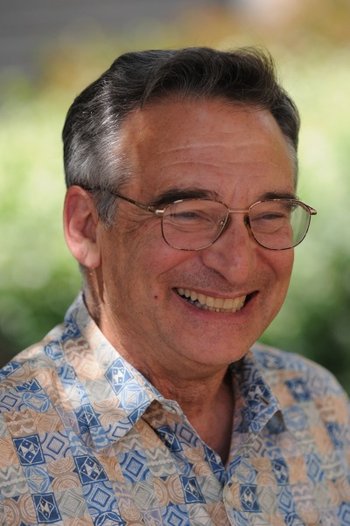 B. T. Soifer合作论文数The Division of Physics, Mathematics and Astronomy, California Institute of Technology20J. Bernard Salas合作论文数16
 Henrik Spoon合作论文数Dept Astron, Cornell Univ16
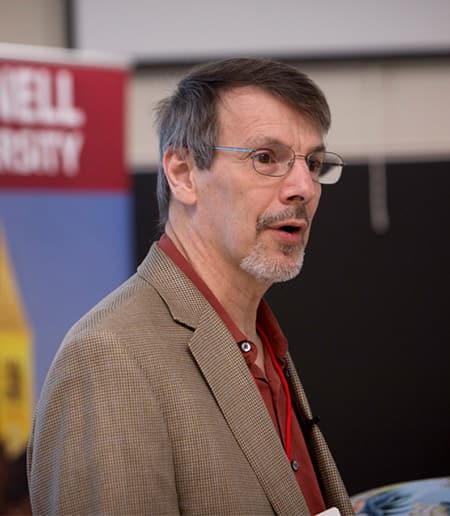 Terry Herter合作论文数College of Arts and Sciences, Cornell University16Philip N Appleton合作论文数15
 Harry I. Teplitz合作论文数Ipac13James Higdon合作论文数13
 Carl J. Grillmair合作论文数Spitzer Science Center, California Institute of Technology;Infrared Processing & Analysis Center, California Institute of Technology12
 Vianney Lebouteiller合作论文数Laboratoire AIM;Université Paris-Saclay;Université Paris Cité11J. Van Cleve合作论文数10Keven Isao Uchida合作论文数9
 Martin Burgdorf合作论文数Deutsch SOFIA Inst, Univ Stuttgart9Dj Barry合作论文数8
 Lei Hao (郝蕾)合作论文数Shanghai Astronomical Observatory, Chinese Academy of Sciences;University of Chinese Academy of Sciences8Yanling Wu合作论文数8
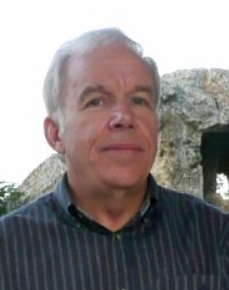 Peter R Wood合作论文数Research School of Astronomy and Astrophysics, Australian National University8Laurent Drissen合作论文数8Kathleen E. Kraemer合作论文数8Sju Higdon合作论文数7
 Patrick W. Morris合作论文数Infrared Processing and Analysis Center, California Institute of Technology;Jet Propulsion Laboratory, NASA7J. A. Marshall合作论文数7David G. Whelan合作论文数7
 Alan W. Mcconnachie合作论文数NRC Herzberg Astronomy and Astrophysics/Department of Physics and Astronomy, University of Victoria7
 Albert Zijlstra合作论文数Labooratory for Space Research, The University of Hong Kong7john r troeltzsch合作论文数6Billy Mahoney合作论文数6
 Duncan Farrah合作论文数Department of Physics & Astronomy, University of Hawai'i at Manoa6yinan wu合作论文数5
 Dale Cruikshank合作论文数Astrophysics Branch, Ames Research Center, National Aeronautics and Space Administration5
 Patrick B. Hall合作论文数Department of Physics and Astronomy, Faculty of Science, York University5
 D. Crampton合作论文数5
 Claus Leitherer合作论文数Space Telescope Science Institute5James Lloyd Higdon合作论文数5Todd Burdullis合作论文数5Harold Reitsema合作论文数Southwest Research Institute5
 Thomas L. Roellig合作论文数NASA Ames Research Center5
 James Ingalls合作论文数5V. Desai合作论文数5Carmelle Robert合作论文数5HWW Spoon合作论文数4S. B. Fajardo‐Acosta合作论文数4




