This study is the first empirical analysis of legal reasoning in trademark opposition proceedings in Switzerland. We examine a novel dataset on trademark opposition proceedings brought before the Swiss Federal Institute of Intellectual Property (IPI). In these proceedings, the likelihood of confusion between two (or more) trademarks is assessed based on the similarity of the trademark signs and the similarity of the goods and services, taking into account a series of additional aspects such as the distinctive character of the opposing trademark and the level of attention of the average consumer when buying the goods and services for which the earlier trademark is registered. Our dataset contains information on 2,453 cases relating to proceedings between June 2002 and August 2018. In particular, we examine which substantive factors drive the outcome of these decisions. Some of our findings call into question the established legal doctrine. For example, our data suggest that the importance of the beginning of words for establishing similarity between word marks is overrated by legal doctrine. Furthermore, our data show no clear influence of the level of attention on the assessment of the likelihood of confusion. Instead, we found striking differences between the success rates of different types of trademarks. In fact, the data reveal a sliding scale with word marks being the most successful trademarks followed by figurative trademarks that contain a word element, and purely figurative trademarks. Based on our empirical findings, we make suggestions on how to improve the legal reasoning when assessing the likelihood of confusion.
Interacting with knowledge graphs can be a daunting task for people without a background in computer science since the query language that is used (SPARQL) has a high barrier of entry. Large language models (LLMs) can lower that barrier by providing support in the form of Text2SPARQL translation. In this paper we introduce a generalized method based on SPINACH, an LLM backed agent that translates natural language questions to SPARQL queries not in a single shot, but as an iterative process of exploration and execution. We describe the overall architecture and reasoning behind our design decisions, and also conduct a thorough analysis of the agent behavior to gain insights into future areas for targeted improvements. This work was motivated by the Text2SPARQL challenge, a challenge that was held to facilitate improvements in the Text2SPARQL domain.
Sükösd–Árpás-dűlő V. lelőhelyen a bronzkori halomsíros kultúra különösen gazdag temetkezése került elő 2020- ban. Az azt követő ásatáson, 2021-ben a Türr István Múzeum munkatársai önkéntesek segítségével további 28 sírt tártak fel a lelőhelyen, melyek közül csak 12 (kilenc csontvázas és három hamvasztásos) sír tartalmazott leleteket. A többi esetben csak a sírok helyét sikerült azonosítani, mivel a sekély mélységben megtalált jelenségeket és leleteket a földművelés elpusztította. A tanulmányban a feltárt sírokból előkerült emberi maradványok komplex biorégészeti (embertani, stabilizotópos, archeogenetikai és radiokarbon) vizsgálatának, valamint az előkerült kőlelet, textil maradványok, malakológiai és talajminták eddig elvégzett archeometriai elemzésének eredményeit tesszük közzé.
This study examines the European Court of Human Rights’ (ECtHR) use of the canonical interpretation techniques (textual, systematic, historical, teleological) based on a novel comprehensive dataset of 8,436 judgments. We show that while interpretation techniques are used in about one-third of cases, the ECtHR often employs multiple methods simultaneously. Textual and teleological interpretation techniques emerged as the most commonly used, with systematic interpretation also being prevalent. Our findings indicate a discernible relationship between the type of rights being considered and the interpretation techniques employed by the ECtHR to construct arguments about rights. Additionally, the study sheds light on the Court’s interpretive choices: in general, the use of interpretation techniques does not enhance the likelihood of a Convention rights violation being found. Textual interpretation may overlook broader social or policy implications and thus make judges less likely to recognize violations. On the other hand, systematic interpretation is negatively associated with the finding of a violation in justice-related rights but is positively associated with the finding of a violation in Convention articles related to ‘life and limb’. This suggests that the Court interprets the justice-related rights more narrowly when applying a systematic approach. The study forms a substantial foundation for further research into the nuanced dynamics of the ECtHR’s use of canonical interpretative techniques.
During the Early Medieval period, the Carpathian Basin witnessed substantial demographic shifts, notably under the Avar dominance for ~250 years, followed by the settlement of early Hungarians in the region during the late 9th century CE. This study presents the genetic analysis of 296 ancient samples, including 103 shotgun-sequenced genomes, from present-day Western Hungary. By using identity-by-descent segment sharing networks, this research offers detailed insights into the population structure and dynamics of the region from the 5th to 11th centuries CE, with specific focus on certain microregions. Our evaluations reveal spatially different histories in Transdanubia even between communities in close geographical proximity, highlighting the importance of dense sampling and analyses. Our findings highlight extensive homogenization and reorganization processes, as well as discontinuities between Hun, Avar, and Hungarian conquest period immigrant groups, alongside the spread and integration of ancestry related to the Hungarian conquerors.
Electrical motors need specific parametrizations to run in highly specialized use cases.However, finding such parametrizations may need a lot of time and expert knowledge.Furthermore, the task gets more complex as multiple optimization goals interplay.Thus, we propose a novel approach using Bayesian Optimization to find optimal configuration parameters for an electric motor.In addition, a multi-objective problem is present as two different and competing objectives must be optimized.At first, the motor must reach a desired revolution per minute as fast as possible.Afterwards, it must be able to continue running without fluctuating currents.For this task, we utilize Bayesian Optimization to optimize parameters.In addition, the evolutionary algorithm NSGA-II is used for the multi-objective setting, as NSGA-II is able to find an optimal pareto front.Our approach is evaluated using three different motors mounted to a test bench.Depending on the motor, we are able to find good parameters in about 60-100%.
A Kárpát-medence késő rézkori temetkezéseinek komplex elemzése és a MEC K_140620, Késő rézkori temetkezések a Kárpát-medencében -Régészeti és bioarchaeológiai elemzések új eredményei című pályázata Borító: Fent: mintavétel a HUN-REN BTK AGI-ban; réz karperec (Balatonlelle-
A magyarság eredete, vándorlási útvonala a mai napig intenzíven vizsgált kérdéskör, melyhez az utóbbi években jelentős mennyiségű új régészeti lelőhely vált ismertté. Kutatócsoportunk a feltételezett vándorlási útvonal kiemelt jelentőségű lelőhelyeiről származó 3/6‒14. századi populációkat vizsgál az Urál-régiótól a Kárpát-medencéig az archeogenetika eszköztárával. Jelen munkában hat – egymással és a korai magyarsággal régészeti vagy földrajzi kapcsolatot mutató – populációba tartozó 100 egyén archeogenetikai vizsgálatának eredményeit mutatjuk be. Vizsgálataink kiterjednek az anyai (mitokondriális DNS) és az apai leszármazási vonalak (Y-kromoszóma) elemzésére. Törekszünk mind az egyedek, mind a populációk között fennálló kapcsolatok felderítésére, ennek érdekében többféle módszerrel elemezzük a vizsgált egyének genetikai adatait. Eredményeink értékelése során felhasználjuk a nemzetközi szakirodalomban fellelhető közel összes archaikus mitokondriális genom adatot, különös figyelmet szentelve a Kárpát-medencei magyar honfoglalás kori adatoknak. Az általunk vizsgált populációk anyai vonalaikat tekintve rendkívül változatos összetételűek, a populációgenetikai elemzések során a kelet-, illetve nyugat-eurázsiai populációk között helyezkednek el. A csoportokat alkotó egyének vizsgálata során több esetben is szoros anyai kapcsolatot detektáltunk a vizsgált populációkon belül és azok között is. Több, a korai magyarokkal kapcsolatba hozható lelőhelyen is azonosítottunk egy olyan apai vonalat (N1a-M46), melyet kapcsolatba hoztak az uráli nyelveket beszélő népcsoportokkal, baskírokkal, sőt, a honfoglaló magyarok között is kimutatták a jelenlétét. A folyamatban lévő, testi kromoszómák változatosságára irányuló vizsgálataink eredményei, valamint a mintaszám növelése további információkkal szolgálnak majd a vizsgált populációkról, melynek hatására a következő években árnyaltabb képet kaphatunk az Urál vidéki kora középkori népmozgásokról, mely régió eddigi tudományos ismereteink szerint történeti, régészeti és nyelvészeti szempontból is felmerült a magyarok elődeinek eredetével kapcsolatban.
Az avar állam és a népesség egy részének ázsiai eredete a régészeti és írott források alapján a kutatásban széles körben elfogadott elmélet, azonban az őshazájuk pontosabb földrajzi elhelyezkedése a mai napig vitatott. Az újonnan érkező csoportok mellett az Avar Kaganátus 6-9. századi népessége nagyon heterogén képet mutatott, ám a Duna-Tisza közén találunk egy társadalmilag, anyagi kultúrájában és antropológiai jellegében is homogénnek tekinthető 7. századi csoportot, melyet a kutatás a politikai-katonai elittel azonosít. Tanulmányunkban e réteg – a Duna-Tisza-közi avar kori elit – genetikai vizsgálatával foglalkoztunk. Az anyai, illetőleg apai származási vonalak feltérképezésével leírtuk ennek a zárt közösségnek a társadalmi szerveződését, genetikai rokonsági kapcsolatokat állapítottunk meg a vizsgált populáción belül, valamint számos archaikus és modern populációval való összehasonlítás során közelebb jutottunk az avar elit eredet kérdésének a megválaszolásához.
Absztrakt Ebben a tanulmányban a Volga–Urál régió, valamint Nyugat-Szibéria magyar őstörténeti vonatkozású régészeti hagyatékát mutatjuk be. A humán csontanyag archeogenetikai vizsgálatával ezen közösségek, illetve a Kárpát-medence honfoglalás kori népességének kapcsolatrendszerét elemezzük. We present the archaeological findings of the Volga–Ural region and Western-Siberia in relation to Hungarian prehistory. Based on archaeogenetic analyses of the human remains, we discuss relationships between these populations and the Conquest Period Hungarians in the Carpathian Basin.
The complexity of Graphical User Interfaces (GUIs) in consumer applications such as home appliances has significantly risen in recent years. For example, the number of different views in the GUIs has increased from simple selection views to complex sub-menu structures. Alongside the development, both testing complexity and cost have risen drastically. A way of handling this increase is test automation by the use of machine learning algorithms. This work focuses on reinforcement learning-based autonomous grey-box monkey testing for consumer GUIs. As a monkey tester, a Deep Q-Network is interacting with the device under test. Experiments are performed on an oven GUI as well as on a desktop training environment. A known feature representation for monkey testing is compared to three alternative representations, as well as a random agent. A careful selection of the feature representation can improve the exploration performance. Empirical results for the autonomous exploration of GUIs show the usefulness of reinforcement learning-based monkey testing over pure random testing on consumer GUIs. This can lead to an efficiency advantage in practice, as pure random testing is often the status quo in many well-known GUI test-frameworks such as Squish.
Horse domestication is a key element in history for its impact on human mobility and warfare. There is clear evidence for horse control from the beginning of the 2 nd millennium BCE in the Carpathian Basin, when antler cheekpieces appear in the archaeological record mostly in the eastern areas. Previous archaeogenomic studies also revealed that the spread of the ancestors of modern day horses began at this time period, but the details of this event in Bronze Age Europe is yet to be uncovered. In this study we report a new shotgun genome (∼0.9x coverage) of a Middle Bronze Age horse (radiocarbon dated to 1740-1630 cal. BCE) from Tompa site, southern Hungary, along with six mitochondrial genomes from various sites from Late Copper Age to Early Bronze Age Western Hungary. Our results reveal a strong bottleneck among pre-domestication Carpathian Basin horses and delayed DOM2 introduction into the region compared to the surrounding areas. The population size reduction was most probably due to human mediated loss of natural habitat, but the practice of horsekeeping after the turn of the 2 nd millennium BCE can not be excluded based on the genomic data. Our results provide a complex history for horse domestication in the Central-European region, highlighting the need for further research to fully understand the extent and nature of human-horse interactions in this area throughout prehistory.
Here we present 115 whole mitogenomes and 92 Y-chromosomal Short Tandem Repeat (STR) and Single Nucleotide Polymorphism (SNP) profiles from a Hungarian ethnic group, the Székelys (in Romanian: Secuii, in German: Sekler), living in southeast Transylvania (Romania). The Székelys can be traced back to the 12th century in the region, and numerous scientific theories exist as to their origin. We carefully selected sample providers that had local ancestors inhabiting small villages in the area of Odorheiu Secuiesc/Székelyudvarhely in Romania. The results of our research and the reported data signify a qualitative leap compared to previous studies since it presents the first complete mitochondrial DNA sequences and Y-chromosomal profiles of 23 STRs from the region. We evaluated the results with population genetic and phylogenetic methods in the context of the modern and ancient populations that are either geographically or historically related to the Székelys. Our results demonstrate a predominantly local uniparental make-up of the population that also indicates limited admixture with neighboring populations. Phylogenetic analyses confirmed the presumed eastern origin of certain maternal (A, C, D) and paternal (Q, R1a) lineages, and, in some cases, they could also be linked to ancient DNA data from the Migration Period (5th–9th centuries AD) and Hungarian Conquest Period (10th century AD) populations.
In this study, we report 21 ancient shotgun genomes from present-day Western Hungary, from previously understudied Late Copper Age Baden, and Bronze Age Somogyvár-Vinkovci, Kisapostag, and Encrusted Pottery archeological cultures (3,530-1,620 cal Bce). Our results indicate the presence of high steppe ancestry in the Somogyvár-Vinkovci culture. They were then replaced by the Kisapostag group, who exhibit an outstandingly high (up to ∼47%) Mesolithic hunter-gatherer ancestry, despite this component being thought to be highly diluted by the time of the Early Bronze Age. The Kisapostag population contributed the genetic basis for the succeeding community of the Encrusted Pottery culture. We also found an elevated hunter-gatherer component in a local Baden culture-associated individual, but no connections were proven to the Bronze Age individuals. The hunter-gatherer ancestry in Kisapostag is likely derived from two main sources, one from a Funnelbeaker or Globular Amphora culture-related population and one from a previously unrecognized source in Eastern Europe. We show that this ancestry not only appeared in various groups in Bronze Age Central Europe but also made contributions to Baltic populations. The social structure of Kisapostag and Encrusted Pottery cultures is patrilocal, similarly to most contemporaneous groups. Furthermore, we developed new methods and method standards for computational analyses of ancient DNA, implemented to our newly developed and freely available bioinformatic package. By analyzing clinical traits, we found carriers of aneuploidy and inheritable genetic diseases. Finally, based on genetic and anthropological data, we present here the first female facial reconstruction from the Bronze Age Carpathian Basin.
Human machine interfaces (HMIs) are an essential part of our daily lifes. Generally, a shift from mechanical HMIs such as knobs to more electronics-based solutions can be observed. A well-known example are touch interfaces which may be found in a variety of products ranging from phones over cars to home appliances. Touch interfaces offer more usability but pose increased technical challenges which must be faced by the development team in order to meet customer demands. Additionally, legal obligations regarding their robustness must be fullfilled (even under noise) in order to allow the novel products to enter the market. This is often enabled by employing a dedicated signal filter chain which is to be set accordingly. The corresponding calibration process is often time intensive and error-prone if performed manually. This is for example the case for our industrial partner which is a major producer in the consumer electronics market. This work analyses if the pain of a manual calibration can be resolved. This task consists of probing new calibration(s) and measuring their performance as well as choosing a calibration. The former is automated by developing a corresponding testbed which can simulate various noise classes and can perform touch interactions on a real user interface using a six-axis robot. The novel calibrations are determined by a genetic algorithm (GA) which is a special optimizer out of the family of evolutionary algorithms. The optimization is the main focus of this study. Quantitatively the GA was analysed by benchmarking it successfully against several other optimizers as well as against a human expert. Furthermore, the search time of the GA could be reduced by improving the stopping criterion. The analysis is rounded up by a qualitative analysis which showed that the GA’s calibrations can withstand noise to a certain degree whilst still identifying touch events if and only if they occurred. Over all the study outlined that an automation of the manual process is possible on the scenarios considered.
Most of the early Hungarian tribes originated from the Volga-Kama and South-Ural regions, where they were composed of a mixed population based on historical, philological and archaeological data. We present here the uniparental genetic makeup of the mediaeval era of these regions that served as a melting pot for ethnic groups with different linguistic and historical backgrounds. Representing diverse cultural contexts, the new genetic data originate from ancient proto-Ob-Ugric people from Western Siberia (6th-13th century), the pre-Conquest period and subsisting Hungarians from the Volga-Ural region (6th-14th century) and their neighbours. By examining the eastern archaeology traits of Hungarian prehistory, we also study their genetic composition and origin in an interdisciplinary framework. We analyzed 110 deep-sequenced mitogenomes and 42 Y-chromosome haplotypes from 18 archaeological sites in Russia. The results support the studied groups' genetic relationships regardless of geographical distances, suggesting large-scale mobility. We detected long-lasting genetic connections between the sites representing the Kushnarenkovo and Chiyalik cultures and the Carpathian Basin Hungarians and confirmed the Uralic transmission of several East Eurasian uniparental lineages in their gene pool. Based on phylogenetics, we demonstrate and model the connections and splits of the studied Volga-Ural and conqueror groups. Early Hungarians and their alliances conquered the Carpathian Basin around 890 AD. Re-analysis of the Hungarian conquerors' maternal gene pool reveals numerous surviving maternal relationships in both sexes; therefore, we conclude that men and women came to the Carpathian Basin together, and although they were subsequently genetically fused into the local population, certain eastern lineages survived for centuries.
Balatonkeresztúr-Réti-dűlő lelőhelyen az M7-es autópálya építését megelőző ásatások során 2003–2004-ben kilenc régészeti korszak emlékei között a kora bronzkor végére keltezhető kisapostagi kultúra települése és 12, zömmel melléklet nélküli temetkezése is előkerült. A 13. sírban 35-45 éves nő nyugodott, akinek a feje körül előkerült, fejdíszhez vagy sapka díszhez köthető apró fém ékszerek arra utalnak, hogy a településen élő közösségen belül magasabb társadalmi státusszal rendelkezett. A sírban igen jó állapotban őrződött meg a koponya, ez lehetőséget nyújtott arra, hogy elkészülhessen a nő egykori arcvonásainak rekonstrukciója, egyben az első női arcrekonstrukció a magyarországi bronzkorból. Tanulmányunkban a szobrászi arcrekonstrukció elkészítését mutatjuk be, a pigmentációra (szemszín, hajszín, bőrtónus) vonatkozó genetikai adatok felhasználásával.
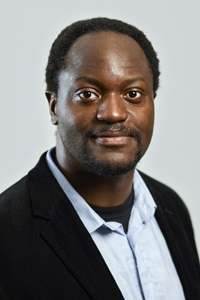 Axel-Cyrille Ngonga Ngomo合作论文数Paderborn University20
 Anna Szecsenyi-Nagy合作论文数Institute of Anthropology, Johannes Gutenberg University of Mainz15
 Lorenz Bühmann合作论文数Smart Data Analytics12
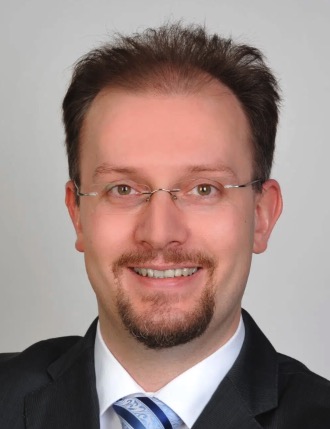 Jens Lehmann合作论文数Amazon;Technische Universität Dresden;SDA Research12
 Balazs Gusztav Mende合作论文数11
 Bea Szeifert合作论文数Institute of Biology, ELTE Eötvös Loránd University8
 Viktoria Kiss合作论文数Res Ctr Humanities, Eotvos Lorand Res Network8
 Christina Unger合作论文数OKAPI:Orbits GmbH8
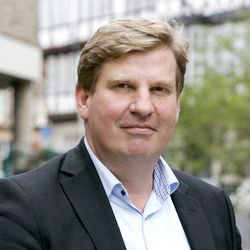 Sören Auer合作论文数Leibniz Information Centre for Science and Technology, Leibniz University of Hannover;L3S Research Center7
 Veronika Csaky合作论文数Institute of Archaeogenomics, Eötvös Loránd Research Network (ELKH),6
 Gabriella Kulcsar合作论文数6
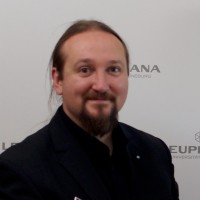 Ricardo Usbeck合作论文数Institute of Information Systems, Leuphana Universität Lüneburg6
 Balazs Egyed合作论文数Institute for Forensic Sciences6
 Szilvia Fabian合作论文数5
 Lukas Rosenbauer合作论文数BSH Home Appliances, Germany5Köhler Kitti合作论文数5Attila Türk合作论文数4
 Jörg Hähner合作论文数4Peter Lango合作论文数3
 Vajk Szeverenyi合作论文数3
 Noemi Borbely合作论文数3Géza Szabó合作论文数3
 Julia I. Giblin合作论文数Department of Sociology, Criminal Justice and Anthropology, Quinnipiac University3Mende Balázs Gusztáv合作论文数3Kustár Ágnes合作论文数3
 Tamas Hajdu合作论文数3
 Andreas Both合作论文数Leipzig University of Applied Sciences;DATEV eG3
 Michael Röder合作论文数Data Science Group, Paderborn University3
 Sebastian Hellmann合作论文数Institute for Applied Informatics, Leipzig University;AKSW3
 Konrad Hoffner合作论文数Institute of Computer Science, University of Leipzig3Viktoria V. Ilyushina合作论文数2Elizaveta V. Volkova合作论文数2Alexander S. Zelenkov合作论文数2Ilgizar R. Gazimzyanov合作论文数2Flarit A. Sungatov合作论文数2András Czene合作论文数2Orsolya Székely合作论文数2Konstantin G Karacharov合作论文数2Dmitrii A Stashenkov合作论文数2Sergey G. Botalov合作论文数2
 klara p fischl合作论文数2V Sleptsova Anastasia合作论文数2Marietta Csányi合作论文数2
 о в комар合作论文数Institute of Archaeology, National Academy of Sciences of Ukraine2Ivan V. Grudochko合作论文数2
 Olga Poshekhonova合作论文数2
 Istvan Major合作论文数Hungarian Acad Sci, Inst Nucl Res2János Dani合作论文数Deri Museum2Róbert Patay合作论文数2