The transition from the Middle to the Late Bronze Age (around 1500 BCE) in the Carpathian Basin was parallel by drastic cultural changes in Central-Europe, which strongly influenced the dynamic of prehistoric Europe. The cultural fragmentation of the Middle Bronze Age (2000 − 1500 BCE) Carpathian Basin was followed by a more homogeneous development at the beginning of the Late Bronze Age (1500 − 1300 BCE), with the appearance of the Tumulus culture. In the beginning of this period, the long-used tell-settlements were abandoned, furthermore new pottery styles and metal types appeared. Whether these changes were caused by immigration, or a local adaptation to external influxes, has long been a matter of debate. Our study investigates this transition from the point of view of diet and mobility from several key-sites of Hungary. Our results show (1) low migration rates and a shift of migration trajectories; that (2) the beginning of the systematic consumption of Panicum miliaceum was from 1540 − 1480 BCE; that (3) the decrease of average animal protein intake was parallel by an increase of cereal consumption and a tendency to less unequal diet. Overall, our results shed new light on the dynamics of complex change in Bronze Age Europe.
In the prehistoric communities of the Great Hungarian Plain (GHP), the exploitation of forest steppe and floodplain woodlands started at ∼6000 cal BC. So far, only scattered and irregular wood charcoal analyses have been performed on Holocene archaeological sites, therefore the species composition of the GHP woodlands is known mainly from pollen records. This study aims to fill this gap by systematic sampling and analysis of key Early, Middle and Late Neolithic, and Copper and Middle Bronze Age archaeological sites. Pollen records from the vicinity of some archaeological sites accompany the charcoal assemblages along with potential vegetation and soil maps. Our results show that oak (Quercus sp.) was dominant in the floodplain and forest steppe, used as construction timber and firewood. Both high and low floodplain forest woody elements (Populus, Salix, Fraxinus) were represented. Elm species (Ulmus spp.) were widespread and often co-dominated the charcoal assemblages. In the long-term charcoal assemblages of the Late Neolithic SE GHP, Ulmus was more frequent than in the NE GHP. Soil and potential vegetation maps of these sites show meadow soil predominance with occasional chernozem meadow soils. Floodplain woodlands predominate in the potential vegetation with the likely presence of U. laevis and U. minor today corroborating the predominance of alluvial forests in SE Hungary during the Neolithic likely with high amplitude water table fluctuation. During the Early Chalcolithic (4500–4000 cal BC), we found a significant decline in Ulmus in the SE GHP both in the pollen and charcoal assemblages suggesting a climate change and/or pathogen induced elm-decline. In comparison with the Balkan region, we demonstrated that the SE border of the GHP was a major environmental barrier, north of which vast riparian and alluvial forests were alternating with steppe oak woods. The Early Neolithic communities had to adapt to this environment.
In this study, we report 21 ancient shotgun genomes from present-day Western Hungary, from previously understudied Late Copper Age Baden, and Bronze Age Somogyvár-Vinkovci, Kisapostag, and Encrusted Pottery archeological cultures (3,530-1,620 cal Bce). Our results indicate the presence of high steppe ancestry in the Somogyvár-Vinkovci culture. They were then replaced by the Kisapostag group, who exhibit an outstandingly high (up to ∼47%) Mesolithic hunter-gatherer ancestry, despite this component being thought to be highly diluted by the time of the Early Bronze Age. The Kisapostag population contributed the genetic basis for the succeeding community of the Encrusted Pottery culture. We also found an elevated hunter-gatherer component in a local Baden culture-associated individual, but no connections were proven to the Bronze Age individuals. The hunter-gatherer ancestry in Kisapostag is likely derived from two main sources, one from a Funnelbeaker or Globular Amphora culture-related population and one from a previously unrecognized source in Eastern Europe. We show that this ancestry not only appeared in various groups in Bronze Age Central Europe but also made contributions to Baltic populations. The social structure of Kisapostag and Encrusted Pottery cultures is patrilocal, similarly to most contemporaneous groups. Furthermore, we developed new methods and method standards for computational analyses of ancient DNA, implemented to our newly developed and freely available bioinformatic package. By analyzing clinical traits, we found carriers of aneuploidy and inheritable genetic diseases. Finally, based on genetic and anthropological data, we present here the first female facial reconstruction from the Bronze Age Carpathian Basin.
Significance Subsistence shifts from hunting and gathering to agriculture over the last 12,000 y have impacted human culture, biology, and health. Although past human health cannot be assessed directly, adult stature variation and skeletal indicators of nonspecific stress can serve as proxies for health during growth and development. By integrating paleogenomic genotype and osteological stature data on a per-individual basis for 167 prehistoric Europeans, we observe relatively shorter than expected statures among early farmers after correcting for individual genetic contributions to stature. Poorer nutrition and/or increased disease burdens for early agriculturalists may partly underscore this result. Our integrated osteological–genetic model has exciting potential for studies of past human health and expansion into various other contexts.
Archaeological research is currently redefining how large-scale changes occurred in prehistoric times. In addition to the long-standing theoretical dichotomy between ‘cultural transmission’ and ‘demic diffusion’, many alternative models borrowed from sociology can be used to explain the spread of innovations. The emergence of urnfields in Middle and Late Bronze Age Europe is certainly one of these large-scale phenomena; its wide distribution has been traditionally emphasized by the use of the general term Urnenfelderkultur/zeit (starting around 1300 BC) . Thanks to new evidence, we are now able to draw a more comprehensive picture, which shows a variety of regional responses to the introduction of the new funerary custom. The earliest ‘urnfields’ can be identified in central Hungary, among the tell communities of the late Nagyrév/Vatya Culture, around 2000 BC. From the nineteenth century BC onwards, the urnfield model is documented among communities in northeastern Serbia, south of the Iron Gates. During the subsequent collapse of the tell system, around 1500 BC, the urnfield model spread into some of the neighbouring regions. The adoption, however, appears more radical in the southern Po plain, as well as in the Sava/Drava/Lower Tisza plains, while in Lower Austria, Transdanubia and in the northern Po plain it seems more gradual and appears to have been subject to processes of syncretism/hybridization with traditional rites. Other areas seem to reject the novelty, at least until the latest phases of the Bronze Age. We argue that a possible explanation for these varied responses relates to the degree of interconnectedness and homophily among communities in the previous phases.
Bár írásos emlékeket nem ismerünk a bronzkor időszakából, a Kárpát-medencét érintő későbbi (pl. kora középkori) népvándorlásokra vonatkozó források ismeretében gyakran a bronzkor változásait is új népek betelepüléséhez, kisebb-nagyobb migrációkhoz kötötte a régészeti kutatás. Az utóbbi két évtizedben újra előtérbe került a történelem előtti időkben feltételezhető eurázsiai vándorlások nyomainak azonosítása, a kutatásba immár más tudományágak, többek között az izotóp-geokémia vagy az archeogenetika eredményeit is bevonva. Az MTA Lendület program támogatásával 2015-ben elindult kutatási projekt a mai Magyarországon feltárt települések, temetkezések és az innen előkerült használati tárgyak vizsgálatát tűzte ki céljául. A hazai bronzkor kutatásában eddig nem alkalmazott, 21. századi multidiszciplináris módszerek együttes használatával kerestünk választ a nagy piramisok építői és a mükénéi aknasírokba temetett görög hősök korában térségünkben letelepedett közösségek emlékanyagában megfigyelt társadalmi változások kérdéseire. Jelen tanulmány a korszakban élt emberek életmódjára és egészségi állapotára, illetve a mobilitás értelmezésére vonatkozó biorégészeti kutatási eredményeket foglalja össze.
Although there is no textual evidence known from the Bronze Age, written sources describing migrations of later (i.e. Early Medieval) periods effecting the Carpathian Basin were interpreted as instances of cultural and population change which could be comparable with processes that took place during the Bronze Age in the Carpathian Basin. In the past two decades, Eurasian archaeological research received a new impetus to investigate the traces of migrations during prehistory, in collaboration with other disciplines such as isotope geochemistry or archaeogenetics. The current project which commenced in 2015, funded by the ‛Momentum Programme’ of the Hungarian Academy of Sciences, was set out to investigate the societal changes that had taken place within the boundaries of modern-day Hungary – contemporaneous with the builders of the great pyramids of Egypt and the Greek heroes of the Mycenaean shaft graves – by analysing the settlements, cemeteries and the artefacts recovered from these archaeological sites. The project, for the first time in Hungarian Bronze Age research, employs a range of multidisciplinary methodologies in order to examine the social changes of the period. The present paper is to provide an overview of a particular aspect of this research: the outcomes of the bioarchaeological enquiries with special regards to the general health, mobility and the lifestyle of studied populations.
This chapter reviews the material evidence for violence in Early and Middle Bronze Age Hungary. This evidence can be categorised into a number of classes, such as weapons, fortifications, skeletal evidence for physical trauma and 'mass graves'. The chapter discusses the weapons in terms of type, context and function. The context of weapons can provide invaluable data for the study of Bronze Age violence, the function of weapons and possibly the organisation of warfare. Some of the highest-quality weapons of Bronze Age Europe were buried in the so-called Hajdusamson and Koszider type hoards during the Middle Bronze Age. The chapter reviews the emergence of fortifications during the Early and Middle Bronze Age and issues with regard to their defensive functionality. It focuses on human remains, first those that show signs of physical trauma possibly connected to warfare, and then to those that appear in settlements in unusual contexts, sometimes also showing signs of violence.
The Bronze Age of Eurasia (around 3000-1000 BC) was a period of major cultural changes. However, there is debate about whether these changes resulted from the circulation of ideas or from human migrations, potentially also facilitating the spread of languages and certain phenotypic traits. We investigated this by using new, improved methods to sequence low-coverage genomes from 101 ancient humans from across Eurasia. We show that the Bronze Age was a highly dynamic period involving large-scale population migrations and replacements, responsible for shaping major parts of present-day demographic structure in both Europe and Asia. Our findings are consistent with the hypothesized spread of Indo-European languages during the Early Bronze Age. We also demonstrate that light skin pigmentation in Europeans was already present at high frequency in the Bronze Age, but not lactose tolerance, indicating a more recent onset of positive selection on lactose tolerance than previously thought.
Kozep-Europaban a bronzkori telepulesek halozatanak es a hozzajuk kapcsolodo temetkezeseknek a kutatasa a regeszeti terepmunkanak mindig is meghatarozo iranyvonalat alkotta. Az elmult evszazadok kutatoi elsősorban a nagyobb kozponti telepulesek, tellek, foldvarak megismereset tűztek ki celul. Az utobbi bő evtizedben alapvető valtozas kezdődott ezen a teruleten is. A kozponti telepulesek tanulmanyozasa mellett hangsulyosabba valtak a mikroregionalis kutatasok, az elterő funkcioju es szerkezetű telepulesek es temetkezesek vizsgalata. A bronzkori tajhasznalat tagan ertelmezett kerdeseinek megvalaszolasara csak komplex kutatasi programok vallalkozhatnak. A kutatas soran tobbek kozott a kovetkező kerdesek merulnek fel: 1) Mikent definialhatok regionalisan es mikroregionalisan a bronzkor kulonboző időszakaiban a telepulesi strukturak? 2) Leteztek-e valodi kozpontok, specializalt telepulesek a bronzkorban Kozep-Europaban? 3) Hogyan befolyasolta a kulturalis hatter az adott regio tajhasznalatat? 4) A temetőkben hogyan nyilvanul meg a tarsadalmi es politikai szerveződes? Ilyen komplex, nemzetkozi kutatasi programok kereteben kerult sor Szazhalombatta videke bronzkori telepulestortenetenek vizsgalatara. | Research on the network of Bronze Age settlements and their burial grounds has always been a priority of archaeological fieldwork in Central Europe. Researchers of the past centuries tended to focus on the large central settlements such as tells and hillforts. The past decade has seen a shift in research perspectives: while the study of central settlements has lost none of its importance, interest has grown in micro-regional research and the investigation of settlements with differing function and layout. Only complex research projects can address broad issues of Bronze Age land use. We sought answers to the following questions: 1) Did differences exist between the regional and micro-regional settlement patterns during successive periods of the Bronze Age? 2) Were there genuine centres and specialised settlements during the Bronze Age in Central Europe? 3) How did a communityʼs cultural background influence landscape use in a particular region? 4) How is social and political organisation reflected in cemeteries? The Bronze Age settlement history of the Szazhalombatta area was investigated as part of an international research project.
You never know until you look. The authors deconstruct a kurgan burial mound in the Great Hungarian Plain designated to the Yamnaya culture, to find it was actually shared by a number of different peoples. The Yamnaya were an influential immigrant group of the Late Copper Age/Early Bronze Age transition. The burials, already characterised by their grave goods, were radiocarbon dated and further examined using stable isotope analysis on the human teeth. The revealing sequence began with a young person of likely local origin buried around or even before the late fourth millennium BC—a few centuries before the arrival of the Yamnaya. It ended around 500 years later with a group of different immigrants, apparently from the eastern mountains. These are explained as contacts built up between the mountains and the plain through the practice of transhumance.
 Gabriella Kulcsar合作论文数15
 Viktoria Kiss合作论文数Res Ctr Humanities, Eotvos Lorand Res Network15
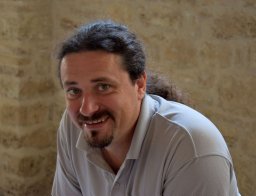 Tamas Hajdu合作论文数10
 Köhler Kitti合作论文数9
 klara p fischl合作论文数6Géza Szabó合作论文数6János Dani合作论文数Deri Museum6
 Eszter Melis合作论文数4
 Balazs Gusztav Mende合作论文数3
 Szilvia Fabian合作论文数3Anett Gemes合作论文数3
 Julia I. Giblin合作论文数Department of Sociology, Criminal Justice and Anthropology, Quinnipiac University3
 Istvan Major合作论文数Hungarian Acad Sci, Inst Nucl Res3Aniko Horvath合作论文数3
 Claudio Cavazzuti合作论文数Department of Archaeology, Durham University3
 Anna Szecsenyi-Nagy合作论文数Institute of Anthropology, Johannes Gutenberg University of Mainz3Szeniczey Tamás合作论文数3
 Daniel Gerber合作论文数Universitat Leipzig3
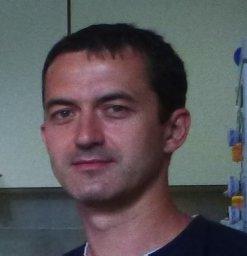 László Palcsu合作论文数Hertelendi Laboratory of Environmental Studies, Institute of Nuclear Research of the Hungarian Academy of Sciences3Volker Heyd合作论文数3Gabriella Darabos合作论文数2Cristina Longhi合作论文数2András Czene合作论文数2Andrea Cardarelli合作论文数2Michaela Fritzl合作论文数2Magdolna Vicze合作论文数2
 Krisztian Kiss合作论文数2Marietta Csányi合作论文数2
 Janos Gabor Tarbay合作论文数2Róbert Patay合作论文数2
 Mario Gavranovic合作论文数Austrian Acad Sci, Austrian Archaeol Inst2
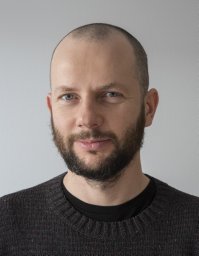 Łukasz Pospieszny合作论文数Department of Anthropology and Archaeology, University of Bristol2
 Jan Kolar合作论文数Inst Archaeol & Museol, Masaryk Univ2
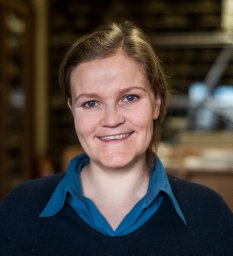 Katharina Rebay-Salisbury合作论文数Austrian Archaeological Institute, Austrian Academy of Sciences2Mario Novak合作论文数Department of Archaeology, Croatian Academy of Sciences and Arts2Vyacheslav Moiseyev合作论文数2
 Mihaly Molnar合作论文数2
 Erika Molnar合作论文数2
 Eszter Banffy合作论文数HUN-REN RCH Institute of Archaeology, Centre of Excellence, Hungarian Academy of Sc.iences;European Association of Archaeologists2stanislaw gronkiewicz合作论文数1Lise Harvig合作论文数1Irena Lasak合作论文数1Raúl Flores Fernández合作论文数1Peter B. Damgaard合作论文数1Zsuzsanna K. Zoffmann合作论文数1Borbála Nyíri合作论文数1Magdolna Hellebrandt合作论文数1Cristian Virag合作论文数1Orsolya Székely合作论文数1




