Factor graphs have demonstrated remarkable efficiency for robotic perception tasks, particularly in localization and mapping applications. However, their application to optimal control problems—especially Model Predictive Control (MPC)—has remained limited due to fundamental challenges in constraint handling. This paper presents a novel integration of the Barrier Interior Point Method (BIPM) with factor graphs, implemented as an open-source extension to the widely adopted g2o framework. Our approach introduces specialized inequality factor nodes that encode logarithmic barrier functions, thereby overcoming the quadratic-form limitations of conventional factor graph formulations. To the best of our knowledge, this is the first g2o-based implementation capable of efficiently handling the constraints within a unified optimization backend. We validate the method through a multi-objective adaptive cruise control application for autonomous vehicles. Benchmark comparisons with state-of-the-art constraint-handling techniques demonstrate faster convergence and improved computational efficiency. (Code repository: https://github.com/snt-arg/bipm_g2o)
Although interpretable controllers are widely used in vehicle systems, they have received limited attention as models of human driving behavior. This study explores whether two such control strategies, a preview-augmented Proportional-Integral-Derivative (PID) controller and a constraint-based Model Predictive Control (MPC) framework, can model human longitudinal driving behavior when adapted via Bayesian optimization. A structured dataset of human driving behavior, recorded with participants in a driving simulator, was used to train and evaluate both controllers across acceleration, deceleration, and cruising scenarios. MPC achieved lower overall deviation and more consistent performance across trials. These findings highlight the potential of combining interpretable control architectures with data-driven parameter adaptation to model human driving behavior effectively.
Electromechanically actuated drum brakes are one interesting option for the realization of brake-by-wire systems for future electric vehicles. A key characteristic for the design and control of electromechanical brake actuators is the actuation point stiffness, as this quantity relates the actuation force to the required actuator position. The various known approaches for the control of electromechanical brakes, which primarily focus on disc foundation brakes, typically rely on the stiffness curve at least to some extent. A transfer of these approaches to drum brakes is not straightforward, because the actuation point stiffness for drum brakes is much more complex compared to disc brakes. In particular, a strong hysteretic behavior is observed for the standing drum and a considerable change of the stiffness and hysteresis can be observed for the rotating drum. Although drum brakes have been used for decades these effects have not been thoroughly discussed in literature, yet. Hence, this article proposes a minimal model, which gives a fundamental understanding of the stiffness characteristics of drum brakes. The relation to measured stiffness curves is discussed in detail to provide an in-depth understanding of the drum brake behavior. Additionally, prospect is given to a reduced complexity model that is suitable for online identification and control.
Model Predictive Control (MPC) has emerged as a pivotal technology for optimizing control tasks in autonomous driving, particularly within Adaptive Cruise Control (ACC) systems. However, the manual tuning of MPC cost function weights and prediction horizons remains a significant challenge. In this paper, we introduce a novel framework that combines Deep Reinforcement Learning (DRL) with MFC to dynamically tune both the weight parameters and prediction horizon in real time. This approach, referred to as the Weights and Prediction Horizon Varying MPC (W-PH-MPC), overcomes traditional MPC limitations by utilizing proximal Policy optimisation and Deep Deterministic Policy Gradient (DDPG) algorithms to adjust control parameters. We evaluate the effectiveness of our approach through simulations in vehicle-tracking scenarios. Simulation results show that the adaptive MPC-RL controller achieves better tracking performance, without compromising power consumption, and lowers longitudinal jerk compared to a fixed-parameter MPC baseline, resulting in smoother and more efficient vehicle behavior.
With the advent of Joint Embedding Predictive Architectures (JEPAs), which appear to be more capable than reconstruction-based methods, this paper introduces a novel technique for creating world models using continuous-time dynamic systems from arbitrary observation data. The proposed method integrates sequence embeddings with neural ordinary differential equations (neural ODEs). It employs loss functions that enforce contractive embeddings and Lipschitz constants in state transitions to construct a well-organized latent state space. The approach's effectiveness is demonstrated through the generation of structured latent state-space models for a simple pendulum system using only image data. This opens up a new technique for developing more general control algorithms and estimation techniques with broad applications in robotics.
This paper presents a reinforcement learning-based energy management strategy for a marine electric propulsion system, developed for the IEEE VTS Motor Vehicle Challenge 2025 (MVC). Targeting tugboats with hybrid battery and supercapacitor storage, the proposed approach transforms episodic cost functions into instantaneous rewards, enabling effective online learning. The method dynamically allocates torque between dual windings of a permanent magnet synchronous machine to optimize energy use and machine loading. Evaluated within the MVC 2025 framework, the strategy demonstrates the promise of learning-based control for sustainable marine operations.
This paper addresses trajectory optimization for the excitation of systems with uncertain parameters, subject to input power constraints. Since the input required to follow a given trajectory depends on the system parameters which are to be estimated, this task is non-trivial. Therefore, we present worst-case and chance constraints to limit the short-time average power demand and optimize the excitation trajectory for energy-based parameter estimation. The effectiveness of our approach is verified through extensive simulation experiments. The results demonstrate that the optimized trajectories can be followed without violating power constraints and yield better parameter estimates compared to randomly selected trajectories, both under low and high power limits.
This paper presents the results of intelligent traffic light management (TLM) which improves the traffic efficiency via optimally controlling the green lights’ time interval and selecting the traffic phases. As the control problem is stochastic and difficult to be modeled accurately, model-free reinforcement learning (RL) is applied in this work. To stabilize the training process and mitigate the overestimation issue of conventional deep Q-learning based RL methods, we developed an RL algorithm with double deep Q-network (DQN) and a clipping function for the TLM problem with a discrete action space. The advantage of this clipped version of double DQN over other Q-learning-based algorithms is demonstrated in this work. Furthermore, the performance of RL-based TLM is compared with both fixed-time and adaptive rule-based TLM by using PTV Vissim which is a multi-modal traffic simulation software as the testing platform in this work.
Synchronous optimal pulse patterns are a well-known synchronous modulation scheme usually applied to electrical drives at medium and high speeds. These pulse patterns are typically designed via offline optimisation and rely on simplified models, both in their design phase and during their deployment within the control of electrical drives, causing tracking deviations and suboptimal operation due to model bias. In this paper, a model-free learning approach for designing optimal synchronous pulse patterns is proposed. The learning problem is formulated as a derivative-free black-box optimisation problem, with an optimisation objective function that incorporates desired torque tracking and power loss minimisation criteria. The learning is done in a data-driven fashion via iterative direct interactions with the real-world drive system, where a candidate pulse pattern is evaluated by deploying it on the drive system to measure its steady-state response which is used to evaluate the objective function. Simulative analysis of the proposed learning scheme for a permanent magnet synchronous motor (PMSM) is presented. Experimental results show that learned pulse patterns from a real-world PMSM drive can achieve improved steady-state torque tracking accuracy compared with pulse patterns designed with a state-of-the-art method based on model knowledge.
In this paper, an adaptive boundary controller is designed to solve the boundary control problem of Euler-Bernoulli beams with an unknown payload. Therefore, a boundary controller with an adaptive law is designed to compensate for the parameter uncertainty of the system. Partial Differential Equations (PDEs) are used to describe the Euler-Bernoulli beam system. The well-posedness of the system under the action of an adaptive boundary controller is proved by using the linear operator semigroup method. Meanwhile, the asymptotic stability of the closed-loop system is derived from the extended Krasovskii-LaSalle invariance principle. The effectiveness and superiority of the proposed method are illustrated by simulation in comparison with the existing results.
The brake system is a vital component in passenger and commercial vehicles. Due to the electrified mobility trend, brake-by-wire technologies have gained research interest while regenerative braking possibilities simultaneously reduce the usage of friction brakes. This makes the use of drum brakes attractive for electric vehicles since they are less prone to corrosion and can help to reduce brake dust emissions with their encapsulated design. A possibility to integrate drum brakes into the X-by-wire framework is to replace the hydraulic actuation with electromechanical actuators. This imposes new challenges in the control of braking systems due to increased mechanical complexity. In this paper we investigate an automatic controller tuning method for electromechanical drum brakes based on safe Bayesian optimization. The method does not require a mathematical model of the actuator mechanism and works directly with data collected on a real system. Several experiments with different hardware setups illustrate the method’s effectiveness.
In this letter we consider discrete-time linear systems affected by unbounded multiplicative noise. To control this class of systems, we apply an indirect-feedback stochastic model predictive control scheme that results in formally provable mean square convergence and closed-loop chance constraint satisfaction guarantees. The benefits of the proposed controller will be highlighted on a numerical example.
The regenerative braking functionality of electric vehicles significantly reduces the use of friction brakes. This can offer a potential for downsizing or, in extreme cases, even elimination of the friction brakes particularly on the rear axle due to the reduced brake torque demand. However, the elimination of wheel individual brake torque interventions of electronic stability control (ESC) on the driven axle makes acceleration on gradients with inhomogeneous surface ( μ -split) impossible, jeopardising state-of-art vehicle safety. Limited slip differentials that can support in such situation may negatively affect the driving comfort, efficiency and tyre wear. This study investigates the impact of locking differentials with different operating principles in a representative driving cycle for typical everyday use utilising a dynamic simulation environment.
In this paper, a robust adaptive vibration control method for gantry crane system is proposed considering unknown parameters brought by unknown payload, cable length and tension. The control objective is to transport the cargo to the desired position while suppressing the vibration of the cable in the presence of unknown parameters. For this purpose, a boundary controller is designed with an adaptive law to compensate the parameter uncertainty of the system. The well-posedness of the closed-loop system is proved by means of operator semigroup theory and the asymptotic stability of the closed-loop system is analyzed. Finally, the effectiveness of the proposed control approach is demonstrated through both numerical simulation comparisons and physical experiments.
We present an ellipse fitting approach with a dual Kalman filter to realize an adaptive angle tracking observer (ATO), suitable for actuator motion control. In many applications where resolvers are used to sense angular displacements, the control system has high requirements for accuracy and fast dynamics. However, harsh environmental conditions and the usage of low-cost sensors impose challenges, as parameters are prone to drift, e.g. due to temperature variations or aging. The proposed ATO utilizes two estimators, one for fast state estimation and another for resolver parameter tracking. The resolvers characteristic is described geometrically with an ellipse, and we demonstrate how its parameters can be fitted online along with their uncertainty ranges. Experiments with simulated and real data from a brake-by-wire actuator show satisfying state and parameter estimation performance, which we also compare to a baseline gradient descent algorithm. The proposed adaptive ATO design, with its simple architecture built upon established state estimation tools, is attractive for various applications that use mechatronic actuators.
Driving simulators often lack fundamental components needed for accurate simulation of energy dynamics. We introduce EcoSimLab, a comprehensive electric vehicle driving simulation framework consisting of (1) a simulation of electric vehicle energy dynamics, (2) an optimization-based approach of structuring eco-driving behaviors, (3) a synthetic driver module as versatile benchmark model to analyze human behavior. Guided by fundamentals of energy modeling and considerations on human action regulation, we further present the development of the EcoDrivingTestPark, an exemplary set of energy-relevant scenarios to enable the analysis of individual differences in eco-driving and intervention effects (e.g., HMIs). To generate a first characterization of driving behavior, we conducted two empirical studies with human (N-S1 = 31, N-S2a = 41) and synthetic drivers (N-S2b = 3). Results indicate substantial variations in driver behavior and considerable challenges for human drivers to achieve synthetic driver performance. Implications for augmenting human action regulation in eco-driving are discussed.
5G ultra-reliable low-latency communication (uRLLC) requires extremely low latency and high reliability to serve safety-critical user ends (UEs) and applications. To fulfill those requirements, many uRLLC-related tasks are simplified for Quality of Service (QoS) analysis. Commonly Poisson or Bernoulli distributions are assumed for the incoming traffic. However, both distributions can only roughly present the characteristics of most communication traffic. On the other hand, the analysis of QoS according to predictions of traffic also requires further research. In this work, we consider the existence of a predictor for the incoming traffic and take the cumulative density function (CDF) of prediction errors into uRLLC's QoS discussions. Furthermore, we consider a typical uRLLC resource allocation task and apply model predictive control (MPC) by converting the QoS into constraints of an optimization problem. The simulations shows that MPC can provide good performance with the prediction module, enhancing a robust operation and mitigating the stochastic effects of environmental conditions.
This paper addresses the robust vibration control problem for a gantry crane system which is governed by a partial differential equation. The control objectives are to transport the cargo from the initial position to the desired position and suppress the vibration of the cable and payload in the presence of boundary disturbance. To achieve the objectives, a sliding-mode controller is proposed by repressing the boundary disturbance. By using the operator semigroup theory, the well-posedness of the closed-loop system is guaranteed. The asymptotic stability of the closed-loop system is proven by using the extended LaSalle’s invariance principle. Both numerical simulations and experiments are provided to illustrate the effectiveness of the proposed boundary control method.
This paper investigates the stabilization of Euler-Bernoulli beam systems modeled by a partial differential equation (PDE) with unknown time-varying disturbance. An iterative learning controller is designed using only boundary state feedback to realize the vibration control subject to unknown boundary disturbance. The well-posedness for the closed-loop system is given by the operator semigroup theory. Furthermore, the exponentially stable for the closed-loop system is proved by the Lyapunov method. The comparisons with existing results are made to demonstrate the effectiveness and advantages of the proposed boundary iterative learning control method.
The development of 5G enables communication systems to satisfy heterogeneous service requirements of novel applications. For instance, ultra-reliable low latency communication (uRLLC) is applicable for many safety-critical and latency-sensitive scenarios. Many research papers aim to convert the stringent reliability and latency factors to a static data rate requirement. However, in most industrial scenarios, the communication traffic presents short-term/long-term dependency, burst, and non-stationary characteristics. This makes it more challenging to obtain a tight upper bound for the rate requirement of uRLLC. In this work, we introduce a novel solution based on decentralized model predictive control (MPC), where the dynamic incoming communication traffic and the users’ quality of service (QoS) requirements are reformulated into an up-to-date data rate constraint. Under such assumptions, we consider a use case of the resource allocation problem for a single uRLLC network slice. The allocation task is solved by the successive convex approximation (SCA) algorithm for a more in-depth analysis. The simulation results show that the proposed algorithm can deal with non-stationary communication traffic in real-time, as well as provide good performance with guaranteed delay and reliability requirements.
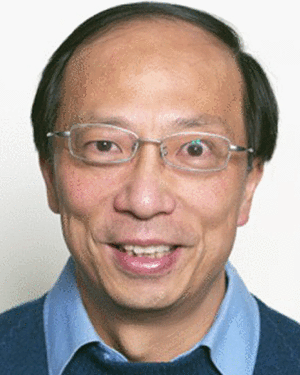 Steven Liu合作论文数25
 Giuliano Costantini合作论文数Fac Elektromobilitat, Tech Univ Kaiserslautern10
 Yanzhao Jia合作论文数9
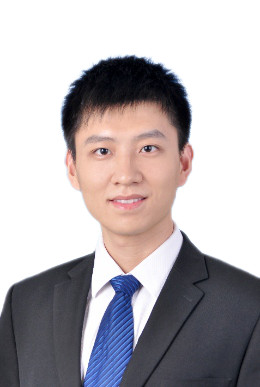 Guoqiang Li合作论文数Tech Univ Kaiserslautern, Dept Elect & Comp Engn, Kaiserslautern, Germany9
 Ramin Rostami合作论文数9Izak, M.合作论文数9
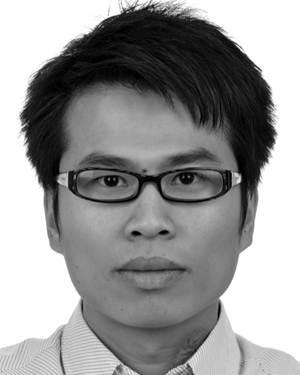 Xiaohai Lin合作论文数9
 Sai Krishna Chada合作论文数Institute of Electromobility, University of Kaiserslautern8Armin Verhagen合作论文数8
 Simon Peter合作论文数Robert Bosch GmbH8
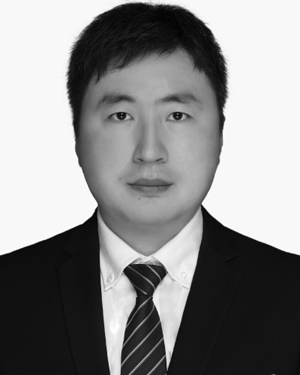 Wei Wu合作论文数8
 Achim Ebert合作论文数University of Kaiserslautern8Tobias Peschke合作论文数7
 Roman Teutsch合作论文数Lehrstuhl Konstrukt Maschinenbau & Fahrzeugtech i, TU Kaiserslautern7Munch, P.合作论文数6
 Sanad Al-Areqi合作论文数6Ganesh Sundaram合作论文数5Jonas Ulmen合作论文数TU Kaiserslautern, GERMANY5
 Thomas Franke合作论文数Dept. of Computer Science, RWTH Aachen5
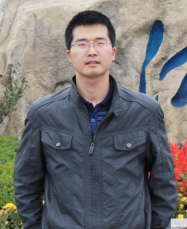 Xuyang Lou (楼旭阳)合作论文数School of Internet of Things Engineering, Jiangnan University5
 Felix Berkel合作论文数5
 Tobias Loss合作论文数4Mirjan Heubaum合作论文数4Andreas Weißmann合作论文数4
 Silas Klug合作论文数4
 Sergio Matteo Savaresi合作论文数Systems & Control Section, Department of Electronics, Computer Sciences and Bioengineering, Politecnico di Milano;Cefriel;As.Car.I;Yape;Hmdrive S.R.L.;E-Novia;Blubrake;Astra Yacht Srl4
 Alessandro Moia合作论文数4Guihai Luo合作论文数Electromobility Research Group, University of Kaiserslautern3
 S. Reimann合作论文数3
 Andreas Wirsen合作论文数3WIENSS ANDREAS合作论文数2Xin Huang合作论文数2
 Felix Dauer合作论文数2
 Jan Heidinger合作论文数2Zhan Wang合作论文数2
 Michael Guenthner合作论文数Institute of Vehicle Propulsion Systems (LAF),, Technische Universität Kaiserslautern (TUK),2
 Markus Gödker合作论文数Universität zu Lübeck2
 Rabee Jibrin合作论文数Dept Elect Elect & Syst Engn, Univ Birmingham2Yutaro Itoh合作论文数2
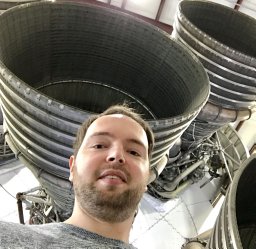 Christoph Mark合作论文数Department of Physics, Friedrich-Alexander University Erlangen-Nürnberg2
 Christine Eisenmann合作论文数Inst Transport Res, German Aerospace Ctr2
 Markus Bell合作论文数2
 Paulo Renato da Costa Mendes合作论文数2
 Holger Voos合作论文数University of Applied Sciences Ravensburg-Weingarten2
 (Hercules) I Haralambides合作论文数Hellenic Foundation for European & Foreign Policy;Komvos-Node Networks of Global Hellenism;Erasmus School of Economics, Erasmus University Rotterdam;Limestone Analytics;Dalian Maritime University;Haralambides & Associates;The World Bank1M Donkers合作论文数1Alexandros Dolianitis合作论文数1A Cela合作论文数1C. Ionete合作论文数1




