We introduce a camera self-calibration method using a planar scene of unknown texture. Planar surfaces are everywhere but checkerboards are not, thus the method can be more easily applied outside the lab. We demonstrate that the accuracy is equivalent to a checkerboard-based calibration, so there is no need for printing checkerboards any more. Moreover, the use of a planar scene provides improved robustness and stronger constraints than a self-calibration with an arbitrary scene. We utilize a closed-form initialization of the focal length with minimal and practical assumptions. The method recovers the intrinsic and extrinsic parameters of the camera and the metric structure of the planar scene. The method is implemented in a real-time application for non-expert users that provides an easy and practical process to obtain high accuracy calibrations.
Given an image sequence and odometry from a moving camera, we propose a batch-based approach for robust reconstruction of scene structure and camera motion. A key part of our method is robust loop closure disambiguation. First, a structure-from-motion pipeline is used to get a set of candidate feature correspondences and the respective triangulated 3D landmarks. Thereafter, the compatibility of each correspondence constraint and the odometry is evaluated in a bundle-adjustment optimization, where only compatible constraints affect. Our approach is evaluated using data from a Google Tango device. The results show that it produces better reconstructions than the device's built-in software or a state-of-the-art pose-graph formulation.
Obtaining a good baseline between different video frames is one of the key elements in vision-based monocular SLAM systems. However, if the video frames contain only a few 2D feature correspondences with a good baseline, or the camera only rotates without sufficient translation in the beginning, tracking and mapping becomes unstable. We introduce a real-time visual SLAM system that incrementally tracks individual 2D features, and estimates camera pose by using matched 2D features, regardless of the length of the baseline. Triangulating 2D features into 3D points is deferred until key frames with sufficient baseline for the features are available. Our method can also deal with pure rotational motions, and fuse the two types of measurements in a bundle adjustment step. Adaptive criteria for key frame selection are also introduced for efficient optimization and dealing with multiple maps. We demonstrate that our SLAM system improves camera pose estimates and robustness, even with purely rotational motions.
We present a joint prior that takes intensity and depth information into account. The prior is defined using a flexible Field-of-Experts model and is learned from a database of natural images. It is a generative model and has an efficient method for sampling. We use sampling from the model to perform in painting and up sampling of depth maps when intensity information is available. We show that including the intensity information in the prior improves the results obtained from the model. We also compare to another two-channel inpainting approach and show superior results.
Combining long sequences of overlapping depth maps without simplification results in a huge number of redundant points, which slows down further processing. In this paper, a novel method is presented for incrementally creating a nonredundant point cloud with varying levels of detail without limiting the captured volume or requiring any parameters from the user. Overlapping measurements are used to refine point estimates by reducing their directional variance. The algorithm was evaluated with plane and cube fitting residuals, which were improved considerably over redundant point clouds.
Many 3D reconstruction methods produce incomplete depth maps. Depth map inpainting can generate visually plausible structures for the missing areas. We present an inpainting method that encourages flat surfaces without favouring fronto-parallel planes. Moreover, it uses a color image to guide the inpainting and align color and depth edges. We implement the algorithm efficiently through graph-cuts. We compare the performance of our method with another inpainting approach used for large datasets and we show the results using several datasets. The depths inpainted with our method are visually plausible and of higher quality.
We present an algorithm that simultaneously calibrates two color cameras, a depth camera, and the relative pose between them. The method is designed to have three key features: accurate, practical, and applicable to a wide range of sensors. The method requires only a planar surface to be imaged from various poses. The calibration does not use depth discontinuities in the depth image, which makes it flexible and robust to noise. We apply this calibration to a Kinect device and present a new depth distortion model for the depth sensor. We perform experiments that show an improved accuracy with respect to the manufacturer's calibration.
Hacking the Kinect isthe technogeeks guide to developing software and creating projects involving the groundbreaking volumetric sensor known as the Microsoft Kinect. Microsofts release of the Kinect in the fall of2010 startled the technology world by providing a low-cost sensor that can detect and track body movement in three-dimensional space. The Kinect set new records for the fastest-selling gadget of all time. It has been adopted worldwide by hobbyists, robotics enthusiasts, artists, and even some entrepreneurs hoping to build business around the technology. Hacking the Kinect introduces you to programming for the Kinect. Youll learn to set up a software environment, stream data from the Kinect, and write code to interpret that data. The progression of hands-on projects in the book leads you even deeper into an understanding of how the device functions and how you can apply it to create fun and educational projects. Who knows? You might even come up with a business idea. Provides an excellent source of fun and educational projects for a tech-savvy parent to pursue with a son or daughter Leads you progressively from making your very first connection to the Kinect through mastery of itsfull feature set Shows how to interpret the Kinect data stream in order to drive your own software and hardware applications, including robotics applications What youll learn How to create a software environment and connect to the Kinect from your PC How to create three-dimensional images from the Kinect data stream How to recognize and work around hardware limitations How to build computer interfaces in the style of "Minority Report" How to interact directly with objects in the virtual world The ins and outs ofpoint clouds, voxel occupancy maps, depth images, and other fundamentals of volumetric sensor technology Who this book is for Hacking the Kinect is aimed at makers of all types. Tech-savvy artists can use the Kinect to drive three-dimensional, interactive artwork. Robotics hobbyists can create robots capable of seeing and responding to human motion and gesture. Programmers can create applicationsin which users manipulate data through physical motion and gestures. The creative possibilities are limitless, and fun! Hacking the Kinect does require some programming background. Familiarity with programming in C++ or similar languages is assumed. Readers should also be reasonably comfortable working with electronicsfor example, with Arduinoor similar equipment.
Welcome to Hacking the Kinect. This book will introduce you to the Kinect hardware and help you master using the device in your own programs. We're going to be covering a large amount of ground—everything you'll need to get a 3-D application running—with an eye toward killer algorithms, with no unusable filler.
We present a multi-view alpha matting method that requires no user input and is able to deal with any arbitrary scene geometry through the use of depth maps. The algorithm uses multiple observations of the same point to construct constraints on the true foreground color and estimate its transparency. A novel free viewpoint rendering pipeline is also presented that takes advantage of the generated alpha maps to improve the quality of synthesized views over state-of-the-art methods. The results show a clear improvement on image quality by implicitly correcting depth map errors, providing more natural boundaries on transparent regions, and removing artifacts.
Patch cloud based multi-view stereo methods have proven to be an accurate and scalable approach for scene reconstruction. Their applicability, however, is limited due to the semi-dense nature of their reconstruction. We propose a method to generate a dense depth map from a patch cloud by assuming a planar surface model for non-reconstructed areas. We use local evidence to estimate the best fitting plane around missing areas. We then apply a graph cut optimization to select the best plane for each pixel. We demonstrate our approach with a challenging scene containing planar and non-planar surfaces.
We present an algorithm that simultaneously calibrates a color camera, a depth camera, and the relative pose between them. The method is designed to have three key features that no other available algorithm currently has: accurate, practical, applicable to a wide range of sensors. The method requires only a planar surface to be imaged from various poses. The calibration does not use color or depth discontinuities in the depth image which makes it flexible and robust to noise. We perform experiments with particular depth sensor and achieve the same accuracy as the propietary calibration procedure of the manufacturer.
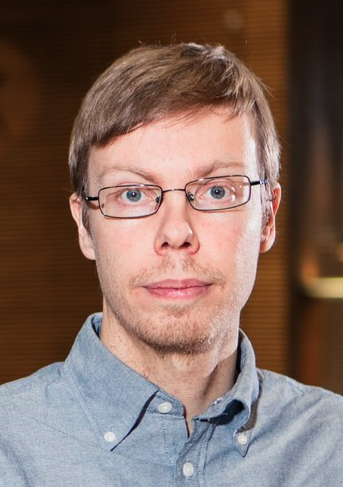 Juho Kannala合作论文数Department of Computer Science, School of Science, Aalto University10
 Janne Heikkilä合作论文数Center for Machine Vision and Signal Analysis, University of Oulu;Faculty of Information Technology and Electrical Engineering, University of Oulu9
 Matt Parker合作论文数7Jeff Kramer合作论文数7
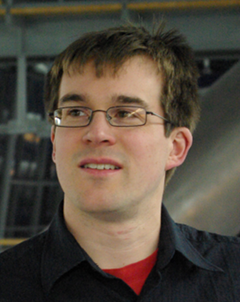 Florian Echtler合作论文数University of Regensburg, Regensburg, Germany7Nicolas Burrus合作论文数EPITA Research and Development Laboratory7Zakaria Laskar合作论文数Aalto Univ, Espoo, Finland1
 Kihwan Kim合作论文数Mobile Communications Division, Samsung Electronics1
 Peter Sturm合作论文数STEEP Research Team, Inria Grenoble Rhône-Alpes1
 Esa Rahtu合作论文数Faculty of Information Technology and Communication Sciences, Tampere University1
 Kari Pulli合作论文数Google1Sami Huttunen合作论文数Department of Electrical and Information Engineering;University of Oulu;Department of Electrical and Information Engineering, University of Oulu1
 Lubor Ladicky合作论文数Computer Vision and Geometry Lab, ETH Zurich1Tomi Kyöstilä合作论文数1




