Camera pose matters. The position and orientation of each viewpoint define a shared spatial coordinate frame that relates observations across video frames. Yet this signal is largely absent from multimodal LLMs (MLLMs) for video understanding, which process frames as isolated 2D snapshots, instead of the persistent scene humans perceive. We revisit pose as a lightweight supervisory signal and introduce Cambrian-P, a video MLLM augmented with per-frame learnable camera tokens and a pose regression head. With a carefully designed sampling scheme, the model achieves substantial gains of 4.5-6.5
Vision language models (VLMs) can flexibly address various vision tasks through text interactions. Although successful in semantic understanding, state-of-the-art VLMs including GPT-5 still struggle in understanding 3D from 2D inputs. On the other hand, expert pure vision models achieve super-human accuracy in metric depth estimation, a key 3D understanding task. However, they require task-specific architectures and losses. Such difference motivates us to ask: Can VLMs reach expert-level accuracy without architecture or loss change? We take per-pixel metric depth estimation as the representative task and show that the answer is yes! Surprisingly, comprehensive analysis shows that text-based supervised-finetuning with sparse labels is sufficient for VLMs to unlock strong 3D understanding, no dense prediction head or complex regression/regularization loss is needed. The bottleneck lies in pixel reference and cross-dataset camera ambiguity, which we address through visual prompting and intrinsic-conditioned augmentation. With much smaller models, our method DepthLM surpasses the accuracy of most advanced VLMs by over 2x, making VLMs for the first time comparable with pure vision models. Meanwhile, the simplicity makes DepthLM scalable to more complex 3D tasks with a unified model. Code will be released to the community.
We present VoiceStar, the first zero-shot TTS model that achieves both output duration control and extrapolation. VoiceStar is an autoregressive encoder-decoder neural codec language model, that leverages a novel Progress-Monitoring Rotary Position Embedding (PM-RoPE) and is trained with Continuation-Prompt Mixed (CPM) training. PM-RoPE enables the model to better align text and speech tokens, indicates the target duration for the generated speech, and also allows the model to generate speech waveforms much longer in duration than those seen during. CPM training also helps to mitigate the training/inference mismatch, and significantly improves the quality of the generated speech in terms of speaker similarity and intelligibility. VoiceStar outperforms or is on par with current state-of-the-art models on short-form benchmarks such as Librispeech and Seed-TTS, and significantly outperforms these models on long-form/extrapolation benchmarks (20-50s) in terms of intelligibility and naturalness. Code and model weights: https://github.com/jasonppy/VoiceStar
Pixels provide a lightweight, scalable way to encode the physical world, preserving rich visual information with minimal human inductive bias. We demonstrate that visual pre-training using pixel supervision alone can learn desirable visual properties and produce strong representations, while remaining simple, stable, and efficient. We present Pixo, a capable self-supervised model trained by purely predicting pixels. It is instantiated on the masked autoencoding (MAE) framework, but enhances MAE with a deeper decoder, larger-block masking, and additional class tokens. It is trained on 2B web-crawled images with a self-curated strategy. Pixo performs well on many downstream tasks, covering monocular depth estimation (e.g., Depth Anything), feed-forward 3D reconstruction (i.e., MapAnything), object segmentation (e.g., SAM 2), and embodied AI. We will release the training code and pre-trained models.
Contrastive Language-Image Pretraining (CLIP) is a popular foundation model, supporting from zero-shot classification, retrieval to encoders for multimodal large language models (MLLMs). Although CLIP is successfully trained on billion-scale image-text pairs from the English world, scaling CLIP's training further to learning from the worldwide web data is still challenging: (1) no curation method is available to handle data points from non-English world; (2) the English performance from existing multilingual CLIP is worse than its English-only counterpart, i.e., "curse of multilinguality" that is common in LLMs. Here, we present Meta CLIP 2, the first recipe training CLIP from scratch on worldwide web-scale image-text pairs. To generalize our findings, we conduct rigorous ablations with minimal changes that are necessary to address the above challenges and present a recipe enabling mutual benefits from English and non-English world data. In zero-shot ImageNet classification, Meta CLIP 2 ViT-H/14 surpasses its English-only counterpart by 0.8% and mSigLIP by 0.7%, and surprisingly sets new state-of-the-art without system-level confounding factors (e.g., translation, bespoke architecture changes) on multilingual benchmarks, such as CVQA with 57.4%, Babel-ImageNet with 50.2% and XM3600 with 64.3% on image-to-text retrieval. Code and model are available at https://github.com/facebookresearch/MetaCLIP.
The recent breakthroughs in natural language processing for model pretraining on large quantities of data have opened the way for similar foundation models in computer vision. These models could greatly simplify the use of images in any system by producing all-purpose visual features, i.e., features that work across image distributions and tasks without finetuning. This work shows that existing pretraining methods, especially self-supervised methods, can produce such features if trained on enough curated data from diverse sources. We revisit existing approaches and combine different techniques to scale our pretraining in terms of data and model size. Most of the technical contributions aim at accelerating and stabilizing the training at scale. In terms of data, we propose an automatic pipeline to build a dedicated, diverse, and curated image dataset instead of uncurated data, as typically done in the self-supervised literature. In terms of models, we train a ViT model (Dosovitskiy et al., 2020) with 1B parameters and distill it into a series of smaller models that surpass the best available all-purpose features, OpenCLIP (Ilharco et al., 2021) on most of the benchmarks at image and pixel levels.
In recent times training Language Models (LMs) have relied on computationally heavy training over massive datasets which makes this training process extremely laborious. In this paper we propose a novel method for numerically evaluating text quality in large unlabelled NLP datasets in a model agnostic manner to assign the text instances a "quality score". By proposing the text quality metric, the paper establishes a framework to identify and eliminate low-quality text instances, leading to improved training efficiency for LM models. Experimental results over multiple models and datasets demonstrate the efficacy of this approach, showcasing substantial gains in training effectiveness and highlighting the potential for resource-efficient LM training. For example, we observe an absolute accuracy improvement of 0.9% averaged over 14 downstream evaluation tasks for multiple LM models while using 40% lesser data and training 42% faster when training on the OpenWebText dataset and 0.8% average absolute accuracy improvement while using 20% lesser data and training 21% faster on the Wikipedia dataset.
We introduce SelfCite, a novel self-supervised approach that aligns LLMs to generate high-quality, fine-grained, sentence-level citations for the statements in their generated responses. Instead of only relying on costly and labor-intensive annotations, SelfCite leverages a reward signal provided by the LLM itself through context ablation: If a citation is necessary, removing the cited text from the context should prevent the same response; if sufficient, retaining the cited text alone should preserve the same response. This reward can guide the inference-time best-of-N sampling strategy to improve citation quality significantly, as well as be used in preference optimization to directly fine-tune the models for generating better citations. The effectiveness of SelfCite is demonstrated by increasing citation F1 up to 5.3 points on the LongBench-Cite benchmark across five long-form question answering tasks.
Recent work has shown that distilling reasoning traces from a larger teacher model via supervised finetuning outperforms reinforcement learning with the smaller student model alone (Guo et al. 2025). However, there has not been a systematic study of what kind of reasoning demonstrations from the teacher are most effective in improving the student model's reasoning capabilities. In this work we curate high-quality "NaturalThoughts" by selecting reasoning traces from a strong teacher model based on a large pool of questions from NaturalReasoning (Yuan et al. 2025). We first conduct a systematic analysis of factors that affect distilling reasoning capabilities, in terms of sample efficiency and scalability for general reasoning tasks. We observe that simply scaling up data size with random sampling is a strong baseline with steady performance gains. Further, we find that selecting difficult examples that require more diverse reasoning strategies is more sample-efficient to transfer the teacher model's reasoning skills. Evaluated on both Llama and Qwen models, training with NaturalThoughts outperforms existing reasoning datasets such as OpenThoughts, LIMO, etc. on general STEM reasoning benchmarks including GPQA-Diamond, MMLU-Pro and SuperGPQA.
The goals of this study were to investigate the recognition of English speech stimuli from phonetic, to word, and sentence level in quiet and long-term speech-shaped (LTSS) noise with and without temporal modulation for 60 Chinese college students and whether speech recognition across these speech materials was correlated to each other, e.g., whether students with better phonetic identification also showed better sentence recognition. Twelve isolated English vowels, twenty-one English consonants in the /aCa/ context, NU6 words, the coordinate response measure (CRM), and IEEE sentences served as speech stimuli. Overall, across the five English speech materials, Chinese students’ performance followed the order: CRM > consonant > NU6 > vowel > IEEE. In quiet, speech recognition scores were significantly correlated with each other, and particularly sentence recognition was significantly related to both vowel and consonant identification, indicating the importance of phonetic processing in sentence recognition in quiet. However, the significant correlation between sentence recognition and phonetic identification was not presented in noise with low signal-to-noise ratios, suggesting that listeners may rely more on top-down processing like linguistic cues in sentence recognition in challenging listening conditions.
Training data plays a crucial role in Large Language Models (LLM) scaling, yet high quality data is of limited supply. Synthetic data techniques offer a potential path toward sidestepping these limitations.We conduct a large-scale empirical investigation (>1000 LLMs with >100k GPU hours) using a unified protocol and scaling laws, comparing natural web data, diverse synthetic types (rephrased text, generated textbooks), and mixtures of natural and synthetic data. Specifically, we found pre-training on rephrased synthetic data alone is not faster than pre-training on natural web texts; while pre-training on 1/3 rephrased synthetic data mixed with 2/3 natural web texts can speed up 5-10x (to reach the same validation loss) at larger data budgets. Pre-training on textbook-style synthetic data alone results in notably higher loss on many downstream domains especially at small data budgets. “Good” ratios of synthetic data in training data mixtures depend on the model size and data budget, empirically converging to ~30% for rephrased synthetic data. Larger generator models do not necessarily yield better pre-training data than ~8B-param models. These results contribute mixed evidence on “model collapse” during large-scale single-round (n=1) model training on synthetic data–training on rephrased synthetic data shows no degradation in performance in foreseeable scales whereas training on mixtures of textbook-style pure-generated synthetic data shows patterns predicted by “model collapse”. Our work demystifies synthetic data in pre-training, validates its conditional benefits, and offers practical guidance.
This paper focuses on creating synthetic data to improve the quality of image captions. Existing works typically have two shortcomings. First, they caption images from scratch, ignoring existing alt-text metadata, and second, lack transparency if the captioners’ training data (e.g. GPT) is unknown. In this paper, we study a principled approach Altogether based on the key idea to edit and re-align existing alt-texts associated with the images. To generate training data, we perform human annotation where annotators start with the existing alt-text and re-align it to the image content in multiple rounds, consequently constructing captions with rich visual concepts. This differs from prior work that carries out human annotation as a one-time description task solely based on images and annotator knowledge. We train a captioner on this data that generalizes the process of re-aligning alt-texts at scale. Our results show our Altogether approach leads to richer image captions that also improve text-to-image generation and zero-shot image classification tasks.
Audio-visual representation learning aims to develop systems with human-like perception by utilizing correlation between auditory and visual information. However, current models often focus on a limited set of tasks, and generalization abilities of learned representations are unclear. To this end, we propose the AV-SUPERB benchmark that enables general-purpose evaluation of unimodal audio/visual and bimodal fusion representations on 7 datasets covering 5 audio-visual tasks in speech and audio processing. We evaluate 5 recent self-supervised models and show that none of these models generalize to all tasks, emphasizing the need for future study on improving universal model performance. In addition, we show that representations may be improved with intermediate-task fine-tuning and audio event classification with AudioSet serves as a strong intermediate task. We release our benchmark with evaluation code 1 and a model submission platform 2 to encourage further research in audio-visual learning.
Ever since the development of GPT-3 in the natural language processing (NLP) field, in-context learning (ICL) has played an essential role in utilizing large language models (LLMs). By presenting the LM utterance-label demonstrations at the input, the LM can accomplish few-shot learning without relying on gradient descent or requiring explicit modification of its parameters. This enables the LM to perform various downstream tasks in a black-box manner. Despite the success of ICL in NLP, little work is exploring the possibility of ICL in speech processing. This study is the first work exploring ICL for speech classification tasks with textless speech LM. We first show that the current speech LM lacks the ICL capability. We then perform warmup training on the speech LM, equipping the LM with demonstration learning capability. This paper explores and proposes the first speech LM capable of performing unseen classification tasks in an ICL manner.
Contrastive Language-Image Pre-training (CLIP) is an approach that has advanced research and applications in computer vision, fueling modern recognition systems and generative models. We believe that the main ingredient to the success of CLIP is its \textit{data} and \textit{not} the \textit{model} architecture or pre-training {objective}. However, CLIP only provides very limited information about its data and how it has been collected, leading to works that aim to reproduce CLIP's data by filtering with its model parameters. In this work, we intend to reveal CLIP's data curation approach and in our pursuit of making it open to the community introduce Metadata-Curated Language-Image Pre-training (MetaCLIP). MetaCLIP takes a raw data pool and metadata (derived from CLIP's concepts) and yields a balanced subset over the metadata distribution. Our experimental study rigorously isolates the model and training settings, concentrating solely on data. MetaCLIP applied to CommonCrawl with 400M image-text data pairs outperforms CLIP's data on multiple standard benchmarks. In zero-shot ImageNet classification, MetaCLIP achieves 70.8\% accuracy, surpassing CLIP's 68.3\% on \mbox{ViT-B} models. Scaling to 1B data, while maintaining the same training budget, attains \textbf{72.4\%}. Our observations hold across various model sizes, exemplified by ViT-H achieving \textbf{80.5\%}, without any bells-and-whistles. Curation code and training data distribution over metadata will be made available.
Spoken Question Answering (SQA) is essential for machines to reply to user’s question by finding the answer span within a given spoken passage. SQA has been previously achieved without ASR to avoid recognition errors and Out-of-Vocabulary (OOV) problems. However, the real-world problem of Open-domain SQA (openSQA), in which the machine needs to first retrieve passages that possibly contain the answer from a spoken archive in addition, was never considered. This paper proposes the first known end-to-end frame-work, Speech Dense Passage Retriever (SpeechDPR), for the retrieval component of the openSQA problem. SpeechDPR learns a sentence-level semantic representation by distilling knowledge from the cascading model of unsupervised ASR (UASR) and text dense retriever (TDR). No manually transcribed speech data is needed. Initial experiments showed performance comparable to the cascading model of UASR and TDR, and significantly better when UASR was poor, verifying this approach is more robust to speech recognition errors.
The foundation model paradigm leverages a shared foundation model to achieve state-of-the-art (SOTA) performance for various tasks, requiring minimal downstream-specific modeling and data annotation. This approach has proven crucial in the field of Natural Language Processing (NLP). However, the speech processing community lacks a similar setup to explore the paradigm systematically. In this work, we establish the Speech processing Universal PERformance Benchmark (SUPERB) to study the effectiveness of the paradigm for speech. We propose a unified multi-tasking framework to address speech processing tasks in SUPERB using a frozen foundation model followed by task-specialized, lightweight prediction heads. Combining our results with community submissions, we verify that the foundation model paradigm is promising for speech, and our multi-tasking framework is simple yet effective, as the best-performing foundation model shows competitive generalizability across most SUPERB tasks. For reproducibility and extensibility, we have developed a long-term maintained platform that enables deterministic benchmarking, allows for result sharing via an online leaderboard, and promotes collaboration through a community-driven benchmark database to support new development cycles. Finally, we conduct a series of analyses to offer an in-depth understanding of SUPERB and speech foundation models, including information flows across tasks inside the models, the correctness of the weighted-sum benchmarking protocol and the statistical significance and robustness of the benchmark.
We investigate efficient methods for training Large Language Models (LLMs) to possess capabilities in multiple specialized domains, such as coding, math reasoning and world knowledge. Our method, named Branch-Train-MiX (BTX), starts from a seed model, which is branched to train experts in embarrassingly parallel fashion with high throughput and reduced communication cost. After individual experts are asynchronously trained, BTX brings together their feedforward parameters as experts in Mixture-of-Expert (MoE) layers and averages the remaining parameters, followed by an MoE-finetuning stage to learn token-level routing. BTX generalizes two special cases, the Branch-Train-Merge method, which does not have the MoE finetuning stage to learn routing, and sparse upcycling, which omits the stage of training experts asynchronously. Compared to alternative approaches, BTX achieves the best accuracy-efficiency tradeoff.
Modern artificial intelligence (AI) systems are powered by foundation models. This paper presents a new set of foundation models, called Llama 3. It is a herd of language models that natively support multilinguality, coding, reasoning, and tool usage. Our largest model is a dense Transformer with 405B parameters and a context window of up to 128K tokens. This paper presents an extensive empirical evaluation of Llama 3. We find that Llama 3 delivers comparable quality to leading language models such as GPT-4 on a plethora of tasks. We publicly release Llama 3, including pre-trained and post-trained versions of the 405B parameter language model and our Llama Guard 3 model for input and output safety. The paper also presents the results of experiments in which we integrate image, video, and speech capabilities into Llama 3 via a compositional approach. We observe this approach performs competitively with the state-of-the-art on image, video, and speech recognition tasks. The resulting models are not yet being broadly released as they are still under development.
Data-driven unit discovery in self-supervised learning (SSL) of speech has embarked on a new era of spoken language processing. Yet, the discovered units often remain in phonetic space and speech units beyond phonemes are largely underexplored. Here, we demonstrate that a syllabic organization emerges in learning sentence-level representation of speech. In particular, we adopt "self-distillation" objective to fine-tune the pretrained HuBERT with an aggregator token that summarizes the entire sentence. Without any supervision, the resulting model draws definite boundaries in speech, and the representations across frames exhibit salient syllabic structures. We demonstrate that this emergent structure largely corresponds to the ground truth syllables. Furthermore, we propose a new benchmark task, Spoken Speech ABX, for evaluating sentence-level representation of speech. When compared to previous models, our model outperforms in both unsupervised syllable discovery and learning sentence-level representation. Together, we demonstrate that the self-distillation of HuBERT gives rise to syllabic organization without relying on external labels or modalities, and potentially provides novel data-driven units for spoken language modeling.
 Hung-Yi Lee (李宏毅)合作论文数Graduate Institute of Networking and Multimedia, National Taiwan University;Department of Electrical Engineering, National Taiwan University;Department of Computer Science & Information Engineering, National Taiwan University32
 Abdelrahman Mohamed合作论文数Meta SuperIntelligence Lab17
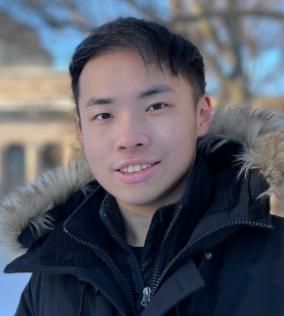 Yung-Sung Chuang (莊永松)合作论文数Computer Science & Artificial Intelligence Laboratory, Schwarzman College of Computing, Massachusetts Institute of Technology;Meta14
 Hu Xu合作论文数Facebook AI Research13
 Jim Glass合作论文数Computer Science and Artificial Intelligence Laboratory, Massachusetts Institute of Technology10
 Shinji Watanabe合作论文数Department of Electrical and Computer Engineering, College of Engineering, Carnegie Mellon University10
 Jiatong Shi (史嘉彤)合作论文数Language Technologies Institute, Carnegie Mellon University9
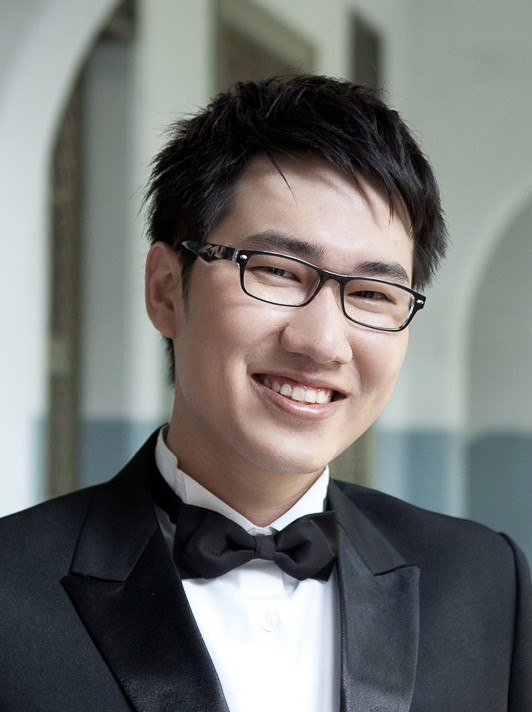 Bernie Huang合作论文数Facebook AI Research8
 Lin-shan Lee (李琳山)合作论文数Department of Electrical Engineering, National Taiwan University;Department of Computer Science and Information Engineering, National Taiwan University;Center for Artificial Intelligence and Advanced Robotics, National Taiwan University8
 Hongyin Luo (罗鸿胤)合作论文数8
 Xuankai Chang (常烜恺)合作论文数Google8
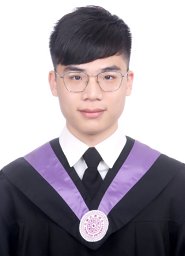 Guan-Ting Lin合作论文数Natl Taiwan Univ7
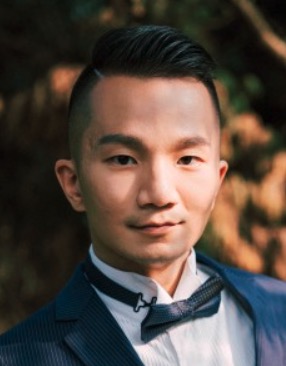 Andy T. Liu (劉廷緯)合作论文数ByteDance Seed7
 C.-C. Jay Kuo合作论文数Thomas Lord Department of Computer Science, Viterbi School of Engineering, University of Southern California;Media Communications Lab, Viterbi School of Engineering, University of Southern California7
 Vasu Sharma合作论文数6
 Kushal Lakhotia合作论文数AI Res, Facebook6
 Shu-Wen (Leo) Yang (楊書文)合作论文数Graduate Institute of Communication Engineering, National Taiwan University;Speech Processing and Machine Learning Laboratory, National Taiwan University6
 ZiLi Huang (黄自力)合作论文数6
 Gargi Ghosh合作论文数Facebook AI6
 Luke Zettlemoyer合作论文数Paul G. Allen School of Computer Science & Engineering, University of Washington;Facebook AI6
 Yuzhuo Ren合作论文数6
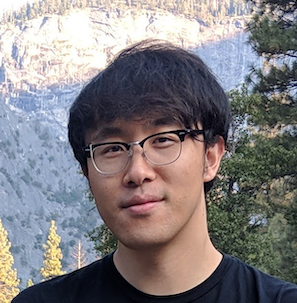 Saining Xie (谢赛宁)合作论文数Courant Institute of Mathematical Sciences, New York University;AMI Labs6
 Scott Wen-Tau Yih (易文韜)合作论文数Facebook AI Research, Meta6
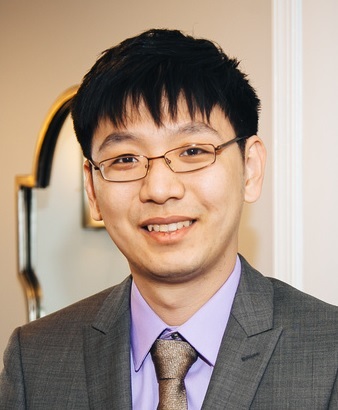 Kai-Wei Chang合作论文数Department of Computer Science, Samueli School of Engineering, University of California, Los Angeles6Wei-Cheng Tseng合作论文数5Ho-Lam Chung合作论文数Centre for Perceptual and Interactive Intelligence (CPII), Hong Kong5
 Chi Po Han合作论文数College of Electrical Engineering and Computer Science, National Taiwan University5
 Henghui Zhu合作论文数Amazon Web Services5
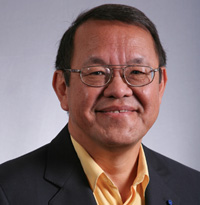 Victor Zue合作论文数Computer Science and Artificial Intelligence Laboratory, Massachusetts Institute of Technology5
 David Harwath合作论文数University of Texas at Austin5
 Puyuan Peng合作论文数The University of Texas at Austin;Meta4
 Shuyan Dong合作论文数4
 Dejiao Zhang合作论文数Figma4
) Lu Yu (虞露)合作论文数Institute of Information and Communication Networks Engineering, College of Information Science and Electronic Engineering Zhejiang University4
Lu Yu (虞露)合作论文数Institute of Information and Communication Networks Engineering, College of Information Science and Electronic Engineering Zhejiang University4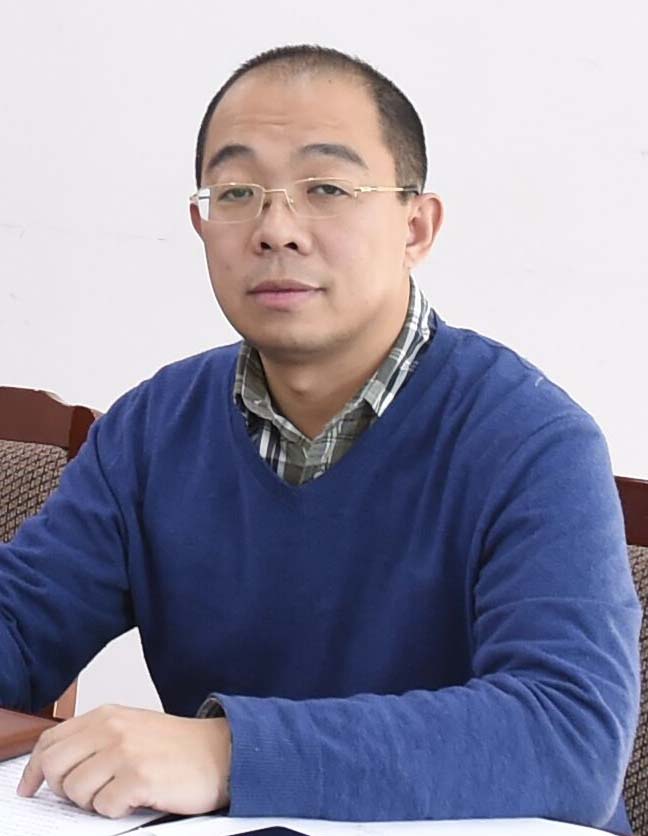 Haibin Wu (吴海滨)合作论文数Harbin University of Science and Technology4
 Andrew O. Arnold合作论文数Shopify;Polytechnic Institute, Tandon School of Engineering, New York University4
 Ching-Feng Yeh合作论文数4
 Christoph Feichtenhofer合作论文数Meta4Cheng-I Jeff Lai合作论文数3Tzu-Hsien Huang合作论文数3Annie Dong合作论文数3Russell Howes合作论文数3
 Jin Cao合作论文数3
 Darong Liu合作论文数Graduate Institute of Communication Engineering, National Taiwan University3
 Wei Xiao合作论文数3
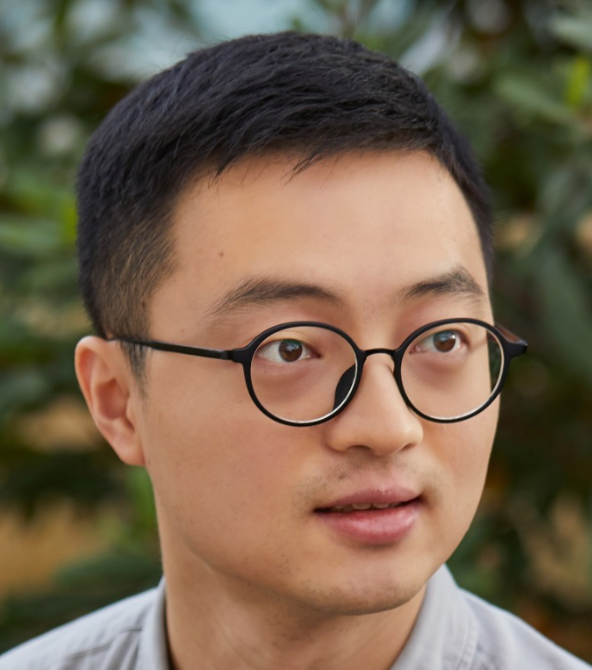 Changhan Wang (王昌翰)合作论文数Meta3Yist Y Lin合作论文数College of Electrical Engineering and Computer Science, National Taiwan University3
 Liang-Che Sun合作论文数Sch. of Grad. Inst. of Commun. Eng., Nat. Taiwan Univ.3
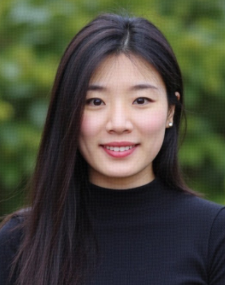 Hua Shen (申华)合作论文数New York University Shanghai;Tandon School of Engineering, New York University;Computer Science Department, New York University2




