The Tropospheric Ozone Assessment Report (TOAR) has recently pioneered the use of global Earth Observation data to derive a globally consistent scheme for characterizing the local environment of stations measuring weather and atmospheric composition. Here, we are building on the TOAR concept and expand it to a set of web services, which will allow for a flexible, automated characterization of any point location through standardized REST APIs. These services shall be freely available to the community and thus pave the way for new concepts to analyze global monitoring data and evaluate numerical models.
Big Data challenges often require application of new data processing paradigms (like MapReduce), and corresponding software solutions (e. g. Hadoop). This trend causes a pressure on both cyber-infrastructure providers (to quickly integrate new services) and infrastructure users (to quickly learn to use new tools). In this paper we present the concept of DARIAH Generic Workspace for Big Data Processing in eHumanities which alleviates the aforementioned problems. It establishes a common integration layer, thus enables a quick integration of new services, and by providing unified interfaces, allows the users to start using new tools without learning their internal details. We describe the overall architecture and implementation details of the working prototype. The presented concept is generic enough to be applied in other emerging cyber-infrastructures for humanities.
During the past decade, significant international and broader interdisciplinary research is increasingly carried out by global collaborations that often share resources within a single production e-science infrastructure. More recently, increasing complexity of e-science applications embrace multiple physical models (i.e. multi-physics) and consider longer and more detailed simulation runs as well as a larger range of scales (i.e. multi-scale). This increase in complexity is creating a steadily growing demand for cross-infrastructure operations that take the advantage of multiple e-science infrastructures with a more variety of resource types. Since interoperable e-science infrastructures are still not seamlessly provided today we proposed in earlier work the Infrastructure Interoperability Reference Model (IIRM) that represents a trimmed down version of the Open Grid Service Architecture (OGSA) in terms of functionality and complexity, while on the other hand being more specifically useful for production and thus easier to implement. This contribution focuses on several important reference model invariants that are often neglected when infrastructure integration activities are being performed thus hindering seamless interoperability in many aspects. In order to indicate the relevance of our invariant definitions, we provide insights into two accompanying cross-infrastructure use cases of the bio-informatics and fusion science domain.
Current praxis of software licensing has been identified as major obstacle for Grid computing a couple of years ago already. Recent surveys of Clouds indicate that the same holds true for Cloud computing. As a consequence, using commercial applications that require access to a license server for authorisation at run-time has been quite limited until recently in distributed computing environments. Due to the mandatory centralised control of license usage during application run-time traditional software licensing practices are not suitable. In this paper we present a novel approach for managing software licenses as web service resources in distributed service oriented environments. Licenses become mobile objects, which may move to the environment where required to authorise the execution of a license protected application. The SmartLM solution, which has been recently implemented as a prototype decouples authorisation for license usage from authorisation for application execution.
Many production Grid and e-science infrastructures offer their broad range of resources via services to end-users during the past several years with an increasing number of scientific applications that require access to a wide variety of resources and services in multiple Grids. But the vision of world-wide federated Grid infrastructures in analogy to the electrical power Grid is still not seamlessly provided today. This is partly due to the fact, that Grids provide a much more variety of services (job management, data management, information, security, etc.) in comparison with the electrical power Grid, but also we observe a rather slow adoption of the Open Grid Services Architecture (OGSA) concept initially defined as the major Grid reference model architecture roughly one decade ago. This contribution critically reviews OGSA and other related reference models in the field while pointing to significant requirements of an e-science infrastructure interoperability reference model that satisfies the needs of end-users today. We give insights to our findings of the core factors of such reference model requirements including its important major indicators to overcome the known limitations of OGSA. We then compare OGSA and the identified factors with our approach to give evidence for its applicability, relevance, and impact in European production infrastructures today.
A recent survey of the 451group on Cloud usage highlights software licensing as one of the top five obstacles for Cloud computing, quite similar to what has been observed in the Grid already a couple of years. The reasons are the same: the current praxis of software licensing, both in terms of business models and licensing technology. As a consequence, using commercial applications that require access to a license server for authorisation at run-time has been quite limited until recently in distributed computing environments, especially when the environment stretches across administrative domains like it is the case for public Clouds. In this paper we present a novel approach for managing software licenses as web service resources in distributed service oriented environments. Licenses become mobile objects, which may move to the environment where required to authorise the execution of a license protected application.
UNICORE is a European Grid Technology with more than 10 years of history. Originating from the Supercomputing domain, the latest version UNICORE 6 has turned into a general-purpose Grid technology that follows established standards and offers a rich set of features to its users. The paper starts with an architectural insight into UNICORE 6, highlighting the workflow features, standards and the different clients. Next, the current state of advancement is presented by describing recent developments. The paper closes with an outlook on future planned developments.
Recently, more and more e-science projects require resources in more than one production e-science infrastructure, especially when using HTC and HPC concepts together in one scientific workflow. But the interoperability of these infrastructures is still not seamlessly provided today and we argue that this is due to the absence of a realistically implementable reference model in Grids. Therefore, the fundamental goal of this paper is to identify requirements that allows for the definition of the core building blocks of an interoperability reference model that represents a trimmed down version of OGSA in terms of functionality, is less complex, more fine-granular and thus easier to implement. The identified requirements are underpinned with gained experiences from world-wide interoperability efforts
One of the major obstacles to using commercial applications in Distributed Computing Infrastructures like Grids or Clouds is the current technology that relies on controlling the use of these applications with software licenses. "Software licensing practices are limiting the acceleration of grid adoption" was one of the results of a survey of the 451group in 2005. Just recently the 451group published a similar report on obstacles to the broad adoption of Cloud Computing - and again licensing practices were listed among the top five obstacles. elasticLM overcomes the limitations of existing licensing technologies allowing seamless running of license protected applications in computing environments ranging from local infrastructures to external Grids and Clouds.
Until recently the use of applications requiring a software license for execution was quite limited in distributed environments. Due to the mandatory centralised control of license usage at application run-time, e.g. heartbeat control by the license server running at the home site of a user, traditional software licensing practices are not suitable especially when the distributed environment stretches across administrative domains. In this paper we present a novel approach for managing software licenses as web service resources in distributed service oriented environments. Licenses become mobile objects, which may move to the environment where required to authorise the execution of a license protected application. A first implementation has been realised for dynamic Grid environments in the European SmartLM project co-funded by the European Commission. The SmartLM solution decouples authorisation for license usage from authorisation for application execution. All authorisations are expressed as and guaranteed by Service Level Agreements. We will present the core technology, discuss various security aspects and how they are addressed in SmartLM, and present a number of usage scenarios leveraged by the SmartLM technology. Finally, we will give an outlook on specific issues and current work extending the solution to Clouds and service based systems in general.
In recent years, the Virtual Organization Membership Service (VOMS) emerged within Grid infrastructures providing dynamic, fine-grained, access control needed to enable resource sharing across Virtual Organization (VOs). VOMS allows to manage authorization information in a VO scope to enforce agreements established between VOs and resource owners. VOMS is used for authorization in the EGEE and OSG infrastructures and is a core component of the respective middleware stacks gLite and VDT. While a module for supporting VOMS is also available as part of the authorization service of the Globus Toolkit, there is currently no support for VO-level authorization within the new Web services-based UNICORE 6. This paper describes the evolution of VOMS towards an open standard compliant service based on the Security Assertion Markup Language (SAML), which in turn provides mechanisms to fill the VO-level authorization service gap within Web service-based UNICORE Grids. In addition, the SAML-based VOMS allows for cross middleware VO management through open standards.
In the past years, many scientific and economic-related applications from various domains have taken advantage of Grid infrastructures that share storage or computational resources such as supercomputers or clusters across multiple organizations. Especially within Grid infrastructures driven by high-performance computing (HPC) such as the Distributed European Infrastructure for Supercomputing Applications (DEISA), the UNICORE Grid middleware has become an important tool to seamlessly access distributed resources by providing strong security and work-flow capabilities. This paper highlights different usage models of UNICORE from a wide variety of scientific applications, and provides insights of approaches in economic-related scenarios with UNICORE.
This paper is about UNICORE, a European Grid Technology with more than 10 years of history. Originating from the Supercomputing domain, the latest version UNICORE 6 has matured into a general-purpose Grid technology that follows established Grid and Web services standards and offers a rich set of features to its users. An architectural insight into UNICORE is given, highlighting the workflow features as well as the different client options. The paper closes with a set of example use cases and e-infrastructures where the UNICORE technology is used today.
 Morris Riedel合作论文数24
 A Streit合作论文数J??lich Supercomputing Centre20
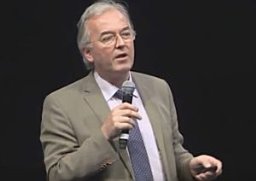 Thomas Lippert合作论文数Forschungszentrum Julich, Julich Supercomp Ctr11
 Shahbaz Memon合作论文数8
 Bjorn Hagemeier合作论文数8
 David Snelling合作论文数7Mathilde Romberg合作论文数Research Centre Julich, Germany7Ahmed Shiraz Memon合作论文数7Wolfgang Frings合作论文数7
 Bernd Thomas Schuller合作论文数Jülich Supercomputing Centre7
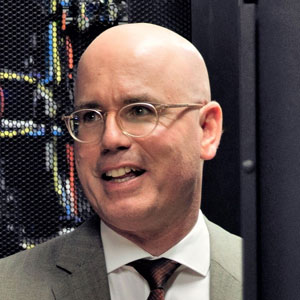 Felix Wolf合作论文数Department of Computer Science, Technical University of Darmstadt7Claudio Cacciari合作论文数6Vivian Li合作论文数6
 Paul Gibbon合作论文数Focused Energy Inc;KU Leuven5
 Wolfgang Ziegler合作论文数5Roger Menday合作论文数5Thomas Eickermann合作论文数Head of the division "Communication Systems"
Central Institute for Applied Mathematics5
Wolfgang Ziegler合作论文数5Roger Menday合作论文数5Thomas Eickermann合作论文数Head of the division "Communication Systems"
Central Institute for Applied Mathematics5 Moreno Marzolla合作论文数Dipartimento di Informatica;Foscari di Venezia;Dipartimento di Informatica|Foscari di Venezia4Angela Rumpl合作论文数4Francesco D’Andria合作论文数Atos Origin - Research and Innovation4
 Josep Martrat合作论文数4Csilla Zsigri合作论文数4Valerio Venturi合作论文数4Dietmar W. Erwin合作论文数4
 Paolo Andreetto合作论文数4
 Piotr Bała合作论文数ICM University of Warsaw4Fredrik Hedman合作论文数3Zeeshan Shah合作论文数3Bastian Tweddell合作论文数3Andrea Ferraro合作论文数3Sonja Holl合作论文数3
 Sven Van den Berghe合作论文数3Sonja Dominiczak合作论文数3Michael Rambadt合作论文数3Bastian Demuth合作论文数3werner anrath合作论文数2Sven van de Berghe合作论文数2Th. Lippert合作论文数2
 Olaf Stein合作论文数2
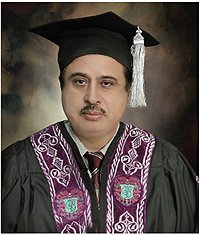 Memon Abdul Sattar合作论文数Department of Surgery, Liaquat University of Medical and Health Sciences (LUMHS),2
 David Garcia合作论文数2A. Vanni合作论文数2Krzysztof Benedyczak合作论文数2Alistair Dunlop合作论文数2
 Philipp Wieder合作论文数Research Centre Jülich Central Institute for Applied Mathematics2Nishadi De Silva合作论文数2S. Lanzarini合作论文数2Miriam Gozalo合作论文数2Ralf Ratering合作论文数* From: workgroup_mailer@lists.oasis-open.org2




