, The first Exaflop-capable systems will be installed in the USA and China beginning in 2020. Europe intends to have its own machines starting in 2023. It is therefore very timely for computer centres, software providers, and application developers to prepare for the challenge of operating and efficiently using such Exascale systems. This paper summarises the activities that have been going on for years in the J¨ulich Supercomputing Centre (JSC) to prepare the scientists and users for the arrival of Exascale computing. The J¨ulich activities revolve around the concept of modular supercomputing. They include both computational and data manage- ment aspects, ranging from the deployment and operation of large-scale computing platforms ( e.g. the JUWELS Booster at JSC) and the federation of storage infrastructures (as for example the European data and compute platform Fenix), up to the education, training and support of application developers to exploit these future technologies.
Since June 2010, the "Partnership for Advanced Computing in Europe" (PRACE) is established as a persistent pan-European research infrastructure for High Performance Computing (HPC). It represents the leadership-level (Tier-0) of the European HPC ecosystem. PRACE has been created within the last four years by a consortium of as yet 22 European countries. A preparatory project, supported by the EU's DG INFSO, has built PRACE's legal and technical foundations. Today PRACE is an international non-profit association with seat in Brussels.Four member organizations have committed to provide compute cycles worth (sic) 100 Million each for 5 years, beginning 2010. Access to the infrastructure is exclusively granted on the basis of scientific quality through a truely European, science governed peer review process. The provision of CPU time started in August 2010 on the 1.0 petaflop/s supercomputer JUGENE hosted by Forschungszentrum Julich, a member of the German Gauss Centre for Supercomputing. End of 2011, the 1.6 petaflop/s system CURIE operated by the French societe civile "Grand Equipement National de Calcul Intensif" (GENCI) and the GCS 1.0 petaflop/s machine HERMIT at Stuttgart University have boosted the PRACE capacity substantially. In 2012 the multi-petaflop/s supercomputers at CINECA in Italy, at LRZ (GCS) in Germany and at BSC in Spain will follow.As summarized in this contribution, PRACE is continuing its development within the first implementation project (2010-2012). PRACE-1IP is overlapping with the second implementation project PRACE-2IP (2011-2013). The third implementation project PRACE-3IP (2012-2014) is under EU review. As an important element, PRACE's Tier-0 infrastructure will be complemented by provision of supercomputers to European science and industry through national centres and national review committees (Tier-1).
Large-scale scientific research often relies on the collaborative use of massive computational power, fast networks, and large storage capacities provided by e-science infrastructures (e.g., deisa, egee) since the past several years. Especially within e-science infrastructures driven by high-performance computing (hpc) such as deisa, collaborative online visualization and computational steering (covs) has become an important technique to enable hpc applications with interactivity and visualized feedback mechanisms. In earlier work we have shown a prototype covs technique implementation based on the visualization interface toolkit (visit) and the Grid middleware of deisa named as Uniform Interface to Computing Resources (unicore). Since then the approach grew to a broader covs framework. More recently, we investigated the impact of using the computational steering capabilities of the covs framework implementation in unicore on large-scale hpc systems (i.e., ibm BlueGene/P with 65536 processors) and the use of attribute-based authorization. In this chapter we emphasize on the improved collaborative features of the covs framework and present new insights of how we deal with dynamic management of n participants, transparency of Grid resources, and virtualization of hosts of end-users. We also show that our interactive approach to hpc systems fully supports the necessary single sign-on feature required in Grid and e-science infrastructures.
Coordinated by the Partnership for Advanced Computing in Europe (PRACE) Europe is restructuring and strengthening its high-performance computing infrastructure with the aim to create a model HPC ecosystem. At the tip of the pyramid, up to six centres are envisaged that will operate systems of the highest performance class. The HPC Research Infrastructure (HPC-RI) will comprise European, national and regional centres. Science communities are integral partners, strong links will include Grid and Cloud users. The HPC-RI strives at providing scientists all over Europe, on the one hand, with unlimited and independent access to state-of-the-art computer resources in all performance classes and, on the other hand, with a world-class pan-European competence and support network.While the hardware-oriented buildup of the infrastructure is making progress, high-quality user support and software development in the upcoming era of unprecedented parallelism and exascale on the horizon have become the imminent challenges. This has been clearly recognized by the European Commission, who will issue calls for proposals to fund petascale software development in summer 2009. Although traditional support structures are well established in Europe's major supercomputing centres, it is questionable if these structures are able to meet the challenges of the future: in general, support structures are based on cross-disciplinary computer science and mathematics teams; disciplinary computational science support usually is given in an ad-hoc, project-oriented manner.In this paper, we describe our approach to establish a suitable support structure-Simulation Laboratories (SL). SLs are currently being established at the Julich Supercomputing Centre of the Forschungszentrum Julich (FZJ) and at the Steinbuch Centre for Computing (SCC) of the Karlsruhe Institute for Technology (KIT) in Germany. While SLs are community-oriented, i.e. each SL focusses on a specific community, they are structured in a strictly interdisciplinary manner, comprising mathematicians, computer scientists and technicians along with disciplinary scientists. SLs are led by a disciplinary scientist, and representatives of the respective disciplines give guidance to its operation. This concept is proposed as a model for and might become an integral element of a future pan-European HPC support and software research structure.
Especially within grid infrastructures driven by high-performance computing (HPC), collaborative online visualization and steering (COVS) has become an important technique to dynamically steer the parameters of a parallel simulation or to just share the outcome of simulations via visualizations with geographically dispersed collaborators. In earlier work, we have presented a COVS framework reference implementation based on the UNICORE grid middleware used within DEISA. This paper lists current limitations of the COVS framework design and implementation related to missing fine-grained authorization capabilities that are required during collaborative COVS sessions. Such capabilities use end-user information about roles, project membership, or participation in a dedicated virtual organization (VO). We outline solutions and present a design and implementation of our architecture extension that uses attribute authorities such as the recently developed virtual organization membership service (VOMS) based on the security assertion markup language (SAML).
The co-allocation of resources for the parallel execution o f distributed MPI applications in a Grid environment is a challenging task. On one hand it is mandatory to co-ordinate the usage of computational resources, like for example compute clusters, on the other hand it improves the additional scheduling of network resources the overall performance. Most Grid middlewares do not include such meta-scheduling capabilities, but rely on the provision of higher-level, often domain-specific, services. In this pap er we describe the integration of a meta-scheduler, namely the VIOLA MetaScheduling Service, into an existing Grid middleware to provide a framework for co-allocation of MPI jobs. For these purposes, the design and architecture of the framework are presented and, based on the MetaTrace application, the performance of the system is evaluated.
Today's large-scale scientific research often relies on the collaborative use of a Grid or c-Science infrastructure (e.g. DEISA, EGEE, TeraGrid, OSG) with computational, storage, or other types of physical resources. One of the goals of these emerging infrastructures is to support the work of scientists with advanced problem-solving tools. Many e-Science applications within these infrastructures aim at simulations of a scientific problem on powerful parallel computing resources. Typically, a researcher first performs a simulation for some fixed amount of time and then analyses results in a separate post-processing step, for instance, by viewing results in visualizations. In earlier work we have described early prototypes of a Collaborative Online Visualization and Steering (COVS) Framework in Grids that performs both -simulation and visualization -at the same time (online) to increase the efficiency of e-Scientists. This paper evaluates the evolved mature reference implementation of the COVS framework design that is ready for production usage within Web service-based Grid and e-Science infrastructures.
A system for the distributed, collaborative online visualisation in heterogeneous visualisation environments was developed and tested in the application project KoDaVis, which is part of the german optical network testbed VIOLA. The aim of KoDaVis is the visualisation of huge data sets from atmosphere research. The core of the presented distributed computer supported collaborative work system is a framework for the coupling of heterogeneous visualisation systems and the design and implementation of two distinct servers, one for the collaborative aspects and one for the direct remote access to centrally stored data. Interfaces to the VTK-based virtual reality visualisation system ViSTA and to the modular visualisation environment AVS/Express were implemented and tested. The successful coupling of these two different visualisation systems as well as the benefit of a fast optical network for parallel data access and for distributed collaboration could be demonstrated in a test setup.
Distributed applications or workflows need to access and use compute, storage and network resources simultaneously or chronologically coordinated respectively. Examples are distributed multi-physics simulations that use the combined computational performance and data storage of multiple clusters. A coordinated reservation and allocation of the resources is a prerequisite for the efficient use of such resources. This contribution describes the components of a system that provides Grid users with this functionality. The Grid middleware UNICORE is extended to access a MetaScheduling Service (MSS) performing orchestration of resources of different administrative domains, using advance reservation capability of local resource management systems (RMS) - including network connections for which ARGON serves as RMS. ARGON leverages Bandwidth on Demand, a cornerstone of next generation Grid enabled optical networks rendering the network to a first class Grid resource.
Many production Grid infrastructures such as DEISA, EGEE, or TeraGrid have begun to offer services to endusers that include access to computational resources. The major goal of these infrastructures is to facilitate the routine interaction of scientists and their workflows with advanced tools and seamless access to computational resources via Grid middleware systems such as UNICORE, gLite or Globus Toolkits. While UNICORE 5 is used in production Grids since several years, recently an early prototype of the new Web services-based UNICORE 6 became available that will be continuously improved in the next months for its use in production. In absence of a widely accepted framework for visualization and steering, the new UNICORE 6 Grid middleware provides not such a higher level service by default. This motivates this contribution to support e-Scientists in upcoming WS-based UNICORE Grids with visualization and steering techniques. In this paper we present the augmentation of the early standards-based UNICORE 6 prototype with a higher-level service for collaborative online visualization and steering. It describes the seamless integration of this service within UNICORE Grids by retaining the convenient single sign-on feature.
This deliverable, named “Design of Grid-GMPLS interworking with NRPS”, reports on the interworking architectures, interoperability scenarios between GMPLS and Harmony system. It also defines the signalling and routing specifications of the HG2 GW (Harmony GMPLS gatetway) and methods that have been implemented to provide this gateway. The work shown here is the outcome of the WP2WP1 collaboration. List of Contributors Eduard Escalona UEssex Georgios Zervas UEssex Reza Nejabati UEssex Dimitra Simeonidou UEssex Alexander Willner UoB Christian de Waal UoB
Many production e-Science infrastructures (e.g. DEISA, D-Grid) have begun to oer a wide variety of services for end-users during the past several years. Many e-Scientists solve their scientic problems by us- ing parallel computing applications on clusters and collaborative on- line visualization and steering (COVS) is known as a tool for analyz- ing and better understanding of these applications. In absence of a widely accepted COVS framework within Grids, visualizations are often created using proprietary technologies assuming a dedicated scenario. This makes it feasible to analyze the usual requirements to provide a blueprint for a more general COVS framework that can be integrated into Grid middleware systems such as UNICORE, gLite, or Globus Toolkits. These requirements lead to a design that was successfully implemented as a higher-level service in UNICORE and presented at numerous places such as the Open Grid Forum 19 and 20, Europar 2006, Supercomputing 2006 and DEISA trainings.
Running large MPI-applications with resource demands exceeding the local site's cluster capacity could be distributed across a number of clusters in a Grid instead, to satisfy the demand. However, there are a number of drawbacks limiting the applicability of this approach: communication paths between compute nodes of different clusters usually provide lower bandwidth and higher latency than the cluster internal ones, MPI libraries use dedicated I/O-nodes for inter-cluster communication which become a bottleneck, missing tools for co-ordinating the availability of the different clusters across different administrative domains is another issue. To make the Grid approach efficient several prerequisites must be in place: an implementation of MPI providing high-performance communication mechanisms across the borders of clusters, a network connection with high bandwidth and low latency dedicated to the application, compute nodes made available to the application exclusively, and finally a Grid middleware glueing together everything. In this paper we present work recently completed in the VIOLA project: MetaMPICH, user controlled QoS of clusters and interconnecting network, a MetaScheduling Service and the UNICORE integration.
Demanding applications like distributed multi-physics simulations benefit from the combined computational performance and data storage of multiple clusters. A reservation mechanism spanning these clusters ensures the availability of all selected resources. Complex workflows with chronological dependencies are supported. This approach addresses network resources the same way as computation and storage resources. A Meta Scheduling Service (MSS) does the orchestration of resources of different administrative domains, based on an advance reservation capability of local resource management systems. The combined reservation of computational, storage and network resources as done in the VIOLA project for UNICORE based Grid applications, allows a user or application driven selection and reservation of network connections with dedicated QoS based on evolving network technologies. The integrated network management system ARGON is a cornerstone of the next generation Grid enabled optical networks rendering the network to a first class Grid resource.
The UNICORE (UNiform Interface to COmputing REsources) software provides a Grid infrastructure together with a computing portal for engineers and scientists to access supercomputer centres from anywhere on the Internet. While UNICORE is primarily designed for the submission and control of batch jobs, it is also feasible to establish an on-line connection between an application and the UNICORE user-client. This opens up the possibility of performing on-line visualization and computational steering of applications under UNICORE control while maintaining the security provided by this system. This contribution describes the design of a steering extension to UNICORE based on the steering toolkit VISIT (VISualization Interface Toolkit). VISIT is a lightweight library that supports bidirectional data exchange between visualizations and parallel applications. As an example application, a parallel simulation of a laser-plasma interaction that can be steered by an AVS/Express application is presented.
In this showcase we will present live running simulations which are integrated into the Access Grid in a variety of different ways. An example of this is the use of vnc to distribute a desktop on which the simulation is being displayed. Another example is the redirection of the visualization into vic to make 3D animations available over the Access Grid. Other examples that will be explored are the use of SGI's OpenGL VizServer to direct the output of a graphics supercomputer located on the Grid to the AG locations. We will also utilize the ability of the next generation AG software to directly link with visualization toolkits such as vtk, AVS/Express, or COVISE as an integrated part of the Virtual Venue as this functionality has developed by the time of the SC2003 demonstrations. We also demonstrate steering in a collaborative setting using a steering service which is fully compliant with OGSI and with the proposed OGSA architecture. This can be integrated with current Grid middleware (e.g. GT2 and UNICORE) using a specially developed Perl hosting environment, OGSI:Lite.
The Gigabit Testbed West is a testbed for the planned upgrade of the German Scientic Network B-WiN. It is based on a 2.4 Gigabit/second ATM connection between the Research Centre Jülich and the GMD - National Research Center for Information Technology in Sankt Augustin. This contribution reports on those activities in the testbed that are related to metacomputing. It starts with a discussion of the IP connectivity of the supercomputers in the testbed. The achieved performance is compared with MetaMPI, an MPI library that is tuned for the use in metacomputing environments with high-speed networks. Applications using this library are briefly described.
Real-time fMRI is a rapidly emerging methodology that enables monitoring changes in brain activity during an ongoing experiment, in this article we demonstrate the feasibility of performing single-event sensory, motor, and higher cognitive tasks in real-time on a clinical whole-body scanner. This approach requires sensitivity optimized fMRI methods: Using statistical parametric mapping we quantified the spatial extent of BOLD contrast signal changes as a function of voxel size and demonstrate that sacrificing spatial resolution and readout bandwidth improves the detection of signal changes in real time. Further increases in BOLD contrast sensitivity were obtained by using real-time multi-echo EPI. Real-time image analysis was performed using our previously described Functional imaging in REal time (FIRE) software package, which features real-time motion compensation, sliding window correlation analysis, and automatic reference vector optimization. This new fMRI methodology was validated using single-block design paradigms of standard visual, motor, and auditory tasks. Further, we demonstrate the sensitivity of this method for online detection of higher cognitive functions during a language task using single-block design paradigms. Finally, we used single-event fMRI to characterize the variability of the hemodynamic impulse response in primary and supplementary motor cortex in consecutive trials using single movements. Real-time fMRI can improve reliability of clinical and research studies and offers new opportunities for studying higher cognitive functions. (C) 2001 Wiley-Liss, Inc.
 Wolfgang Frings合作论文数13
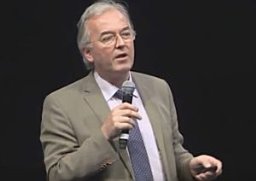 Thomas Lippert合作论文数Forschungszentrum Julich, Julich Supercomp Ctr8
 Paul Gibbon合作论文数Focused Energy Inc;KU Leuven8
 Morris Riedel合作论文数5
 Wolfgang Ziegler合作论文数5
 Daniel Mallmann合作论文数Forschungszentrum Jülich GmbH5Oliver Wäldrich合作论文数4
 Norbert Attig合作论文数4
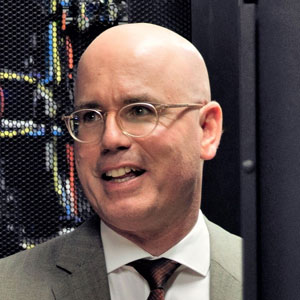 Felix Wolf合作论文数Department of Computer Science, Technical University of Darmstadt4
 Jörg Henrichs合作论文数Central Institute for Applied Mathematics (ZAM),, Research Centre Jülich GmbH3
 A Streit合作论文数J??lich Supercomputing Centre3Sonja Dominiczak合作论文数3T Dussel合作论文数3Lidia Kirtchakova合作论文数3Gino Carrozzo合作论文数2w gurich合作论文数2angel sanchez合作论文数2Sebastian Rinke合作论文数2Stefan Posse合作论文数2
 Cees de Laat合作论文数Informatics Institute, Faculty of Science, University of Amsterdam2
 Leon Gommans合作论文数University of Amsterdam2
 Wolfgang E. Nagel合作论文数Center for Information Services and High Performance Computing, Technische Universitat Dresden2Artur Binczewski合作论文数Sorry, no bio available. Please contact the speaker for more information2
 Markus Pilz合作论文数University of Zurich2S. Habbinga合作论文数2
 Christoph Barz合作论文数University of Bonn2Ferdinand Hommes合作论文数Korea Institute of Science & Technology|Imaging Media Research Center|Fraunhofer-Institute for Media Communication2
 Sergi Figuerola合作论文数i2CAT Foundation, c/ Gran Capità 2-4, Edifici Nexus I, 2a planta, desp. 203, Barcelona, Spain 080342
 Norbert Eicker合作论文数Jülich Supercomputing Centre, Institute for Advanced Simulation, Forschungszentrum Jülich;Bergische Universität Wuppertal2W. Homberg合作论文数Julich Supercomputing Centre;Forschungszentrum Julich GmbH2J B Salloum合作论文数1w bogacki合作论文数1
 Wojbor Bogacki合作论文数1Frank Schneider合作论文数1Achilles Sebastian合作论文数1John H. Moore合作论文数1stanislav sima合作论文数1Lada Altmannova合作论文数1Dorian Krause合作论文数1
 Alexandre Strube合作论文数Jülich Supercomputing Centre1
 Andreas Herten合作论文数1
 Reza Nejabati合作论文数University of Essex1Stefan Wiese合作论文数1
 Ute Habel合作论文数Department of Psychiatry and Psychotherapy, RWTH Aachen University1A. Ernst合作论文数1Maciej Stroinski合作论文数1
 Paola Grosso合作论文数Univ Amsterdam1
 Philipp Wieder合作论文数Research Centre Jülich Central Institute for Applied Mathematics1Carsten Rosche合作论文数1




