Figure S8. CCF comparisons between multiple tumour samples.
Supplementary Material and Methods Figure S1. Proportion of clonal and subclonal variants identified by whole exome sequencing. Figure S2. Mutation cancer cell fractions from whole-exome sequencing. Figure S4. Bootstrap values for targeted sequencing phylogenetic trees. Figure S5. Phylogenetic trees reconstructed from WES data. Figure S6. Phylogenetic trees reconstructed from TES data using only clonal mutations in each sample (CCF>80%). Figure S7. Measure of phylogenetic divergence.
Whole-exome sequencing mutations variant allele frequencies used to calculate cancer cell fractions
Targeted sequencing mutations variant allele frequencies used to calculate cancer cell fractions
Figure S3. Log-R-ratios and B-allele-frequency values.
A morbidostat is a bioreactor that uses antibiotics to control the growth of bacteria, making it well-suited for studying the evolution of antibiotic resistance. However, morbidostats are often too expensive to be used in educational settings. Here we present a low-cost morbidostat called the EVolutionary biorEactor (EVE) that can be built by students with minimal engineering and programming experience. We describe how we validated EVE in a real classroom setting by evolving replicate Escherichia coli populations under chloramphenicol challenge, thereby enabling students to learn about bacterial growth and antibiotic resistance.
Colorectal malignancies are a leading cause of cancer death. Despite large-scale genomic efforts, DNA mutations do not fully explain malignant evolution. Here we study the co-evolution of the genome and epigenome of colorectal tumours at single-clone resolution using spatial multi-omic profiling of individual glands. We collected 1,373 samples from 30 primary cancers and 9 concomitant adenomas and generated 1,212 chromatin accessibility profiles, 527 whole-genomes and 297 whole-transcriptomes. We found positive selection for DNA mutations in chromatin modifier genes and recurrent chromatin changes in regulatory regions of cancer drivers with otherwise no mutation. Genome-wide alterations in transcription factor binding accessibility involved CTCF, downregulation of interferon, and increased accessibility for SOX and HOX, indicating developmental genes reactivation. Epigenetic aberrations were heritable, distinguishing adenomas from cancers. Mutational signature analysis showed the epigenome influencing DNA mutation accumulation. This study provides a map of (epi)genetic tumour heterogeneity, with fundamental implications for understanding colorectal cancer biology.
Cancer genomic medicine relies on targeting driver genes. However, current catalogues of cancer drivers are mostly based on indirect measurements of mutation frequencies, positions or types, rather than their effect on clonal expansions in vivo . Moreover, non-genetic drivers are largely unknown, as are the epigenetic and transcriptomic effects of genetic drivers. Here we perform spatial computational inference on multiomic data with matched whole-genome sequencing, ATAC-seq and RNA-seq. Using 436 samples, we directly quantify the contribution, or lack thereof, of putative driver genes to subclonal expansions in vivo in 30 colorectal carcinomas (4-33 samples per patient, median=15). Although subclonal neutral evolution was widespread (13/26 cases with sufficient data), there were cases with clear evidence of subclonal selection (6/26) in which we measured epigenetic and transcriptomic differences between subclones in vivo . In 7/26 cases we could not distinguish between neutral or selective evolution with the available data. We identified expanding subclones that were not driven by known genetic alterations, and propose candidate epigenetic drivers. We identified the distinguishing patterns of genomic heterogeneity produced in fast, exponentially growing tumours (7/26) versus neoplasms growing only at the periphery (19/26), as well as identifying clonally intermixed (16/28 cases with sufficient data) versus segregated malignancies (10/28). Our model-based approach measures genetic and non-genetic subclonal selection, or lack thereof, in space and time and allows in vivo comparisons of the emergent phenotypic properties of subclones within human tumours.
Intra-tumour heterogeneity is a leading cause of treatment failure and disease progression in cancer. While genetic mutations have long been accepted as a primary mechanism of generating this heterogeneity, the role of phenotypic plasticity is becoming increasingly apparent as a driver of intra-tumour heterogeneity. Consequently, understanding the role of this plasticity in treatment resistance and failure is a key component of improving cancer therapy. We develop a mathematical model of stochastic phenotype switching that tracks the evolution of drug-sensitive and drug-tolerant subpopulations to clarify the role of phenotype switching on population growth rates and tumour persistence. By including cytotoxic therapy in the model, we show that, depending on the strategy of the drug-tolerant subpopulation, stochastic phenotype switching can lead to either transient or permanent drug resistance. We study the role of phenotypic heterogeneity in a drug-resistant, genetically homogeneous population of non-small cell lung cancer cells to derive a rational treatment schedule that drives population extinction and avoids competitive release of the drug-tolerant sub-population. This model-informed therapeutic schedule results in increased treatment efficacy when compared against periodic therapy, and, most importantly, sustained tumour decay without the development of resistance.
18 19 The vast majority of cancer genomic data are generated from bulk samples composed of mixtures of cancer and 20 normal cells. To study tumor evolution, subclonal reconstruction approaches based on machine learning are used 21 to separate subpopulation of cancer cells in a sample and reconstruct their ancestral relationships. However, 22 current approaches are entirely data-driven and agnostic to evolutionary theory. Here, we demonstrate that 23 systematic errors occur in the subclonal reconstruction if tumor evolution is not accounted for, and that those 24 errors increase when multiple samples are taken from the same tumor. To address this issue, we present a novel 25 approach for model-based tumour subclonal reconstruction that combines data-driven machine learning with 26 evolutionary theory. Using public whole-genome sequencing data from 2,606 samples from different cohorts, as 27 well as newly generated data and synthetic validation, we show the method is more robust and accurate than 28 current techniques in single sample, multi-region and longitudinal data. With careful data interpretation, we show 29 how this approach minimizes the confounding factors that affect non-evolutionary methods, leading to more 30 accurate recovery of the evolutionary history and biological characteristics of human cancers. 31
Circulating tumour DNA (ctDNA) allows tracking of the evolution of human cancers at high resolution, overcoming many limitations of tissue biopsies. However, exploiting ctDNA to determine how a patient’s cancer is evolving in order to aid clinical decisions remains difficult. This is because ctDNA is a mix of fragmented alleles, and the contribution of different cancer deposits to ctDNA is largely unknown. Profiling ctDNA almost invariably requires prior knowledge of what genomic alterations to track. Here, we leverage on a rapid autopsy programme to demonstrate that unbiased genomic characterisation of several metastatic sites and concomitant ctDNA profiling at whole-genome resolution reveals the extent to which ctDNA is representative of widespread disease. We also present a methylation profiling method that allows tracking evolutionary changes in ctDNA at single-molecule resolution without prior knowledge. These results have critical implications for the use of liquid biopsies to monitor cancer evolution in humans and guide treatment.
Drug resistance mediated by clonal evolution is arguably the biggest problem in cancer therapy today. However, evolving resistance to one drug may come at a cost of decreased fecundity or increased sensitivity to another drug. These evolutionary trade-offs can be exploited using ‘evolutionary steering’ to control the tumour population and delay resistance. However, recapitulating cancer evolutionary dynamics experimentally remains challenging. Here, we present an approach for evolutionary steering based on a combination of single-cell barcoding, large populations of 10 8 –10 9 cells grown without re-plating, longitudinal non-destructive monitoring of cancer clones, and mathematical modelling of tumour evolution. We demonstrate evolutionary steering in a lung cancer model, showing that it shifts the clonal composition of the tumour in our favour, leading to collateral sensitivity and proliferative costs. Genomic profiling revealed some of the mechanisms that drive evolved sensitivity. This approach allows modelling evolutionary steering strategies that can potentially control treatment resistance.
Blockade of epidermal growth factor receptor (EGFR) causes tumor regression in some patients with metastatic colorectal cancer (mCRC). However, residual disease reservoirs typically remain even after maximal response to therapy, leading to relapse. Using patient-derived xenografts (PDXs), we observed that mCRC cells surviving EGFR inhibition exhibited gene expression patterns similar to those of a quiescent subpopulation of normal intestinal secretory precursors with Paneth cell characteristics. Compared with untreated tumors, these pseudodifferentiated tumor remnants had reduced expression of genes encoding EGFR-activating ligands, enhanced activity of human epidermal growth factor receptor 2 (HER2) and HER3, and persistent signaling along the phosphatidylinositol 3-kinase (PI3K) pathway. Clinically, properties of residual disease cells from the PDX models were detected in lingering tumors of responsive patients and in tumors of individuals who had experienced early recurrence. Mechanistically, residual tumor reprogramming after EGFR neutralization was mediated by inactivation of Yes-associated protein (YAP), a master regulator of intestinal epithelium recovery from injury. In preclinical trials, Pan-HER antibodies minimized residual disease, blunted PI3K signaling, and induced long-term tumor control after treatment discontinuation. We found that tolerance to EGFR inhibition is characterized by inactivation of an intrinsic lineage program that drives both regenerative signaling during intestinal repair and EGFR-dependent tumorigenesis. Thus, our results shed light on CRC lineage plasticity as an adaptive escape mechanism from EGFR-targeted therapy and suggest opportunities to preemptively target residual disease.
Both normal tissue development and cancer growth are driven by a branching process of cell division and mutation accumulation that leads to intra-tissue genetic heterogeneity. However, quantifying somatic evolution in humans remains challenging. Here, we show that multi-sample genomic data from a single time point of normal and cancer tissues contains information on single-cell divisions. We present a new theoretical framework that, applied to whole-genome sequencing data of healthy tissue and cancer, allows inferring the mutation rate and the cell survival/death rate per division. On average, we found that cells accumulate 1.14 mutations per cell division in healthy haematopoiesis and 1.37 mutations per division in brain development. In both tissues, cell survival was maximal during early development. Analysis of 131 biopsies from 16 tumours showed 4 to 100 times increased mutation rates compared to healthy development and substantial inter-patient variation of cell survival/death rates.
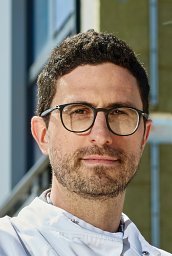 Andrea Sottoriva合作论文数Computational Biology Research Centre, Human Technopole;The Institute of Cancer Research25
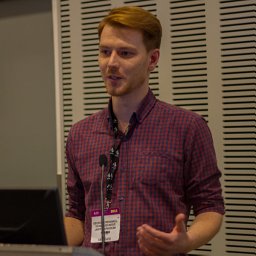 George D Cresswell合作论文数Evolutionary Genomics and Modelling Lab, Centre for Evolution and Cancer, The Institute of Cancer Research23
 Inmaculada Spiteri合作论文数21
 Ahmet Acar合作论文数Paterson Institute for Cancer Research, The University of Manchester;Paterson Institute for Cancer Research, The University of Manchester18
 Carlo Maley合作论文数School of Life Sciences, Arizona State University;Center for Evolution and Medicine, Arizona State University;Biodesign Center for Biocomputing, Security and Society, Arizona State University;St. Joseph's Hospital and Medical Center13Nicholas Trahearn合作论文数12Peter Barry合作论文数12Gaia Schiavon合作论文数12Luca Ermini合作论文数11
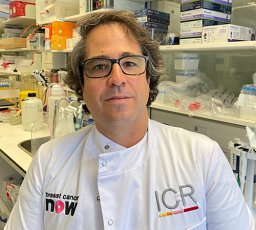 Garcia-Murillas Isaac合作论文数11
 Mitch Dowsett合作论文数Academic Department of Biochemistry, Royal Marsden Hospital;Centre for Molecular Pathology, Royal Marsden Hospital;Institute of Cancer Research;Breakthrough Breast Cancer Centre11
 Rachael Natrajan合作论文数Functional Genomics Group, The Institute of Cancer Research11
 Yinyin Yuan合作论文数Department of Translational Molecular Pathology, The University of Texas MD Anderson Cancer Center11Konrad Koelble合作论文数11Lila Zabaglo合作论文数11Alexandra Vatsiou合作论文数10Ian Said Huntingford合作论文数9Francesca Muscarà合作论文数9Kate Chkhaidze合作论文数9Hannah Cottom合作论文数9Sarah Hrebien合作论文数Royal Marsden Hospital, The Institute of Cancer Research, London, United Kingdom;9
 Saira Khalique合作论文数9
 Nick Turner合作论文数Royal Marsden Hospital;Breast Cancer Now Research Centre, The Institute of Cancer Research9
 Trevor A. Graham合作论文数Cancer Research UK, London Research Institute9
 Jennifer E Rusby合作论文数Department of Surgery, Division of Surgical Oncology, 55 Fruit Street, Yawkey 9A, Boston, MA 021149Anderson Alexander R A合作论文数8
 Giulio Caravagna合作论文数Dipartimento Informat Sistemist & Comunicaz, Univ Milano Bicocca8Timon Heide合作论文数Inst Canc Res, Evolutionary Genom & Modelling Lab, Ctr Evolut & Canc, London, England7
 Javier Fernández-Mateos合作论文数Univ Hosp Salamanca, Med Oncol Serv, IBSAL, Salamanca 37007, Spain7
 Benjamin Werner合作论文数Evolutionary Theory Group, Max-Planck-Institute for Evolutionary Biology7
 Peter Jeavons合作论文数Department of Computer Science, University of Oxford7
 Robert A. Bonomo合作论文数Department of Population and Quantitative Health Sciences, School of Medicine, Case Western Reserve University;Department of Medicine, School of Medicine, Case Western Reserve University;Department of Pharmacology, School of Medicine, Case Western Reserve University6
 Luis Zapata合作论文数Ctr Genom Regulat CRG, Barcelona Inst Sci & Technol6
 Luca Magnani合作论文数Dept Surg & Canc, Imperial Coll London6
 Jacob Scott合作论文数Cleveland Clinic Lerner Research Institute;Case Comprehensive Cancer Center, Case Western Reserve University6Ketevan Chkhaidze合作论文数Inst Canc Res, Evolutionary Genom & Modelling Lab, Ctr Evolut & Canc, London, England5Marc J Williams合作论文数4Jacob Househam合作论文数Evolution and Cancer Laboratory, Barts Cancer Institute, Queen Mary University of London;4
 Eszter Lakatos合作论文数Imperial Coll London, Dept Life Sci, Ctr Integrat Syst Biol & Bioinformat, London, England4Christopher Kimberley合作论文数Evolut & Canc Lab, Queen Mary Univ London4
 Guido Sanguinetti合作论文数Institute for Adaptive and Neural Computation, School of Informatics, The University of Edinburgh4
 William M. Cross合作论文数4
 Alexander Fletcher合作论文数3Jerome L. Paul合作论文数3
 Robert Gatenby合作论文数Center of Excellence for Evolutionary Therapy, Moffitt Cancer Center3
 Udai Banerji合作论文数Drug Development Unit, The Institute of Cancer Research;Drug Development Unit, The Royal Marsden NHS Foundation Trust;Clinical Pharmacodynamics Biomarker Group, The Institute of Cancer Research;Clinical Pharmacology Adaptive Therapy Group, The Institute of Cancer Research3
 Barozzi Iros合作论文数Dept Expt Oncol, European Inst Oncol3
 John Bridgewater合作论文数Cancer Institute, University College London;Research Department of Haematology, University College London3
 Jansen Marnix合作论文数Barts Cancer Institute, Queen Mary University of London3




