Abstra t. Most evaluation metri s in lassi ation are designed to reward lass uniformity in the example subsets indu ed by a feature (e.g., Information Gain). Other metri s are designed to reward dis rimination power in the ontext of feature sele tion as a means to ombat the feature-intera tion problem (e.g., Relief, Contextual Merit). We de ne a new framework that ombines the strengths of both kinds of metri s. Our framework enri hes the available information when onsidering whi h feature to use to partition the training set. Sin e most metri s rely on only a small fra tion of this information, this framework enlarges the spa e of possible metri s. Experiments on real-world domains in the ontext of de ision-tree learning show how a simple setting for our framework ompares well with standard metri s.
Keratocytes are vital for maintaining the overall health of human cornea as they preserve the corneal transparency and help in healing corneal injuries. Manual segmentation of keratocytes is challenging, time consuming and also needs an expert. Here, we propose a novel semi-automatic segmentation framework, called Conditional Random Field Weakly Supervised Segmentation (CRF-WSS) to perform the keratocytes cell segmentation. The proposed framework exploits the concept of dictionary learning in a sparse model along with the Conditional Random Field (CRF) modeling to segment keratocytes cells in Ultra High Resolution Optical Coherence Tomography (UHR-OCT) images of human cornea. The results show higher accuracy for the proposed CRF-WSS framework compare to the other tested Supervised Segmentation (SS) and Weakly Supervised Segmentation (WSS) methods.
Cross-Language Information Retrieval is a compact book introducing a branch of information retrieval that has gained considerable research interest since the dawn of the WorldWideWeb in the mid 1990s. Information retrieval is generally concerned with the problem of finding documents within a large collection that are relevant to a given input query. Whereas the original formulation of IR assumes that queries and documents are written in the same language, cross-language IR (CLIR) presumes instead that they are written in two different languages. If the collection contains documents in more languages, then we refer to multi-lingual IR (MLIR), which is typically solved with multiple instances of CLIR. Recently, other variations on the theme have been proposed that address non-textual documents, such as image, music, and speech retrieval. An interesting application of CLIR is the retrieval of images that are provided with textual descriptions in any language. Computational linguistics could be interested in CLIR for several reasons. CLIR is mainly about the optimal integration ofmachine translation (MT) and IR, and it presents peculiar and difficult translation issues when short queries are involved, which is the most common case. For such problems, interesting approaches have been developed and refined over time, which mainly build on top of core statistical MT techniques (e.g., word alignment models, translation models) and various lexical resources (e.g., WordNet, dictionaries). In recent years, several books on IR have been published (e.g., Grossman and Frieder 2004; Manning, Raghavan, and Schütze 2008; Büttcher, Clarke, and Cormack 2010), which devoted at most a section or chapter to CLIR. As specific books on CLIR have been limited so far to edited collections of scientific papers (Grefenstette 1998), it was definitely time for the first monograph on the topic. Jian-Yun Nie’s volume is structured as five chapters, which are organized as follows:
 Chris Drummond合作论文数29Anthony Wirth合作论文数29
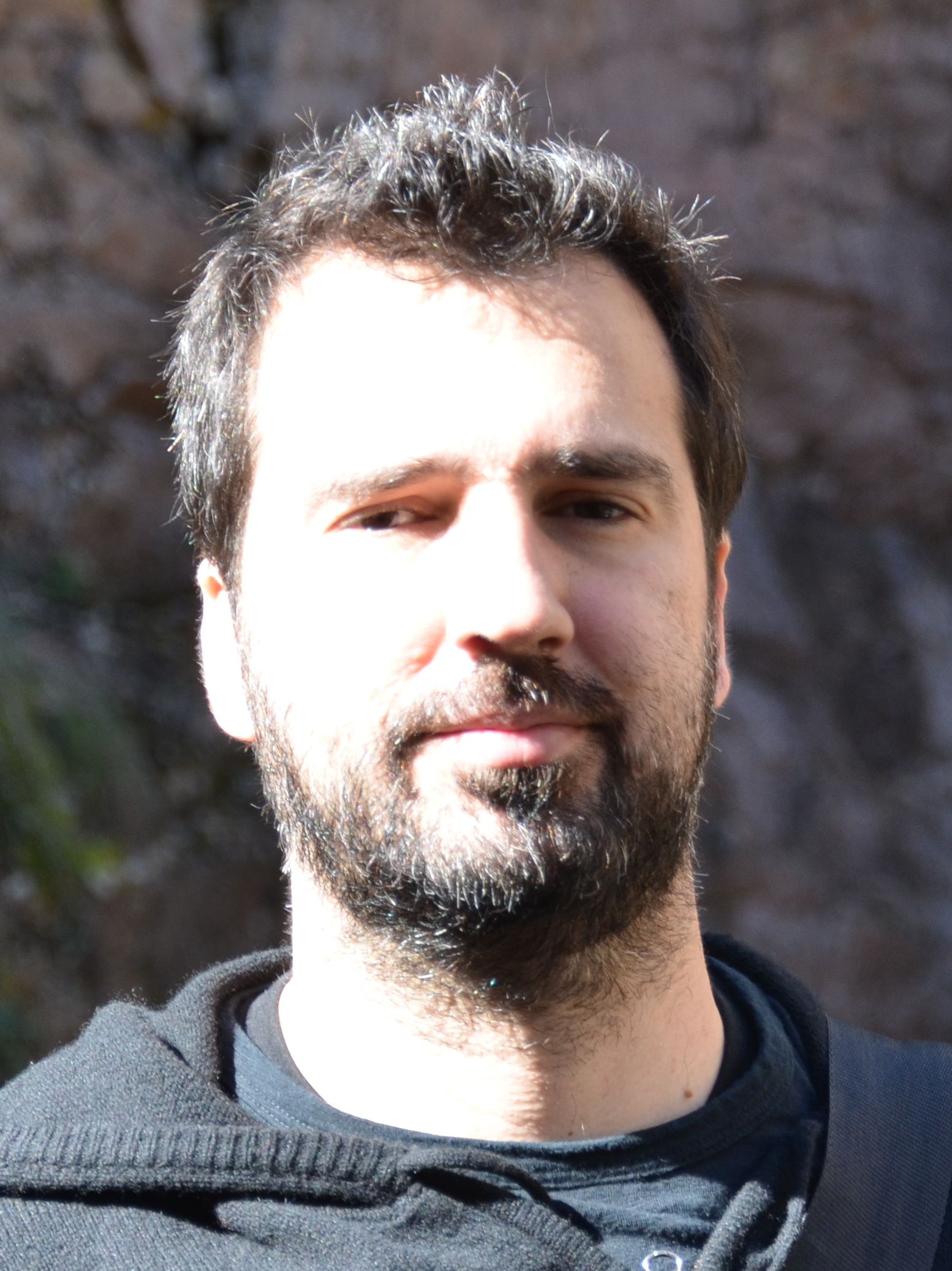 Panayiotis Tsaparas合作论文数Department of Computer Science & Engineering, University of Ioannina29
 João Gama合作论文数Laboratory of Artificial Intelligence and Decision Support, Institute for Systems and Computer Engineering, Technology and Science;Faculty of Economics, University of Porto29
 Galileo Namata合作论文数Verisign29
 Pietro Michelucci合作论文数29
 Susan Craw合作论文数School of Computing, Robert Gordon University29
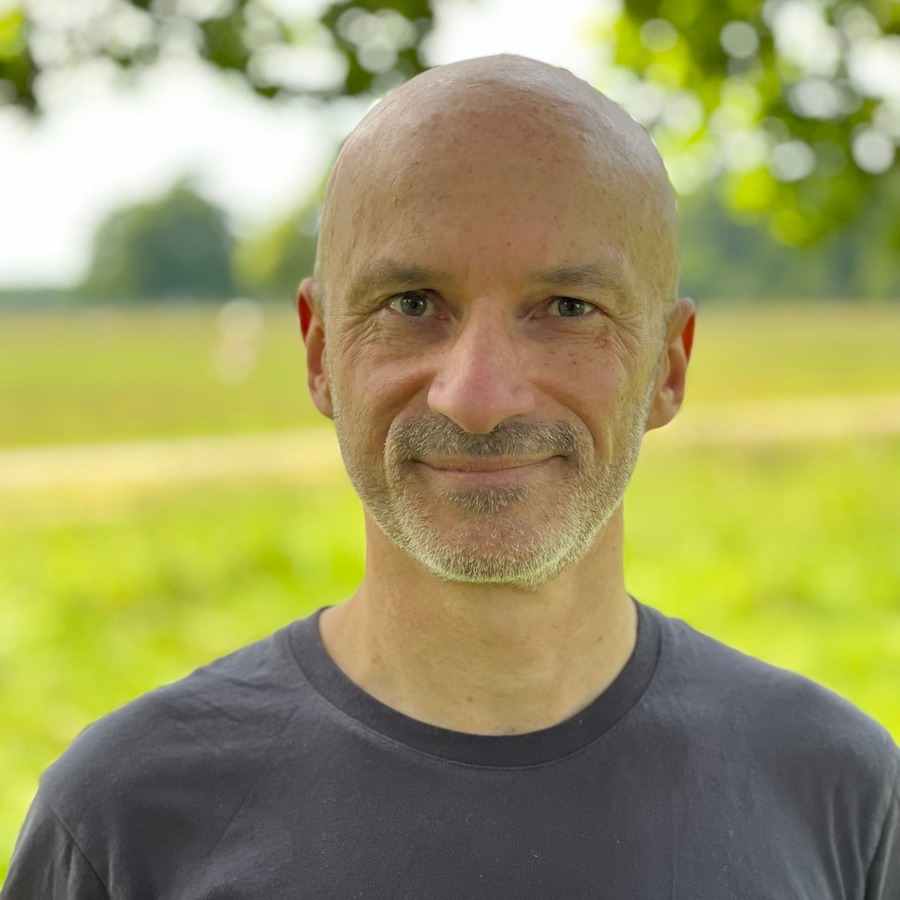 Nicola Cancedda合作论文数Fundamental AI Research, Meta27
 Periklis Andritsos合作论文数Faculty of Information, University of Toronto27Bernhard Pfahringer合作论文数23
 Claude Sammut合作论文数School of Computer Science & Engineering, Faculty of Engineering, The University of New South Wales22
 Sanjay Jain合作论文数School of Computing, National University of Singapore21
 Vittorio Castelli合作论文数Amazon Web Services20Lawrence D. Bergman合作论文数19
 Prithviraj Sen合作论文数IBM Almaden Research Center19Frank Stephan合作论文数17Tessa Ann Lau合作论文数17
 Xinhua Zhang (张歆华)合作论文数Department of Computer Science, University of Illinois Chicago16
 Jean-Michel Renders合作论文数Naver Labs Europe14Eamonn Keogh合作论文数13
 Kai Ming Ting (陈开明)合作论文数School of Artificial Intelligence, Nanjing University13
 Lise Getoor合作论文数Department of Computer Science, University of California, Santa Cruz;Department of Computer Science, University of Maryland13Abdullah Mueen合作论文数12
 Scott E. Fahlman合作论文数Language Technologies Institute, Carnegie Mellon University;Department of Computer Science, School of Computer Science, Carnegie Mellon University12
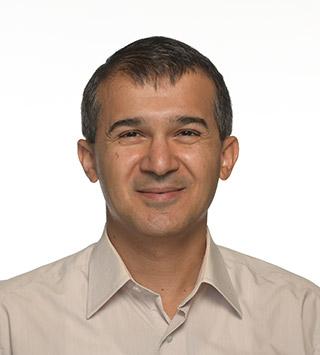 Mustafa Bilgic合作论文数Department of Computer Science, College of Computing,12
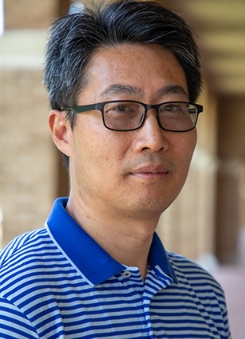 Victor S. Sheng合作论文数Department of Computer Science, Whitacre College of Engineering, Texas Tech University11
 John William Case合作论文数Delaware Biotechnology Institute;Department of Computer and Information Sciences, University of Delaware10
 R. Paul Wiegand合作论文数University of Central Florida10John Case合作论文数University of Delaware;Department of Computer and Information Sciences8
 Kiri L. Wagstaff合作论文数Oregon State University8
 Pierluca Lanzi合作论文数Dipartimento di Elettronica, Informazione e Bioingegneria, School of Industrial and Information Engineering, Politecnico di Milano8
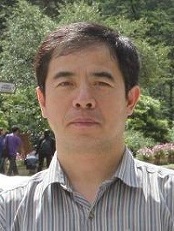 Jun He (何军)合作论文数School of Information, Renmin University of China7stephen j rolando合作论文数5neal m keller合作论文数5debra l biebesheimer合作论文数5
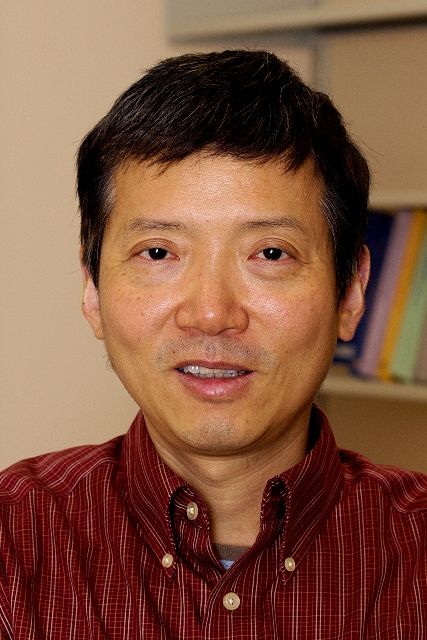 Charles Ling (凌晓峰)合作论文数Department of Computer Science, Western University5
 Michael Harries合作论文数Kyndi5donn p jasura合作论文数4Charles X. Ling合作论文数4
 Siegfried Nijssen合作论文数Institute for Information and Communication Technologies, Electronics and Applied Mathematics, Université Catholique De Louvain4Thomas R. Shultz合作论文数4Mark Podlaseck合作论文数4
 C. X. Ling合作论文数University of Western Ontario (UWO);Department of Computer Science4Ricardo Silva合作论文数3
 Irina Rish合作论文数Mila – Quebec Artificial Intelligence Institute;Department of Computer Science, Université de Montréal;Department of Operations Research, Université de Montréal3
 Mark Brodie合作论文数3
 Gerald F DeJong II合作论文数The Grainger College of Engineering, University of Illinois Urbana-Champaign2




