Understanding how surface structure influences oxidation processes is essential for advancing the design of metal-based catalysts. In this study, we investigated how oxygen adsorbed on a bifaceted Rh(111)/(322) single crystal using low-energy electron diffraction (LEED) and temperature programmed desorption (TPD). The (111) facet represented a flat, close-packed surface, while the (322) facet introduced a high density of well-defined, repeating stepped features with more undercoordinated atoms. Our results revealed pronounced structure sensitivity. Low temperature atomic oxygen exposures lead to enhanced O coverages on both facets; however, LEED revealed an ordered overlayer on Rh(111) and a faintless crystalline adlayer on Rh(322). Oxygen exposures at 600 K caused oxide formation on the (111) facet but not on the (322) facet, and oxide was not observed on either facet for lower temperature O-2 exposures. Notably, the additional O uptake was observed. While TPD measurements show similar adsorption energies for the various oxygen species, LEED analysis reveals clear structural differences on the stepped surface. These findings highlight the critical role of facet-specific coordination environments in dictating oxidation behavior and having insight into oxygen mobility across catalytic surfaces.
Rhodium surfaces play a crucial role in heterogeneous catalysis, driving extensive research on their reactivity. In particular, CO oxidation is of great interest, where different oxygen species at the surface can influence catalytic activity. Under certain conditions, rhodium can also host sub-surface oxygen species, further affecting reaction dynamics. In this work, we combine molecular beam surface scattering, ion imaging, and ultra-high vacuum techniques to investigate the impact of subsurface oxygen on CO oxidation on single-crystal Rh surfaces. When oxidizing CO at the (2 × $ \times $ 1)-O adlayer without subsurface oxygen, we observe hyperthermal velocity distributions of desorbing CO2, indicating significant energy release along the translational coordinate directly from the transition state. In contrast, subsurface oxygen induces thermal velocity distributions. DFT calculations indicate the formation of a chemisorption state in presence of subsurface oxygen that is energetically favored and transiently traps product CO2 long enough for thermalization.
KURZFASSUNG Rhodiumoberflächen spielen eine wichtige Rolle in der heterogenen Katalyse, was zu intensiver Forschung hinsichtlich ihrer Reaktivität geführt hat. Von großem Interesse ist insbesondere die Oxidation von CO, bei der verschiedene Sauerstoffspezies an der Oberfläche die katalytische Aktivität beeinflussen können. Unter bestimmten Bedingungen kann Rhodium auch eine Unter‐Oberflächen‐Sauerstoffspezies (engl. „subsurface oxygen“, O sub ) beherbergen, was die Reaktionsdynamik zusätzlich beeinflusst. In dieser Arbeit werden Molekülstrahl‐Oberflächen‐Streuexperimente, Ionen‐Imaging und Ultrahochvakuum Methoden kombiniert, um den Einfluss von O sub während der CO‐Oxidation an Rh‐Einkristalloberflächen zu untersuchen. Bei der Oxidation von CO an einer (2 × 1)‐O‐Adsorbatschicht ohne O sub beobachten wir hyperthermische Geschwindigkeitsverteilungen des desorbierenden CO 2 , was auf eine signifikante Energiefreisetzung entlang der Translationskoordinate direkt aus dem Übergangszustand hinweist. Im Gegensatz hierzu induziert O sub thermische Geschwindigkeitsverteilungen. DFT‐Rechnungen deuten auf die Bildung eines chemisorbierten Zustands in Gegenwart von O sub hin, welcher energetisch bevorzugt ist und das CO 2 ‐Produkt so lange transient bindet, dass eine Thermalisierung möglich ist.
The oxidation of rhodium surfaces has wide-ranging impacts on heterogeneously catalyzed reaction mechanisms. Not only is rhodium itself catalytically active, but it also serves as a robust model system for understanding the oxidation chemistries of platinum-group metals or late transition metals in general. The chemical speciation of oxygen on rhodium surfaces is reasonably well understood, and this knowledge can be used to discover how structural changes affect the oxygen speciation. Herein, we report our findings for the oxidation of a bifaceted Rh(111)/(322) crystal that show that when the surface is oxidized, the steps on the (322) facet hinder the formation of crystalline surface phases at low temperatures and accelerate surface oxide formation at elevated temperatures. The narrow terraces used provide insight into how highly defective surfaces, like nanoparticles, will behave under strongly oxidizing conditions.
The epoxidation of olefins on Ag/O systems is a significant industrial-scale process within heterogeneous catalysis. However, the details of the surface reaction remain controversial, and it has been highly challenging to reconcile the findings from cataltyic studies under reaction conditions with the highly detailed static studies under carefully controlled ultra-high vacuum (UHV) conditions. In this study, we combine molecular beam surface scattering and ion imaging techniques to explore the partial oxidation of styrene. This experimental approach enhances the sensitivity to the extent that we can directly observe the partial oxidation product, styrene oxide, under UHV conditions. We note that partial oxidation exclusively occurs at high oxygen coverages, which we attribute to the reaction of styrene with electrophilic oxygen formed specifically at elevated coverages. The epoxidation of olefins on silver surfaces is an important industrial process on a large scale. This paper presents microscopic insights of styrene oxidation on Ag(111) under well-controlled ultra-high vacuum conditions. Epoxidation exclusively takes place at elevated oxygen coverages, coinciding with the emergence of electrophilic oxygen. Upon depletion of electrophilic oxygen, residual nucleophilic oxygen triggers complete combustion. image
This study presents velocity-resolved desorption experiments of recombinatively-desorbing oxygen from Ag (111). We combine molecular beam techniques, ion imaging, and temperature-programmed desorption to obtain translational energy distributions of desorbing O2. Molecular beams of NO2 are used to prepare a p (4 × 4)-O adlayer on the silver crystal. The translational energy distributions of O2 are shifted towards hyperthermal energies indicating desorption from an intermediate activated molecular chemisorption state.
We combine velocity map imaging (VMI) with temperature-programmed desorption (TPD) experiments to record the angular-resolved velocity distributions of recombinatively-desorbing oxygen from Rh(111). We assign the velocity distributions to desorption from specific surface and sub-surface states by matching the recorded distributions to the desorption temperature. These results provide insight into the recombinative desorption mechanisms and the availability of oxygen for surface-catalyzed reactions.
Heterogeneously catalyzed reactions over transition metal surfaces are pillars of chemical industry and account for a significant fraction of the global energy demand. CO oxidation provides insight into the relative reactivity of various oxygenaceous surface phases, and it is necessary to first understand where it binds to the surface and the nature of the local environment to develop robust mechanistic pictures of the reaction. Surface IR spectroscopy is a quantitative technique that also provides information about the binding sites and chemical environments of the adsorbed CO molecules. Here, we report results from a study of CO sticking to clean Rh(111) and (2 × 1)-O/Rh(111) that shows that the intensity of the IR absorption was not linear with coverage and is an important consideration for further studies of the catalytic surface.
The adsorption of oxygen and the resultant O-induced surface reconstructions are key components in heterogeneously catalyzed reactions on silver metal surfaces. O uptake and reconstructions on planar Ag(111) are well-characterized, and in this paper, we show that curved Ag(111) features similar O adsorption and reconstructions. Through a systematic scanning tunneling microscope study of a curved Ag(111) single crystal exposed to gas-phase atomic oxygen at a temperature of 525 K, we observed Oad and, upon higher coverages, saw p(4×4) and p(4×5√3) reconstructions form on both the A-type and B-type steps. Exposures at low temperatures (< 500 K) resulted in the formation of subsurface oxygen and the appearance of a stripe pattern and amorphous phase on the surface. Upon heating, stable surface reconstructions were formed. Although the geometric arrangement of atoms along the steps were different, A-type and B-type steps formed the same reconstructions. In addition, the B-type steps also saw the formation of several different features atop the oxygen reconstructions.
Oxygen atoms on transition metal surfaces are highly mobile under the demanding pressures and temperatures typically employed for heterogeneously catalyzed oxidation reactions. This mobility allows for rapid surface diffusion of oxygen atoms, as well as absorption into the subsurface and reemergence to the surface, resulting in variable reactivity. Subsurface oxygen atoms play a unique role in the chemistry of oxidized metal catalysts, yet little is known about how subsurface oxygen is formed or returns to the surface. Furthermore, if oxygen diffusion between the surface and subsurface is mediated by defects, there will be localized changes in the surface chemistry due to the elevated oxygen concentration near the emergence sites. We observed that oxygen atoms emerge preferentially along the boundary between surface phases and that subsurface oxygen is depleted before the surface oxide decomposes.
Surface structure and oxidation are key to silver-based heterogeneous catalysis. Prevention of surface reconstruction may favor electrophilic oxygen, which is believed to be the active species in silver-catalyzed oxidation. To determine whether terrace width or step geometry enables control of oxidation and concomitant reconstruction, we investigated oxidation of the topmost layer of a curved Ag(111) crystal. This crystal contains a range of terrace widths having either A- or B-type step geometries. Atomic oxygen was used to facilitate oxidation, temperature-programmed desorption quantified the extent of oxygen adsorption, and scanning tunneling microscopy characterized the formation of reconstructed areas. While A-type steps prove to have little influence, B-type steps hinder reconstruction. We attribute the difference to geometric-dependent growth mechanisms of silver oxide surface reconstructions.
Carbon monoxide oxidation over oxidized Rh surfaces is known to be sensitive to both the oxygen species present as well as the surface temperature. Although CO oxidation on Rh(111) is a prototypical heterogeneously catalyzed oxidation reaction, questions remain about the reactivity of the individual oxygenaceous phases present on the surface. For example, the effects of surface temperature or the duration of CO exposure have not been previously determined on the oxygen-rich, (2 x 1)-O surface adlayer. In this paper, we present results from a study that used a combination of ultra-high vacuum surface science techniques to measure the oxidation of CO by oxygen in the (2 x 1)-O adlayer. The surface temperature during the CO exposure was varied between 100 K and 350 K, and the effect of the surface temperature on CO oxidation was determined for CO exposures between 5 L and 300 L. We observed that the surface temperature had little effect on the CO2 yield or the amount of residual oxygen for CO exposures up to 300 K, but these quantities were reduced after CO exposures above 300 K. We also found that CO oxidation was unchanged by the extent of the CO exposure at both 300 K and 350 K. Taken together, these results show that CO was oxidized over the (2 x 1)-O adlayer during CO exposures above 300 K via a different reaction pathway than the one followed by co-adsorbed O and CO in the (2 x 2)-2O + CO adlayer and that these lower-barrier reactive sites were not regenerated during the CO exposure.
The uptake and chemical speciation of oxygen in and on Ag(111) surface is described. An Ag(111) surface was exposed to gas-phase oxygen atoms under ultrahigh vacuum compatible conditions at various surface temperatures. The O uptake was quantified using temperature-programmed desorption measurements and showed that oxygen exposures at temperatures above 500 K yielded only surface-adsorbed oxygen in a single surface reconstruction. At temperatures below 500 K, O uptake continued past O surface saturation, and a maximum in the uptake with respect to exposure temperature was observed at 450 K. A model where O atoms must diffuse out of subsurface absorption sites to free room for further O describes this observation. The chemical speciation of the oxygenaceous species formed under these conditions was achieved using X-ray photoelectron spectroscopy. These data show that a single O species initially formed on the surface, but at higher coverages, a new, three-dimensional oxygenaceous phase developed. Because of the importance of silver in heterogeneously catalyzed partial oxidation reactions, these results show that oxygen species embedded below the surface plane must be incorporated into accurate models of Ag-surface catalyzed reactions.
In heterogeneously catalyzed oxidation reactions on metal surfaces, advantageous oxygenaceous species proffer lower barrier reaction pathways. In order to utilize such reactions better, it is essential to understand what species are present, how they are formed, and under what conditions they are available for reaction. Oxides, adsorbed oxygen, and subsurface oxygen each form on Rh(111) surfaces and thus provide the opportunity to distinguish the contributions of each species to the overall reactivity. In an effort to elucidate relevant reaction sites on catalytically active rhodium surfaces, a combination of scanning tunneling microscopy (STM) and temperature-programmed desorption (TPD) showed that when subsurface oxygen is present, CO was readily oxidized at the interface between the metallic and oxidic phases at relatively modest temperatures.
Subsurface oxygen is known to form in transition metals, and is thought to be an important aspect of their ability to catalyze chemical reactions. The formation of subsurface oxygen is not, however, equivalent across all catalytically relevant metals. As a result, it is difficult to predict the stability and ease of the formation of subsurface oxygen in metals, as well as how the absorbed oxygen affects the chemical and physical properties of the metal. In comparing how a stepped platinum surface, Pt(5 5 3), responds to exposure to gas-phase oxygen atoms under ultra-high vacuum conditions to planar Rh(1 1 1), we are able to determine what role, if any, steps have on the capacity of a metal for subsurface oxygen formation. Despite the presence of regular defects, we found that only surface-bound oxygen formed on Pt(5 5 3). Alternatively, on the Rh(1 1 1) surface, oxygen readily absorbed into the selvedge of the metal. These results suggest that defects alone are insufficient for the formation of subsurface oxygen, and the ability of the metal to absorb oxygen is the primary factor in the formation and stabilization of subsurface oxygen.
Recent studies have shown the importance of oxide surfaces in heterogeneously catalyzed reactions. Because of the difficulties in reproducibly preparing oxidized metal surfaces, it is often unclear what species are thermodynamically stable and what factors effect the oxide formation process. In this work, we show that the thermodynamically stable phases on Rh(111) after exposure to atomic oxygen are the (2X1) O adlayer and the trilayer surface oxide, RhO2. Formation of RhO2, was facilitated by surface defects and elevated concentrations of dissolved O atoms in the subsurface region. As the concentration of subsurface O atoms decreased, the coverage of RhO2, decreased so that only the (2X1) O adlayer was present on the surface. The importance of subsurface oxygen species in RhO2 formation and stability indicates a complex relationship between surface structure and subsurface oxygen concentration.
Although important to heterogeneous catalysis, the ability to accurately model reactions of polyatomic molecules with metal surfaces has not kept pace with developments in gas phase dynamics. Partnering the specific reaction parameter (SRP) approach to density functional theory with ab initio molecular dynamics (AIMD) extends our ability to model reactions with metals with quantitative accuracy from only the lightest reactant, H2, to essentially all molecules. This is demonstrated with AIMD calculations on CHD3 + Ni(111) in which the SRP functional is fitted to supersonic beam experiments, and validated by showing that AIMD with the resulting functional reproduces initial-state selected sticking measurements with chemical accuracy (4.2 kJ/mol ≈ 1 kcal/mol). The need for only semilocal exchange makes our scheme computationally tractable for dissociation on transition metals.
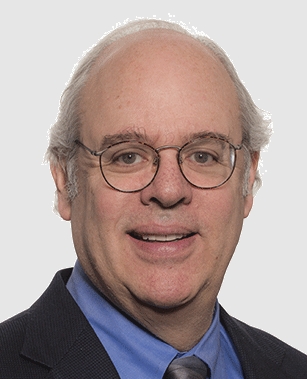 Steven J. Sibener合作论文数Department of Chemistry, The University of Chicago;James Franck Institute, The University of Chicago15
 Rachael G. Farber合作论文数James Franck Inst, Univ Chicago13
 Arthur L. Utz合作论文数11Marie E. Turano合作论文数10Gibson K D合作论文数10Hanqiu Yuan合作论文数9
 Ludo B. F. Juurlink合作论文数Leiden University, University of Leiden9Rr Smith合作论文数6jonathan derouin合作论文数5
 James Becker合作论文数Department of Psychology, University of Pittsburgh5Maxwell Z. Gillum合作论文数4Elizabeth A. Jamka合作论文数4Eleanor C. N. Oskorep合作论文数3Kevin D. Gibson合作论文数3Arved C Dorst合作论文数3
 Pratihar Subha合作论文数Department of Chemistry, Indian Institute of Technology3Iski Erin V合作论文数3
 Manikandan Paranjothy合作论文数Department of Chemistry and Biochemistry, Texas Tech University3
 Kohale Swapnil C合作论文数Department of Chemical Engineering, Texas Tech University3
 Schäfer Tim合作论文数Max-Planck-Institut fur biophysikalische Chemie, Am Fassberg 11, D-37077 Göttingen, Germany.3Faith J. Lewis合作论文数2George Hildebrandt合作论文数2Daniel Schauermann合作论文数2Noelle T Wands合作论文数2W. L. Hase合作论文数2d m r e a dissanayake合作论文数2Victoria Campbell合作论文数2r a rosenberg合作论文数2
 Marc Koper合作论文数Leiden Institute of Chemistry, Leiden University2
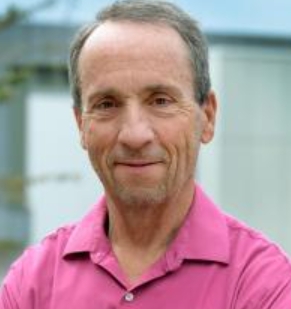 Alec Wodtke合作论文数Department of Chemistry & Biochemistry, University of California, Santa Barbara2Li Wenxin合作论文数2Langlois Grant G合作论文数2Badan Cansin合作论文数2Nicholas S. Shuman合作论文数The Department of Chemistry, The University of North Carolina at Chapel Hill2
 J. Aldstadt合作论文数2Eric Dombrowski合作论文数1Yasmine Heyrich合作论文数1
 Victor Valencia合作论文数1Lbf Juurlink合作论文数1Stacy Lynn Heslop合作论文数1Eric A High合作论文数1
 Damian Valencia合作论文数Kettering Med Ctr, Dept Cardiovasc Med, Dayton, OH 45405 USA1
 Davide Migliorini合作论文数Gorlaeus Labs, Leiden Univ1
 Rebecca S. Thompson合作论文数The James Franck Institute and Department of Chemistry, The University of Chicago1
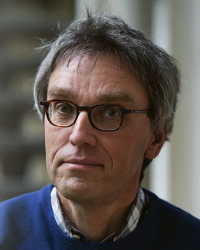 Geert Jan Kroes合作论文数Leiden Institute of Chemistry, Leiden University1Calle-Vallejo Federico合作论文数Leiden Inst Chem, Leiden Univ1
 Nattino Francesco合作论文数Leiden Institute of Chemistry, Leiden University1
 Brown Ryan D合作论文数Department of Chemistry and Biochemistry, University of Notre Dame1
 Kolb Manuel J合作论文数Leiden Institute of Chemistry, Leiden University1




