Autoregressive transformers are spectacular models for short sequences but scale poorly to long sequences such as high-resolution images, podcasts, code, or books. We proposed Megabyte, a multi-scale decoder architecture that enables end-to-end differentiable modeling of sequences of over one million bytes. Megabyte segments sequences into patches and uses a local submodel within patches and a global model between patches. This enables sub-quadratic self-attention, much larger feedforward layers for the same compute, and improved parallelism during decoding---unlocking better performance at reduced cost for both training and generation. Extensive experiments show that Megabyte allows byte-level models to perform competitively with subword models on long context language modeling, achieve state-of-the-art density estimation on ImageNet, and model audio from raw files. Together, these results establish the viability of tokenization-free autoregressive sequence modeling at scale.
Progress in machine learning has been driven in large part by massive increases in data. However, large web-scale datasets such as LAION are largely uncurated beyond searches for exact duplicates, potentially leaving much redundancy. Here, we introduce SemDeDup, a method which leverages embeddings from pre-trained models to identify and remove semantic duplicates: data pairs which are semantically similar, but not exactly identical. Removing semantic duplicates preserves performance and speeds up learning. Analyzing a subset of LAION, we show that SemDeDup can remove 50% of the data with minimal performance loss, effectively halving training time. Moreover, performance increases out of distribution. Also, analyzing language models trained on C4, a partially curated dataset, we show that SemDeDup improves over prior approaches while providing efficiency gains. SemDeDup provides an example of how simple ways of leveraging quality embeddings can be used to make models learn faster with less data.
In-context learning (ICL) improves language models' performance on a variety of NLP tasks by simply demonstrating a handful of examples at inference time. It is not well understood why ICL ability emerges, as the model has never been specifically trained on such demonstrations. Unlike prior work that explores implicit mechanisms behind ICL, we study ICL via investigating the pretraining data. Specifically, we first adapt an iterative, gradient-based approach to find a small subset of pretraining data that supports ICL. We observe that a continued pretraining on this small subset significantly improves the model's ICL ability, by up to 18%. We then compare the supportive subset constrastively with random subsets of pretraining data and discover: (1) The supportive pretraining data to ICL do not have a higher domain relevance to downstream tasks. (2) The supportive pretraining data have a higher mass of rarely occurring, long-tail tokens. (3) The supportive pretraining data are challenging examples where the information gain from long-range context is below average, indicating learning to incorporate difficult long-range context encourages ICL. Our work takes a first step towards understanding ICL via analyzing instance-level pretraining data. Our insights have a potential to enhance the ICL ability of language models by actively guiding the construction of pretraining data in the future.
Large language models, which are often trained for hundreds of thousands of compute days, have shown remarkable capabilities for zero- and few-shot learning. Given their computational cost, these models are difficult to replicate without significant capital. For the few that are available through APIs, no access is granted to the full model weights, making them difficult to study. We present Open Pre-trained Transformers (OPT), a suite of decoder-only pre-trained transformers ranging from 125M to 175B parameters, which we aim to fully and responsibly share with interested researchers. We show that OPT-175B is comparable to GPT-3, while requiring only 1/7th the carbon footprint to develop. We are also releasing our logbook detailing the infrastructure challenges we faced, along with code for experimenting with all of the released models.
Recent work has shown that fine-tuning large pre-trained language models on a collection of tasks described via instructions, a.k.a. instruction-tuning, improves their zero and few-shot generalization to unseen tasks. However, there is a limited understanding of the performance trade-offs of different decisions made during the instruction-tuning process. These decisions include the scale and diversity of the instruction-tuning benchmark, different task sampling strategies, fine-tuning with and without demonstrations, training using specialized datasets for reasoning and dialogue, and finally, the fine-tuning objectives themselves. In this paper, we characterize the effect of instruction-tuning decisions on downstream task performance when scaling both model and benchmark sizes. To this end, we create OPT-IML Bench: a large benchmark for Instruction Meta-Learning (IML) of 2000 NLP tasks consolidated into task categories from 8 existing benchmarks, and prepare an evaluation framework to measure three types of model generalizations: to tasks from fully held-out categories, to held-out tasks from seen categories, and to held-out instances from seen tasks. Through the lens of this framework, we first present insights about instruction-tuning decisions as applied to OPT-30B and further exploit these insights to train OPT-IML 30B and 175B, which are instruction-tuned versions of OPT. OPT-IML demonstrates all three generalization abilities at both scales on four different evaluation benchmarks with diverse tasks and input formats -- PromptSource, FLAN, Super-NaturalInstructions, and UnifiedSKG. Not only does it significantly outperform OPT on all benchmarks but is also highly competitive with existing models fine-tuned on each specific benchmark. We release OPT-IML at both scales, together with the OPT-IML Bench evaluation framework.
In NLP, models are usually evaluated by reporting single-number performance scores on a number of readily available benchmarks, without much deeper analysis. Here, we argue that - especially given the well-known fact that benchmarks often contain biases, artefacts, and spurious correlations - deeper results analysis should become the de-facto standard when presenting new models or benchmarks. We present a tool that researchers can use to study properties of the dataset and the influence of those properties on their models' behaviour. Our Text Characterization Toolkit includes both an easy-to-use annotation tool, as well as off-the-shelf scripts that can be used for specific analyses. We also present use-cases from three different domains: we use the tool to predict what are difficult examples for given well-known trained models and identify (potentially harmful) biases and heuristics that are present in a dataset.
Large-scale autoregressive language models such as GPT-3 are few-shot learners that can perform a wide range of language tasks without fine-tuning. While these models are known to be able to jointly represent many different languages, their training data is dominated by English, potentially limiting their cross-lingual generalization. In this work, we train multilingual autoregressive language models on a balanced corpus covering a diverse set of languages, and study their few-and zero-shot learning capabilities in a wide range of tasks. Our largest model with 7.5 billion parameters sets new state of the art in few-shot learning in more than 20 representative languages, outperforming GPT-3 of comparable size in multilingual commonsense reasoning (with +7.4% absolute accuracy improvement in 0-shot settings and +9.4% in 4-shot settings) and natural language inference (+5.4% in each of 0-shot and 4-shot settings). On the FLORES-101 machine translation benchmark, our model outperforms GPT-3 on 171 out of 182 translation directions with 32 training examples, while surpassing the official supervised baseline in 45 directions. We present a detailed analysis of where the model suc-ceeds and fails, showing in particular that it enables cross-lingual in-context learning on some tasks, while there is still room for improvement on surface form robustness and adaptation to tasks that do not have a natural cloze form. Finally, we evaluate our models in social value tasks such as hate speech detection in 5 languages and find it has limitations similar to comparably sized GPT-3 models.
Recent advances in neural program models allow us to build purely neural network based architectures that learn to execute complex, algorithmic tasks. However, these models require formal, structured specifications of the task. This thesis explores how well-known natural language processing techniques such as attention and word embeddings can be adopted in order to allow Neural Programmer-Interpreters (NPI-s) to take natural language instructions directly as their input. We propose two novel, attention-based architectures that extend the NPI model: The first model computes attention over the input word sequence and thus finds the key bits of informations required to make the right decisions when executing the task. With the second model we show the feasibility of using the attention mechanism over the world state in order to interpret references to the observed world in the instructions. Our models outperform our baseline, a trivial modification of original NPI model by up to 65% accuracy in particular experiments.
 Tianlu Wang合作论文数Facebook AI5
 Luke Zettlemoyer合作论文数Paul G. Allen School of Computer Science & Engineering, University of Washington;Facebook AI4
 Todor Mihaylov合作论文数Meta4
 Victoria Lin (林曦)合作论文数Foundational AI Research, Meta3
 Punit Singh Koura合作论文数Meta3
 Xian Li合作论文数Meta3
 Mona Diab合作论文数Language Technologies Institute, School of Computer Science, Carnegie Mellon University3
 Veselin Stoyanov合作论文数Lightfield2
 Chris Dewan合作论文数Meta2
 Brian O'Horo合作论文数Meta2
 Sam Shleifer合作论文数Thinking Machines Lab2
 Shuohui Chen合作论文数Meta2
 Naman Goyal合作论文数Thinking Machines Lab2
 Ramakanth Pasunuru合作论文数FAIR, Meta2
 Mikel Artetxe合作论文数Reka AI;University of the Basque Country2
 Asli Celikyilmaz合作论文数Paul G. Allen School of Computer Science & Engineering, University of Washington;Meta2
 Myle Ott合作论文数Thinking Machines Lab2
 Kurt Shuster合作论文数Thinking Machines Lab2
 Ping (Iris) Yu合作论文数Meta AI1
 Anjali Sridhar合作论文数Google1
 Amro Abbas合作论文数Meta AI1Qing Liu合作论文数Meta1Jeff Wang合作论文数1Lili Yu合作论文数1Colin Flaherty合作论文数1
 Kushal Tirumala合作论文数Facebook AI Research1
 Moya Chen合作论文数Facebook1
 Khuyagbaatar Batsuren合作论文数1
 Gabriel Pereyra合作论文数Harvey1
 Verna Dankers合作论文数Mila - Quebec Artificial Intelligence Institute1
 Ari Morcos合作论文数DatologyAI1
 Susan Zhang合作论文数Meta1
 Vishrav Chaudhary合作论文数Meta1
 Srinivasan Iyer (斯里尼瓦桑艾耶)合作论文数Facebook AI Research, Meta AI Research1
 Armen Aghajanyan合作论文数Facebook AI Research1
 Dieuwke Hupkes合作论文数Meta1
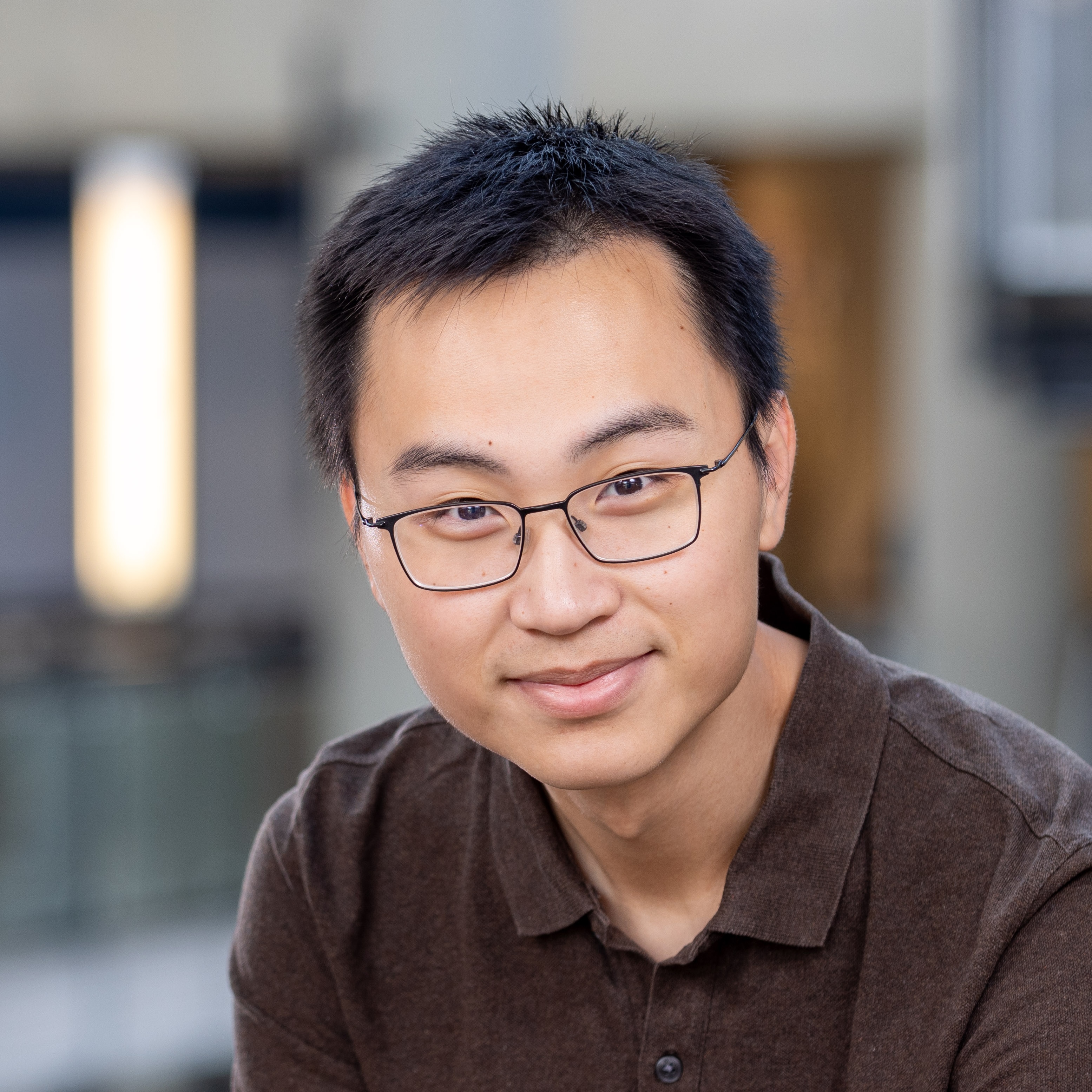 Xiaochuang Han (韩晓窗)合作论文数FAIR, Meta1
 Paul H. J. Kelly合作论文数Department of Computing, Faculty of Engineering, Imperial College London;Centre for Computational Methods in Science and Engineering, Imperial College London;Centre for Doctoral Training in High-performance Embedded and Distributed Systems, Imperial College London1
 Zornitsa Kozareva合作论文数SliceX AI1
 Shruti Bhosale合作论文数Facebook1
 Mike Lewis合作论文数Meta1
 Yulia Tsvetkov合作论文数Paul G. Allen School of Computer Science & Engineering, University of Washington1
 Peter Henderson合作论文数Center For Information Technology Policy, Princeton University;Department of Computer Science, Princeton University;School of Public and International Affairs, Princeton University1
 Jingfei Du合作论文数Voker1
 Stephen Roller合作论文数Thinking Machines Lab1
 Surya Ganguli合作论文数Department of Applied Physics, Stanford University1




