Neuroscientists now routinely record the activity of large numbers of neurons at high temporal and spatial resolution. With these capabilities comes the promise of causally intervening during these recordings by perturbing neurons or changing experimental conditions, requiring tight integration between data acquisition, analysis, and manipulation. Unfortunately, solutions for real-time interventions are rare, difficult to design and implement, and remain largely unused. Here, we introduce improv , a software platform that allows users to flexibly specify and manage adaptive experiments to integrate data collection, preprocessing, visualization, and user-defined analytics. Using improv for streaming data analysis for two photon calcium imaging and behavior we demonstrate how access to online information can be used for automated, integrated experimentation. ### Competing Interest Statement The authors have declared no competing interest.
Patients with late-onset Alzheimer’s disease (LOAD) frequently manifest comorbid neuropsychiatric symptoms with depression and anxiety being most frequent, and individuals with major depressive disorder (MDD) have an increased prevalence of LOAD. This suggests shared etiologies and intersecting pathways between LOAD and MDD. We performed pleiotropy analyses using LOAD and MDD GWAS data sets from the International Genomics of Alzheimer’s Project (IGAP) and the Psychiatric Genomics Consortium (PGC), respectively. We found a moderate enrichment for SNPs associated with LOAD across increasingly stringent levels of significance with the MDD GWAS association (LOAD|MDD), of maximum four and eightfolds, including and excluding the APOE-region, respectively. Association analysis excluding the APOE-region identified numerous SNPs corresponding to 40 genes, 9 of which are known LOAD-risk loci primarily in chromosome 11 regions that contain the SPI1 gene and MS4A genes cluster, and others were novel pleiotropic risk-loci for LOAD conditional with MDD. The most significant associated SNPs on chromosome 11 overlapped with eQTLs found in whole-blood and monocytes, suggesting functional roles in gene regulation. The reverse conditional association analysis (MDD|LOAD) showed a moderate level, ~sevenfold, of polygenic overlap, however, no SNP showed significant association. Pathway analyses replicated previously reported LOAD biological pathways related to immune response and regulation of endocytosis. In conclusion, we provide insights into the overlapping genetic signatures underpinning the common phenotypic manifestations and inter-relationship between LOAD and MDD. This knowledge is crucial to the development of actionable targets for novel therapies to treat depression preceding dementia, in an effort to delay or ultimately prevent the onset of LOAD.
Motion blur is one of the most common degradation artifacts in dynamic scene photography. This paper reviews the NTIRE 2020 Challenge on Image and Video Deblurring. In this challenge, we present the evaluation results from 3 competition tracks as well as the proposed solutions. Track 1 aims to develop single-image deblurring methods focusing on restoration quality. On Track 2, the image deblurring methods are executed on a mobile platform to find the balance of the running speed and the restoration accuracy. Track 3 targets developing video deblurring methods that exploit the temporal relation between input frames. In each competition, there were 163, 135, and 102 registered participants and in the final testing phase, 9, 4, and 7 teams competed. The winning methods demonstrate the state-ofthe-art performance on image and video deblurring tasks.
INTRODUCTION:Genome-wide association studies (GWAS) discovered multiple late-onset Alzheimer's disease (LOAD)-associated SNPs and inferred the genes based on proximity; however, the actual causal genes are yet to be identified. METHODS:We defined LOAD-GWAS regions by the most significantly associated SNP ±0.5 Mb and developed a bioinformatics pipeline that uses and integrates chromatin state segmentation track to map active enhancers and virtual 4C software to visualize interactions between active enhancers and gene promoters. We augmented our pipeline with biomedical and functional information. RESULTS:We applied the bioinformatics pipeline using three ∼1 Mb LOAD-GWAS loci: BIN1, PICALM, CELF1. These loci contain 10-24 genes, an average of 106 active enhancers and 80 CTCF sites. Our strategy identified all genes corresponding to the promoters that interact with the active enhancer that is closest to the LOAD-GWAS-SNP and generated a shorter list of prioritized candidate LOAD genes (5-14/loci), feasible for post-GWAS investigations of causality. DISCUSSION:Interpretation of LOAD-GWAS discoveries requires the integration of brain-specific functional genomic data sets and information related to regulatory activity.
 Michael William Lutz合作论文数Department of Neurology, Duke University School of Medicine2
 Ornit Chiba-Falek合作论文数Division of Translational Brain Sciences, Department of Neurology, Duke University School of Medicine;Bryan Alzheimer's Disease Research Center, Duke University School of Medicine;Division of Human Genetics, Duke University School of Medicine;Center for Genomic and Computational Biology, Duke University;CLAIRIgene2
 Sangmin Kim合作论文数1Yi-Min Tsai合作论文数1Yu-Syuan Xu合作论文数1
 Haichao Yu合作论文数1
 Lunhao Duan合作论文数1
 Xin Li (李鑫)合作论文数University of Science and Technology of China1
 Jiaqin Jiang合作论文数1
 Deepa P L合作论文数1Bhrij Patel合作论文数1Matthew D Loring合作论文数1Stephan Brehm合作论文数1
 Akhil K a合作论文数College of Engineering Trivandrum, Trivandrum, India1Yihao Chu合作论文数1Hyungjoon Nam合作论文数1Maxim Nikitchenko合作论文数1Chaichontat Sriworarat合作论文数1
 Andrea Giovannucci合作论文数Spanish Council Sci Res CSIC, IIIA, Artificial Intelligence Res Inst, Barcelona 08193, Spain1
 Densen Puthussery合作论文数College of Engineering1
 Hrishikesh P S合作论文数College of Engineering Trivandrum1Cheng-Ming Chiang合作论文数1Jisu Kim合作论文数Samsung1
 Saikat Dutta合作论文数Department of Computer Science, Cornell Ann S. Bowers College of Computing and Information Science, Cornell University1Tseng Yu合作论文数1
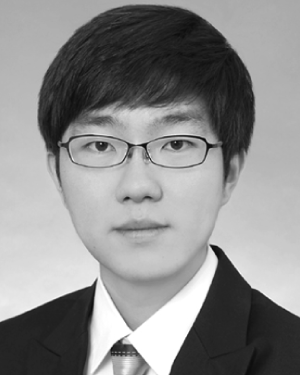 Guisik Kim合作论文数Chung Ang University1
 Eva Aimable Naumann合作论文数Basic Science Departments, Duke University School of Medicine;Duke Institute for Brain Sciences, Duke University1
 John Pearson合作论文数Department of Psychology and Neuroscience, Trinity College of Arts & Sciences, Duke University1
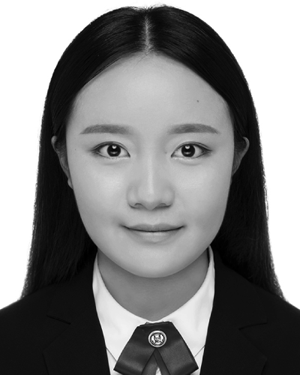 Ya Zhou合作论文数1
 Yuchen Fan (范雨晨)合作论文数Meta1
 Shivam Garg合作论文数Stanford University1
 Sanghyun Son合作论文数AI Center, Samsung Electronics1
 Radu Timofte合作论文数Computer Vision Laboratory, Institute of Computer Science, Faculty of Mathematics and Computer Science, Julius Maximilians University of Würzburg;ETH Zurich1
 Jiahui Yu合作论文数Meta1Qingyan Sun合作论文数1
 Shihua Huang (黄世华)合作论文数Intellindust AI Lab1
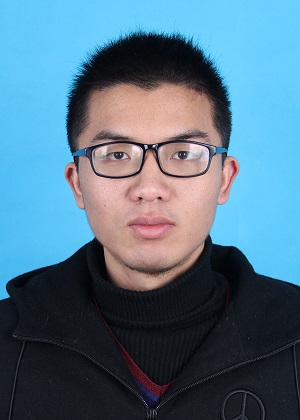 Jie Huang (黄杰)合作论文数Department of Automation, University of Science and Technology of China1
 Sen Liu合作论文数Department of Mechanical Engineering, College of Engineering, University of Louisiana at Lafayette1
 Maitreya Suin合作论文数Samsung Research America1
 Sourya Dipta Das合作论文数SHL1
 Seungjun Nah合作论文数NVIDIA1
 Jian Yao (姚剑)合作论文数School of Remote Sensing and Information Engineering, Wuhan University1
 Dejia Xu合作论文数Luma AI1
 Je-Chang Jeong合作论文数Department of Electronic Engineering, Hanyang University1
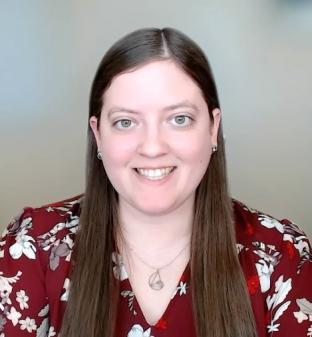 Anne Draelos合作论文数Michigan Neuroscience Institute, University of Michigan1
 A.N.Rajagopalan合作论文数Department of Electrical Engineering, Indian Institute of Technology Madras1
 Kyoung Mu Lee合作论文数Computer Vision Laboratory, Department of Electrical and Computer Engineering, College of Engineering, Seoul National University1
 Dong Liu (刘东)合作论文数Department of Electronic Engineering and Information Science, School of Information Science and Technology, University of Science and Technology of China1Julio Barrera合作论文数1




