The advancements in diffusion models for 2D and 3D content creation have sparked a surge of interest in generating 4D content. However, the scarcity of 3D scene datasets constrains current methodologies to primarily object-centric generation. To overcome this limitation, we present Comp4D, a novel framework for text-to-compositional 4D scene generation. Unlike conventional methods that generate a singular 4D representation of the entire scene, Comp4D innovatively employs a decompose-then-recompose strategy, constructing each 4D component within the scene separately. The framework first decomposes a textual input prompt into multiple object components and delineates their moving trajectories. After initializing the static 3D objects, we construct the compositional 4D scene by accurately positioning these objects along their designated paths. To refine the scene and motion, our method proposes a novel compositional score distillation technique involving trajectory-guided and object-centric sampling, utilizing pre-trained diffusion models across text-to-image, text-to-video, and text-to-3D domains for optimization. Extensive experiments demonstrate our superior 4D content creation capability compared to prior arts, showcasing superior visual quality, motion fidelity, and enhanced object interactions.
Video generation is experiencing rapid growth, driven by advances in diffusion models and the development of better and larger datasets. However, producing high-quality videos remains challenging due to the high-dimensional data and the complexity of the task. Recent efforts have primarily focused on enhancing visual quality and addressing temporal inconsistencies, such as flickering. Despite progress in these areas, the generated videos often fall short in terms of motion complexity and physical plausibility, with many outputs either appearing static or exhibiting unrealistic motion. In this work, we propose a framework to improve the realism of motion in generated videos, exploring a complementary direction to much of the existing literature. Specifically, we advocate for the incorporation of a retrieval mechanism during the generation phase. The retrieved videos act as grounding signals, providing the model with demonstrations of how the objects move. Our pipeline is designed to apply to any text-to-video diffusion model, conditioning a pretrained model on the retrieved samples with minimal fine-tuning. We demonstrate the superiority of our approach through established metrics, recently proposed benchmarks, and qualitative results, and we highlight additional applications of the framework.
The blooming of virtual reality and augmented reality (VR/AR) technologies has driven an increasing demand for the creation of high-quality, immersive, and dynamic environments. However, existing generative techniques either focus solely on dynamic objects or perform outpainting from a single perspective image, failing to meet the requirements of VR/AR applications that need free-viewpoint, 360$^{\circ}$ virtual views where users can move in all directions. In this work, we tackle the challenging task of elevating a single panorama to an immersive 4D experience. For the first time, we demonstrate the capability to generate omnidirectional dynamic scenes with 360$^{\circ}$ views at 4K (4096 $\times$ 2048) resolution, thereby providing an immersive user experience. Our method introduces a pipeline that facilitates natural scene animations and optimizes a set of 3D Gaussians using efficient splatting techniques for real-time exploration. To overcome the lack of scene-scale annotated 4D data and models, especially in panoramic formats, we propose a novel Panoramic Denoiser that adapts generic 2D diffusion priors to animate consistently in 360$^{\circ}$ images, transforming them into panoramic videos with dynamic scenes at targeted regions. Subsequently, we propose Dynamic Panoramic Lifting to elevate the panoramic video into a 4D immersive environment while preserving spatial and temporal consistency. By transferring prior knowledge from 2D models in the perspective domain to the panoramic domain and the 4D lifting with spatial appearance and geometry regularization, we achieve high-quality Panorama-to-4D generation at a resolution of 4K for the first time. Project page: https://4k4dgen.github.io/.
World foundation models, which simulate the physical world by predicting future states from current observations and inputs, have become central to many applications in physical intelligence, including autonomous driving and robotics. However, these models require substantial computational resources for pretraining and are further constrained by available data during post-training. As such, scaling computation at test time emerges as both a critical and practical alternative to traditional model enlargement or re-training. In this work, we introduce SWIFT, a test-time scaling framework tailored for WFMs. SWIFT integrates our extensible WFM evaluation toolkit with process-level inference strategies, including fast tokenization, probability-based Top-K pruning, and efficient beam search. Empirical results on the COSMOS model demonstrate that test-time scaling exists even in a compute-optimal way. Our findings reveal that test-time scaling laws hold for WFMs and that SWIFT provides a scalable and effective pathway for improving WFM inference without retraining or increasing model size. Project page: https://scalingwfm.github.io/.
Recent advancements in 2D and multimodal models have achieved remarkable success by leveraging large-scale training on extensive datasets. However, extending these achievements to enable free-form interactions and high-level semantic operations with complex 3D/4D scenes remains challenging. This difficulty stems from the limited availability of large-scale, annotated 3D/4D or multi-view datasets, which are crucial for generalizable vision and language tasks such as open-vocabulary and prompt-based segmentation, language-guided editing, and visual question answering (VQA). In this paper, we introduce Feature4X, a universal framework designed to extend any functionality from 2D vision foundation model into the 4D realm, using only monocular video input, which is widely available from user-generated content. The "X" in Feature4X represents its versatility, enabling any task through adaptable, model-conditioned 4D feature field distillation. At the core of our framework is a dynamic optimization strategy that unifies multiple model capabilities into a single representation. Additionally, to the best of our knowledge, Feature4X is the first method to distill and lift the features of video foundation models (e.g. SAM2, InternVideo2) into an explicit 4D feature field using Gaussian Splatting. Our experiments showcase novel view segment anything, geometric and appearance scene editing, and free-form VQA across all time steps, empowered by LLMs in feedback loops. These advancements broaden the scope of agentic AI applications by providing a foundation for scalable, contextually and spatiotemporally aware systems capable of immersive dynamic 4D scene interaction.
Using the latent diffusion model has proven effective in developing novel 3D generation techniques. To harness the latent diffusion model, a key challenge is designing a high-fidelity and efficient representation that links the latent space and the 3D space. In this paper, we introduce Atlas Gaussians, a novel representation for feed-forward native 3D generation. Atlas Gaussians represent a shape as the union of local patches, and each patch can decode 3D Gaussians. We parameterize a patch as a sequence of feature vectors and design a learnable function to decode 3D Gaussians from the feature vectors. In this process, we incorporate UV-based sampling, enabling the generation of a sufficiently large, and theoretically infinite, number of 3D Gaussian points. The large amount of 3D Gaussians enables the generation of high-quality details. Moreover, due to local awareness of the representation, the transformer-based decoding procedure operates on a patch level, ensuring efficiency. We train a variational autoencoder to learn the Atlas Gaussians representation, and then apply a latent diffusion model on its latent space for learning 3D Generation. Experiments show that our approach outperforms the prior arts of feed-forward native 3D generation. Project page: https://yanghtr.github.io/projects/atlas_gaussians.
Reference-guided face restoration can have better identity preservation than non-reference-based methods. However, existing methods can (a) easily produce artifacts, possibly attributable to inefficient facial priors and (b) do not well preserve finegrained facial details crucial for identity, such as freckles, tattoos, and scars. In this work, we propose solutions for these problems. (1) We incorporate a stronger facial prior, generative facial prior (GFP), for reference-based face image restoration. (2) We identify an ambiguity and point out that traditional loss prevents the network from heavily copying facial features from the reference. To address this, we set a new goal and come up with a new loss to realize the new goal. More specifically, when the ground truth and reference are different (e.g., differences in wrinkles, makeup, facial hair, etc.), which one should the output look like? As a simple example, ground truth does not have a mole while reference has one. Traditional loss chose the ground truth, which seems natural, but then the network also learns to ignore reference's facial features; during testing, the network often hesitates. Our new goal is to copy features from the reference as much as possible while maintaining semantic consistency with the degraded input. We propose to use spatial minimum loss and cycle consistency loss to realize the new goal and make the network copy features without hesitation. Using only a single reference image, our proposed method is able to restore highly degraded images while accurately capturing finegrained facial details. To our knowledge, we are the first face restoration framework that is able to restore faces at this granularity. Code and data are available at https://github.com/RefineFIR/RefineFIR.
With the rapid advancement and widespread adoption of VR/AR technologies, there is a growing demand for the creation of highquality, immersive dynamic scenes. However, existing generation works predominantly concentrate on the creation of static scenes or narrow perspective-view dynamic scenes, falling short of delivering a truly 360-degree immersive experience from any viewpoint. In this paper, we introduce TiP4GEN, an advanced text-to-dynamic panorama scene generation framework that enables fine-grained content control and synthesizes motion-rich, geometry-consistent panoramic 4D scenes. TiP4GEN integrates panorama video generation and dynamic scene reconstruction to create 360-degree immersive virtual environments. For video generation, we introduce a Dual-branch Generation Model consisting of a panorama branch and a perspective branch, responsible for global and local view generation, respectively. A bidirectional cross-attention mechanism facilitates comprehensive information exchange between the branches. For scene reconstruction, we propose a Geometryaligned Reconstruction Model based on 3D Gaussian Splatting. By aligning spatial-temporal point clouds using metric depth maps and initializing scene cameras with estimated poses, our method ensures geometric consistency and temporal coherence for the reconstructed scenes. Extensive experiments demonstrate the effectiveness of our proposed designs and the superiority of TiP4GEN in generating visually compelling and motion-coherent dynamic panoramic scenes.
In recent years there have been remarkable breakthroughs in image-to-video generation. However, the 3D consistency and camera controllability of generated frames have remained unsolved. Recent studies have attempted to incorporate camera control into the generation process, but their results are often limited to simple trajectories or lack the ability to generate consistent videos from multiple distinct camera paths for the same scene. To address these limitations, we introduce Cavia, a novel framework for camera-controllable, multi-view video generation, capable of converting an input image into multiple spatiotemporally consistent videos. Our framework extends the spatial and temporal attention modules into view-integrated attention modules, improving both viewpoint and temporal consistency. This flexible design allows for joint training with diverse curated data sources, including scene-level static videos, object-level synthetic multi-view dynamic videos, and real-world monocular dynamic videos. To the best of our knowledge, Cavia is the first framework that enables users to generate multiple videos of the same scene with precise control over camera motion, while simultaneously preserving object motion. Extensive experiments demonstrate that Cavia surpasses state-of-the-art methods in terms of geometric consistency and perceptual quality.
Generative image editing has recently witnessed extremely fast-paced growth. Some works use high-level conditioning such as text, while others use low-level conditioning. Nevertheless, most of them lack fine-grained control over the properties of the different objects present in the image, i.e. object-level image editing. In this work, we tackle the task by perceiving the images as an amalgamation of various objects and aim to control the properties of each object in a fine-grained manner. Out of these properties, we identify structure and appearance as the most intuitive to understand and useful for editing purposes. We propose PAIR Diffusion, a generic framework that enables a diffusion model to control the structure and appearance properties of each object in the image. We show that having control over the properties of each object in an image leads to comprehensive editing capabilities. Our framework allows for various object-level editing operations on real images such as reference image-based appearance editing, free-form shape editing, adding objects, and variations. Thanks to our design, we do not require any inversion step. Additionally, we propose multi-modal classifier-free guidance which enables editing images using both reference images and text when using our approach with foundational diffusion models. We validate the above claims by extensively evaluating our framework on both unconditional and foundational diffusion models.
Recent advancements in diffusion models for 2D and 3D content creation have sparked a surge of interest in generating 4D content. However, the scarcity of 3D scene datasets constrains current methodologies to primarily object-centric generation. To overcome this limitation, we present Comp4D, a novel framework for Compositional 4D Generation. Unlike conventional methods that generate a singular 4D representation of the entire scene, Comp4D innovatively constructs each 4D object within the scene separately. Utilizing Large Language Models (LLMs), the framework begins by decomposing an input text prompt into distinct entities and maps out their trajectories. It then constructs the compositional 4D scene by accurately positioning these objects along their designated paths. To refine the scene, our method employs a compositional score distillation technique guided by the pre-defined trajectories, utilizing pre-trained diffusion models across text-to-image, text-to-video, and text-to-3D domains. Extensive experiments demonstrate our outstanding 4D content creation capability compared to prior arts, showcasing superior visual quality, motion fidelity, and enhanced object interactions.
The availability of large-scale multimodal datasets and advancements in diffusion models have significantly accelerated progress in 4D content generation. Most prior approaches rely on multiple images or video diffusion models, utilizing score distillation sampling for optimization or generating pseudo novel views for direct supervision. However, these methods are hindered by slow optimization speeds and multi-view inconsistency issues. Spatial and temporal consistency in 4D geometry has been extensively explored respectively in 3D-aware diffusion models and traditional monocular video diffusion models. Building on this foundation, we propose a strategy to migrate the temporal consistency in video diffusion models to the spatial-temporal consistency required for 4D generation. Specifically, we present a novel framework, \textbf{Diffusion4D}, for efficient and scalable 4D content generation. Leveraging a meticulously curated dynamic 3D dataset, we develop a 4D-aware video diffusion model capable of synthesizing orbital views of dynamic 3D assets. To control the dynamic strength of these assets, we introduce a 3D-to-4D motion magnitude metric as guidance. Additionally, we propose a novel motion magnitude reconstruction loss and 3D-aware classifier-free guidance to refine the learning and generation of motion dynamics. After obtaining orbital views of the 4D asset, we perform explicit 4D construction with Gaussian splatting in a coarse-to-fine manner. Extensive experiments demonstrate that our method surpasses prior state-of-the-art techniques in terms of generation efficiency and 4D geometry consistency across various prompt modalities.
Cross-scene generalizable NeRF models, which could directly synthesize novel views using several source views of unseen scenes, are gaining prominence in the NeRF field. Discovering the potential signal of emerging capabilities in existing methods, we draw a parallel between BERT’s "drop-and-predict" Masked Language Model (MLM) pre-training and novel view synthesis (NVS) in generalizable NeRF. In this work, we pioneer the scaling up of NVS as an effective pretraining strategy in a multi-view context. To bolster generalizability in pretraining, we incorporate a large-scale, minimally annotated dataset and proportionally increase the model size, revealing a neural scaling law akin to that observed in BERT. We also introduce innovative hardness-aware training techniques to enhance robust feature learning. Our model, named "NPS", demonstrates remarkable generalizability in both zero-shot and few-shot novel view synthesis. It further shows emergent capabilities in downstream tasks like few-shot multi-view semantic segmentation and depth estimation. Significantly, NPS reduces the necessity of training separate models for each task, underlining its versatility and efficiency. This approach sets a new precedent in the NeRF field, and highlights the vast possibilities opened up by scaling up generalizable novel view synthesis.
Recently video diffusion models have emerged as expressive generative tools for high-quality video content creation readily available to general users. However, these models often do not offer precise control over camera poses for video generation, limiting the expression of cinematic language and user control. To address this issue, we introduce CamCo, which allows fine-grained Camera pose Control for image-to-video generation. We equip a pre-trained image-to-video generator with accurately parameterized camera pose input using Plücker coordinates. To enhance 3D consistency in the videos produced, we integrate an epipolar attention module in each attention block that enforces epipolar constraints to the feature maps. Additionally, we fine-tune CamCo on real-world videos with camera poses estimated through structure-from-motion algorithms to better synthesize object motion. Our experiments show that CamCo significantly improves 3D consistency and camera control capabilities compared to previous models while effectively generating plausible object motion. Project page: https://ir1d.github.io/CamCo/
Recent advances in real-time neural rendering using point-based techniques have enabled broader adoption of 3D representations. However, foundational approaches like 3D Gaussian Splatting impose substantial storage overhead, as Structure-from-Motion (SfM) points can grow to millions, often requiring gigabyte-level disk space for a single unbounded scene. This growth presents scalability challenges and hinders splatting efficiency. To address this, we introduce LightGaussian, a method for transforming 3D Gaussians into a more compact format. Inspired by Network Pruning, LightGaussian identifies Gaussians with minimal global significance on scene reconstruction, and applies a pruning and recovery process to reduce redundancy while preserving visual quality. Knowledge distillation and pseudo-view augmentation then transfer spherical harmonic coefficients to a lower degree, yielding compact representations. Gaussian Vector Quantization, based on each Gaussian’s global significance, further lowers bitwidth with minimal accuracy loss. LightGaussian achieves an average 15 times compression rate while boosting FPS from 144 to 237 within the 3D-GS framework, enabling efficient complex scene representation on the Mip-NeRF 360 and Tank & Temple datasets. The proposed Gaussian pruning approach is also adaptable to other 3D representations (e.g., Scaffold-GS), demonstrating strong generalization capabilities.
Text-to-image generative models are becoming increasingly popular and accessible to the general public. As these models see large-scale deployments, it is necessary to deeply investigate their safety and fairness to not disseminate and perpetuate any kind of biases. However, existing works focus on detecting closed sets of biases defined a priori, limiting the studies to well-known concepts. In this paper, we tackle the challenge of open-set bias detection in text-to-image generative models presenting OpenBias, a new pipeline that identifies and quantifies the severity of biases agnostically, without access to any precompiled set. OpenBias has three stages. In the first phase, we leverage a Large Language Model (LLM) to propose biases given a set of captions. Secondly, the target generative model produces images using the same set of captions. Lastly, a Vision Question Answering model recognizes the presence and extent of the previously proposed biases. We study the behavior of Stable Diffusion 1.5, 2, and XL emphasizing new biases, never investigated before. Via quantitative experiments, we demonstrate that OpenBias agrees with current closed-set bias detection methods and human judgement.
Recent advances in text-to-image diffusion models have enabled the photorealistic generation of images from text prompts. Despite the great progress, existing models still struggle to generate compositional multi-concept images naturally, limiting their ability to visualize human imagination. While several recent works have attempted to address this issue, they either introduce additional training or adopt guidance at inference time. In this work, we consider a more ambitious goal: natural multi-concept generation using a pre-trained diffusion model, and with almost no extra cost. To achieve this goal, we identify the limitations in the text embeddings used for the pre-trained text-to-image diffusion models. Specifically, we observe concept dominance and non-localized contribution that severely degrade multi-concept generation performance. We further design a minimal low-cost solution that overcomes the above issues by tweaking (not re-training) the text embeddings for more realistic multi-concept text-to-image generation. Our Correction by Similarities method tweaks the embedding of concepts by collecting semantic features from most similar tokens to localize the contribution. To avoid mixing features of concepts, we also apply Cross-Token Non-Maximum Suppression, which excludes the overlap of contributions from different concepts. Experiments show that our approach outperforms previous methods in text-to-image, image manipulation, and personalization tasks, despite not introducing additional training or inference costs to the diffusion steps.
Score distillation has emerged as one of the most prevalent approaches for text-to-3D asset synthesis. Essentially, score distillation updates 3D parameters by lifting and back-propagating scores averaged over different views. In this paper, we reveal that the gradient estimation in score distillation is inherent to high variance. Through the lens of variance reduction, the effectiveness of SDS and VSD can be interpreted as applications of various control variates to the Monte Carlo estimator of the distilled score. Motivated by this rethinking and based on Stein's identity, we propose a more general solution to reduce variance for score distillation, termed Stein Score Distillation (SSD). SSD incorporates control variates constructed by Stein identity, allowing for arbitrary baseline functions. This enables us to include flexible guidance priors and network architectures to explicitly optimize for variance reduction. In our experiments, the overall pipeline, dubbed SteinDreamer, is implemented by instantiating the control variate with a monocular depth estimator. The results suggest that SSD can effectively reduce the distillation variance and consistently improve visual quality for both object- and scene-level generation. Moreover, we demonstrate that SteinDreamer achieves faster convergence than existing methods due to more stable gradient updates.
Recently, several works tackled the video editing task fostered by the success of large-scale text-to-image generative models. However, most of these methods holistically edit the frame using the text, exploiting the prior given by foundation diffusion models and focusing on improving the temporal consistency across frames. In this work, we introduce a framework that is object-centric and is designed to control both the object's appearance and, notably, to execute precise and explicit structural modifications on the object. We build our framework on a pre-trained image-conditioned diffusion model, integrate layers to handle the temporal dimension, and propose training strategies and architectural modifications to enable shape control. We evaluate our method on the image-driven video editing task showing similar performance to the state-of-the-art, and showcasing novel shape-editing capabilities. Further details, code and examples are available on our project page: https://helia95.github.io/vase-website/
 Zhangyang “Atlas” Wang (汪张扬)合作论文数XTX Markets33
 Zhiwen Fan合作论文数Department of Electrical and Computer Engineering, Texas A&M University20
 Yifan Jiang (江亦凡)合作论文数Apple18
 Peihao Wang合作论文数Department of Electrical and Computer Engineering, Cockrell School of Engineering, The University of Texas at Austin14
 Humphrey Shi合作论文数School of Interactive Computing, College of Computing, Georgia Institute of Technology;NVIDIA;University of Illinois at Urbana-Champaign9
 Xingqian Xu合作论文数Picsart5
 Hanxue (Charles) Liang合作论文数University of Cambridge4
 Elia Peruzzo合作论文数4Zehao Zhu合作论文数4
 Hanwen Jiang (江翰文)合作论文数Department of Computer Science, The University of Texas at Austin4
 Pan-wang Pan合作论文数Key Lab Underwater Acoust Commun & Marine Informa, Minist Educ, Xiamen Univ4
 Liang Hanwen合作论文数Huawei Noah s Ark Lab4
 Radu Timofte合作论文数Computer Vision Laboratory, Institute of Computer Science, Faculty of Mathematics and Computer Science, Julius Maximilians University of Würzburg;ETH Zurich4
 Nicu Sebe合作论文数Department of Information Engineering and Computer Science, University of Trento4
 Dilin Wang合作论文数Meta Reality Labs4
 Yao Zhao (赵耀)合作论文数School of Computer and Information Technology, Beijing Jiaotong University;Institute of Information Science of Beijing Jiaotong University4
 Yunchao Wei (魏云超)合作论文数Institute of Information Science, Beijing Jiaotong University;Center of Digital Media Information Processing, Beijing Jiaotong University4
 Achuta Kadambi合作论文数Electrical and Computer Engineering Department, Samueli School of Engineering, University of California, Los Angeles;Visual Machines Group;Vayu Robotics4
 Yuyang Yin合作论文数3
 Vidit Goel合作论文数Snap Inc.3Yihao Chu合作论文数3Shant Navasardyan合作论文数3
 Kevin Wang合作论文数3Qingyan Sun合作论文数3
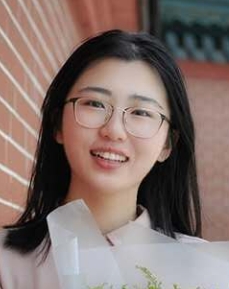 Wenyan Cong (丛文艳)合作论文数Department of Electrical and Computer Engineering, The University of Texas at Austin3
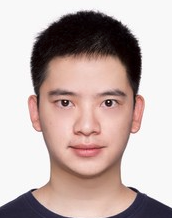 Xinyu Gong (龚新宇)合作论文数The University of Texas at Austin3
 Suya You合作论文数Ming Hsieh Department of Electrical and Computer Engineering, University of Southern California;U.S. Army Research Laboratory Adelphi3Chu-Tak Li合作论文数2Yilei Li合作论文数2Hayk Poghosyan合作论文数2
 Xin Li (李鑫)合作论文数University of Science and Technology of China2Hyungjoon Nam合作论文数2Rakesh Ranjan合作论文数2
 Densen Puthussery合作论文数College of Engineering2
 Hrishikesh P S合作论文数College of Engineering Trivandrum2
 Pradyumna Chari合作论文数Visual Machines Group, University of California, Los Angeles2
 Haoning Wu (吴昊宁)合作论文数S-Lab, Nanyang Technological University2
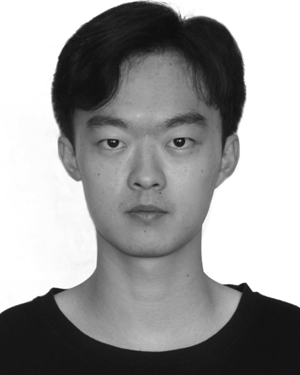 Haoran Chang合作论文数2Jisu Kim合作论文数Samsung2Sreyas Mohan合作论文数Department of Electrical Engineering, Indian Institute of Technology Madras2
 Wenhan Yang (杨文瀚)合作论文数The Distributed High Performance Software Fundamental Research Laboratory, Pengcheng National Lab2
 Jian Wang合作论文数Snap Inc.2
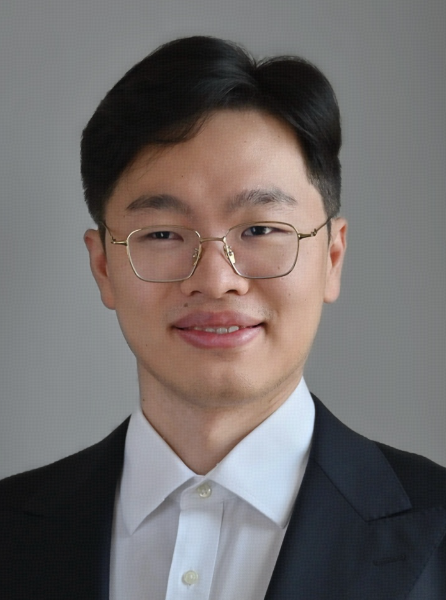 Hezhen Hu合作论文数VITA Group, The University of Texas at Austin2
 Maitreya Suin合作论文数Samsung Research America2
 Haitao Yang合作论文数Department of Computer Science, University of Texas at Austin2
 Qiang Liu合作论文数Department of Computer Science, College of Natural Sciences, The University of Texas at Austin2
 Errui Ding合作论文数Department of Computer Vision Technology, Baidu Inc.2
 Li-Wen Wang合作论文数Hong Kong Polytechnic University2
 Je-Chang Jeong合作论文数Department of Electronic Engineering, Hanyang University2




