Results of detailed modeling of in situ redistribution of heavy metals in pedological horizons of low and moderately metal contaminated soils, considering distinctly different long-term land use, are scarcely reported in literature. We used Hydrus-2D software parameterized with abundant available local soil data to simulate future Zn and Pb movements in soils contaminated by metallurgical fallout in the 20th century. In recent work on comparing different modeling hypotheses, we validated a two-site reactive model set with adjusted chemical kinetic constant values by fitting the 2005 Zn and Pb concentration profiles in soils, with estimated 1901-1963 airborne Zn and Pb loads (Mallmann et al., 2012a). In the present work, we used the same approach to simulate 2005-2055 changes in Zn and Pb depth-distribution and soil-solution concentrations, comparing two hypotheses of chemical equilibrium: i) the validated two-site model (one site at equilibrium and the other involved in kinetic reactions with pore water) set with adjusted kinetic EDTA extraction constants, and ii) a non-linear one-surface site adsorption equilibrium model. Simulated transfers were found generally lower and more realistic when using the two-site model. Simulations showed that consistent Zn redistribution and loss occurred in the moderately contaminated soil until 2055, i.e., more than one century after the main metal deposition, but negligible in low contaminated soils. Transfer of Pb was small in the three soils and under both hypotheses. In 2055, simulated Zn outflow concentrations remained under threshold values for drinking water.
This work aims to evaluate the soil physical properties affected by cover crop rotation and soil management in a long-term experiment in southern Brazil. The experiment was established in 1986, with treatments combining six winter treatments and two tillage systems (conventional and no tillage). Bulk density, porosity, aggregate-size class distribution, and organic carbon content of the aggregates were determined at six depths. Bulk density was not affected by tillage systems and winter treatments. The soil disturbance by plowing enhanced the macroporosity, decreased the microporosity, and promoted the formation of smaller aggregate size, in comparison to no tillage. Apart from the soil management, all winter species increased the greater aggregate-size classes, mean weight diameter, geometric mean diameter, and aggregate stability index compared to the fallow treatments. At the no-till treatments, the greater part of sequestered carbon into the soil was stored into the lower and bigger soil aggregates.
"Strategies" to sustain crop productivity by reducing the fertilizer and lime demands must be developed. The use of plant species that use more efficiently the soil nutrients and tillage systems that provide nutrients accumulation in more labile forms are prerequisites for sustainable agroecosystems. This study aimed to evaluate the long period effect of cultivating different winter species under different soil management systems on vertical distribution of soil nutrients and the soil acidity distribution in soil profile. The experiment was established in 1986 with six winter treatments (blue lupine, hairy vetch, oat, radish, wheat and fallow) under conventional tillage (CT) and no-tillage (NT) in a very clayey Rhodic Hapludox in Southern Brazil. As a result of 19 years of no soil disturbance, soil chemical attributes related to soil acidity and the availability of P and K were more favorable to crops growth up to 10 cm in the soil under no-tillage than in the conventional tillage. On other hand, lime applications in low doses on the soil surface were not efficient in neutralizing the aluminum toxicity below 10 cm depth. It shows that repeated use of lime on the soil surface under NT system can be a viable alternative strategy only when soil acidity and aluminum toxicity in subsurface has been previously eliminated using the adequate amount of lime and incorporating it into the arable layer. Moreover, in the conventional tillage system P and K availability were higher below 10 cm depth compared to the no-tillage system. Even after 19 years of no soil disturbance in the NT system the available P content below 10 cm soil layer was lower than the optimal content of available P recommended to cash crops. The reduced surface K application over time was sufficient to gain adequate crop yields and to maintain the optimal content of soil available K in both soil management systems. The effects of soil management systems were predominant on the soil acidity attributes, and no effects of winter cover crops were observed on soil acidity attributes. Black oat and blue lupine were more efficient in P cycling, increasing the soil available P content especially in the surface soil under NT. The lower amount of biomass produced over time when no cover crops were used in the winter period resulted in lower P and K availability in the soil, showing the important role of growing winter species to maintain soil fertility. (C) 2013 Published by Elsevier B.V.
Predicting the transfer of contaminants in soils is often hampered by lacking validation of mathematical models. Here, we applied Hydrus-2D software to three agricultural soils for simulating the 1900–2005 changes of zinc and lead concentration profiles derived from industrial atmospheric deposition, to validate the tested models with plausible assumptions on past metal inputs to reach the 2005 situation. The models were set with data from previous studies on the geochemical background, estimated temporal metal deposition, and the 2005 metal distributions. Different hypotheses of chemical reactions of metals with the soil solution were examined: 100% equilibrium or partial equilibrium, parameterized following kinetic chemical extractions. Finally, a two-site model with kinetic constant values adjusted at 1% of EDTA extraction parameters satisfactory predicted changes in metal concentration profiles for two arable soils. For a grassland soil however, this model showed limited applicability by ignoring the role of earthworm activity in metal incorporation.
It is known that any kind of soil management causes changes in the soil physical characteristics and can affect agricultural yield. The purpose of this study was to evaluate soil properties of an Alfisol and soybean yield under different management systems for no-tillage annual crops, no-tillage with chiseling and no-tillage crop rotation. The 11-year experiment was initiated in the 1998/99 growing season, on 100 x 30 m plots (11 % slope). Soil samples (5 per management system) were systematically collected (0-25 cm layer) in the summer growing season, to quantify soil organic matter, bulk density, macroporosity and flocculation, as well as soybean yield. The highest values for soil bulk density and organic matter content and the lowest for macroporosity were observed in the no-till system alone, whereas in the no-till system with quarterly chiseling the values for organic matter content were lowest, and no-tillage crop rotation resulted in the highest values for organic matter and macroporosity, and the lowest for soil bulk density. The average soybean yield was highest under no-till and trimestrial chiseling or crop rotation, and lowest for no-tillage annual crops no-tillage annual crops alone.
Application of lime and fertilizers might impact soil properties by affecting their physico-chemical parameters. The focus of the Versailles 42-plots experiment that was started in 1929 has always been to determine in fallow conditions the impact of mineral fertilization over time on the physico-chemical properties of a loamy soil. This paper's aim is to assess the impact of long-term mineral fertilization on mechanical strength and soil stability. Soil samples of similar texture and bulk density were taken from the 42-plots site, with pH ranging from 3.5 to 8.2. Aggregate stability followed the procedure of Le Bissonnais (1996). Compression tests were performed in drained conditions and short loading time (300s). Remolded and saturated soil samples were used to focus on the impact of chemical changes due to repeated fertilization. The pre-compression stress values Pc were derived from compression curves using various model fits according the shape of curve. Chemical discrepancies among soils provided from pH, organic matter and diversity of treatments. The decrease of pH reduced the cationic exchange capacity (CEC) value due to the protonation of variable charges and retention of positively charged hydroxyl-Al polymers. Exchangeable aluminum represented up to 90% of the CEC in acid soils as calcium ions represented from 80 to 98% of CEC with increasing pH of neutral and alkaline soils. Compression curves showed different global shapes according pH values and the contrasted behavior of acid soils when compared to other ones. The Pc values of highly acid soils were much greater than other treatments (greater than 150kPa compared with 30kPa). Nevertheless their Pc values decreased down to 40kPa, when soils were air-dried before compression. Meanwhile the deformation rate decreased when the pH dropped. This lower deformation cannot be explained by kinetic aspects and was not sensitive to drying. So the hypothesis of a set of yield stress avoiding drainage of the water phase and limiting soil compression was proposed. Aggregate stability tests revealed the unstable nature of all plots especially with the highly acid soils. The size distributions of fragment were very similar for all three tests with a narrow distribution in elementary particle class suggesting the predominance of dispersion in fragmentation process. But we found opposite results for this soil by comparing mechanical strength and water stability of aggregates. This contrast raised the question of the crucial role of the air-drying step on aggregate stability measurements. A small increase of aggregate stability was observed in neutral and alkaline soils due to calcium bridges when compared to reference plot. Such effect was not observed in compression behavior of remolded soils. Future studies will require the use of structured soil samples; in particular for neutral and alkaline soils to gather evidence of the effects of calcium bridges on soil stability and mechanical strength. Our results showed the need to consider interfacial processes in the soil stability and compression behavior and the great interest of the 42-plots experiments at INRA Versailles to relate chemical and physical soil properties.
Soils play a fundamental role in the production of human foods. The Oxisols in the state of Paraná are among the richest and most productive soils in Brazil, but degradation and low porosity are frequently documented, due to intensive farming involving various management strategies and the application of high-tech solutions. This study aims to investigate changes in the porosity of two Red Oxisols (Latossolos Vermelhos), denoted LVef (eutroferric) and LVdf (dystroferric) under conventional and no-tillage soil management, with a succession of annual crops of soybean, maize and wheat over a continuous period of more than 20 years. After describing the soil profiles under native forest, no-tillage management and conventional tillage using the crop profile method, deformed and non-deformed soil samples were collected from the volumes most compacted by human intervention and the physical, chemical and mineralogical properties analyzed. The various porosity classes (total pore volume, inter-aggregate porosity between channels and biological cavities) and intra-aggregate porosity (determined in 10 cm³ saturated clods subjected to a pressure of -10 kPa to obtain a pore volume with a radius (r eq), > 15 μm and < 15 μm). The results showed that the effects of no-tillage farming on porosity are more pronounced in both soil types. Porosity of the LVdf was higher than pf the LVef soil, whatever the management type. In the LVdf soil, only pores with a radius of > 15 μm were affected by farming whereas in the LVef soil, pores with a radius of < 15 μm were affected as well.
The transfer of soil sediments and phosphorus from terrestrial to aquatic systems is a common process in agricultural lands. The aims of this paper are to quantify the soil phosphorus availability and to characterize phosphorus forms in soil sediments as contaminant agents of waters as a function of anthropic pressures.
Soils play a fundamental role in the production of human foods. The Oxisols in the state of Paraná are among the richest and most productive soils in Brazil, but degradation and low porosity are frequently documented, due to intensive farming involving various management strategies and the application of high-tech solutions. This study aims to investigate changes in the porosity of two Red Oxisols (Latossolos Vermelhos), denoted LVef (eutroferric) and LVdf (dystroferric) under conventional and no-tillage soil management, with a succession of annual crops of soybean, maize and wheat over a continuous period of more than 20 years. After describing the soil profiles under native forest, no-tillage management and conventional tillage using the crop profile method, deformed and non-deformed soil samples were collected from the volumes most compacted by human intervention and the physical, chemical and mineralogical properties analyzed. The various porosity classes (total pore volume, inter-aggregate porosity between channels and biological cavities) and intra-aggregate porosity (determined in 10 cm³ saturated clods subjected to a pressure of -10 kPa to obtain a pore volume with a radius (r eq), > 15 μm and < 15 μm). The results showed that the effects of no-tillage farming on porosity are more pronounced in both soil types. Porosity of the LVdf was higher than pf the LVef soil, whatever the management type. In the LVdf soil, only pores with a radius of > 15 μm were affected by farming whereas in the LVef soil, pores with a radius of < 15 μm were affected as well.Sabe-se que os solos têm função primordial na produção de alimentos para a humanidade. No Estado do Paraná, os Latossolos Vermelhos estão entre os mais produtivos do Brasil; devido à utilização intensa deles com diferentes práticas culturais e a uma agricultura altamente tecnificada, são comuns relatos de sua degradação física, com redução da porosidade. Dessa forma, o objetivo deste trabalho consistiu em estudar a modificação da porosidade de Latossolos Vermelho eutroférrico (LVef) e distroférrico (LVdf) cultivados sob plantio direto e convencional, com sucessão das culturas anuais soja, milho e trigo por mais de 20 anos consecutivos. Após uma descrição dos perfis de solo sob mata, plantio direto e preparo convencional pelo método do perfil cultural, coletaram-se amostras de solo deformadas e indeformadas nos volumes de solo antropizados mais compactos, para as análises físicas, químicas, mineralógicas e estudo das diferentes classes de poros (volume total de poros, poros entre (canais e cavidades biológicas) e intra-agregados (determinada em torrões de 10 cm³ saturados e submetidos à tensão de -10 kPa, para obtenção do volume de poros de r eq. > 15 µm r eq. < 15 μm). Os resultados permitiram concluir que o efeito da exploração agrícola sobre a porosidade é evidenciado principalmente no plantio direto nos dois solos estudados. O LVdf apresentou porosidade superior à de LVef, qualquer que seja o manejo considerado; no LVdf, somente os poros de raio equivalente > 15 μm foram alterados pela exploração agrícola; e no LVef, além dos macroporos, também os poros de raio equivalente < 15 μm foram afetados pelo manejo.
Different management systems tend to modify soil structure and porosity over the years. The aim of this study was to study modifications in the morphostructure and porosity of dystroferric Red Latosol (Oxisol) under conventional tillage and no-tillage over a 31- year period. The study began with the description of soil profiles based on the cropping profile method, to identify the most compact structures, define sample collection points for physical and chemical analysis, and determine the water retention curve. A forest soil profile was described and used as reference. The results showed that, under conventional tillage, the microaggregate structure of the Oxisol was fragmented between 0 and 0.20 m, and compact (bulk density = 1.52 Mg m-3) in the sub-surface layer between 0.20 and 0.50 m. Under no-tillage, the structure became compacted (bulk density = 1.40 Mg m-3) between 0 and 0.60 m, but contained fissures and biopores. The volume of the class with a pore diameter of > 100 µm under no-tillage was limited, but practically non-existent in the conventional management system. On the other hand, the classes with a pore diameter of < 100 µm were not affected by the type of soil management system.
The system of no-till sowing stands out as being a technology that suits the objectives of more rational use of the soil and greater protection against the erosion. However, through till, any of it, occurs modifications of the soil's structure. This current work aims to study the influence of the energy state of the water and of the organic matter on the mechanism of compaction of Red Oxisol under no-till management system. Humid and non-deformed sample were collected in horizon AP of two agricultural areas under no-till, with and without rotation of cultures. In the laboratory, these samples were broken into fragments and sifted to obtain aggregates of 4 to 5 mm sized, which were placed in equilibrium under four matrix potentials. Thereafter, they were exposed to uni-dimensional compression with pressures varying from 32 to 1,000 kPa. The results in such a way show that the highest compressibility of aggregates both for the tilling with rotation of cultures as for the tilling without rotation of cultures, occurred for matrix potential -32 kPa (humidity of 0.29-0.32 kg kg-1, respectively), while the minor occurred for the potentials of -1 and -1,000 kPa (humidity of 0.35 and 0.27 kg kg-1, respectively), indicating that this soil should not be worked with humidity ranging around 0.29 to 0.32 kg kg-1 and the highest reduction of volume of aggregates was obtained for the mechanical pressures lower than 600 inferior kPa, indicating that these soils showed to be very influenced by compression, when exposed to mechanical work. Also, the aggregates of soil under no-till and rotation of crops presented higher sensitivity to the compression than the aggregates of soil under no-till and without rotation of crops, possibly for having better structural conditions given to a higher content of organic matter.O sistema de semeadura direta destaca-se como uma tecnologia que atende aos objetivos de uso mais racional do solo e maior proteção contra a erosão. Entretanto, por meio do manejo, qualquer que seja ele, ocorrem modificações da estrutura do solo. O presente trabalho teve como objetivo estudar a influência do estado energético da água e do teor de matéria orgânica sobre o mecanismo de compactação de Latossolo Vermelho sob plantio direto. Utilizaram-se para este estudo amostras de solo úmidas e indeformadas, coletadas no horizonte Ap de duas áreas agrícolas sob plantio direto com e sem rotação de culturas. No laboratório, essas amostras foram fragmentadas e peneiradas para obtenção de agregados de 4 a 5 mm de diâmetro, os quais foram colocados em equilíbrio com umidade de quatro potenciais matriciais para, após essa etapa, sofrerem uma compressão uniaxial com pressões de 32 a 1.000 kPa. Os resultados mostram que a maior compressibilidade dos agregados tanto para o manejo com rotação de culturas como para o manejo sem rotação de culturas, ocorreu para o potencial matricial de -32 kPa (umidade entre 0,29 e 0,32 kg kg-1), enquanto a menor ocorreu para os potenciais de -1 e -1.000 kPa (umidades de 0,35 e 0,27 kg kg-1, respectivamente), indicando que esse solo não deve ser trabalhado com umidade em torno de 0,29-0,32 kg kg-1. A maior redução de volume dos agregados foi obtida para pressões mecânicas inferiores a 600 kPa, indicando que esses solos mostraram-se bastante sensíveis à compactaçãoquando expostos ao trabalho mecânico. Além disso, os agregados do solo com plantio direto e rotação de culturas apresentaram sensibilidade maior à compressão que os agregados do solo com plantio direto e sem rotação de culturas, possivelmente por terem melhores condições estruturais, graças ao maior teor de matéria orgânica.
The system of no-till sowing stands out as being a technology that suits the objectives of more rational use of the soil and greater protection against the erosion. However, through till, any of it, occurs modifications of the soil's structure. This current work aims to study the influence of the energy state of the water and of the organic matter on the mechanism of compaction of Red Oxisol under no-till management system. Humid and non-deformed sample were collected in horizon AP of two agricultural areas under no-till, with and without rotation of cultures. In the laboratory, these samples were broken into fragments and sifted to obtain aggregates of 4 to 5 mm sized, which were placed in equilibrium under four matrix potentials. Thereafter, they were exposed to uni-dimensional compression with pressures varying from 32 to 1,000 kPa. The results in such a way show that the highest compressibility of aggregates both for the tilling with rotation of cultures as for the tilling without rotation of cultures, occurred for matrix potential -32 kPa (humidity of 0.29-0.32 kg kg(-1), respectively), while the minor occurred for the potentials of -1 and -1,000 kPa (humidity of 0.35 and 0.27 kg kg(-1), respectively), indicating that this soil should not be worked with humidity ranging around 0.29 to 0.32 kg kg(-1) and the highest reduction of volume of aggregates was obtained for the mechanical pressures lower than 600 inferior kPa, indicating that these soils showed to be very influenced by compression, when exposed to mechanical work. Also, the aggregates of soil under no-till and rotation of crops presented higher sensitivity to the compression than the aggregates of soil under no-till and without rotation of crops, possibly for having better structural conditions given to a higher content of organic matter.
A presença de gradiente textural é comum e marcante em Argissolos. O objetivo do trabalho foi estudar a mineralogia das partículas envolvidas no processo de formação de gradiente textural em um solo subtropical do Rio Grande do Sul. Amostras de um Argissolo Vermelho-Amarelo distrófico abrúptico, material parental sedimentar, foram coletadas em duas trincheiras localizadas em distintas posições no relevo da área do departamento de solos da Universidade Federal de Santa Maria. No perfil 1, sob campo nativo e posicionado na meia encosta de uma colina com 9 % declividade, amostras foram coletadas nos horizontes A1, A2, AB e Bt. No perfil 2, sob vegetação espontânea e localizado no topo plano da colina, amostras foram coletadas nos horizontes A1, A2, E e Bt. Atributos químicos foram avaliados sobre a fração de solo menor que 2 mm. Amostras de argila dispersa em NaOH, após serem extraídas, foram submetidas à difração laser, discriminando a distribuição do tamanho de partícula envolvida no processo. A fração menor que 0,2 μm foi extraída, saturada com Ca2+ e submetida à difração de raios X sob os seguintes tratamentos: normal, à temperatura ambiente (N); depois de saturada com etilenoglicol (EG), depois de aquecida a 300 e 550 ºC. Os difratogramas de raios X (N) foram submetidos à modelagem matemática com DecompRX. Ambos os perfis apresentaram gradiente textural. Os teores de argila no horizonte Bt foram 2,9 e 4,4 vezes maiores no perfil 1 e 2 que nos seus respectivos horizontes mais arenosos. Os diagramas de difração laser mostraram enriquecimento no horizonte Bt em partículas de tamanho modal de 0,09 e 0,2 μm. A mineralogia dessa fração apresentou incremento nos horizontes Bt de interestratificados caulinita-esmectita (C-E) em detrimento das fases vermiculita hidróxi-Al entrecamada (VHE) e ilita-esmectita (I-E). Dessa forma, infere-se que o gradiente textural observado no solo está associado ao processo de migração de C-E com partículas de tamanho modal de 0,09 e 0,2 μm. Entretanto, o perfil 2 apresenta indícios de descontinuidade litológica, indicando que o processo de migração de partículas não é o único responsável pela formação de gradiente textural.
Soil organic carbon (SOC) was assessed in a long-term (19 yr) experiment comparing conventional tillage (CT) and no-tillage (NT) management systems and various winter cover crop treatments in a Rhodic Hapludox in southern Brazil. After 19 yr, NT resulted in 6.84 Mg C ha(-1), in the upper soil layer (0-10 cm), which represented 64.6% more than CT. In the 0 to 20 cm soil layer, the NT system sequestered 1.24 Mg C ha(-1) yr(-1), while CT sequestered 0.96 Mg C ha(-1) yr(-1). Independent of soil management, the fallow treatment resulted in the lowest SOC stocks to the 40-cm soil depth compared to all other winter treatments. We compared SOC levels of the experimental site with a nearby-forested area, which has never been cleared. No-till management combined with winter cover crops resulted in soil properties that most closely resembled the undisturbed forest. Maize grain yields and soybean seed yields were 6 and 5% higher, respectively, under NT than CT. Our results point to NT management combined with winter cover crops as the management system of choice to achieve sustainable crop production on Oxisols in the subtropical and tropical regions of the world.
Caulinita é um argilomineral comumente encontrado nas frações finas de solos tropicais e subtropicais do Sul do Brasil. Em difratometria de raios X, sua presença é verificada pelo pico correspondente à distância 00l de d = 0,715 nm. Contudo, em alguns solos pode-se observar pico superior a d = 0,720 nm, correspondendo a uma haloisita ou a um interestratificado caulinita-esmectita (C-E). A avaliação dessa hipótese e posterior discussão sobre a gênese do solo constituiu o objetivo deste trabalho. Amostras de rocha e dos horizontes A1, A2, E e Bt de um Argissolo Vermelho-Amarelo sob vegetação pioneira foram coletadas no campus da Universidade Federal de Santa Maria. A fração argila foi extraída por sedimentação, saturada com Ca2+ e submetida à difratometria de raios X nas seguintes condições: normal, à temperatura ambiente (N); depois de saturada com etilenoglicol (EG); depois de aquecida a 300 e 550 °C; e depois da solvatação com formamida. Os difratogramas de raios X (DRX) brutos foram submetidos à modelagem matemática na região entre 11 e 15 ° de 2 teta, com auxílio do programa DecompRX. Os DRX indicaram a presença de dois picos: um estreito e intenso a d = 0,717 nm, atribuído à caulinita; e outro mais largo e menos intenso a d = 0,720 nm. Este último foi sensível à solvatação com etilenoglicol, deslocando-se a d = 0,730 nm, e, depois de aquecido a 300 °C, retornando a d = 0,720 nm. Esse comportamento é típico de entrecamadas expansíveis. Em face disso, atribuiu-se a existência de interestratificado caulinita-esmectita, visto que a presença de haloisita não foi confirmada pelo teste com formamida. Em DRX modelado, confirmou-se a presença de interestratificado caulinita-esmectita, na proporção de 0,8-0,9 de caulinita e 0,1-0,2 de camadas de esmectitas. Ademais, a C-E representa cerca de 90 % e a caulinita em torno de 10 % do pico a d = 0,720 nm. A presença de C-E foi também observada na rocha, indicando que ela é proveniente de herança do material de origem. A mineralogia deste solo indica estádio intermediário entre argilominerais de estrutura do tipo 2:1 e 1:1 no processo de intemperismo.Kaolinite is commonly found in fine fractions of tropical and subtropical Brazilian soils. Kaolinite can be verified by an X-ray diffractogram, made of a series of 00l peaks, at the distance of 0.715 nm. However, in some soils, major peaks can be found at about d = 0.720 nm, indicating halloysite or kaolinite-smectite (K-S) interstratified minerals. The objectives of this study were to verify this hypothesis and subsequently discuss soil genesis. Parent material and soil samples from the horizons A1, A2, E and Bt were collected in a Red Yellow Acrisol, covered by native vegetation, on the Campus of the Universidade Federal de Santa Maria, RS, Brazil. The clay fraction was separated by sedimentation, Ca2+ saturated and X-ray diffracted after the following treatments: control, air drying, (N); ethylene-glycol saturation (EG); heating to 300 and 550 °C; and, after formamide saturation. The raw X-ray diffractograms (XRD) were modeled between 11 and 15 degrees 2 theta (using DecompRX). Two peaks were found in the XRD around this region. The first peak was sharp and intense at d = 0.717 nm, corresponding to kaolinite; the second, broader and less intense, was observed at d = 0.720 nm. The peak at d = 0.720 nm was sensitive to EG treatment; it varied from d = 0.720 nm to d = 0.730 nm and returned to about d = 0.720 nm after heating to 300 °C. This behaviour is typical of expansive layers. The presence of interstratified K-S minerals was inferred since halloysite clay was not identified by the formamide test. The XRD were analyzed and indicated interstratified K-S mineral at a proportion of 0.8_0.9 kaolinite layers and 0.1-0.2 smectite layers. Furthermore, the K-S covered about 90 % and kaolinite alone 10 % of the modelled peak, at d = 0.720 nm. K-S was also found in the bedrock, indicating that K-S was inherited from the parent material. The soil mineralogy indicates an intermediate weathering stage of the clay minerals with a 2:1 and 1:1 structure in the weathering process of this soil.
Caulinita é um argilomineral comumente encontrado nas frações finas de solos tropicais e subtropicais do Sul do Brasil. Em difratometria de raios X, sua presença é verificada pelo pico correspondente à distância 00l de d = 0,715 nm. Contudo, em alguns solos pode-se observar pico superior a d = 0,720 nm, correspondendo a uma haloisita ou a um interestratificado caulinita-esmectita (C-E). A avaliação dessa hipótese e posterior discussão sobre a gênese do solo constituiu o objetivo deste trabalho. Amostras de rocha e dos horizontes A1, A2, E e Bt de um Argissolo Vermelho-Amarelo sob vegetação pioneira foram coletadas no campus da Universidade Federal de Santa Maria. A fração argila foi extraída por sedimentação, saturada com Ca2+ e submetida à difratometria de raios X nas seguintes condições: normal, à temperatura ambiente (N); depois de saturada com etilenoglicol (EG); depois de aquecida a 300 e 550 °C; e depois da solvatação com formamida. Os difratogramas de raios X (DRX) brutos foram submetidos à modelagem matemática na região entre 11 e 15 ° de 2 teta, com auxílio do programa DecompRX. Os DRX indicaram a presença de dois picos: um estreito e intenso a d = 0,717 nm, atribuído à caulinita; e outro mais largo e menos intenso a d = 0,720 nm. Este último foi sensível à solvatação com etilenoglicol, deslocando-se a d = 0,730 nm, e, depois de aquecido a 300 °C, retornando a d = 0,720 nm. Esse comportamento é típico de entrecamadas expansíveis. Em face disso, atribuiu-se a existência de interestratificado caulinita-esmectita, visto que a presença de haloisita não foi confirmada pelo teste com formamida. Em DRX modelado, confirmou-se a presença de interestratificado caulinita-esmectita, na proporção de 0,8-0,9 de caulinita e 0,1-0,2 de camadas de esmectitas. Ademais, a C-E representa cerca de 90 % e a caulinita em torno de 10 % do pico a d = 0,720 nm. A presença de C-E foi também observada na rocha, indicando que ela é proveniente de herança do material de origem. A mineralogia deste solo indica estádio intermediário entre argilominerais de estrutura do tipo 2:1 e 1:1 no processo de intemperismo.
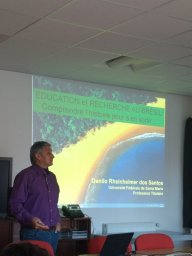 Danilo Rheinheimer dos Santos合作论文数Centro de Ciências Rurais, Universidade Federal de Santa Maria9
 Joao Tavares Filho合作论文数8
 Edson Campanhola Bortoluzzi合作论文数Faculdade de Agronomia e Medicina Veterinária, Universidade de Passo Fundo6
 Maria De Fátima Guimarães合作论文数Centro de Ciências Agrárias5
 Ricardo Ralisch合作论文数Campus Universitário, Universidade Estadual de Londrina4
 Stephane de Tourdonnet合作论文数3
 Michel Grimaldi合作论文数Centre IRD, Univ. Pierre et Marie Curie (Paris VI),3
 Folkert van Oort合作论文数3
 Isabelle Lamy合作论文数UR 251 Unité PESSAC, INRA3W. L. Hargrove合作论文数3Miguel Pernes合作论文数3
 Ademir Calegari合作论文数3
 Pauline Defossez合作论文数2Jerome Labanowski合作论文数2
 Fabio Joel Kochem Mallmann合作论文数Departamento de Solos, Universidade Federal de Santa Maria2Francoise Elsass合作论文数2
 Joao Kaminski合作论文数2
 Jean Roger-Estrade合作论文数Centre de Grignon, AgroParisTech2Véronique Chaplain合作论文数2
 Philippe Cambier合作论文数2Luciano Colpo Gatiboni合作论文数2Anne-Marie Jaunet合作论文数2
 Guy Richard合作论文数2a r dexter合作论文数1Michael A. Cole合作论文数1Ghislaine Delarue合作论文数1a calegari合作论文数1Santanna Maria Alice合作论文数1Donald Peacor合作论文数Department of Earth and Environmental Sciences, College of Literature, Science, and the Arts, University of Michigan1
 Tiecher Tales合作论文数Department of Soils, Universidade Federal de Santa Maria;IC2MP-HydrASA UMR 7285, Université de Poitiers;Universidade Federal de Santa Maria, Université de Poitiers1
 Jinwook Kim合作论文数1
 Joseph William Stucki (Joseph W. Stucki)合作论文数Department of Natural Resources and Environmental Sciences, College of Agricultural, Consumer and Environmental Sciences, University of Illinois Urbana-Champaign1
 Pascal Boivin合作论文数1Frederic Hetzel合作论文数1
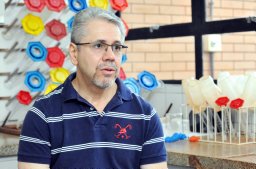 João Tavares Filho合作论文数Londrina State University, Londrina State University1Max Sarrazin合作论文数1Henry T. Wilkinson合作论文数1Anthony R. Dexter合作论文数1
 Pierre Curmi合作论文数USARQ, ENSA-INRA1S. De Tourdonnet合作论文数1
 Andre Carlos Cruz Copetti合作论文数Centro de Ciências Rurais, Universidade Federal de Santa Maria1Flavio J. Luizao合作论文数1Guillaume Limousin合作论文数1
 Claire Chenu合作论文数INRA AgroParisTech1
 Christophe Schwartz合作论文数Laboratoire Sols et Environnement 2, ENSAIA-INPL/INRA1
 Patricia Garnier合作论文数1João Batista Rossetto Pellegrini合作论文数1armand chauvel合作论文数1William L. Hargrove合作论文数1




