Urban agriculture development often faces the problem of soil pollution. Soil engineering consisting in the addition over polluted soils of a top layer made of recycled wastes is a promising solution. This study was co-constructed with urban farmers and aimed at testing in situ the feasibility of growing vegetables safe for consumption in substrates consisting of organic and inorganic waste, directly overlaying soil polluted by trace elements (TE). Two plants were tested: radishes and tomatoes. Three substrates were tested: 1) sheep manure mixed with composted ramial chipped wood (SHW); 2) biowaste compost mixed with mushroom compost and ramial chipped wood (BMW); and 3) deep excavated subsoils mixed with green waste compost (EXC). Only radishes grown in EXC presented levels of TE below the threshold values. For all the other cases, cadmium levels were above the threshold values. This result concerning plant contamination by TE is consistent with a contamination of SHW and BMW substrates by the polluted soil underneath. EXC contained lower TE content, suggesting that mineral materials limited the transfer from the polluted soil towards the substrate overlay. We concluded that adding a combination of mineral and organic waste on top of polluted soils may better mitigate vegetables contamination than adding only organic waste. However, this result was not observed for all tested vegetables. More research is needed to evaluate the best substrate candidate and its adequate thickness, to study its physico-chemical evolution over a longer period of time and to test a larger panel of vegetables.
Application of organic wastes as soil fertilizers represents an important route of agricultural soil contamination by antibiotics such as sulfamethoxazole (SMX). Soil contamination may be influenced by the storage time of organic wastes before soil spreading. The objective of this work was to study the fate of SMX in two organic wastes, a co-compost of green waste and sewage sludge and a bovine manure, which were stored between 0 and 28 days, then incorporated in an agricultural soil that has never received organic waste and monitored for 28 days under laboratory conditions. Organic wastes were spiked with C-14-labelled SMX at two concentrations (4.77 and 48.03 mg kg(-1) dry organic waste). The fate of SMX in organic wastes and soil-organic waste mixtures was monitored through the distribution of radioactivity in the mineralised, available (2-hydroxypropyl-beta-cyclodextrin extracts), extractable (acetonitrile extracts) and non-extractable fractions. SMX dissipation in organic wastes, although partial, was due to i) incomplete degradation, which led to the formation of metabolites detected by high performance liquid chromatography, ii) weak adsorption and iii) formation of non-extractable residues. Such processes varied with the organic wastes, the manure promoting non-extractable residues, and the compost leading to an increase in extractable and non-extractable residues. Short storage does not lead to complete SMX elimination; thus, environmental contamination may occur after incorporating organic wastes into soil. After addition of organic wastes to the soil, SMX residues in the available fraction decreased quickly and were transferred to the extractable and mostly non-extractable fractions. The fate of SMX in the soil also depended on the organic wastes and on the prior storage time for manure. However the fate of SMX in the organic wastes and soil-organic waste mixtures was independent on the initial spiked concentration. (C) 2021 Elsevier B.V. All rights reserved.
Repeated applications of organic waste products (OWP) are a source of trace elements (TE) inputs to agricultural topsoils. The present study aimed at (i) assessing the effects of repeated OWP inputs on the chemical properties of topsoils in two long-term field experiments (13 and 15 years; calcareous and non-calcareous soils), (ii) evaluating TE phytoavailability and their transfer to grain (winter wheat and maize) and (iii) identifying the underlying factors causing alterations of TE phytoavailability. In both field experiments, receiving compliant or slightly high doses of OWP in compliance with regulations, OWP and soil physicochemical properties and TE concentrations in soils and grains were determined. In situ phytoavailability of TE was assessed at two juvenile crop growth stages by analyzing TE concentrations in shoot plantlets. Depending on the OWP input amount, results showed that compared to the soil receiving no organic amendment, repeated OWP inputs significantly increased soil organic carbon content, pH, cation exchange capacity, total soil Cu, Mo and Zn concentration and the phytoavailability of Mo, while the phytoavailability of Cd, Mn, Ni and Tl was significantly reduced. No notable effect was observed for Cr, Cu, Hg, Pb and Zn phytoavailability. Statistical approaches suggested that due to the repeated OWP applications, increased soil organic carbon content and pH, were likely responsible for decreased TE phytoavailability (e.g., Cd).
Chemical fertilizers, phosphate ore treatments, and phosphogypsum wastes contribute to enhanced levels of natural radionuclides in the environment. A total of 27 soil samples were collected from nine uncultivated sites around a Lebanese fertilizer plant in order to analyze the gamma emitter radionuclides (238U,232Th,226Ra,210Pb,137Cs, and40K) and to assess the radiological impact on the surrounding environment, through the calculation of different radiological index parameters. In addition, a total of 27 Dittrichia viscosa plant samples were gathered including roots, leaves, and stems, and the radionuclide transfer factors were determined. Measurements were conducted using a gamma spectrometer with high-purity germanium detectors. The highest values measured in soil samples were 77 ± 9 Bq/kg, 102 ± 10 Bq/kg, and 143 ± 5 Bq/kg for238U,226Ra, and210Pb, respectively.40K levels were comparable to other Lebanese provinces and about 50% less than the worldwide average value. The results showed the absence of radionuclide transfer between soil and plants, except for40K. The average values of the total absorbed dose rate and the annual effective dose were comparable to the worldwide average values. Therefore, the external exposure index and Radium equivalent were found to be below the international recommended values.
Anaerobic conditions mobilize phosphorus (P) in soils and sediments. The role of anaerobic microsites in well-drained soil on P migration is unknown. This study aimed to identify mechanisms that control field-scale vertical P mobility as affected by organic fertilizers that may trigger variable redox conditions. Soils were sampled at different depths in a well-drained Luvisol after 19 years of application of organic fertilizers. The concentrations of P and manganese (Mn) in 0.45-μm-filtered extracts (10-3 M CaCl2) of field-moist soil samples were strongly correlated (r = + 0.95), and both peaked in and below the compacted plough pan, suggesting that reductive processes mobilize P. Waterlogged soil incubations confirmed that anaerobic respiration comobilizes Mn and P and that this leads to the release of colloidal P and iron (Fe). The long-term applications of farmyard manure and immature compost enhanced the concentrations of Mn, Fe, and aluminum (Al) in the soil solution of subsurface samples, whereas less such effect was found under the application of more stable organic fertilizers. Farmyard manure application significantly enhanced soil P stocks below the plough layer despite a small P input. Overall, multiple lines of evidence confirm that anaerobic respiration, sparked by labile organic matter, mobilizes P in this seemingly well-drained soil.
Organic waste products (OWP) application to crop lands makes possible nutrients recycling. However, it can result in long-term accumulation of trace elements (TE) in soils. The present study aimed at (i) assessing the impact of regular applications of urban composts and manure on the TE contents of topsoils and crops in a long-term field experiment, (ii) comparing the TE mass balances with the stock variations of TE in soils, and (iii) proposing a prospective evaluation of this practice, based on estimated soil safe threshold values and simulations of soil TE accumulation for 100 years. In the long-term field experiment, physico-chemical properties and TE contents (Cd, Cr, Cu, Hg, Ni, Pb and Zn) have been measured in OWP, soils, plants and leaching waters for the period 1998–2015, and used for mass balance calculations and long-term simulations of TE accumulations. The composts of green wastes and sludge (GWS) and of municipal solid waste (MSW) were the OWP with the largest TE contents, while the farmyard manure tended to have the lowest. Repeated application of OWP led to significant accumulation of Zn and Cu in the topsoil layer (not for Cr, Cd, Hg, Ni, Pb), especially with GWS, without overpassing calculated protective threshold values. No effect of repeated application of OWP has been observed on TE contents in grains (wheat, maize, barley). The positive mass balance has been dominated by the input flux of TE through OWP and resulted in the observed increases of soil stocks for Cu and Zn. Prospective simulation of soil content evolution until 2100 showed that soil content reached 0.4 mg Cd kg−1 soil (GWS, MSW), 38 mg Cu kg−1 soil (GWS) and 109 mg Zn kg−1 soil (GWS), which remained lower than protective threshold values.
Total and bioaccessible lead (Pb) concentrations in Dittrichia viscosa and soil samples were considered for estimating the potential health risk, related to both plant intake and accidental soil ingestion by adult and child consumers, near a Lebanese fertilizer plant. A total of 27 plant samples, from 9 uncultivated sites situated around the plant, were analyzed in order to assess the total and bioaccessible Pb content. Physiologically based extraction test (PBET) was used to estimate oral bioaccessibility of Pb in edible plant parts. Washed and unwashed leaves were compared in order to show the importance of good consumer practice on Pb intake. Extracted Pb in the intestinal medium accounted for 24 up to 87% of Pb extracted in the gastric medium. The total hazard quotient (HQtot) and the total bioaccessible hazard quotient (BHQ), related to both plants' intake and soil ingestion, for two maximalist child and adult scenarios, were calculated in order to estimate human health risk assessment. HQtot estimations considering the total concentration of Pb in soil and plant suggest that this metal is a contributor in elevating health risks problems on local plants' consumers, especially children inhabitants. However, the integration of bioaccessible concentrations of Pb in risk estimations reduces remarkably the potential risk.
The use of phosphate ore by fertilizer industries is considered a major source of soil contamination by trace metals and radionuclides. Despite its low mobility and bioavailability, lead (Pb) is among soil contaminants that pose a serious risk to human health. This study evaluates the potential impact of a fertilizer factory in North Lebanon on the total content of Pb and the activity concentration of its radioisotopes in residential, non-agricultural lands around the industry, as well as its mobility and bioaccessibility in soil samples collected at different depths. Chemical extractions by EDTA and in vitro physiologically based extraction test were used to estimate, respectively, the available and bioaccessible fractions of Pb in soils. Radioisotopes 214Pb, 212Pb and 210Pb have been analyzed by gamma spectrometry. Different physicochemical soil parameters, such as pH, carbonate content, electrical conductivity, cation exchange capacity, clay, total nitrogen and redox potential, were studied. The pseudo-total Pb varied between 12.8 and 68.5 mg kg−1, while the extractable fractions were more variable, between 12 and 72% of total Pb concentration for the EDTA extracted fraction and up to 28.5% for the bioaccessible fractions. The processing of the data shows the decreases with depth in most sites of the total and available Pb and of the activity concentration of 210Pb and their positive correlations with total nitrogen. These variations and relationships with the location of studied sites show the influence of emissions from the factory or the transport of ore and by-products. The correlations between available and bioaccessible Pb on one hand, between available Pb and 210Pb on another hand, raise the question of health risk assessments taking into account the bioaccessibility of Pb and its radioisotopes.
Today, the recycling of organic wastes (OW) in agriculture has been largely encouraged since it makes possible to recycle the nutrients they contain as substitute to mineral fertilizers. As an example in 2017, 25%, 54% and 71% of nitrogen, phosphorous and potassium applied on cultivated soils have been applied as organic fertilizers issued from organic wastes, respectively in France. Additionally, the associated input of organic matter could also contribute at increasing soil organic carbon stocks, thus improving soil fertility and potential climate change mitigation. The main sources of organic wastes are of agricultural origin with all animal manures, but also of industrial origin (agro-industries or other) or urban origins (food wastes, green wastes, sewage sludges…). If agricultural and industrial wastes are largely recycled in agriculture, the recycling of urban wastes is strongly encouraged after biological treatments (composting or anaerobic digestion). Finally, urban sewage sludges are also recycled in agriculture in many countries. If these recycling participate to circular economy, such practice needs to be proved to have no adverse impacts on soil, crop and water qualities. The objective is to focus on trace element (TE) contents in these organic fertilizers and the consequences of their repeated application on TE contents in soils, their potential transfers to crops and soil solutions then to food chain and ground waters. A network of long-term field experiments (SOERE-PRO) have been created among French research institutes, to quantify, explain and be able to predict the consequences of repeated fertilization with OW on soil and water qualities and on crop production and quality. The SOERE-PRO included different pedoclimatic conditions including temperate and tropical conditions, various OW including animal manures and slurries, sewage sludge composted or not, biowaste composts and digestates… with some experiments as old as 1998. TE bioavailability for crops and mobility in soils depend on their speciation in OW and soils but also on soil characteristics such as pH and soil organic matter content or dissolved organic matter content in soil solution. The SOERE-PRO will be presented, and also examples of results of TE mass balance, interactions between impacts (pH and TE mobility for example), soil biological activities, evolution of TE contents in soil, crop and water since 20 years. Finally, questions will be asked from the end-user and agronomist point of vue on the development of pertinent risk indicators.
Spreading organic waste products (OWP) issued from sewage sludge or manures into soil may disseminate antibiotics with unknown risks for human health and environment. Our objectives were to compare the fate of two sulfonamides, sulfamethoxazole (SMX) and its metabolite N-acetyl-sulfamethoxazole (N-ac-SMX), and one fluoroquinolone, ciprofloxacin (CIP), in an unamended soil, and two soils regularly amended since 1998 with a sewage sludge and green waste compost and with farmyard manure respectively. Incubations of soil spiked with 14C labelled SMX or N-ac-SMX (0.02 mg kg−1) or CIP (0.15 mg kg−1) allowed a quantification of radiolabeled molecules in the mineralized, easily, hardly and non-extractable fractions after 3 and 156 days. Nature of 14C molecules was also analyzed by HPLC in extractable fractions after 3 and 156 days.SMX and N-ac-SMX dissipation was fast and due to i) mineralization (∼10% of recovered 14C after 156 days) or incomplete degradation (production of metabolites), ii) adsorption, even if both sulfonamides present low Kd (<3 L kg−1) and iii) formation of non-extractable residues (NER), representing more than 50% of recovered radioactivity.N-ac-SMX was more mineralized than SMX, and formed more progressively NER, after a step of deacetylation. Adsorption of CIP was fast and formed mainly NER (>72%) whereas its mineralization was negligible. Repeated applications of OWP tend to enhance adsorption of antibiotics and lower their degradation, through the quantity and quality of the built up soil organic matter. If applications of sewage sludge compost favor adsorption and inhibit mineralization, applications of manure boost the formation of non-extractable residues.
Recycling organic residues in agrosystems presents several benefits but faces the question of contaminants, among them a few trace metals which eventually accumulate in soils following regular applications of organic waste products (OWP) and represent an ecological risk. The increase of total trace metal contents in amended topsoils can be predicted by a mass balance approach, but the evolution of their available fractions is a more intricate issue. We aimed at modelling this evolution by using the dataset of a long-term field experiment of OWP applications (manure and three urban waste composts). Two operationally-defined fractions of 6 trace metals have been quantified in the OWP and amended topsoils between 2002 and 2015: the soluble and potentially available metals, extracted in 0.01 M CaCl2 and 0.05 M EDTA solutions, respectively. The potentially available metals have progressively increased in amended topsoils, at rates depending on elements and types of OWP. For Zn, these increases corresponded in average to inputs of potentially available Zn from OWP. But the soil stocks of potentially available Cu increased faster than from the inputs of EDTA-extractable Cu, showing linear regression slopes between 1.4 and 2.5, depending on OWP type. The influence of OWP has been provisionally interpreted in the light of their efficiency to increase soil organic matter and their inputs of reactive oxides. Soluble copper has increased with repeated amendments. But soluble cadmium, nickel and zinc have generally decreased, as they are influenced by changing soil variables such as pH and organic matter. Statistic models were used to unravel the relationships between soluble and EDTA-extractable metals and other soil variables. For Cu, the most satisfactory models just relate soluble and potentially available Cu. Developing such models could contribute to predict the long-term effects of a precise scenario of agricultural OWP recycling upon available trace metals in soils. (C) 2018 Elsevier B.V. All rights reserved.
Modeling Cu and Cd soil mobility originating from urban waste compost using HYDRUS-2D. 14th International Conference on the Biogeochemistry of Trace Elements ICOBTE
Purpose This work tackles the mobility of heavy metals in soil after compost addition, with particular attention to the effects of compost feedstock and compost maturity.Methods Three types of organic wastes: MSW (municipal solid waste), MSW + GW (municipal solid waste + green waste) and SS + GW (sewage sludge + green waste), were composted and sampled at three different composting times (0, 6 and 12 weeks). These samples were mixed with a cultivated horizon from a silt loam soil in order to pursue column leaching experiments. Columns were built up in three replicates and submitted to leaching with dilute CaCl2 solution, during 1 h, nearly each week during 2 months. Leachates were analysed for organic and inorganic C, pH, Zn and Cu.Results The leaching of Cu and dissolved organic C were closely related, while Zn showed a different behaviour. Compost feedstock was the factor with the highest influence in element leaching, which decreased in the sequence MSW > MSW + GW > SS + GW. Within composts obtained from the same feedstock, maturity also had an influence on element leaching, which was expressed at two levels: (1) during the first days after compost addition to soil, leaching decreases at increasing degrees of compost maturity; (2) cumulated amounts of Cu and organic C leached during the 2-month experiments increased with compost maturity. The limited variations of pH during leaching experiments showed no clear relationship neither with the maturation of compost, nor with the mobility of the studied heavy metals.
The structural soil heterogeneity caused by agro-technical measures can have a large impact on water flow and sediment transfer. The main objective of the paper was to evaluate how the presence of different structural zones in the soil’s arable layer affects the initiation of preferential water flows in the soil and to assess the impact of the herbicide isoproturon degradation rate on the dynamics of its transport. Long-period data from the Polish trial (QualiAgro, 2004 - 2010) which applies compost obtained through urban biological waste recycling were used for the calibration and verfication of the numerical model HYDRUS-2D. Water flow and isoproturon dynamics were successfully simulated after the calibration of hydraulic parameters and temporal optimization of the isoproturon degradation rate. Preferential flows occured in interfurrows due to a high compost porosity resulting from the flow’s direction around the soil’s compacted zones. On the other hand, the addition of compost obtained through recycling of sewage sludge and green biological waste increased isoproturon degradation and sorption in areas containing the highest compost amounts, thus reducing its transport.
La qualite des sols urbains en politique : du desordre aux nouveaux agencements sociotechniques dans les jardins collectif urbains. Colloque Ordres et desordres au jardin
The structural soil heterogeneity caused by agro-technical measures can have a large impact on water flow and sediment transfer. The main objective of the paper was to evaluate how the presence of different structural zones in the soil's arable layer affects the initiation of preferential water flows in the soil and to assess the impact of the herbicide isoproturon degradation rate on the dynamics of its transport.Long-period data from the Polish trial (QualiAgro, 2004 - 2010) which applies compost obtained through urban biological waste recycling were used for the calibration and verfication of the numerical model HYDRUS-2D. Water flow and isoproturon dynamics were successfully simulated after the calibration of hydraulic parameters and temporal optimization of the isoproturon degradation rate. Preferential flows occured in interfurrows due to a high compost porosity resulting from the flow's direction around the soil's compacted zones. On the other hand, the addition of compost obtained through recycling of sewage sludge and green biological waste increased isoproturon degradation and sorption in areas containing the highest compost amounts, thus reducing its transport.
 Sabine HOUOT合作论文数30
 Pierre Benoit合作论文数12Aurélia Michaud合作论文数9Revallier Agathe合作论文数9Folkert van Oort合作论文数9H. Bacheley合作论文数8Guillaume Bodineau合作论文数8
 Isabelle Lamy合作论文数UR 251 Unité PESSAC, INRA8A Lepeuple合作论文数7G. Vallez合作论文数7
 Nathalie Cheviron合作论文数7Yves Coquet合作论文数7
 Vilim Filipovic合作论文数6
 Vincent Mercier合作论文数6Jerome Labanowski合作论文数6Nastaran Manouchehri合作论文数6Jean-Noël Rampon合作论文数5Lana Filipović合作论文数5
 Christine Aubry合作论文数5Valérie Pot合作论文数4Patrick Cazevieille合作论文数4Aurore Andriamalala合作论文数3Denis Montenach合作论文数3
 Baptiste Grard合作论文数AgroParisTech, Univ Paris Saclay3
 Dany Saba合作论文数3Khozam Rola Bou合作论文数3
 Besancon Stephane合作论文数3Hanna Chebib合作论文数3
 Amine Kassouf合作论文数ER004 "Lebanese Food Packaging", Faculty of Sciences II, Lebanese University;UMR1145 Ingénierie Procédés Aliments, INRA;UMR1145 Ingénierie Procédés Aliments, AgroParisTech;Faculty of Sciences II, Lebanese University3Francoise Elsass合作论文数3
 Jean-Louis Hazemann合作论文数Centre National De La Recherche Scientifique;Institut Néel3
 Dominique Masse合作论文数3Manfred Womes合作论文数3Claire-Sophie Haudin合作论文数3
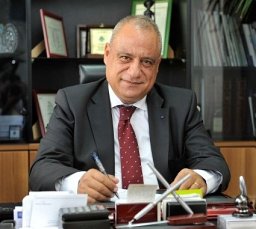 Naim Ouaini合作论文数Faculty of Sciences, University of Holy Spirit Kaslik3
 Pierre Renault合作论文数United ' Ecologie et de Physiologie du Systeme Digestif;Institut National de la Recherche Agronomique;Service de Gastroentérologie;Service de Gastroentérologie, Institut National de la Recherche Agronomique3
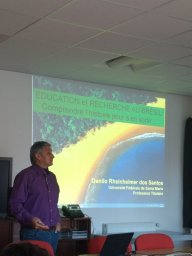 Danilo Rheinheimer dos Santos合作论文数Centro de Ciências Rurais, Universidade Federal de Santa Maria3
 Valerie Sappin-Didier合作论文数3
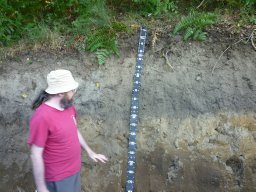 Remigio Paradelo合作论文数Dpto. Edafología y Química Agrícola, Universidad de Santiago de Compostela3Lina Nafeh Kassir合作论文数3
 Denis Baize合作论文数3
 Omar El Samad合作论文数3Marjolaine Deschamps合作论文数2Anne Jaulin合作论文数2V. Suchá合作论文数2Camille Resseguier合作论文数2Valentin Deltreil合作论文数2Daniel Tessier合作论文数2




